

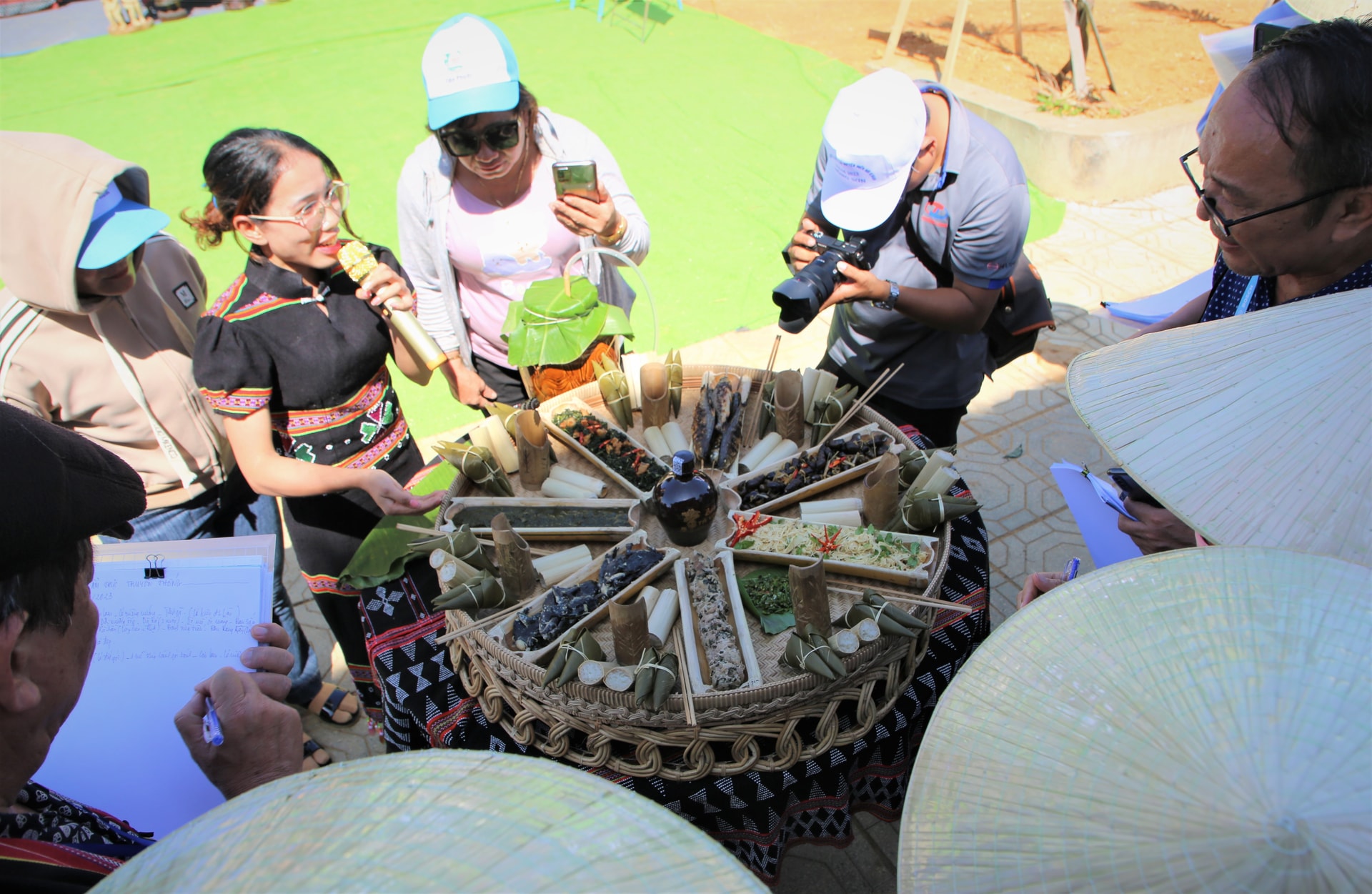
That day, we sat by the fireplace in the stilt house. The dishes were simple but full of the host's warmth and hospitality, from smoked meat (pa'riêng) and fermented meat (za'rúa) to fragrant grilled meat cooked over glowing coals, passed around, and the conversation continued.
The aroma from the kitchen attic
The conversation continued. The smell of wood smoke permeated the stilt house, clinging to every wooden wall. Old Riah Đơơr sat by the fire, his voice slow and drawn back memories from days gone by. He said that, amidst the many changes in life, smoked meat remains a constant presence in the kitchens of the mountain people, including the Cơ Tu. Over time, the meat darkens, becoming a part of the way of life preserved in each family.
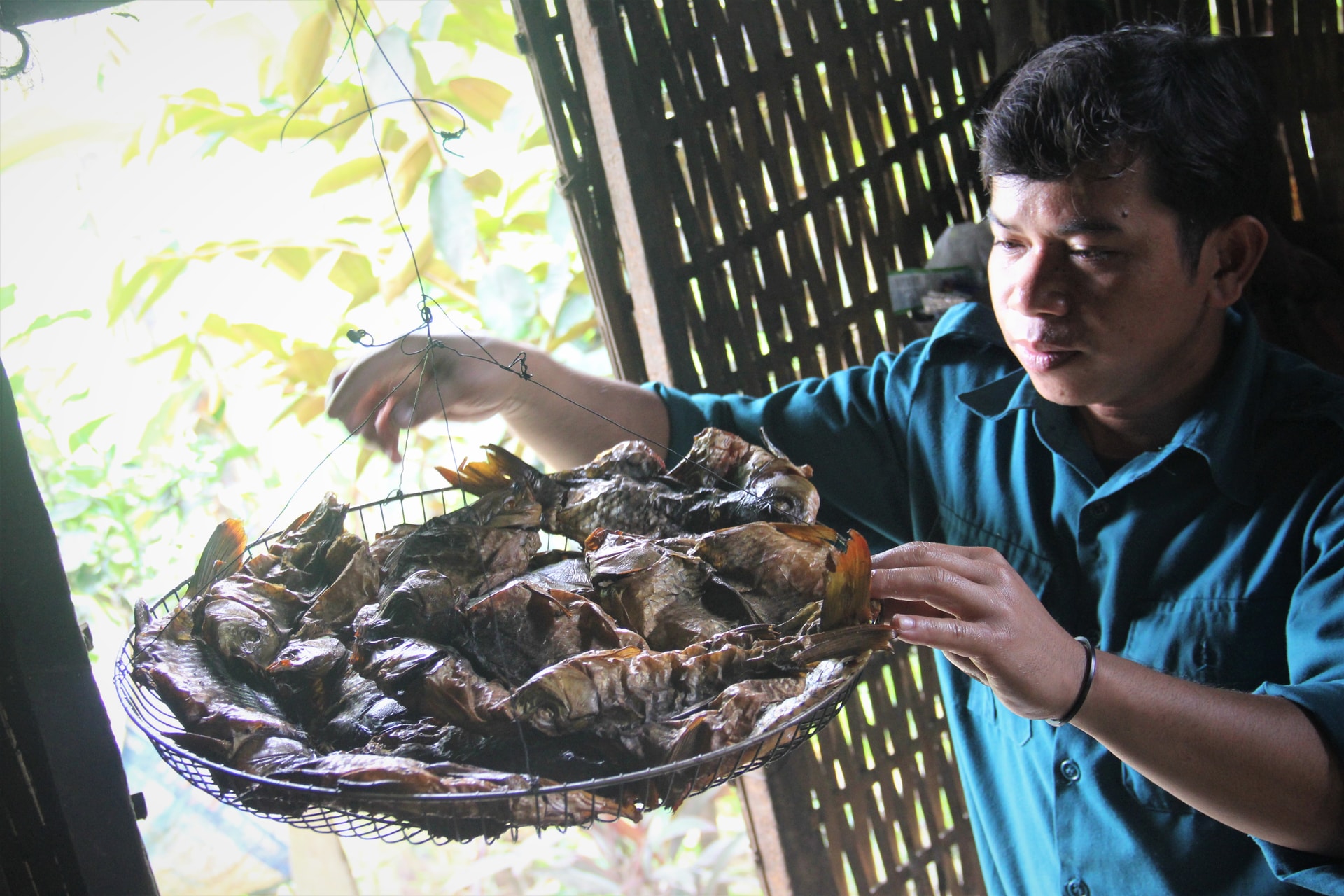
In the midst of mountain life, the kitchen loft is not simply a place to light a fire, but a space for preserving culinary culture. Meat and fish are hung up, exposed to the daily kitchen smoke, gradually drying out. As time passes, the fresh meat turns dark, acquiring a distinctive smoky aroma. "The kitchen smoke both dries the meat, preventing spoilage, and is intertwined with the way of life of the highlanders through years of survival," said elder Riah Đơơr.
In the memories of old man Đơơr, in the old days, when life was difficult, people in the highlands relied on the kitchen racks to store food. Meat hung in the attic, after a long time in the smoke, became a reserve for lean times. For each meal, portions of meat were taken down from the attic, soaked in hot water, and scraped off the smoky layer before being prepared. It wasn't overly elaborate, but it was very flavorful. Smoked meat therefore often appeared at community gatherings and when welcoming guests.
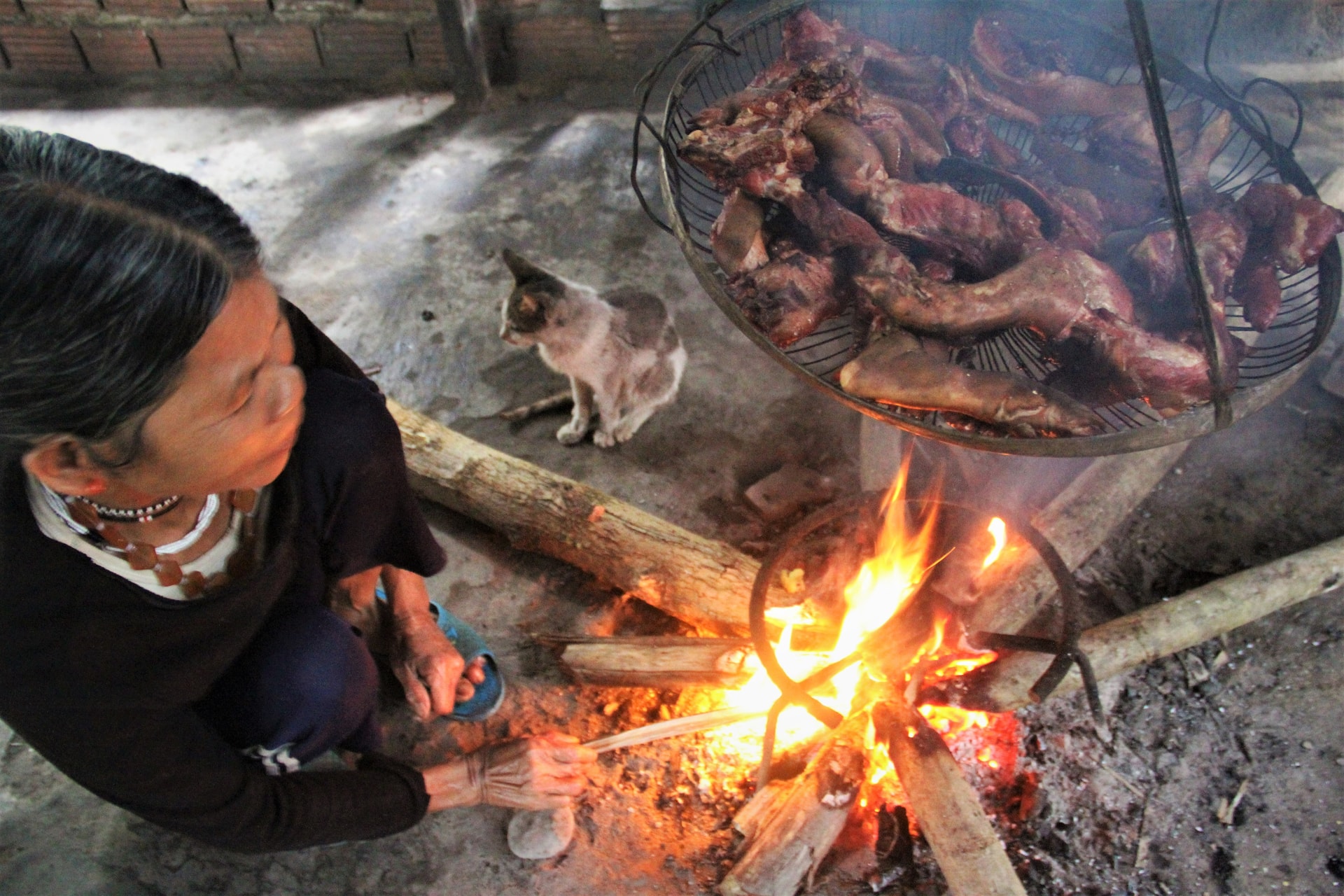
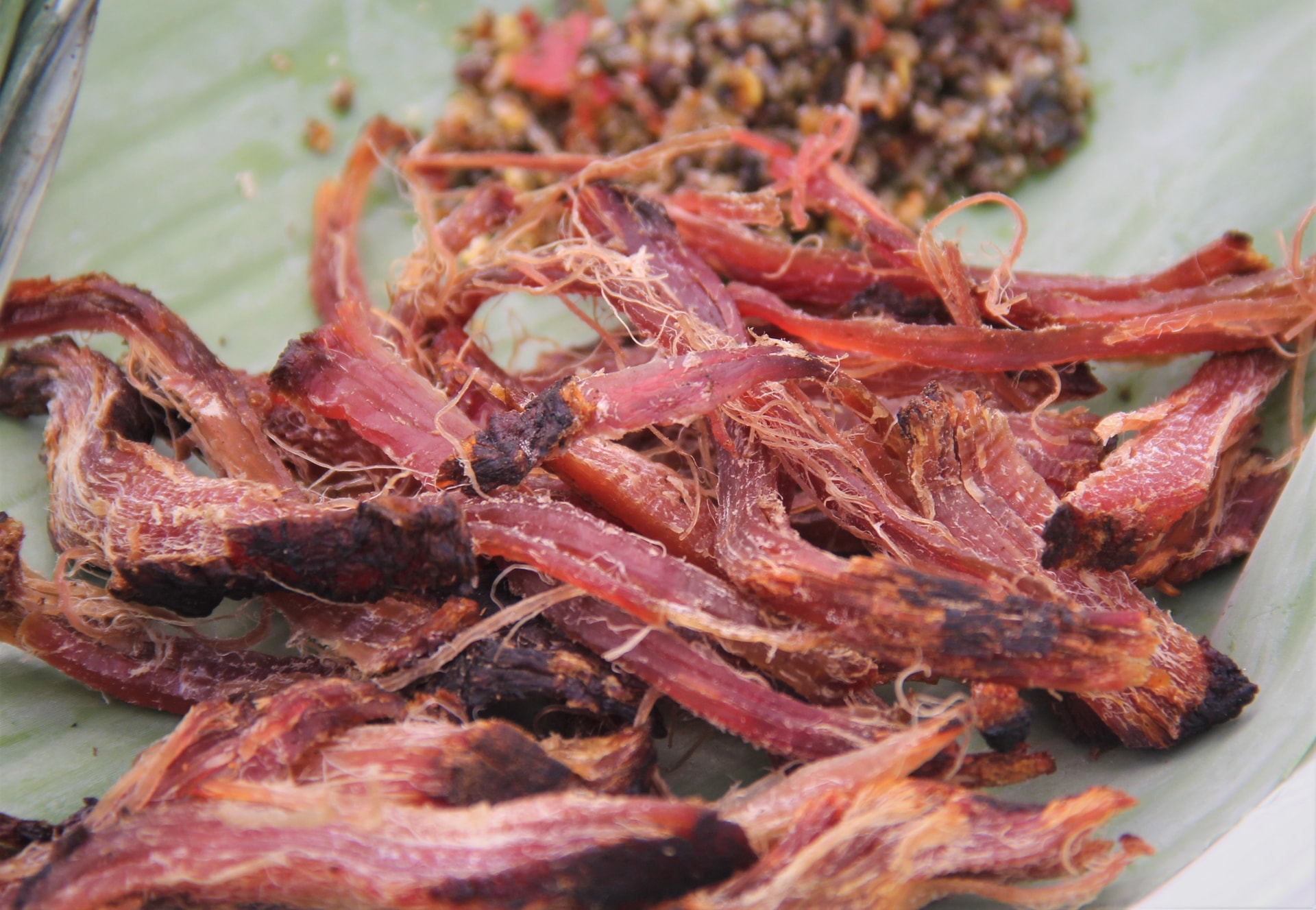
Elder Riah Đơơr said that the longer smoked meat is left to sit, the better it tastes. In the past, people in the highlands rarely marinated the meat. They selected the freshest, tastiest cuts and smoked them to preserve the flavor for a long time. In some households, the meat could be hung on a kitchen rack for several years and still be usable without any other preservation methods. Besides grilling, this dish is also stir-fried with wild vegetables, seasoned with a little salt, chili, wild pepper, and wild leaves that grow naturally in the mountains.
“Only honored guests, visitors from afar, would be served smoked meat. Sometimes it was squirrel or mouse, and sometimes it was free-range black pork. In the old days, smoked meat was usually only used during festivals, weddings, or traditional ceremonies. These were special gifts that the son-in-law would give to his wife's family,” old man Đơơr recounted.
Beneath the thin wisp of smoke, the aroma of smoked meat spreads further, intertwining with the stories of old man Đơơr, lingering in the intoxicating scent of tà vạt rice wine.
The community's "living heritage".
Each season brings its own specialties. People in the mountainous regions are accustomed to living in harmony with the forest, and they learn how to prepare food from it. Each season and each type of ingredient gives rise to a unique way of cooking, both for enjoyment and to preserve the natural flavors.
Nestled within the Trường Sơn mountain range, the Trường Sơn "mother forest," peoples like the Cơ Tu, Giẻ Triêng, Xê Đăng, and Co share many similarities in their traditional cuisine. Ingredients are primarily sourced from the forest, and cooking methods are closely tied to natural conditions. Bitter leaves, forest roots, and local spices remain present in daily meals, serving both as food and as a way for mountain dwellers to rely on the forest for their well-being.
Elder Ho Van Dinh, from Tam Lang village (Tra Doc commune), said that cuisine has become an indispensable part of the community life in the mountainous region. It is a "living heritage" forged over time, from labor and daily life to community customs. In the communal lifestyle rich in sharing, food has become a familiar part of local life. After each communal celebration, the custom of sharing is still maintained. Meat is divided equally among everyone in the village, as a habit that has become a tradition in the lives of the mountain dwellers.
Beyond everyday meals, many dishes of the mountain people become offerings during rituals to worship deities. During the "New Year's Thanksgiving to the Forest" festival recently organized by the government and the Co Tu community of Hung Son commune, the offerings were laid out amidst the mountainous forest. Familiar dishes from daily life were offered to the mountain gods, conveying the community's hopes for a peaceful and prosperous new year...
Source: https://baodanang.vn/nham-nhi-mot-mieng-vi-rung-3333158.html
![[Photo] General Secretary and President To Lam presides over a meeting with the Central Organizing Committee.](https://vphoto.vietnam.vn/thumb/1200x675/vietnam/resource/IMAGE/2026/06/03/1780482764658_a1-bnd-4741-3342-jpg.webp)

![[Photo] Secretary of the National Assembly Party Committee, Chairman of the National Assembly presides over the meeting of the Standing Committee and Executive Committee of the National Assembly Party Committee.](https://vphoto.vietnam.vn/thumb/1200x675/vietnam/resource/IMAGE/2026/06/03/1780480353201_ndo_br_bnd-2585-jpg.webp)
![[Photo] First session of the 14th Congress of the Vietnam Trade Union](https://vphoto.vietnam.vn/thumb/1200x675/vietnam/resource/IMAGE/2026/06/03/1780465947883_ndo_br_img-3852-jpg.webp)









![[Infographic] Over 1.2 million candidates registered for the 2026 High School Graduation Exam](https://vphoto.vietnam.vn/thumb/402x226/vietnam/resource/IMAGE/2026/06/03/1780496872518_w_20260603205412.jpeg)


































![[Video] Sunset at Lap An Lagoon – Where the sun sets over the fishing nets](https://vphoto.vietnam.vn/thumb/1200x675/vietnam/resource/IMAGE/2026/05/31/1780192137701_beach-landscape-sea-water-nature-grass-745871-pxhere-com.jpeg)






























Comment (0)