


Sumo wrestlers have an average lifespan of only about 60 years - Photo: AN
Sumo wrestlers have a much shorter life expectancy than the average Japanese person.
In the world of traditional Japanese martial arts, sumo has always held a special place. The rikishi, or sumo wrestlers, are not only athletes but also considered cultural icons with a long history linked to Shintoism.
They possess enormous physiques, ascend the dohyo with solemn rituals, and compete using martial arts that seem simple but are extremely physically demanding.
However, behind that powerful image lies a reality that has been debated for many years: sumo wrestlers generally have a significantly lower life expectancy than the average Japanese population.
Numerous statistics from Japanese medical researchers show that the average life expectancy of former professional sumo wrestlers is only around 60 years, far lower than the average of over 80 years for modern Japanese men.
This paradox makes sumo a particularly interesting subject of study in sports science : individuals trained like elite athletes face a high risk of illness and premature death.
The first reason lies in sumo's professional philosophy. Unlike most modern combat sports that emphasize speed or strict weight classes, sumo places almost absolute importance on body weight.
In a fight held in a small, narrow circular ring, the fighter's goal is to push or throw their opponent out. This makes body mass a huge tactical advantage.
A high-level rikishi typically weighs between 140kg and over 200kg. However, this is not simply ordinary obesity. Sumo wrestlers possess massive muscle mass in their legs, hips, and lower back, developed from extremely intense daily training.
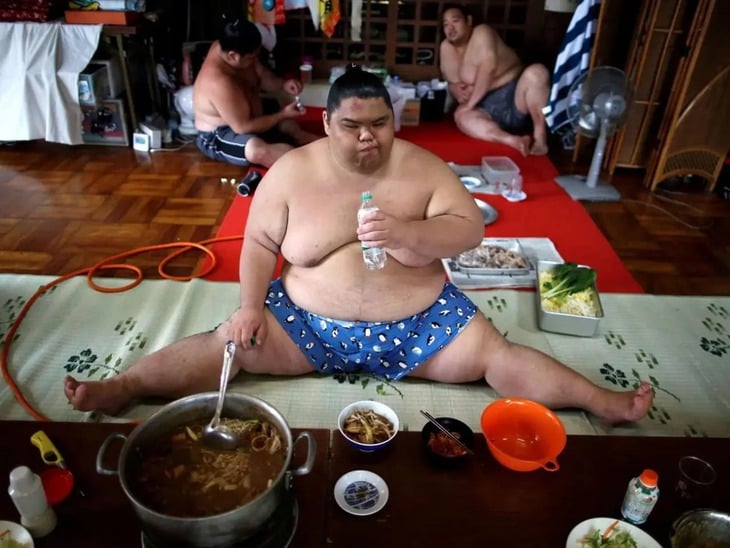
Sumo wrestling's diet is often controversial - Photo: BN
Shiko exercises—sumo's famous stomping movements—or butsukari exercises, which involve continuously lunging and pushing opponents, put immense pressure on the entire musculoskeletal system.
Dr. John Hoenigman, an American sports medicine expert who has studied sumo, stated that the bodies of sumo wrestlers "possess both the characteristics of peak strength athletes and many metabolic signs similar to obesity." According to him, this is an extremely unique and risky physiological state.
Extreme diet
To maintain their enormous weight, sumo wrestlers must follow an unusual diet. A professional rikishi can consume between 5,000 and over 10,000 kcal per day, many times more than the average person.
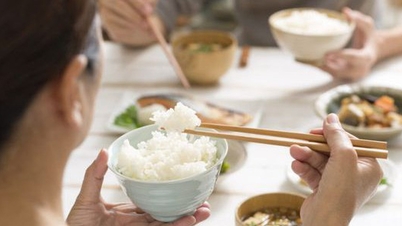
The signature dish of sumo wrestling is chanko nabe, a protein-rich hot pot with meat, fish, tofu, and vegetables, served with large portions of rice and noodles.
It's noteworthy that sumo wrestlers often skip breakfast, train intensely in the morning on an empty stomach, then eat huge amounts of food before sleeping to maximize energy absorption and fat storage. This mechanism helps them gain weight quickly for competition, but it also puts immense metabolic pressure on their bodies.
A study published in the National Center for Biotechnology Information (NCBI) medical database shows that former sumo wrestlers are at increased risk of cardiovascular disease, hypertension, type 2 diabetes, and kidney failure.
In particular, sleep apnea occurs with a very high frequency due to the large amount of fat around the neck and abdominal area.
Professor Kazuhiro Tanaka, a sports physiology expert at Tsukuba University, once explained that during their competitive years, high-intensity training helps rikishi (athletes) maintain their cardiovascular and metabolic capabilities to some extent.
However, after retirement, the volume of exercise decreases sharply while the body retains a very high weight. According to him, "that is the most dangerous period, because the body no longer has enough energy to control the metabolic disorders that have accumulated over many years."
The specialized martial arts aspect of sumo also contributes to the lifespan of sumo wrestlers. Contrary to popular belief, sumo is not a sport where wrestlers simply "stand and push each other."
A high-level fight typically involves a massive, head-on collision between two bodies weighing hundreds of kilograms, hurtling towards each other at high speed. Tachi-ai strikes, the initial lunge at the start of the fight, generate immense force on the spine, knees, and neck.
According to Japanese sports medicine experts, sumo wrestlers' knees are subjected to constant pressure for many years due to having to support their enormous body weight when changing direction or grappling with opponents. Joint degeneration, chronic back pain, and ligament injuries occur at a very high rate.
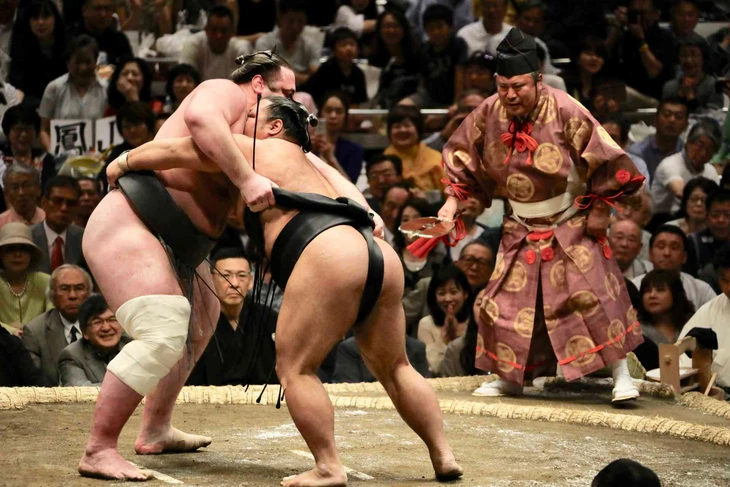
Being a sumo wrestler is no longer a dream job in Japan - Photo: THEGUARDIAN
Furthermore, traditional sumo has a culture of enduring serious injuries. For decades, continuing to compete despite pain was seen as a manifestation of the samurai spirit. Many rikishi (sumo masters) concealed injuries or delayed treatment to avoid losing their ranking.
Former yokozuna Kisenosato competed for a long time with serious injuries to his hand and chest before being forced to retire. This case was seen by the Japanese press as a prime example of the traditional pressures in professional sumo.
However, modern research also emphasizes that not all sumo wrestlers have short lifespans. Those who lose significant weight after retirement, change their diet, and maintain aerobic exercise often experience significant improvements in cardiovascular health.
Some former rikishi have even become role models for successful weight loss after leaving the ring. However, for the majority of fighters, the metabolic and musculoskeletal damage accumulated over decades of competition still leaves lasting consequences.
Source: https://tuoitre.vn/vi-sao-cac-vo-si-sumo-kho-tho-qua-tuoi-60-2026051322013717.htm

![[Image] Close-up view of the interchange connecting the two expressways and Long Thanh Airport.](https://vphoto.vietnam.vn/thumb/1200x675/vietnam/resource/IMAGE/2026/05/25/1779703378210_ndo_br_z7863716673926-224453a31600126cce10622af6290afd-4549-jpg.webp)
![[Image] Hanoi's urban life under the challenge of a "scorching hot" environment](https://vphoto.vietnam.vn/thumb/1200x675/vietnam/resource/IMAGE/2026/05/25/1779706979265_nang-nong-t5-2026-minh-duy-7-4636-jpg.webp)

























































































Comment (0)