

The 2024 Land Law, effective from August 1, 2024, replacing the 2013 Land Law, was expected to be an institutional boost for the real estate market and resource management. However, after nearly two years of implementation, the law will be amended again this year with many major changes.
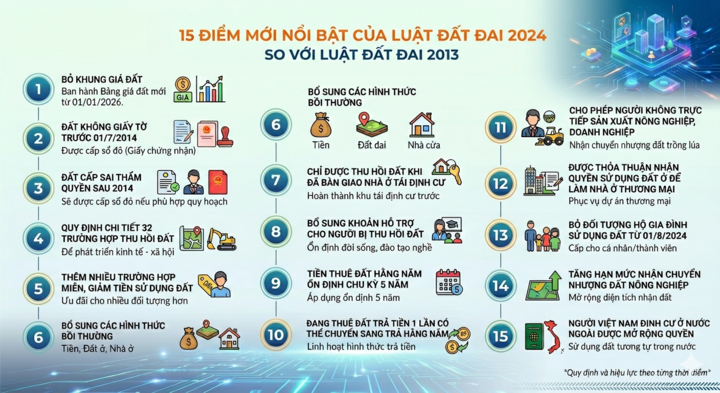
'Outdated' even before its introduction.
According to experts, amending the Land Law is an urgent requirement because, although it has only recently come into effect, the law is no longer suitable for the new context, especially since from July 1, 2025, the whole country will implement a two-tiered local government model, including the provincial and commune/ward levels, while the current Land Law still stipulates a land use planning and management system at three levels: national, provincial, and district.
This incompatibility has led to many shortcomings, causing overlaps and a lack of synchronization with other sectors after the abolition of the district level.
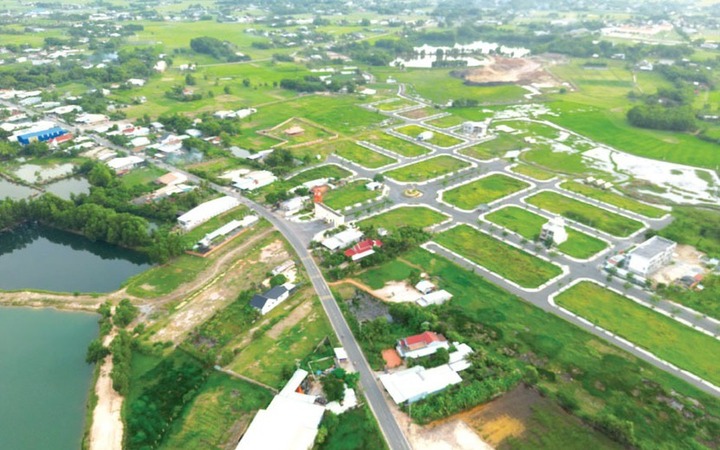
The National Assembly will comprehensively amend the Land Law at its end-of-year session after nearly two years of implementation. (Illustrative image)
Mr. Le Hoang Chau, Chairman of the Ho Chi Minh City Real Estate Association, explained that the Land Law typically has an amendment cycle of about 10 years. However, the context of 2024-2026 presents three major variables that require the law to be adjusted sooner.
This refers to the shift in local government structure to a two-tiered model, eliminating the district/county level. However, the 2024 Land Law still designs land use plans at three levels: national, provincial, and district. This imbalance in administrative levels leaves many procedures without a place to be carried out, causing bottlenecks in many processes.
Furthermore, the need to institutionalize Central Resolutions 18 and 69 on land management requires further clarification of land finance mechanisms, especially valuation and compensation.
Finally, pressure to clear land for key infrastructure projects is increasing. Without a transparent and specific mechanism, progress will continue to be slow.
Mr. Chau also emphasized that the biggest bottleneck remains the compensation price: " The State's current land price list used to calculate taxes and land rent is reasonable. But when land is reclaimed, people want the compensation to be close to market price."
The solution lies not in choosing one extreme over the other, but in building an independent compensation valuation mechanism with clear methodology, digitized and verified transaction data, and a valuation council that includes representatives of the people. The goal is to create consensus, limit prolonged disputes, and ensure fiscal discipline for the locality .”
Meanwhile, the Ministry of Agriculture and Environment explained that, in addition to being incompatible with the two-tiered local government model, land use planning and sectoral planning involving land use are also inconsistent and not synchronized.
In addition, public investment projects or important projects of an urgent and specific nature, serving political and foreign policy objectives, are not yet included in or are not in line with the planning.
Current land valuation methods remain complex and heavily reliant on independent consultants, while state agencies are both responsible for appraisal and bear legal responsibility.
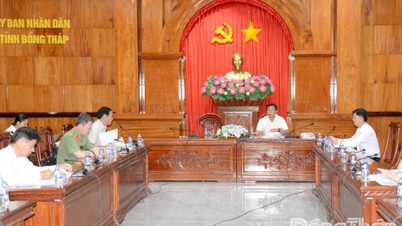
Mr. Pham Van Hoa (Member of Parliament representing Dong Thap province)
The aforementioned important projects also lack regulations on land acquisition, for example, projects serving the Asia-Pacific Economic Cooperation (APEC) Forum or projects in free trade zones and international financial centers. Current laws also lack regulations on land acquisition when investors cannot reach an agreement on the remaining area (small scale), causing projects to be stalled, wasting resources and delaying investment progress.
The 2024 Land Law allowed areas with existing urban and rural planning to manage land use without separate land use plans, instead using those existing plans for management. However, in reality, the coverage rate of urban and rural planning remains low. In many places, planning does not cover the entire administrative boundary, meaning that even with existing plans, localities still have to create additional land use plans, leading to overlaps and waste.
Currently, land allocation and leasing are mainly carried out through auctions of land use rights or bidding processes to select investors. However, this process depends on the procedures and regulations of the law on auctions and bidding, so it requires a lot of preparation time.
Meanwhile, in many cases, it is still difficult to select investors with sufficient capacity, causing project progress to be delayed, land to be put into use slowly, and affecting investment attraction.

Removing a series of bottlenecks that are causing public outrage.
Representative Pham Van Hoa (Dong Thap) noted that although the Land Law has undergone many changes and made significant contributions to socio-economic development, in reality there are still many obstacles, especially at the local level, where implementation is directly organized.
In particular, Mr. Hoa stated that obstacles related to land valuation, land acquisition, and compensation frequently lead to petitions and disagreements among the public.
"The current land valuation method remains complex and heavily reliant on independent consultants, while state agencies are both responsible for appraisal and bear legal responsibility."
"For industrial land or land for production and business, land use fees only account for a small proportion of the total investment, but businesses can lose 6 to 12 months just waiting for the price to be determined. This waiting time increases opportunity costs, while the difference in value between different valuation options is often insignificant," Mr. Hoa said.
According to Representative Hoa, the obstacles are not only technical but also in the implementation process. The annual land price list is built to closely reflect market prices as required by law, but when applied to compensation, people believe it is still lower than the actual transaction price.
Conversely, if only free market prices are used, the budget will be difficult to balance and complaints about transparency are likely to arise. The gap between the official price list and market prices is creating a dilemma for both the government and those whose land is being expropriated.
Furthermore, many provisions in the new laws and decrees remain at the level of general principles. For example, the regulation allowing land subdivision and conversion of land use purposes without requiring a road frontage, as long as there is a legal access route, is a correct policy and aligns with the realities of urbanization. However, what constitutes a legal access route, what is the minimum width, and how is it established? The law has not yet specified these details. As a result, many localities have opted for the safer option of temporarily suspending the processing of applications.
The current situation of having only framework documents leads to documents waiting for further action. Local authorities are confused, citizens and businesses have to make multiple trips, and informal costs increase.
Mr. Hoa cited the example of the policy reducing land use fees by 70% for certain groups. While the goal is humane, the application conditions are overlapping, and there are inconsistencies in understanding what constitutes a household, an individual, or the timing of land use.
Mr. Hoa proposed shifting from a rigid management mindset to one focused on efficiency and value creation. He also suggested simplifying procedures as much as possible, increasing transparency, and especially emphasizing the increased use of economic tools instead of administrative measures.
For example, instead of trying to accurately determine land value down to the last penny, it's possible to accept a reasonable price according to the price list and regulate the added value through taxes, fees, or other financial obligations. This reduces the burden on the system while ensuring the State still collects added value.
The draft amendments to the Land Law by the Ministry of Agriculture and Environment are expected to focus on two major groups of content.
The first group consists of content that meets the requirements of national development in the new era and the need for double-digit economic growth.
The Ministry proposes amending and supplementing several articles of the Land Law to include provisions on mechanisms and policies to address difficulties and obstacles in the implementation of the Land Law through the codification of regulations in National Assembly Resolutions and Government Decrees and Resolutions such as land prices, land price tables, land price adjustment coefficients; land use fees, land lease fees; land acquisition, compensation, support, and resettlement;
Registration and issuance of land certificates; land use planning and plans; land allocation, land leasing, permission for land use conversion, selection of land lease forms, land subdivision, land consolidation; land use regimes for certain types of land; land information systems, and land dispute resolution.
Simultaneously, amendments and additions were made to regulations on land use planning and plans at the commune level; the rights and obligations of rice land users; the rights and obligations of land users who violated land laws before July 1, 2014; compensation in special cases; and the land use regime for certain types of land.
The second group consists of regulations on decentralization, delegation of power, and delineation of authority according to the two-tiered local government model, and administrative reform in the field of land.
The Ministry proposes amending and supplementing regulations on the authority to implement state management of land to align with the two-tiered local government model; and adding a new provision on the authority to implement state management of land.
In addition, revise and supplement regulations on administrative procedures related to the provincial level and review them to ensure consistency and uniformity within the legal system with other laws and resolutions.
Source: https://vtcnews.vn/vi-sao-luat-dat-dai-2024-vua-co-hieu-luc-da-phai-sua-doi-ar1017806.html



![[Image] Close-up view of the interchange connecting the two expressways and Long Thanh Airport.](https://vphoto.vietnam.vn/thumb/1200x675/vietnam/resource/IMAGE/2026/05/25/1779703378210_ndo_br_z7863716673926-224453a31600126cce10622af6290afd-4549-jpg.webp)


























































































Comment (0)