


In reality, many people return from vacation feeling more tired than before they left, due to packed schedules and spending more time on transportation than actually enjoying their destination. The habit of checking in at every place and taking countless photos to avoid missing social media trends sometimes makes trips feel rushed and disconnected. The fear of missing out (FOMO) is also one of the reasons why many people try to cram more places into their itineraries.
Perhaps that's why "slow travel" is becoming a more natural need than a fleeting trend. Unlike mass tourism, slow travel doesn't focus on how many places you visit. What's more important is the level of experience and the ability to connect with the land you're traveling to. A leisurely morning at a highland market, a day learning to cook local dishes, cycling through a coastal fishing village, or simply spending time observing the peaceful life in a small town... these are all things that superficial, quick-travel experiences can hardly offer.
The concept of "slow travel" is actually not new. It's a branch of the "slow food" movement, initiated by journalist and activist Carlo Petrini in 1986 in Piedmont, Italy, as a reaction to the spread of fast food and the risk of eroding local identity. From the culinary story, the mindset of "living slowly to feel more deeply" gradually spread to tourism. At the core of slow travel is making conscious choices: traveling less, staying longer, reducing the carbon footprint, and creating a deeper connection with local culture.
As early as 2010, two UK tourism researchers, Janet Dickinson and Les Lumsdown, recognized slow travel as a new conceptual framework, aiming for slower movement, longer stays, and less travel. When not constantly racing against time, travelers tend to choose environmentally friendly modes of transportation such as trains, buses, bicycles, or walking; and prioritize homestays, farmstays, or staying with locals to better understand the lifestyle of the places they visit.
One of the clearest symbols of the "slow travel" spirit is the "Out of Eden" journey of Paul Salopek, a Pulitzer Prize-winning journalist. Since 2013, he has been walking, retracing the migratory footsteps of human ancestors, for a distance of 24,000 miles from Ethiopia to the southernmost tip of South America. For Paul Salopek, slow travel is not about procrastination, but about how humans can better understand the world and themselves.
This trend is becoming increasingly evident. Based on 25 international travel reports, CNBC forecasts notable trends in the global tourism industry in 2026, shifting the focus from the number of destinations to experiences, sustainability, and a high degree of personalization. Travelers are expected to increasingly seek secondary destinations – places that are less crowded but offer deeper experiences.

Notably, in Agoda's list of top slow-travel destinations in Asia, Hoi An topped the list thanks to its charming old town, perfect for walking, cycling, and immersing yourself in local experiences such as cooking classes, tailoring, and exploring lush green rice fields. Previously, Agoda also honored Nha Trang, Da Nang, and Ho Chi Minh City as destinations suitable for slow travel based on traveler search data.
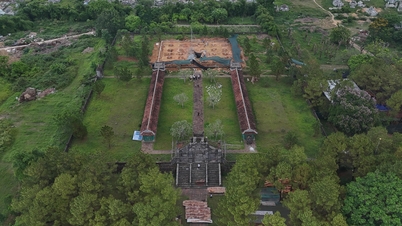
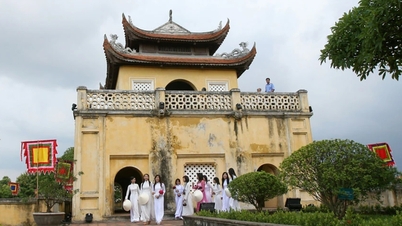
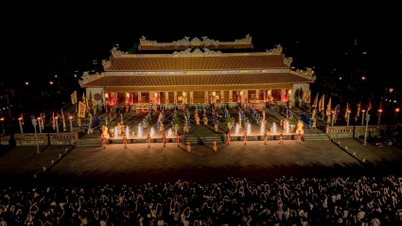
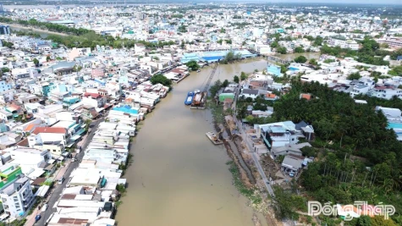
It's easy to see that Vietnam has many advantages for this trend. Homestays, farmstays, community tourism, trekking tours, walking tours, wellness retreats, and train travel are increasingly developing. Destinations like Hanoi, Hue, Ninh Binh, Thanh Hoa, Lam Dong, and Can Tho, with their natural landscapes and rich cultural heritage, are also showing great potential in retaining tourists for longer periods rather than just fleeting visits.
Slow tourism not only helps tourists recharge their energy, but it also brings clear economic value to destinations: extending the length of stay, increasing spending, and motivating local communities to preserve their cultural identity. At the same time, this form of tourism also contributes to reducing pressure on infrastructure, the environment, and overcrowding during peak seasons.
These directions align with Vietnam's green and sustainable tourism development strategy, in which Resolution No. 08-NQ/TW and Resolution No. 80-NQ/TW dated January 7, 2026, both emphasize the need to develop experiential tourism products linked to culture and reduce emissions.
However, for slow tourism to truly thrive, the challenge lies not only in creating new products but also in the mindset behind tourism development. According to experts, many localities have long used the number of visitors as a measure of effectiveness, neglecting the depth of the experience. The consequence is that visitors arrive in large numbers but leave quickly, destinations easily become commercialized, and their unique character is lost. Experts argue that in the context of global competition, places that can tell stories, create experiences, and preserve cultural and natural values are the ones that will have lasting appeal to tourists.
Ultimately, slow travel isn't about traveling for a very long time or deliberately living at a slow pace. What matters is how each person is present on their journey. When there's no longer the pressure to "see everything," people have more time to sit longer in a local café, wander into a small alley, chat with a vendor, or simply pay attention to the small details they previously overlooked. And sometimes, it's these seemingly ordinary moments that leave the longest lasting impression after a trip.
Source: https://baovanhoa.vn/du-lich/vi-sao-nhieu-du-khach-ngay-cang-thich-du-lich-cham-232671.html

![[Image] Nearly 125,000 Hanoi students completed the Literature exam for the 10th grade entrance exam.](https://vphoto.vietnam.vn/thumb/1200x675/vietnam/resource/IMAGE/2026/05/30/1780117233041_ndo_br_thiet-ke-chua-co-ten-2-png.webp)




















































































Comment (0)