


Furthermore, Resolution 79-NQ/TW of the Politburo on the development of the state-owned economy, issued in January 2026, sets the goal of having 50 state-owned enterprises in the top 500 in Southeast Asia and 1-3 state-owned enterprises in the top 500 in the world by 2030.
Alongside this, we need to build a number of strong, large-scale state-owned economic groups and enterprises with modern technology and regional and international competitiveness, playing a pioneering role in leading domestic businesses to participate deeply in a number of global production and supply chains, especially in key, strategic sectors of the economy.
In fact, after 40 years of Doi Moi (1986-2026), according to Mr. Dau Anh Tuan, Vice President of the Vietnam Chamber of Commerce and Industry (VCCI), Vietnam has seen the emergence of large economic groups in many sectors. Specifically, in the manufacturing industry, Truong Hai (THACO) has built an automotive and mechanical manufacturing ecosystem in Quang Nam on a scale among the largest in Southeast Asia.
VinFast is a particularly noteworthy case, becoming Vietnam's first electric vehicle manufacturer, building a large-scale factory in Hai Phong, listing on the Nasdaq stock exchange, and launching sales in numerous international markets including North America, Europe, and Southeast Asia.
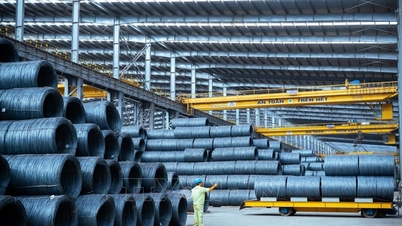
Furthermore, Hoa Phat Group, starting from a small furniture factory, has risen to become a leading steel producer in Southeast Asia, with a capacity of millions of tons of steel per year, directly competing with international steel corporations in many export markets.
In the technology sector, FPT has become one of the largest information technology companies in the region, present in dozens of countries, providing digital transformation services to many multinational corporations. In the consumer goods sector, Vinamilk has built a Vietnamese milk brand present in more than 50 countries, with a system of farms and factories meeting international standards. Masan has developed a consumer ecosystem from food and beverages to retail, serving tens of millions of consumers every day.
These are the businesses that have proven that Vietnamese private enterprises are fully capable of building national brands that are competitive in the region.
In the infrastructure and real estate sectors, Vingroup has undertaken projects on an unprecedented scale in the history of Vietnamese private enterprises, ranging from urban areas, hospitals, and schools to electric car manufacturing. Sun Group, BRG, and many other corporations have also invested billions of dollars in tourism infrastructure, resorts, and airports, contributing to changing the face of many economic regions.
According to statistics, by the end of 2025, Vietnam will have a total of nearly 1.1 million businesses operating in various sectors. However, according to Mr. Dau Anh Tuan, in Vietnam, "this force is large but not yet strong, broad but not yet deep."
Meanwhile, according to Mr. Nguyen Duc Hien, Deputy Head of the Central Strategy and Policy Committee, most businesses in recent years have still been dependent on capital, whereas, in order to achieve the goal of becoming a modern industrialized country by 2045, it is necessary to have economic conglomerates operating in the industrial sector.
Sharing this view, economist Tran Dinh Thien argues that the development experience of many countries shows that to become an economic powerhouse, one must have strong economic conglomerates to lead the economy, and these conglomerates need to have global competitiveness. These businesses not only have to withstand global economic fluctuations but are also expected to become one of the most important driving forces of the economy.
Vietnamese businesses are already young, small, and weak. If they continue to be restricted in their development space, it will be very difficult for them to mature into leading enterprises. Therefore, to have strong economic conglomerates, according to Mr. Tran Dinh Thien, Vietnam needs to change its approach to supporting businesses. The old method of providing scattered support, like "scattering grain to sparrows," often only creates small businesses and makes it difficult to form large corporations. In the new phase, policies need to shift to focused support, concentrating on businesses capable of leading and creating a ripple effect throughout the entire production chain.
Sharing further insights on industrial development orientation, expert Tran Dinh Thien emphasized that to become a superpower, one must master technology. However, the selection of priority industries and specific development directions needs careful consideration, with a prudent and focused approach.
Sharing his international experience with reporters, Mr. Nguyen Canh Cuong, a lecturer and expert at the University of Economics - Vietnam National University, Hanoi, said that Japan achieved breakthroughs by choosing the right strategic industries and persistently investing long-term. South Korea built leading corporations like Samsung and Hyundai, thereby creating an entire industrial ecosystem. China has leveraged its market size and combined it with strong policies to develop large-scale industrial clusters and gradually master the value chain.

It can be said that Resolution 68-NQ/TW on the development of the private economy and Resolution 79-NQ/TW on the development of the state-owned economy are creating a relatively synchronized policy framework for the growth of Vietnamese businesses. Opportunities are present, and the foundation has been laid. The remaining issue lies in the capacity for implementation and the steadfastness in choosing the right development path.
If this period is well-utilized, the next 10 years could be the time when Vietnam forms economic conglomerates of regional scale, gradually asserting its position in the global industrial value chain and realizing the goal of "rising to prominence" for its economy.
Source: https://baotintuc.vn/kinh-te/vi-the-moi-tu-nhung-tap-doan-kinh-te-manh-20260518081052186.htm
![[Image] Hanoi's urban life under the challenge of a "scorching hot" environment](https://vphoto.vietnam.vn/thumb/1200x675/vietnam/resource/IMAGE/2026/05/25/1779706979265_nang-nong-t5-2026-minh-duy-7-4636-jpg.webp)
![[Image] Close-up view of the interchange connecting the two expressways and Long Thanh Airport.](https://vphoto.vietnam.vn/thumb/1200x675/vietnam/resource/IMAGE/2026/05/25/1779703378210_ndo_br_z7863716673926-224453a31600126cce10622af6290afd-4549-jpg.webp)


































































Comment (0)