

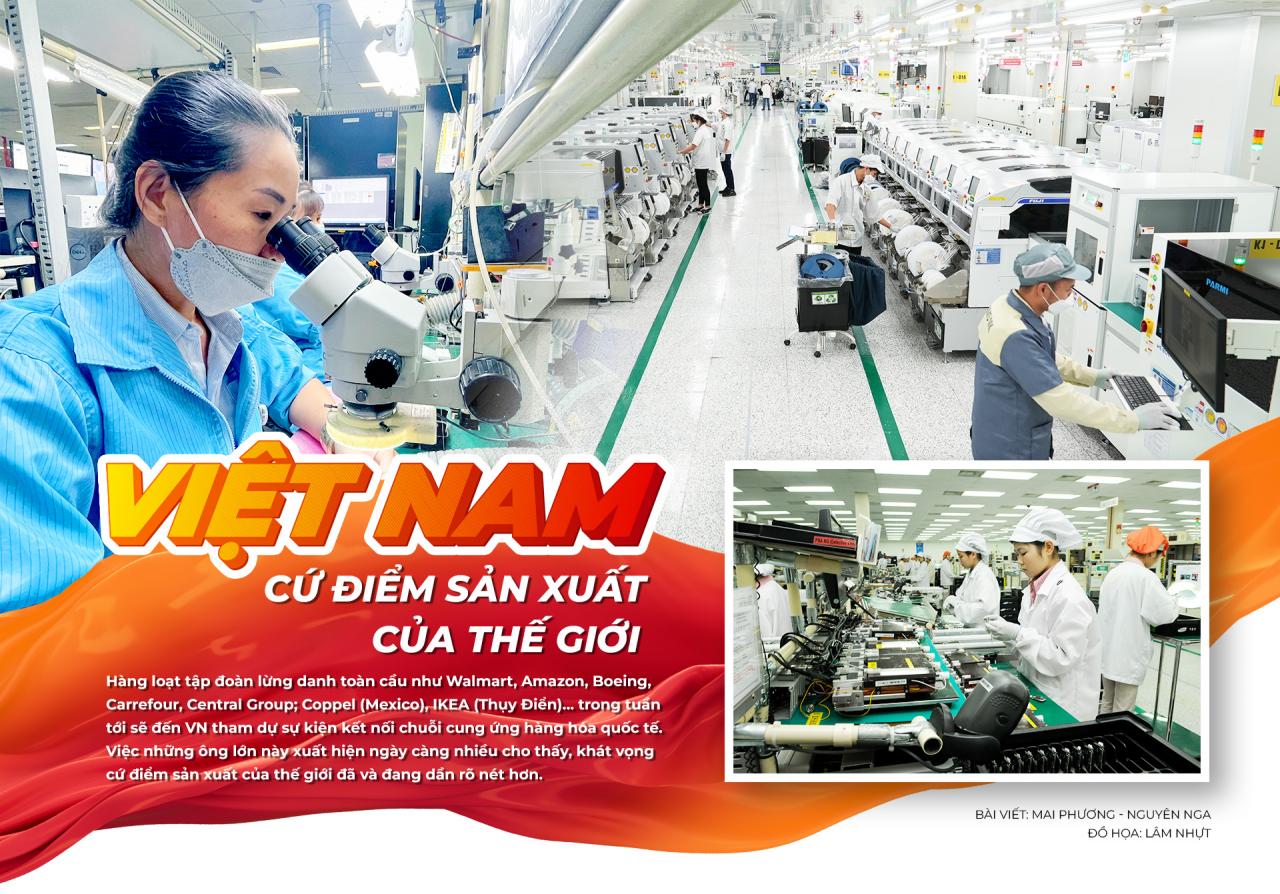
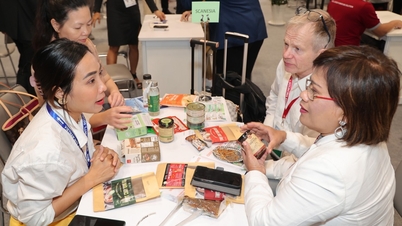
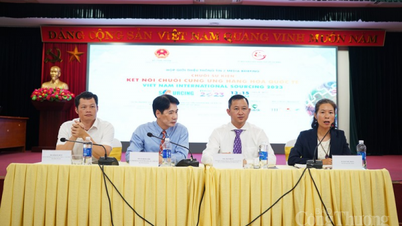
The "Vietnam International Sourcing 2023" event, held from September 13-15 in Ho Chi Minh City, aims to support businesses in participating more deeply in global production chains and promote connections between distribution channels, importers, and domestic manufacturing and exporting businesses. The Ministry of Industry and Trade announced that many large global corporations have indicated their participation, including Walmart, Amazon, Boeing, Carrefour, Central Group; Coppel (Mexico), IKEA (Sweden); Aeon, Uniqlo (Japan), etc.
Furthermore, recent information from the European-American Market Department (Ministry of Industry and Trade) indicates that the American corporation Apple has completed the relocation of 11 factories producing audio-visual equipment to Vietnam; Intel is expanding phase 2 of its chip testing plant in Ho Chi Minh City with a total investment of up to 4 billion USD; and Lego Group of Denmark is investing 1 billion USD in building a factory in Binh Duong.


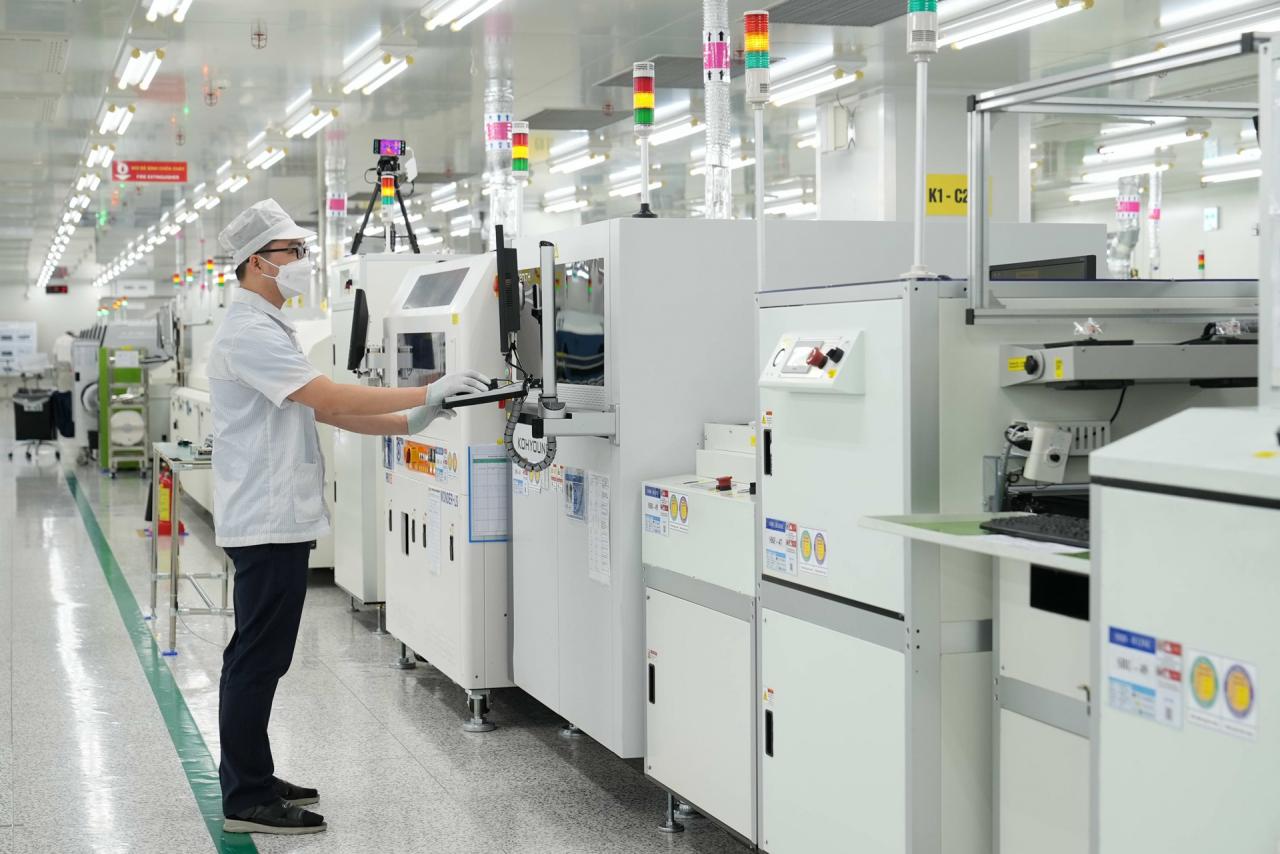
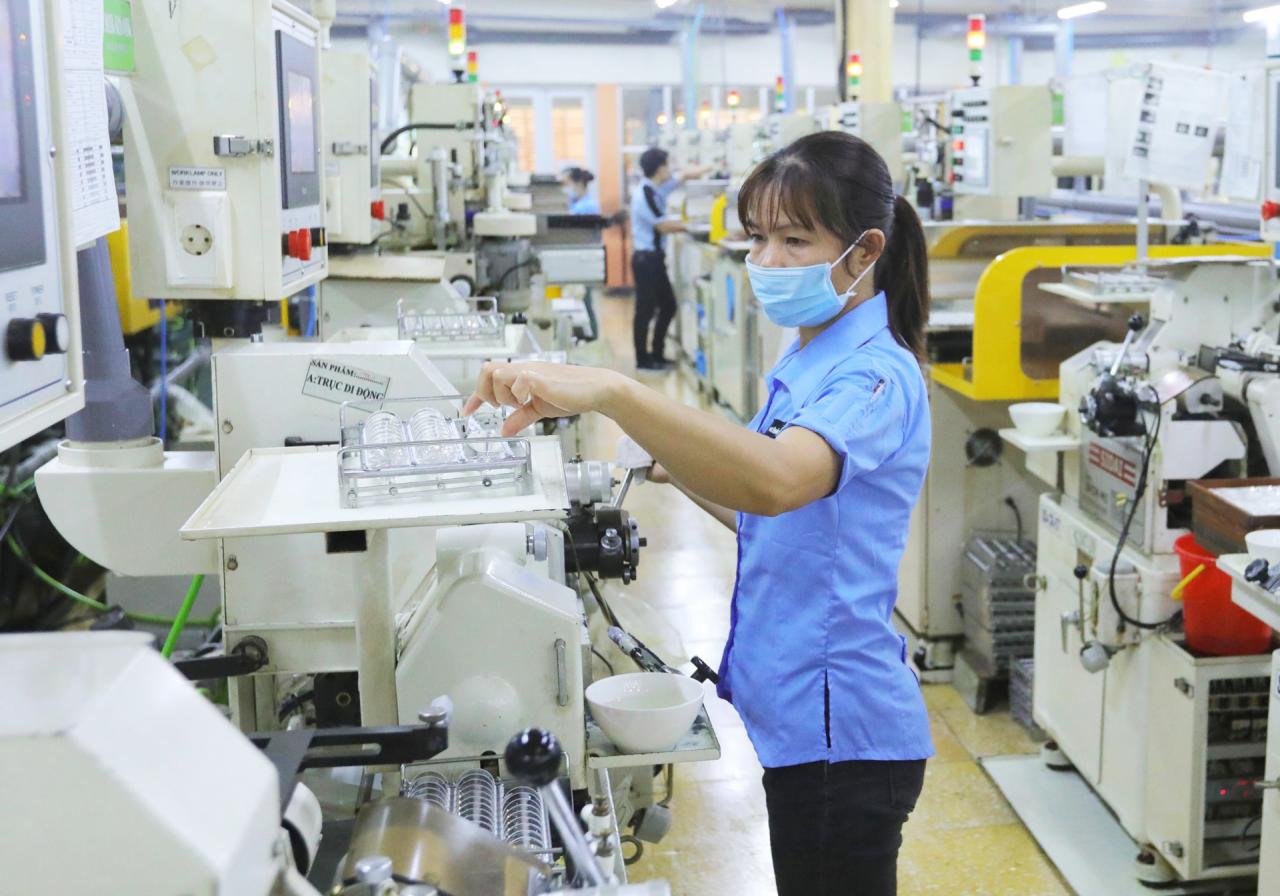
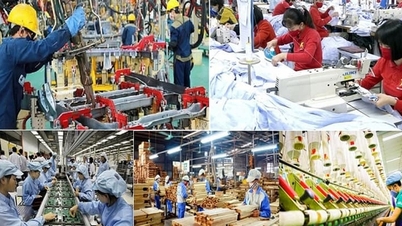
Manufacturing electronic devices at Foster Vietnam Co., Ltd. in VSIP 2 Industrial Park (Binh Duong) - a Japanese-invested company.
Do Truong
The emergence of large manufacturing corporations shows that Vietnam is becoming a major global manufacturing hub. Previously, foreign direct investment (FDI) companies that had an early presence in the domestic market, such as Intel, Samsung, LG, and Qualcomm, have continuously announced investment expansions. Most notably, at the end of last year, Samsung officially launched its Research and Development (R&D) center in Hanoi – the largest R&D center in Southeast Asia for the group – as part of its plan to elevate Vietnam's position beyond its role as a global manufacturing base. Currently, Samsung has shifted its entire phone production line to Vietnam and India. Approximately 60% of Samsung's smartphones sold worldwide are manufactured in Vietnam.
Through its R&D center, Samsung hopes to make a positive contribution to the development of hardware (H/W) and software (S/W) in line with advanced IT and the Fourth Industrial Revolution. In addition, the corporation is preparing the conditions for trial production of semiconductor chip grids and will mass-produce them at the Samsung Electro-Mechanics factory in Thai Nguyen . Similarly, the LG Group leadership stated that in the future, the corporation will invest another $4 billion in Vietnam, with the desire to continue investment cooperation in many fields. LG's goal is to make Vietnam a future center for manufacturing mobile phone cameras…


Manufactured by Samsung Electronics Vietnam Co., Ltd.
Pham Hung
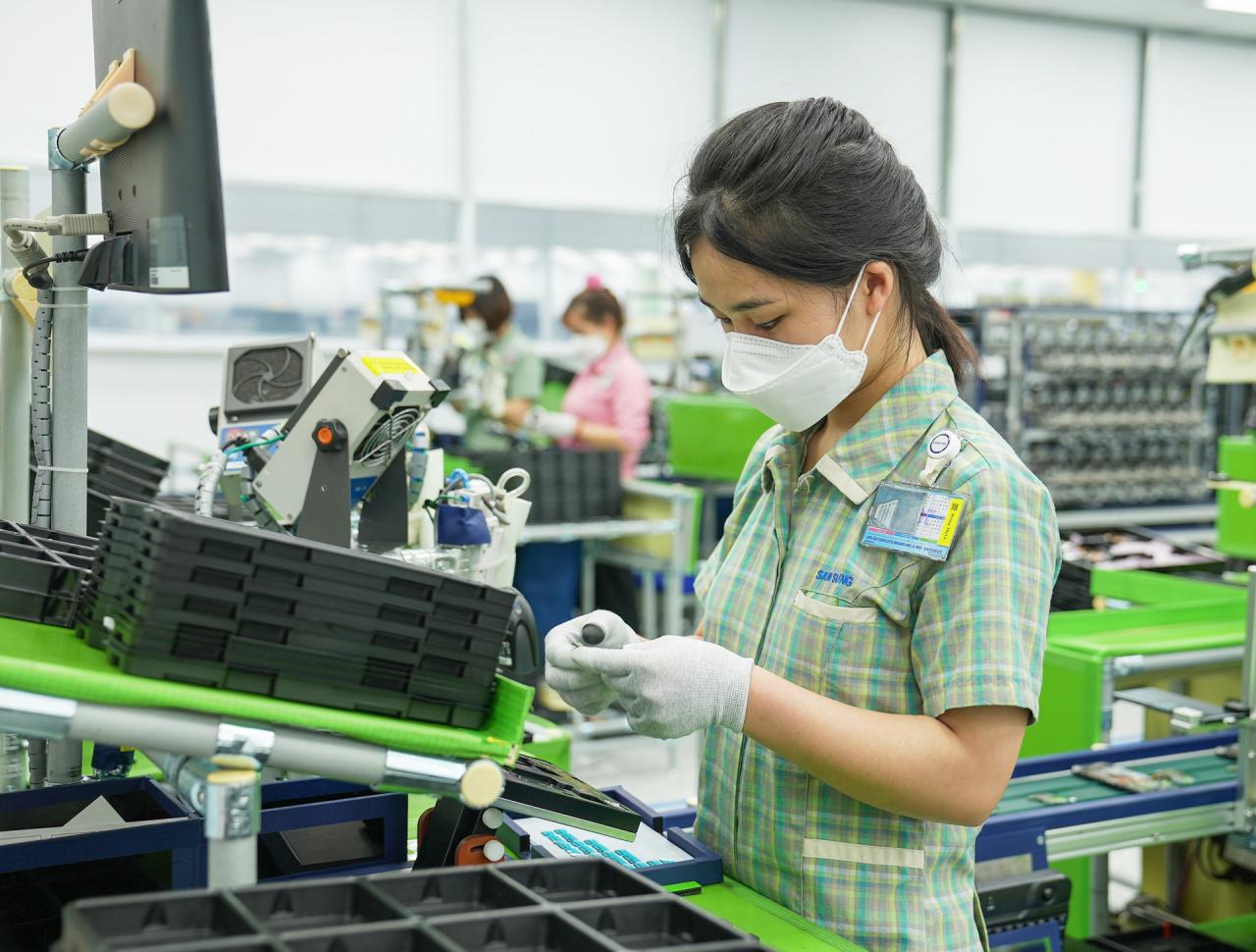
Manufactured in Vietnam by Samsung Vietnam
Thuy Linh
In addition, a number of new companies have begun to establish a direct presence in Vietnam. For example, in 2022, Synopsys (USA) announced it would train electrical engineers in Vietnam and support the Ho Chi Minh City High-Tech Park (SHTP) in establishing a chip design center through a software sponsorship program. This is one of the few American companies that dominate the global market for electronic design automation (EDA), or chip design software. Hansol Electronics Vietnam (South Korea), a component supplier for Samsung, recently received investment licenses from the Dong Nai Provincial People's Committee for two projects with a total capital of up to 100 million USD…

At the forum "Seizing Opportunities from New Capital Flows" held at the end of August, representatives from the Korea Chamber of Commerce and Industry (Kocham) reported that dozens of investment projects from South Korea entered Vietnam in the first seven months of 2023. Notably, some projects were valued from $700 million to billions of USD. Kocham affirmed that capital flows from South Korea to Vietnam will continue to increase in the coming period, as Vietnam is still considered a potential market by Korean companies, especially after the Covid-19 pandemic, which has led to a strong shift of foreign investors to Vietnam.
Referring to President Joe Biden's official visit to Vietnam starting today (September 10th), Professor Nguyen Mai, Chairman of the Vietnam Association of Foreign Investment Enterprises (VAFIE), affirmed that Vietnam and the US will have important cooperation projects in the technology sector in the near future. The US ranked 11th out of 141 countries and territories investing in Vietnam last year, but that only represents direct investment from the US; investment through third countries, through supply chains, etc., is actually much higher.
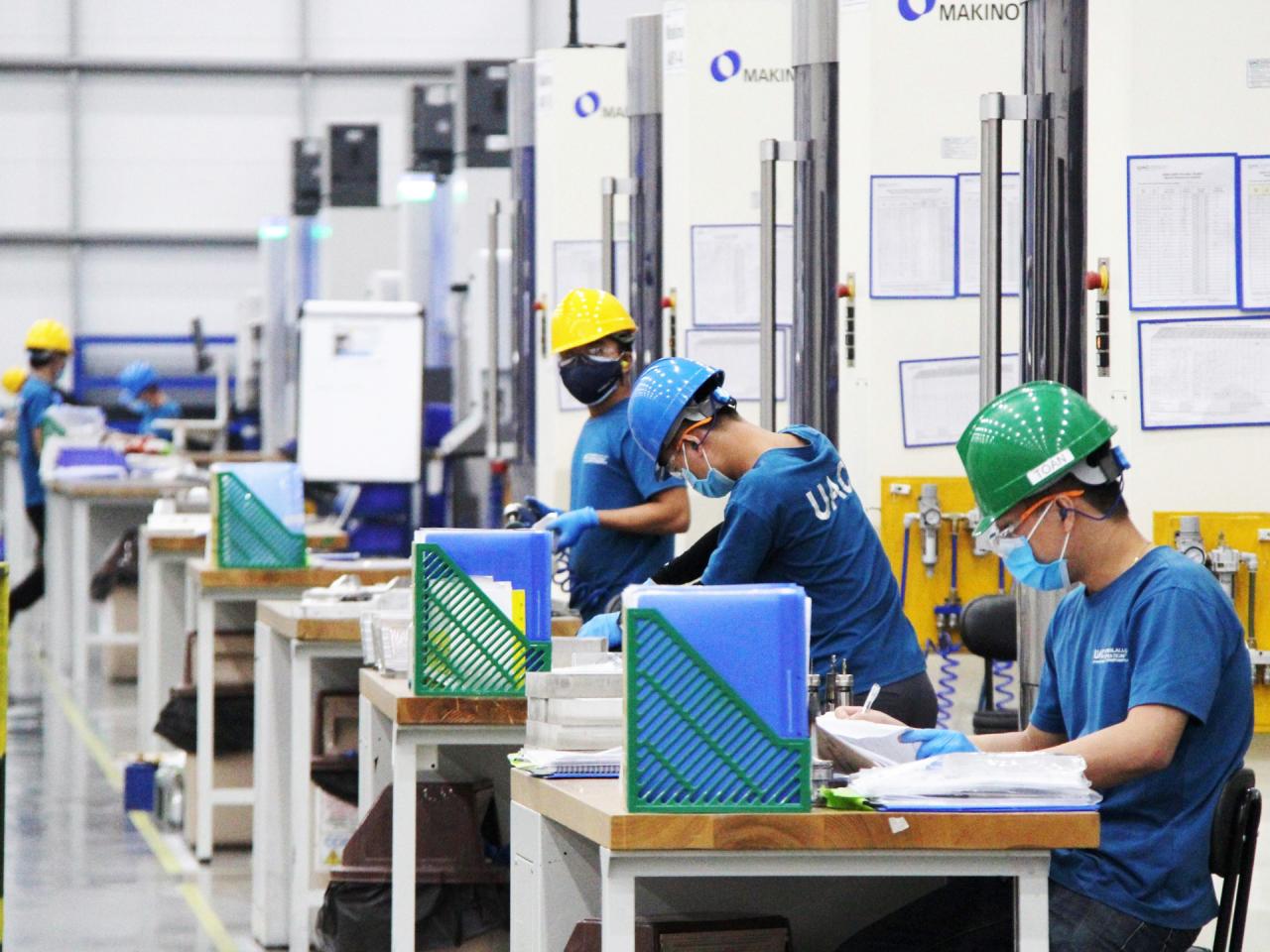
Sunshine Aerospace Components Manufacturing Plant of UAC Group (USA) in Da Nang
Nguyen Tu
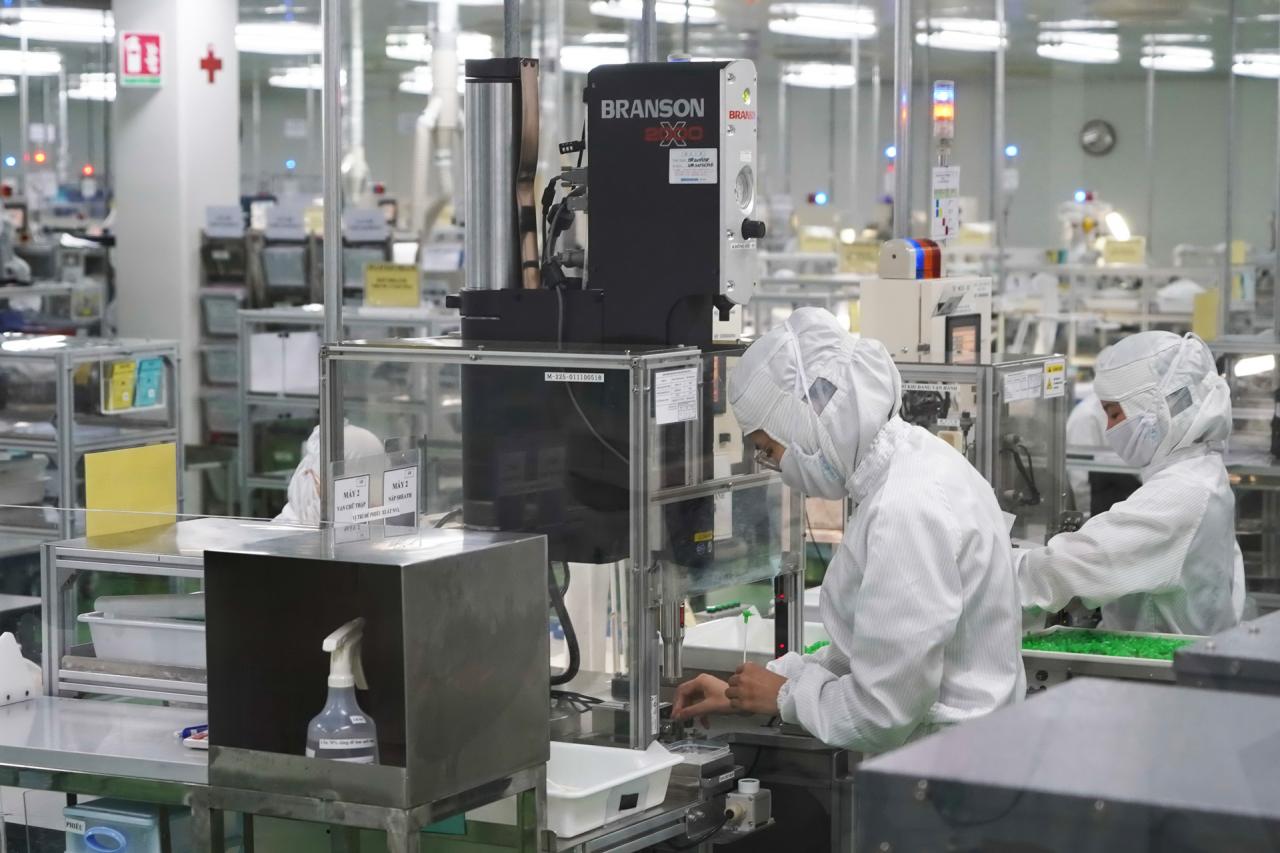
Manufactured by Terumo Company (medical equipment), Quang Minh Industrial Zone, Hanoi. Photo by Pham Hung (12)
Pham Hung
Notably, the hottest issue in the recent semiconductor competition is semiconductor technology (and rare earth elements are indispensable in semiconductors). After China, Vietnam has a huge advantage in rare earth elements. In 2022, Vietnam exported 4,500 tons of rare earth elements, earning $200 million. With the potential we already have, assuming we can produce hundreds of thousands of tons of rare earth elements, the foreign exchange earnings could reach tens of billions of USD. This is not just about money, but also about a nation's standing in the world. Based on rare earth elements, human resources are being trained to become increasingly better, pushing forward the industrialization and modernization of the country.
Professor Nguyen Mai emphasized: Therefore, the opportunity, or more accurately, the prospect of Vietnam becoming an important global manufacturing hub, is entirely possible. Vietnam's advantage lies in having large, long-term investors from two powerful Asian countries, South Korea and Japan – consistently among the top 5 in FDI into Vietnam. Now, with diplomatic visits, exchanges, and meetings between high-ranking leaders from the US to Vietnam, along with the presence of major technology corporations, there is an opportunity for the two countries to further strengthen cooperation in technology. The US remains a leader in high technology, future technology, and core technology.






















![[Photo] Reception to welcome General Secretary and President To Lam and his wife on their State visit to the Philippines](https://vphoto.vietnam.vn/thumb/1200x675/vietnam/resource/IMAGE/2026/06/01/1780295488620_vna-potal-chieu-dai-chao-mung-tong-bi-thu-chu-tich-nuoc-to-lam-va-phu-nhan-tham-cap-nha-nuoc-toi-philippines-8798060-7855-jpg.webp)
















































Comment (0)