

A number of chip industry giants have surpassed the trillion-dollar mark.
Despite the challenges posed by the Middle East conflict, technology companies remain a bright spot in the global market. Semiconductor chips, in particular, are one of the sectors maintaining strong growth momentum.
In May alone, three more companies in the chip industry reached a market capitalization of $1 trillion: two South Korean corporations, Samsung and SK Hynix, along with the American memory chip giant Micron. The rise of these three, along with the continued strength of others, further demonstrates the considerable power the chip industry possesses compared to the overall market.
On May 26th, Micron's stock closed with a massive 19% increase, officially pushing the company's market capitalization past the $1 trillion mark. Since the beginning of the year, Micron's stock has risen by approximately 200%, driven by huge demand for high-bandwidth memory (HBM) – a key product line for Micron – used in large-scale AI server and data center systems.
Matt Stucky of Northwestern Mutual Asset Management said: "Earlier this year, about 65% of companies on the exchange outperformed the S&P 500, but since the conflict broke out, that number has dropped to just 24%. Companies that can boost revenue from AI, especially in chips and memory like Micron, are the main drivers of growth."
Just one day later, South Korean rival SK Hynix also officially reached the same milestone in the South Korean market. This achievement by SK Hynix, along with Samsung's earlier performance this month, has given South Korea two companies that have reached a trillion-dollar market capitalization. Similar to Micron, both corporations are benefiting from the high demand for high-end memory chips for AI development.
Not only South Korea, but the "chip craze" is also sweeping through the mainland Chinese market, thanks to the country's progress in chip self-sufficiency.
Timothy Pope, a China market analyst for CGTN, commented: "Mainland Chinese chip stocks received a boost following news of Huawei's progress in chip development. The market reacted enthusiastically to this news, pushing the mainland semiconductor index up 7.1%, while the Star 50 technology index also rose nearly 6%."
Chip stocks have also been a bright spot in many other Asian markets, such as TSMC and MediaTek in Taiwan (China) and Tokyo Electron in Japan, thanks to their impressive revenue growth recently as the tech industry races to invest in hardware for AI.

The wave of AI investment continues to drive semiconductor stock prices higher, propelling many global chip companies into the trillion-dollar market capitalization club.
Chip stocks lead the stock market rally.
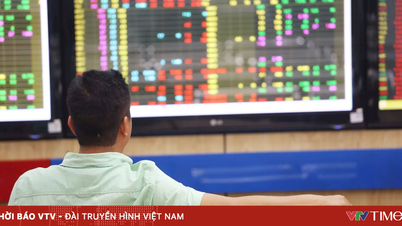
The recent boom in the chip industry has not only benefited the companies within the sector but has also created a positive ripple effect, driving global markets.
In the US, the Philadelphia Semiconductor Index – which includes 30 of the top semiconductor companies listed in the US – has risen by 75% since the beginning of the year. In just the last two months, the stocks in this index have increased by more than $5 trillion in market value.
These impressive figures have helped Wall Street continuously set new records this year despite the unpredictable signals from the conflict in the Middle East. The S&P 500 index has risen by about 10% in 2026, and the Nasdaq – home to many tech giants – surpassed 26,000 points for the first time in history in early May. Across the market, Nvidia remains firmly at the top of the market capitalization rankings with a value of approximately $5.1 trillion.
Another market benefiting from the chip stock boom is South Korea. Simultaneously with SK Hynix reaching a trillion-dollar market capitalization, the Kospi index officially closed at a historic 8,000 points earlier last week. The country has now officially surpassed Germany in market capitalization, driven primarily by the two giants Samsung and SK Hynix.
Concerns about a growing "bubble" in chip sector stocks.
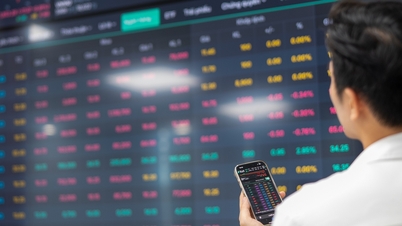
Chip stocks are playing a significant role in helping global stock markets repeatedly reach new record highs. However, along with this, warnings about the risk of a "bubble" are also becoming more frequent.
One of the key warnings recently came from Jamie Dimon, CEO of leading US bank JP Morgan. While acknowledging that market sentiment remains positive, he also noted that similar excessive euphoria preceded several historical market crashes, such as the dot-com bubble of 2000. This is something the CEO is very cautiously monitoring.
Another indicator is that there are currently 1.7 million open put options contracts – a record high for the Vaneck fund, a leading semiconductor chip ETF in the US – implying that more and more investors are anticipating a potential sharp correction in chip stocks in the near future.
The global chip market maintains strong momentum.

Beyond the demand from technology corporations, many countries are also accelerating the development of domestic semiconductor capabilities to ensure technological security.
Following warnings about the risk of overvaluation, the biggest question for investors right now is whether the semiconductor boom is repeating the dot-com bubble scenario of more than two decades ago. However, many experts believe that the current market has significantly different foundations, as the drivers of stock price growth are not only from expectations about AI, but also from the wave of actual investment in technology infrastructure taking place globally.
According to analysts, while the initial AI boom revolved primarily around the race to develop large-scale language models, the competition is now shifting to a new phase: building the physical infrastructure for the AI economy . This shift is creating enormous demand for the global semiconductor industry.
This year alone, Microsoft, Amazon, Alphabet, and Meta are expected to spend approximately $725 billion on data centers, servers, and equipment for AI. This is seen as a direct source of demand for the semiconductor industry, from processor chips and memory chips to chip manufacturing equipment.
Olu Sonola, Head of US Economic Research at Fitch Ratings, stated: "Looking ahead to 2030, the current AI infrastructure development remains sustainable. The companies leading this investment wave possess very strong cash flow and the ability to commercialize those investments."
Beyond the demand from technology corporations, many countries are also accelerating the development of domestic semiconductor capabilities to ensure technological security. The United States, China, South Korea, Japan, and the European Union are all implementing chip manufacturing support programs worth tens, even hundreds of billions of dollars.
Another noteworthy point is that demand has now expanded to more segments than before. While the early stages of AI primarily drove high-end graphics processing chips, the development of AI assistants and automated AI systems is driving increasing demand for memory chips, central processing units, and data storage infrastructure. This trend has been clearly reflected in the stock market. While Nvidia remains the most valuable name, the impressive upward momentum has spread to many other names such as Intel, AMD, and Arm.
Of course, the potential for market adjustment remains if the global economy weakens or tech companies cut spending. However, at present, capital continues to flow strongly into AI infrastructure, indicating that the semiconductor industry's growth momentum shows no clear signs of slowing down.
Source: https://vtv.vn/con-sot-ai-tao-nen-the-he-ty-do-moi-100260601102402421.htm




























![[Photo] Reception to welcome General Secretary and President To Lam and his wife on their State visit to the Philippines](https://vphoto.vietnam.vn/thumb/1200x675/vietnam/resource/IMAGE/2026/06/01/1780295488620_vna-potal-chieu-dai-chao-mung-tong-bi-thu-chu-tich-nuoc-to-lam-va-phu-nhan-tham-cap-nha-nuoc-toi-philippines-8798060-7855-jpg.webp)







































































Comment (0)