

With its massive production system comprising 13 factories and 13 farms nationwide, Vinamilk demonstrates its pioneering role in reducing its carbon footprint, managing greenhouse gas emissions, and working alongside the Government towards Net Zero.
Proactively transition to green.
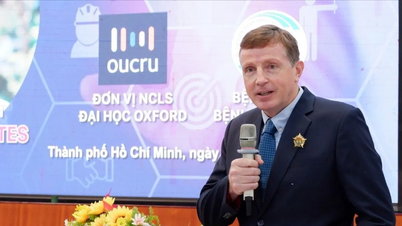
Speaking at the 2023 Green Trade Forum with the theme "Proactive Green Transformation," Mr. Le Hoang Minh, Production Executive Director and Net Zero Project Leader at Vinamilk, stated that, aware that any production activity impacts the environment and the community, Vinamilk always strives to find solutions to minimize these impacts and efficiently utilize resources and energy.
Through its activities, Vinamilk affirms its pioneering role in managing and minimizing its carbon footprint in production and business operations, and in accompanying the Government in implementing the "National Strategy on Climate Change to 2050" as well as aiming for the Net Zero (zero emissions) goal committed at COP26.
A representative from Vinamilk added that the greening process in Vietnam still faces many challenges. “Because reducing emissions is not just the responsibility of one company, as we are part of a shared value chain. Vinamilk also has suppliers and consumers whose activities contribute to emissions, which, if converted, account for up to 80% of total emissions. Therefore, this challenge cannot be solved independently but requires the joint efforts of businesses and the community,” Mr. Minh shared on the sidelines of the forum.
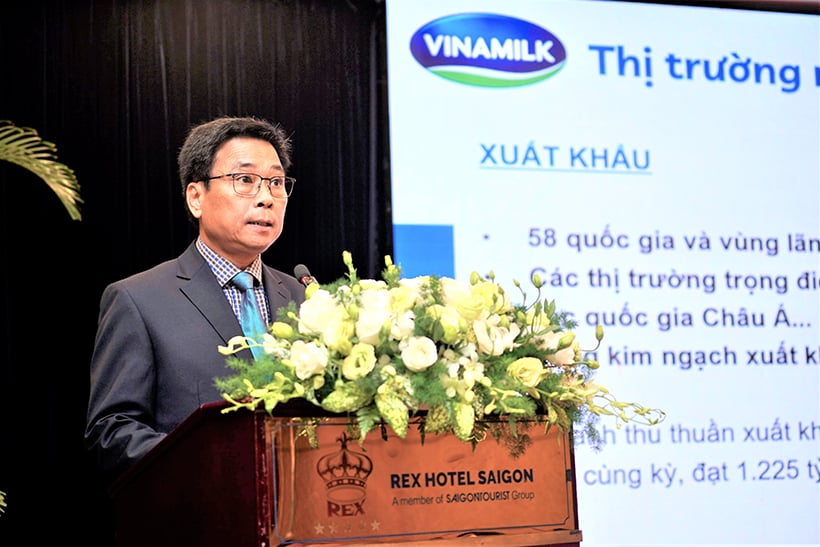
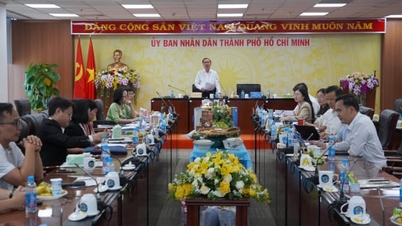
Mr. Le Hoang Minh, Director of Production at Vinamilk, presented his paper at the forum.
Sustainable development - a strategic goal
Vinamilk is currently among the top 36 largest dairy companies in the world by revenue (revenue in 2022: over 60,000 billion VND). The company currently manages 15 farms and 17 factories domestically and internationally, as well as 13 subsidiaries, joint ventures, and affiliated companies domestically and internationally. In Vietnam alone, Vinamilk's system of factories and farms can be considered the largest in the dairy industry.
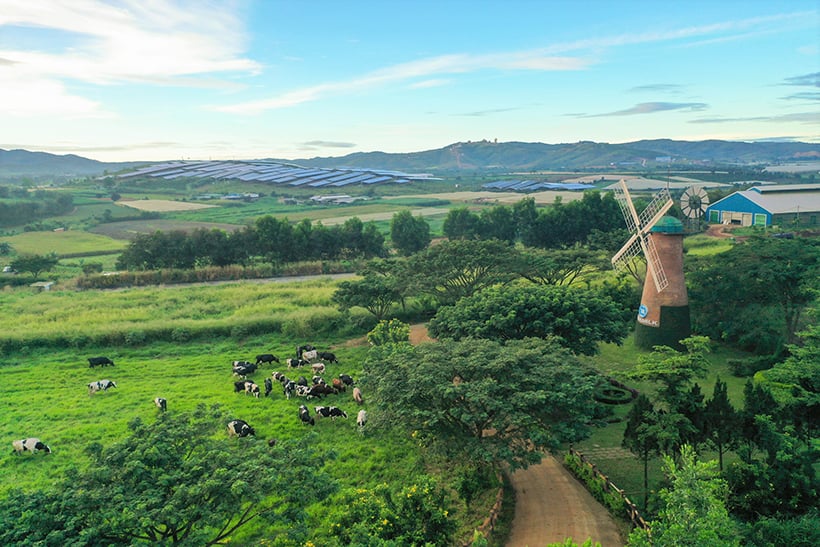
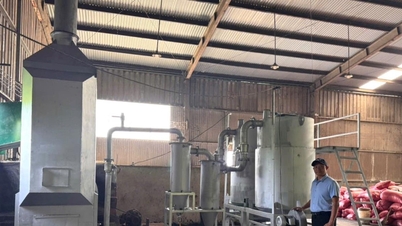
Vinamilk's farms all utilize solar energy and biogas systems to transform cattle waste into resources.
Vinamilk's operations in the dairy farming and production industry, and its commitment to sustainable development, are defined around three main pillars: Nature, People, and Products.
Mr. Le Hoang Minh further shared that promoting the application of technology, implementing international standards, increasing the use of green energy, and promoting the circular economy are also among the four key priorities in Vinamilk's five-year strategy (2022-2026). Vinamilk is known for its early awareness and implementation of sustainable development programs. Since 2012, it has been one of the few domestic enterprises to publish a Sustainable Development Report referencing the Global Sustainable Development Reporting Standards (GRI) and the United Nations Sustainable Development Goals (SDGs). This report is published voluntarily, independently, and audited by a leading global auditing firm to ensure transparency, clarity, and completeness.
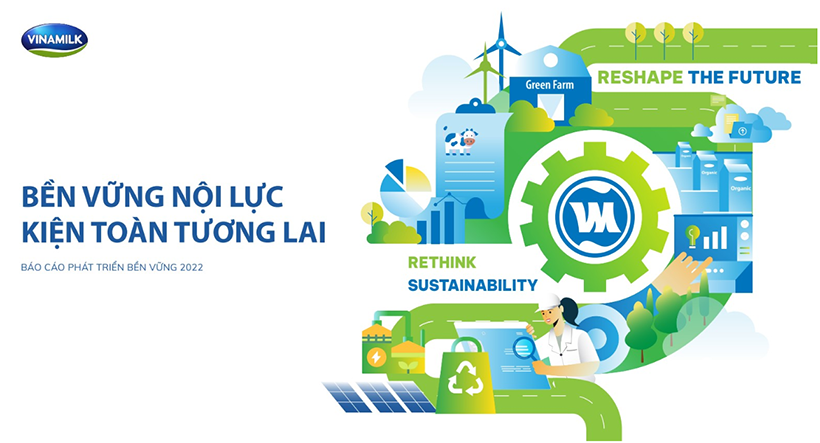
Vinamilk's sustainability report has won numerous awards for many consecutive years.
Minimize your carbon footprint, aiming for Net Zero.
Among the 11 key areas that Vinamilk plans to invest in for sustainable development, greenhouse gas emission management is a priority. This is clearly demonstrated by Vinamilk's recent announcement of its roadmap towards Net Zero by 2050 and the first factories and farms achieving carbon neutrality according to the international standard PAS 2060:2014.
Vinamilk Nghe An Dairy Factory and Vinamilk Nghe An Dairy Farm are the first two units to achieve carbon neutrality according to PAS 2060:2014 standards, with over 17,560 tons of CO2 absorbed. This result comes from a "dual action" of reducing emissions in production and livestock farming while maintaining green spaces to absorb greenhouse gases over the past several years.
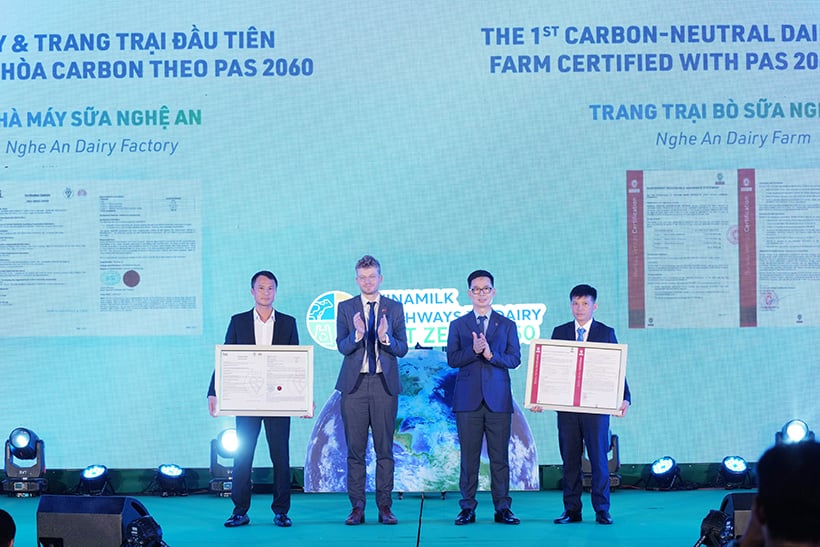
Vinamilk receives certification for its carbon-neutral factories and farms according to PAS 2060:2014 standards.
Previously, Vinamilk was the first Vietnamese dairy company to participate in Pathways to Dairy Net Zero (a global initiative for the dairy industry on Net Zero) and the first dairy company in Asia to collaborate with the Dairy Sustainable Development Framework (DSF) to conduct an assessment program to identify key aspects of sustainable development at Vinamilk in particular and the Vietnamese dairy industry in general.
With a specific roadmap of reducing greenhouse gas emissions by 15% by 2027, 55% by 2035, and achieving Net Zero by 2050, Vinamilk focuses on four aspects: Sustainable livestock farming, Green production, Environmentally friendly logistics, and Sustainable consumption.
Vinamilk's leaders cited examples such as the application of biogas systems to transform waste into resources (fertilizer, water, gas, etc.), farms cultivated 100% organically, 70% of farmland covered in greenery, 87% of energy from biogas and CNG replacing energy from fossil fuels; and 15% - 20% of electricity used is generated from solar energy. Vinamilk also invests in energy-saving technologies such as autonomous robots and heat recovery and reuse systems.
Following the success of the "One Million Green Trees for Vietnam" program (2012-2020), Vinamilk has also collaborated with the Natural Resources and Environment Newspaper to implement a 5-year (2023-2027) Net Zero Tree Planting Project with the goal of increasing green cover nationwide, contributing to reducing the impact of climate change, and creating "Net Zero Forests" in the future. "This year, we will plant more mangrove forests in Ca Mau, a type of forest with high CO2 absorption capacity and helping to mitigate many other negative effects of climate change," Mr. Minh added.

Vinamilk and the Ministry of Natural Resources and Environment launched the project in Me Linh district (Hanoi) in February 2023.
The carbon footprint is the total amount and level of greenhouse gas emissions resulting from the production and use of products or services by humans, directly or indirectly. |
PV
Source


![[Photo] Prime Minister Pham Minh Chinh attends the Conference on the Implementation of Tasks for 2026 of the Industry and Trade Sector](/_next/image?url=https%3A%2F%2Fvphoto.vietnam.vn%2Fthumb%2F1200x675%2Fvietnam%2Fresource%2FIMAGE%2F2025%2F12%2F19%2F1766159500458_ndo_br_shared31-jpg.webp&w=3840&q=75)
































































Comment (0)