

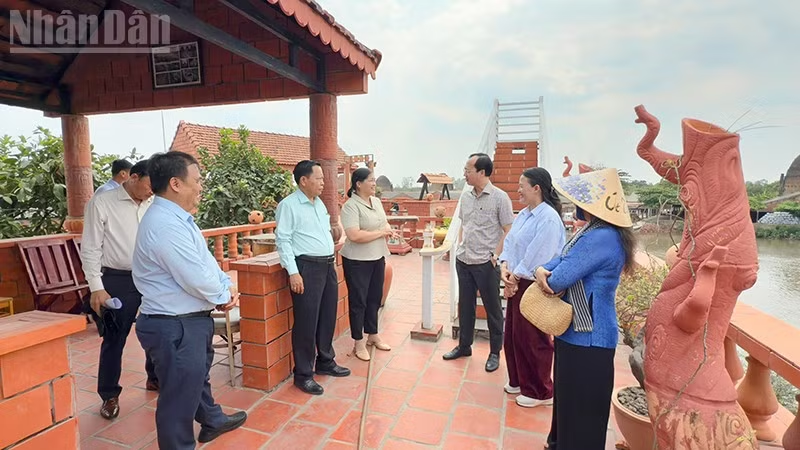
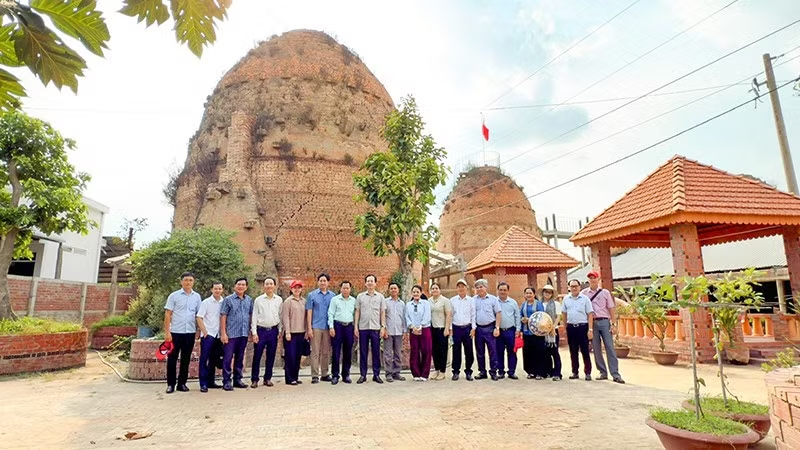
Recently, Comrade Tran Tri Quang, Deputy Secretary of the Provincial Party Committee and Chairman of the People's Committee of Vinh Long province, along with a delegation, conducted a field survey at the Mang Thit brick and pottery kiln area in Nhon Phu commune, Vinh Long province.
This was not just a routine progress check, but also demonstrated the high level of political determination of the provincial leaders in realizing the "Mang Thít Contemporary Heritage" project.
Insights from field surveys
Following the survey, Chairman of the People's Committee of Vinh Long province, Tran Tri Quang, highly appreciated the enormous potential of this traditional craft village.
The comrade noted that, although the province has a master plan, the actual implementation progress is still slow. The survey aims to accurately assess the situation of conservation and promotion of the values of this area. From there, decisive directives will be issued to accelerate progress and soon make Mang Thít a bright spot on the tourism map.
Nhon Phu commune is considered the "heart" of the heritage area, with a core zone planning area of approximately 347 hectares, including the hamlets of My Dien, Phu Hoa, Phu Quoi, Phu Thuan A, and Cai Can. This is where the highest concentration of brick kilns is found, and where the most traditional architecture is still preserved intact.
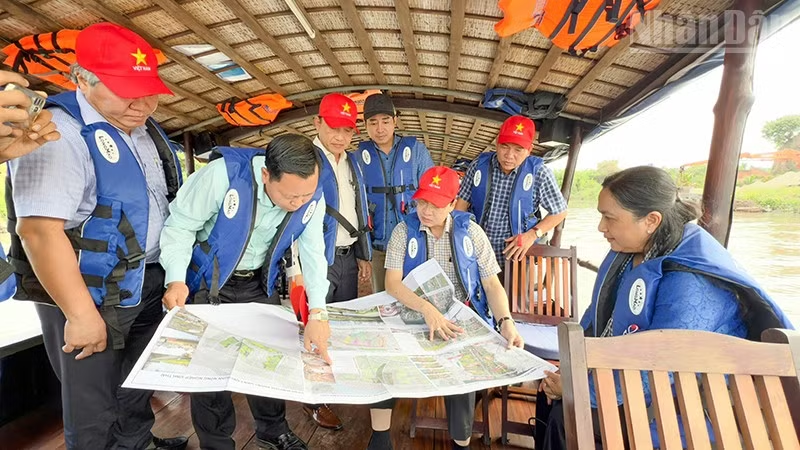
Reporting to provincial leaders, the Party Secretary of Nhon Phu commune, Nguyen Huynh Thu, stated that the core area of Nhon Phu commune alone has 213 brick kilns. Among them, the most distinctive feature is the 205 traditional round kilns – "architectural structures" made of fired clay in the shape of pyramids, a testament to the skillful hands and creativity of Vinh Long artisans over many generations.
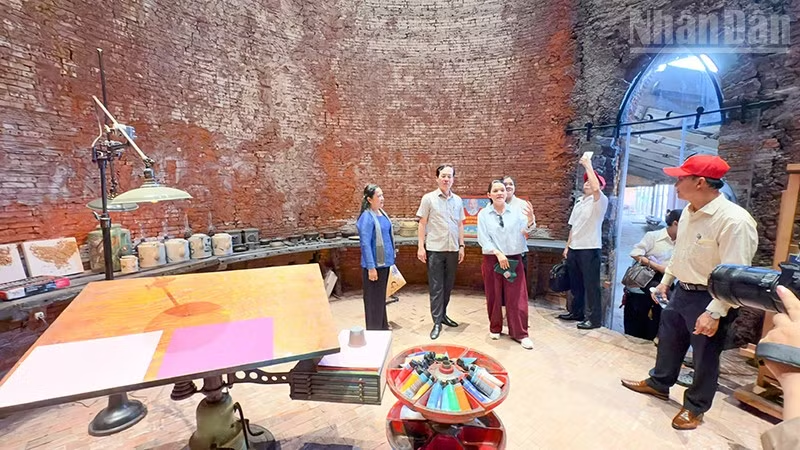
In addition, there are other types of kilns here, such as continuous kilns and Hoffman kilns, creating a "living museum" of ceramic brick firing technology. The entire Mang Thít Contemporary Heritage project covers an area of approximately 3,060 hectares, spanning four communes, with the goal of forming a sustainable landscape-heritage-service ecosystem.
When the people are the subjects of conservation and innovation.
The most remarkable aspect of the village's revival is the shift in awareness and the proactive creativity of the local community. Instead of demolishing old kilns to clear land, people have shown a strong sense of responsibility in preserving this valuable resource.
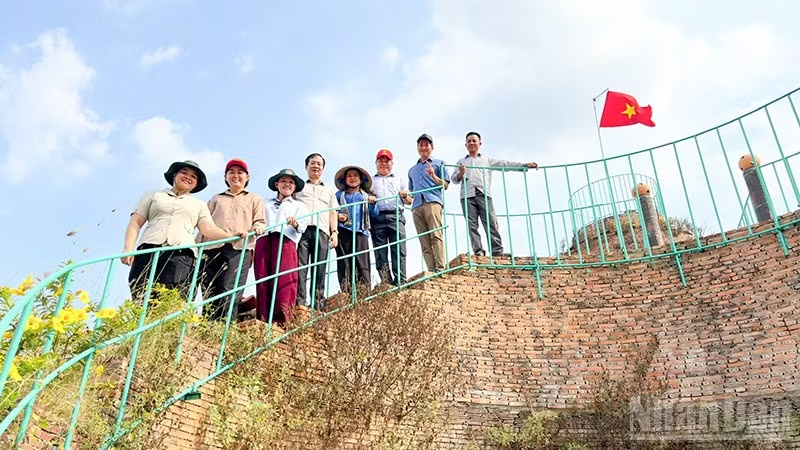
In Nhon Phu commune, many brick kiln owners and businesses have boldly invested in transforming old, moss-covered kilns into unique art and service spaces. Many old kiln openings have been renovated into stages for performing music, dance, and traditional Southern Vietnamese opera, creating a one-of-a-kind musical experience.

In particular, the kiln owners have cleverly designed a system of staircases leading to the top of the kilns, allowing visitors to stand high above and admire the panoramic view of the "red kingdom" with its thousands of undulating domes and the picturesque, peaceful Thầy Cay canal.
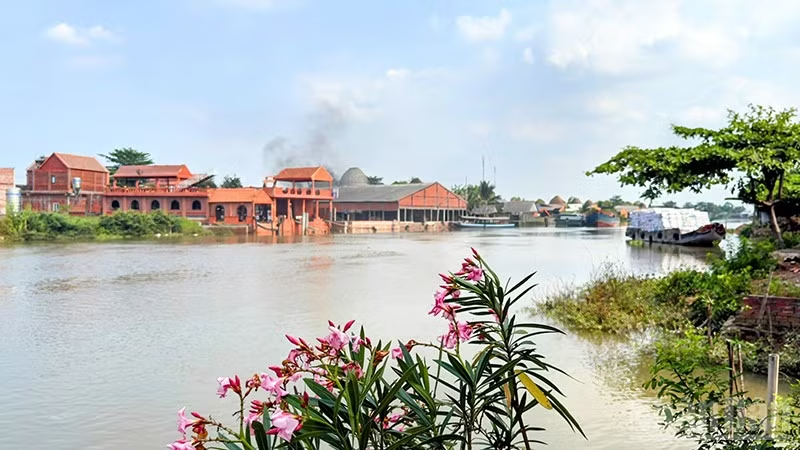
Colorful cafes adorned with bricks and ceramics have sprung up, where visitors can sip tea while feeling the breath of history and the tranquility of the countryside. These community initiatives have contributed to a significant spread, attracting a large number of tourists to visit and experience the area, especially after the province organized the Red Brick and Ceramic Festival in 2024.
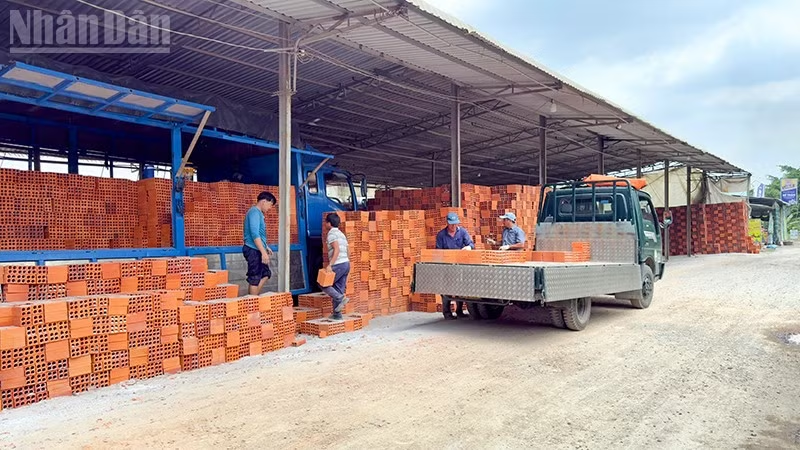
To gain public support, Vinh Long province has issued specific support policies. Specifically, the former Mang Thit district previously provided conservation support to 363 households with 647 brick kilns, totaling over 9 billion VND. In the core area of Nhon Phu commune, 205 out of 213 kilns have received conservation funding.
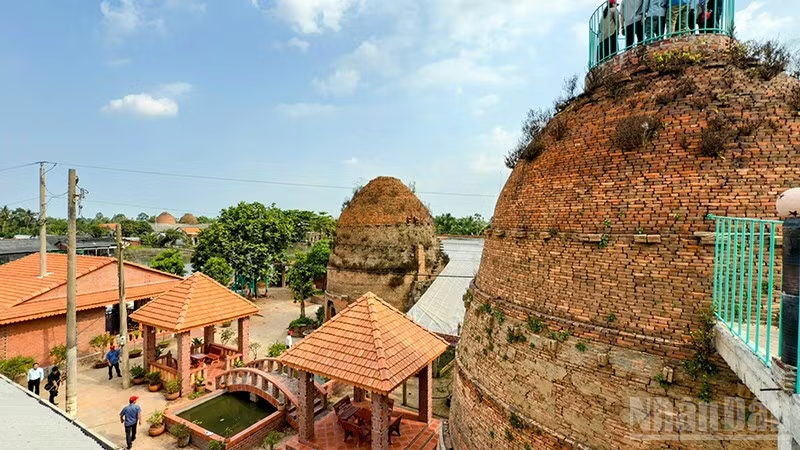
However, during the implementation process, Nhon Phu commune also reported objective difficulties. The main road leading to the core area has seriously deteriorated, causing difficulties for tourists' travel. The local authorities have proposed including it in the public investment list for the 2026-2030 period. The leaders of Nhon Phu commune hope that investors will accelerate the progress of implementing the functional zones to soon have a basis for attracting investment and guiding people to develop professional tourism products.
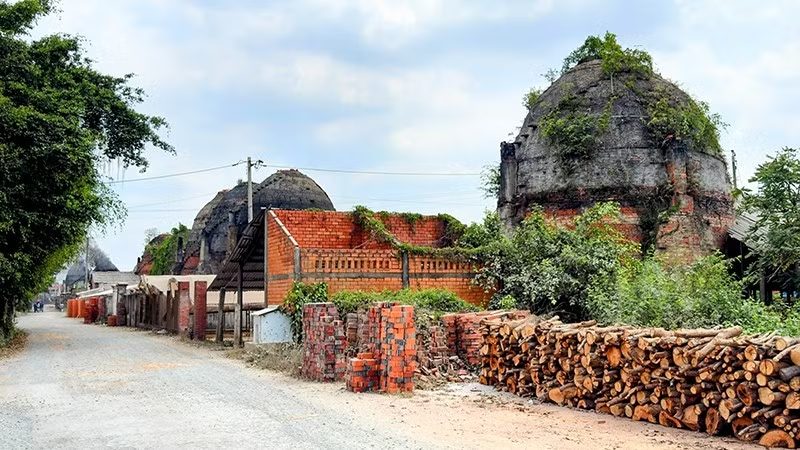
The leaders of Vinh Long province have set a goal: not only to preserve but also to develop this craft village into a diverse service ecosystem.
According to the planning of the Vinh Long Provincial Civil and Industrial Project Management Board, this area will be divided into 9 functional zones, ranging from ecological resorts and rural residential areas combined with services, to agricultural areas associated with traditional craft villages.
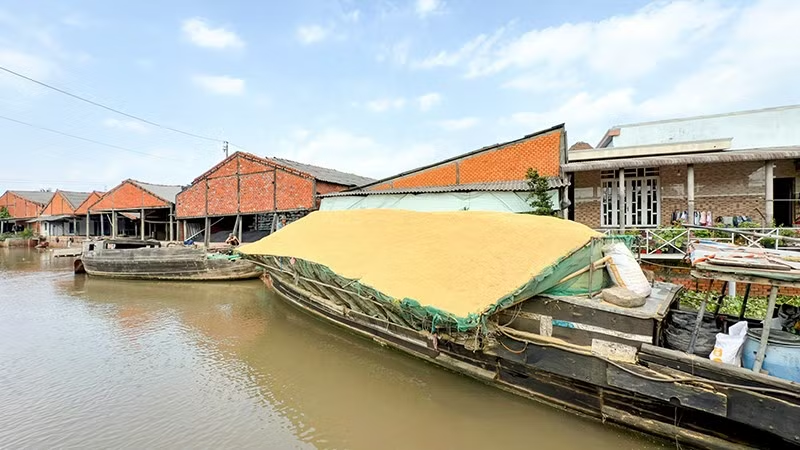
In the near future, Nhon Phu will develop ceramic museums, tourist waterways, riverside squares, and pedestrian streets. In particular, the province aims to strongly develop its night-time economy with vibrant cultural and culinary festivals, reflecting both regional and international cultural identities.
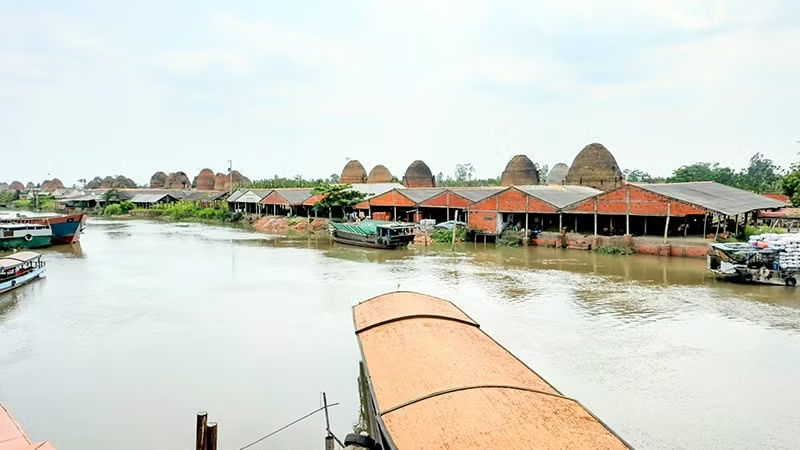
Chairman of the People's Committee of Vinh Long province, Tran Tri Quang, affirmed that the province will focus all resources and accelerate progress to preserve this valuable resource, transforming the Mang Thit brick and pottery village into a high-value tourist destination of national significance. The combination of rich history, unique architecture, and the continuous creativity of the people is the key to making this "red kingdom" shine brighter than ever before.
Source: https://nhandan.vn/vinh-long-danh-thuc-vuong-quoc-do-gach-gom-post962380.html
![[Photo] National Assembly Chairman Tran Thanh Man working with the Standing Committee of the Law and Justice Committee](https://vphoto.vietnam.vn/thumb/1200x675/vietnam/resource/IMAGE/2026/05/21/1779378929214_ndo_br_1-4610-jpg.webp)
![[Photo] General Secretary and President To Lam presides over a working session with the Central Policy and Strategy Committee on the development of the materials industry.](https://vphoto.vietnam.vn/thumb/1200x675/vietnam/resource/IMAGE/2026/05/21/1779359935432_a3-bnd-3129-1412-jpg.webp)








![[Video] Some solutions for saving electricity during hot weather](https://vphoto.vietnam.vn/thumb/402x226/vietnam/resource/IMAGE/2026/05/22/1779408223092_dung00-00-12-14still001-png.webp)















































Comment (0)