

Some businesses have indicated that they may need to increase rice imports from neighboring countries to fulfill export orders, especially for the Indonesian market.
ST rice varieties see sharp price increase; Vietnam needs to increase imports.
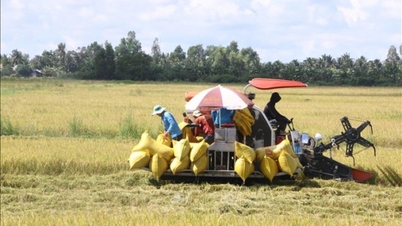
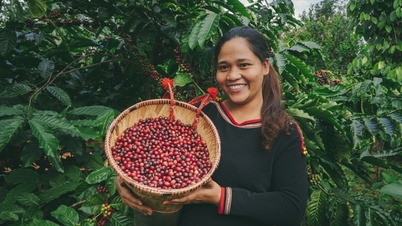
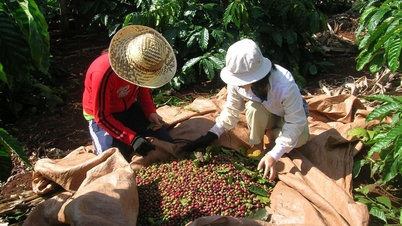
In the Mekong Delta, farmers are currently rushing to harvest the late summer-autumn rice crop, but heavy rains are making harvesting difficult and resulting in lower rice quality. Consequently, rice prices have fluctuated, with some varieties experiencing price increases while others have decreased.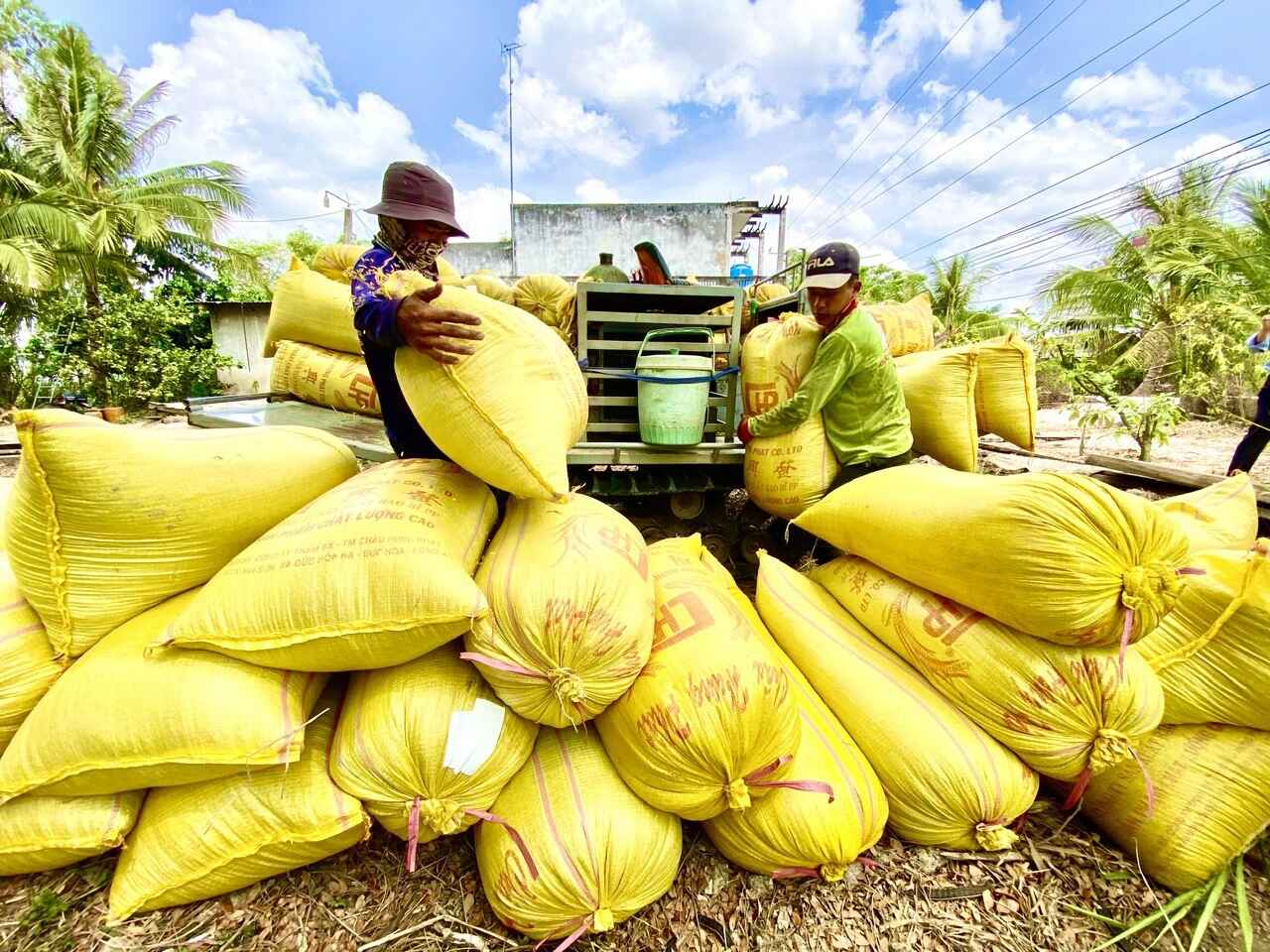
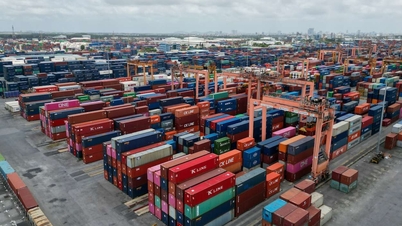
Vietnam may need to import rice to meet export demands in the final months of the year.
Photo: Cong Han
Why has the price of rice dropped?
Regarding India, the world's largest supplier of non-basmati white rice – which is reportedly considering lifting its ban on exports that has lasted over a year – Mr. Nguyen Van Thanh analyzed: These speculations have appeared many times, but so far nothing has happened. Even if it did happen, it wouldn't significantly affect the Vietnamese market, because the main market for Vietnamese rice is the Philippines. There are three main Vietnamese rice varieties that they highly favor: OM5451, OM18, and DT8; these three varieties account for 80-90% of the Philippine market; even Thai rice cannot compete. After harvesting, it only takes 15-20 days for Vietnamese rice to reach the dinner tables of Filipinos – they appreciate that freshness. Vietnam has a geographical advantage, so short transportation times and low costs are advantages that no other country possesses. In the high-end segment, such as the ST variety, Vietnam is exporting very well to China, the Middle East, and the EU. Meanwhile, Indian non-basmati white rice is in the Indonesian market segment (even in this segment, Vietnamese rice is of higher quality). Currently, Vietnam's rice supply is limited, so the impact is negligible. Returning from two international rice conferences in Thailand and Indonesia, Ms. Pham Mai Huong, co-founder of the international rice market website SSRicenews, analyzed: Rice demand remains high, especially in countries like Indonesia and the Philippines. However, the recent downward trend in rice prices is due to the impact of the USD exchange rate on the domestic currencies of many rice-exporting countries. Regarding the market, China continues its policy of restricting rice imports. This is causing Myanmar's rice reserves to increase rapidly as the country prepares for its next harvest in November. Myanmar has historically relied on cross-border rice trade with China, while international trade and logistics are underdeveloped and costly. Therefore, when China restricted imports, Myanmar faced pressure and actively sought outlets by proactively lowering prices. This led to a downturn in the overall market. According to Ms. Huong, in mid-September, India abandoned its policy of setting a floor price for basmati rice exports. This is one of the moves to ease the country's rice export restrictions. Previously, India allowed private ethanol producers to participate in tenders for raw rice. In this segment, Pakistan was the country most directly and significantly affected; Vietnamese rice was not included in this segment. As for non-basmati white rice, objective data shows that India is in a position to reopen exports, and it will only be a matter of time. However, the issue India is considering concerns the agencies and state-owned enterprises implementing the policy of providing cheap rice to the poor. They are looking for solutions to avoid these policies overlapping and negatively impacting each other, preventing subsidized rice from reaching the poor and instead selling it abroad.In the first six months, Vietnam imported $670 million worth of rice, an increase of 27%.
According to a report by the Ministry of Agriculture and Rural Development, in the first six months of 2024, Vietnam spent approximately $670 million on rice imports, a 27% increase compared to the same period last year. In 2023, Vietnam's rice imports totaled $860 million; the main sources of supply were Cambodia and India. Vietnam primarily imports rice for re-export and to meet the needs of processing rice-based products.Vietnam continues to win rice tenders in the Indonesian market.
In September, Indonesia tendered a record-breaking 450,000 tons of rice, divided into 15 lots. A Vietnamese company won two lots totaling nearly 60,000 tons at a winning bid of US$548/ton (C&F - delivery at Indonesian ports). The lowest price in this tender was offered by a Myanmar company at US$547/ton. Thailand won the bid with the highest price of US$574/ton for one lot, equivalent to 31,800 tons. Pakistan won the largest quantity of rice with eight lots, totaling approximately 240,000 tons, with winning bids ranging from US$555 to US$567.5/ton. According to the Indonesian Central Statistics Agency, in the first eight months of 2024, the country imported 3.05 million tons of rice, valued at US$1.9 billion. Rice imports increased by 121 percent compared to the same period last year.Thanhnien.vn
Source: https://thanhnien.vn/vn-co-kha-nang-tang-nhap-khau-gao-185240925210054467.htm


![[Photo] Prime Minister Pham Minh Chinh attends the Conference on the Implementation of Tasks for 2026 of the Industry and Trade Sector](/_next/image?url=https%3A%2F%2Fvphoto.vietnam.vn%2Fthumb%2F1200x675%2Fvietnam%2Fresource%2FIMAGE%2F2025%2F12%2F19%2F1766159500458_ndo_br_shared31-jpg.webp&w=3840&q=75)

























































































Comment (0)