

 |
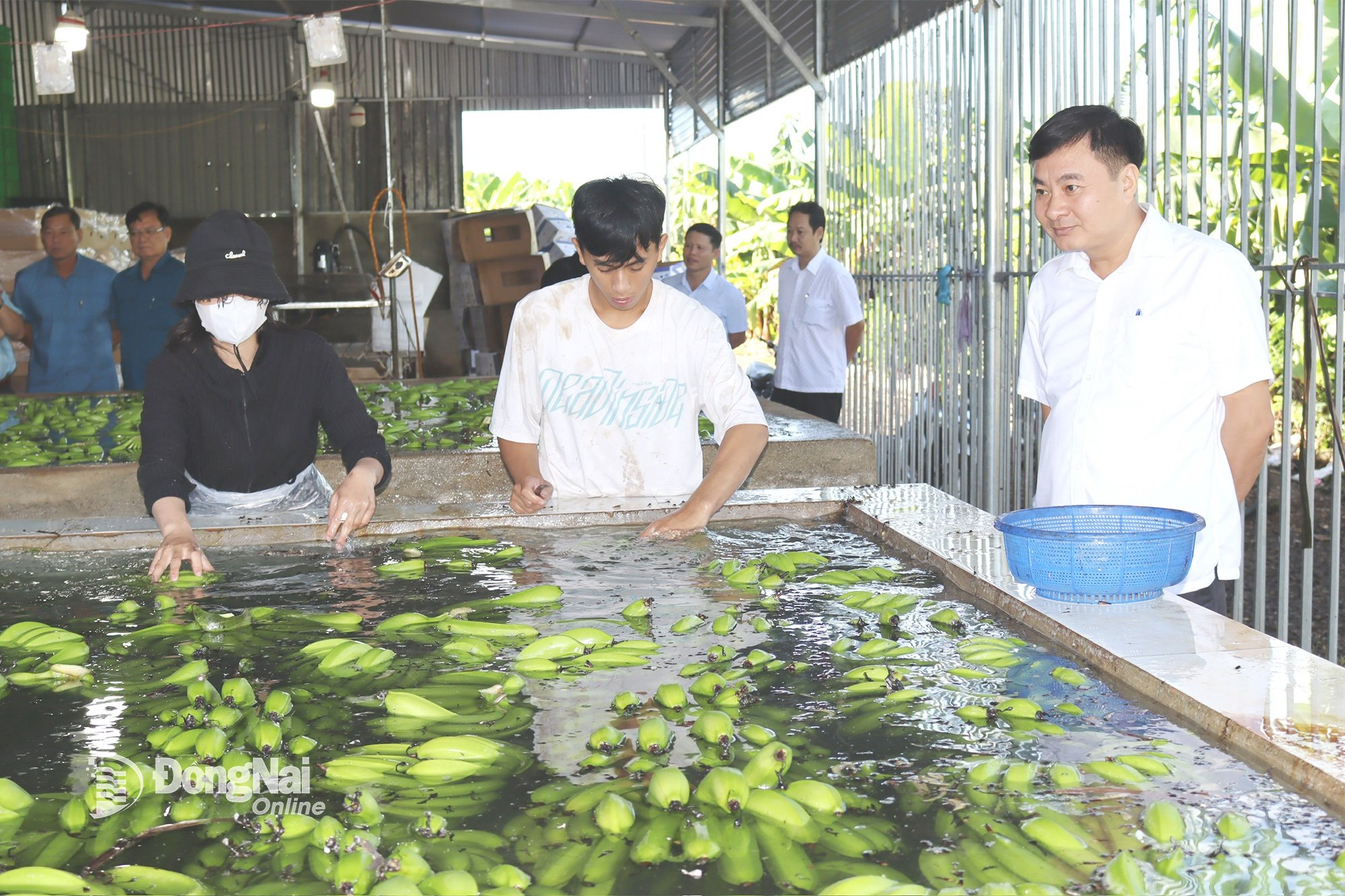
| Packaging bananas for export at Thanh Binh Cooperative, Bau Ham commune. Photo: HL |
For many years, Dong Nai , the "banana capital" of the Southeast region, has been renowned for its banana cultivation and export. However, sustainable banana development remains a challenge for both farmers and local authorities, especially as export markets increasingly tighten product quality standards.
Large banana growing region
According to the Economic Department of Bau Ham commune, there are approximately 5,400 hectares of land planted with bananas in the commune. Bau Ham is currently the "banana capital" of Trang Bom district and Dong Nai province in the past. Recently, the area planted with bananas, especially tissue-cultured bananas, has been continuously increasing. This is because tissue-cultured bananas have many advantages over other crops, including a faster time from planting to harvesting, only about 8 months. If this crop is unsuitable or prices fall too low, it can easily be switched to other crops. Bananas are mainly exported to China, ASEAN, and some other markets, and when prices are good, they bring significant income to the people.
In Bau Ham commune, there have also been large-scale banana plantation models and projects. The former Trang Bom district and the current Bau Ham commune have actively supported farmers in crop conversion; encouraged farmers to specialize in agricultural production and adhere to clean production processes; and organized training courses on planting, caring for, and controlling diseases...
According to Le Huy Quang, Deputy Head of the Economic Department of Bau Ham commune, to facilitate the planting and consumption of bananas in the raw material area, the locality will strive to invest in infrastructure, promote production and transportation of agricultural products; especially calling on businesses and cooperatives to join hands in investing in large-scale banana plantations.
Locally, there are also units and cooperatives that have partnered with farmers to create large-scale banana raw material areas. For example, Thanh Binh Cooperative has built a raw material area of over 320 hectares thanks to its collaboration with farmers in production. Annually, this cooperative exports more than 6,000 tons of fresh bananas to markets in the Middle East, ASEAN, and other regions.
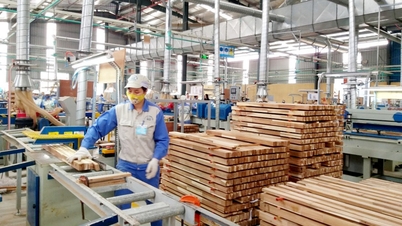
Ly Minh Hung, Director of Thanh Binh Cooperative, shared: In addition to exporting fresh bananas, the cooperative has invested in a preliminary processing and processing facility, a banana harvesting line, machines for processing dried agricultural products, machines for processing various types of agricultural products into chewy textures, and a cold storage system to produce processed banana products, thereby increasing the value of the product. Waste materials such as banana peels, fibers, and dried banana strands are utilized as raw materials to produce environmentally friendly consumer products and handicrafts, which sell well in both domestic and export markets.
To achieve development, we must have sustainable production.
In reality, agricultural production is always uncertain, and banana cultivation is no exception. Recently, in Bau Ham commune, there has been a situation where bananas ripened but could not be sold due to the purchase price being too low compared to the previous season, leaving farmers unable to cover their production costs. Farmers hope that businesses will support them in finding markets and purchasing their bananas; at the same time, they hope for the development of long-term purchasing plans to avoid being exploited by traders who force down prices.
In late August 2025, Bau Ham commune, in coordination with the Department of Agriculture and Environment, organized a meeting with banana farmers in the commune to discuss the establishment of a concentrated raw material area linked to the development of an export-oriented banana industry chain. To foster closer cooperation, businesses expressed their desire for farmers to produce according to the plan, ensuring compliance with technical standards to improve product quality. Specifically, bananas need to meet requirements regarding appearance, be disease-free, free from pests and insects, and harvested at the correct age and size as stipulated. Importantly, farmers need to sign contracts and commit to responsibility for their products to ensure stable purchase prices.
Bau Ham commune organized field trips to hamlets within its area to survey and assess the production and consumption of bananas in banana-growing areas that have been granted planting area codes and export packaging facility codes. This activity aims to provide the locality with a comprehensive overview to guide future development.
According to Mr. Ly Minh Hung, for sustainable development, Thanh Binh Cooperative must always closely monitor the market, thereby formulating operational directions and promoting production and exports. Only then can it cope with unpredictable fluctuations. At the same time, to proactively meet market demands, the cooperative will also thoroughly research partners and customers to build its brand.
Similarly, Dang Quy Nhan, General Director of Mekong Production and Service Trading Joint Stock Company (Ho Chi Minh City), commented: For agricultural products, preservation is very important. The company has been building linkages and banana raw material areas in Dong Nai for export and has also tried to invest in initial preservation. In addition, sustainable development must aim for green and safe production. However, this is a strategic, long-term issue, and it is very difficult to implement if only individual businesses act alone. Therefore, a synchronized effort from both the people and local authorities is needed.
King
Source: https://baodongnai.com.vn/kinh-te/202509/vung-trong-chuoi-lon-nhat-dong-nai-fe31b3e/











































































Comment (0)