

Everywhere there is a shortage of teachers to teach the new subject.
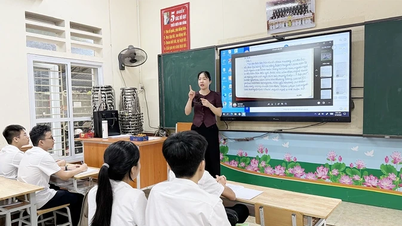
According to statistics from the Ministry of Education and Training, the country still lacks 118,253 teachers. This situation has not only failed to improve but has worsened, increasing by 11,308 compared to the 2021-2022 school year. In reality, the teacher shortage is occurring in almost all localities nationwide, especially for teachers who meet the requirements of the reformed general education curriculum.
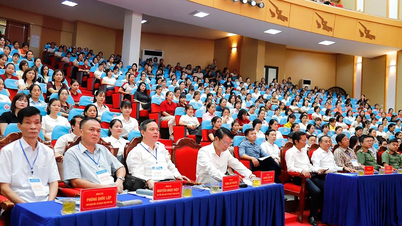
Mr. Tran The Cuong, Director of the Hanoi Department of Education and Training, stated that Hanoi has 2,845 schools with over 2.3 million students. The number of schools continues to increase year by year, with an average of 30-50 new schools being built annually. However, since 2015, the number of civil servants allocated to the education sector has remained largely unchanged. In 2022, the total number of staff citywide only met 92% of the staffing needs of public schools. Currently, Hanoi is short of approximately 10,000 teachers at all levels. Therefore, Mr. Cuong proposed that the Ministry of Education and Training continue to consult with the Ministry of Interior and submit a proposal to the Government to allocate additional staff.
Mr. Tran Van Thuc, Director of the Department of Education and Training of Thanh Hoa province , said that the entire province is short of more than 10,250 teachers, one of the most severe shortages in the country. Specifically, some compulsory subjects under the new curriculum lack 690 teachers for computer science, 350 for English, and 280 for fine arts. This significantly impacts the quality of teaching and learning.
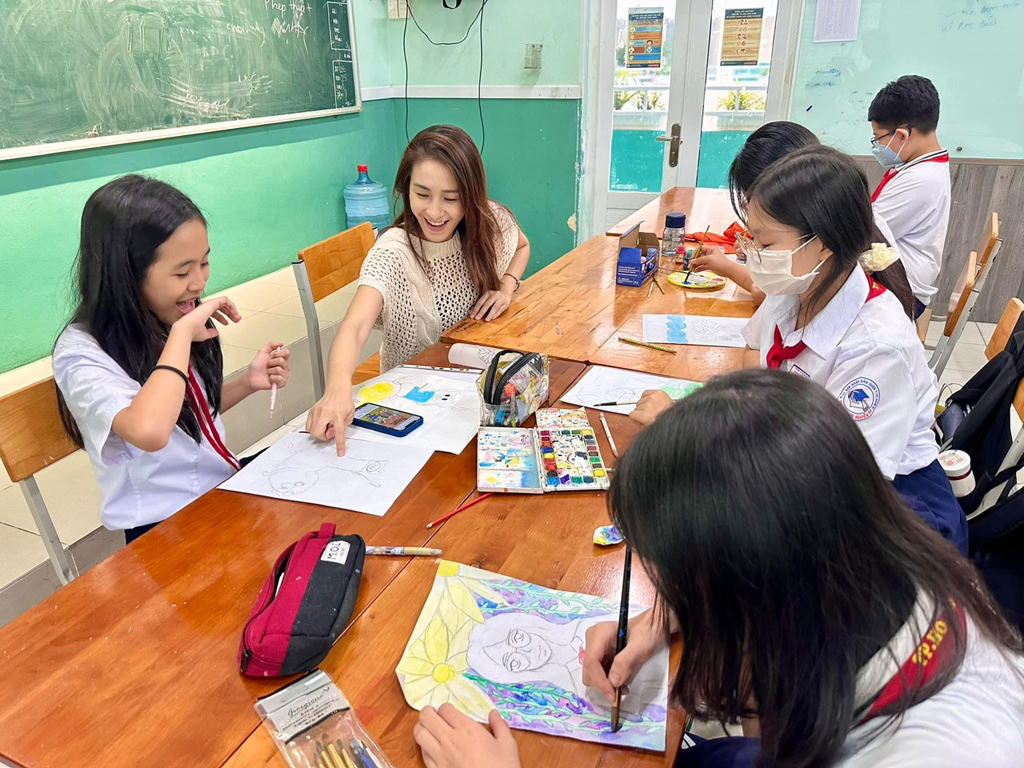
Every locality is short of teachers for art and music.
According to Mr. Thuc, the reasons are that the number of teaching staff allocated to the province (nearly 1,700) is lower than the standard, while 10% of the staff must be cut annually according to Resolution 19 of the Central Committee. In addition, the new general education program (2018) has many changes in the subject structure, resulting in some subjects having an excess of teachers while others have a shortage. Prior to the 2021-2022 school year, English and computer science were elective subjects in primary school; music and fine arts were not included in the high school curriculum. Under the new program, English and computer science become compulsory subjects from grade 3; music and fine arts are included as elective subjects from grade 10, making the preparation of the teaching staff more difficult.
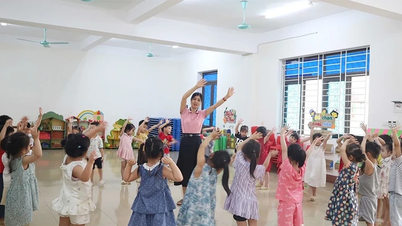
In Hai Duong province, in 2023, the education sector was allocated a staffing quota of over 27,900 teachers. Currently, the province has over 22,600 teachers and is short of more than 1,400. The greatest shortage of teachers is in preschool education and in some specialized subjects at the primary school level such as information technology and fine arts.
Mr. Thai Van Tai, Director of the Primary Education Department (Ministry of Education and Training), said that the 2018 general education program includes several new subjects at the primary level and requires teaching two sessions per day, so preparation in terms of teachers, education management staff, and facilities still faces many difficulties.
IF THE EDUCATION AND TRAINING SECTOR DOESN'T YET "UNDERSTAND" THE HUMAN INDUSTRY, IT WILL REMAIN DIFFICULT.
According to Mr. Vu Minh Duc, Director of the Department of Teachers and Educational Management Staff (Ministry of Education and Training), although there is a significant shortage of teachers, as of the end of the 2022-2023 school year, the number of allocated positions that have not yet been filled is more than 74,100 teachers.
Explaining the failure to recruit enough teachers, the provinces stated that the policies on employing and rewarding teachers still have some shortcomings, failing to create the material and spiritual incentives to encourage and attract them. The decentralization of teacher recruitment at the local level is also inadequate, leading to localized teacher shortages and surpluses. The specialized agencies, such as the Departments and Offices of Education and Training, are not the primary recruitment units, thus lacking the autonomy to regulate the number and structure of teachers by subject and grade level, and therefore cannot proactively manage teacher shortages and surpluses.
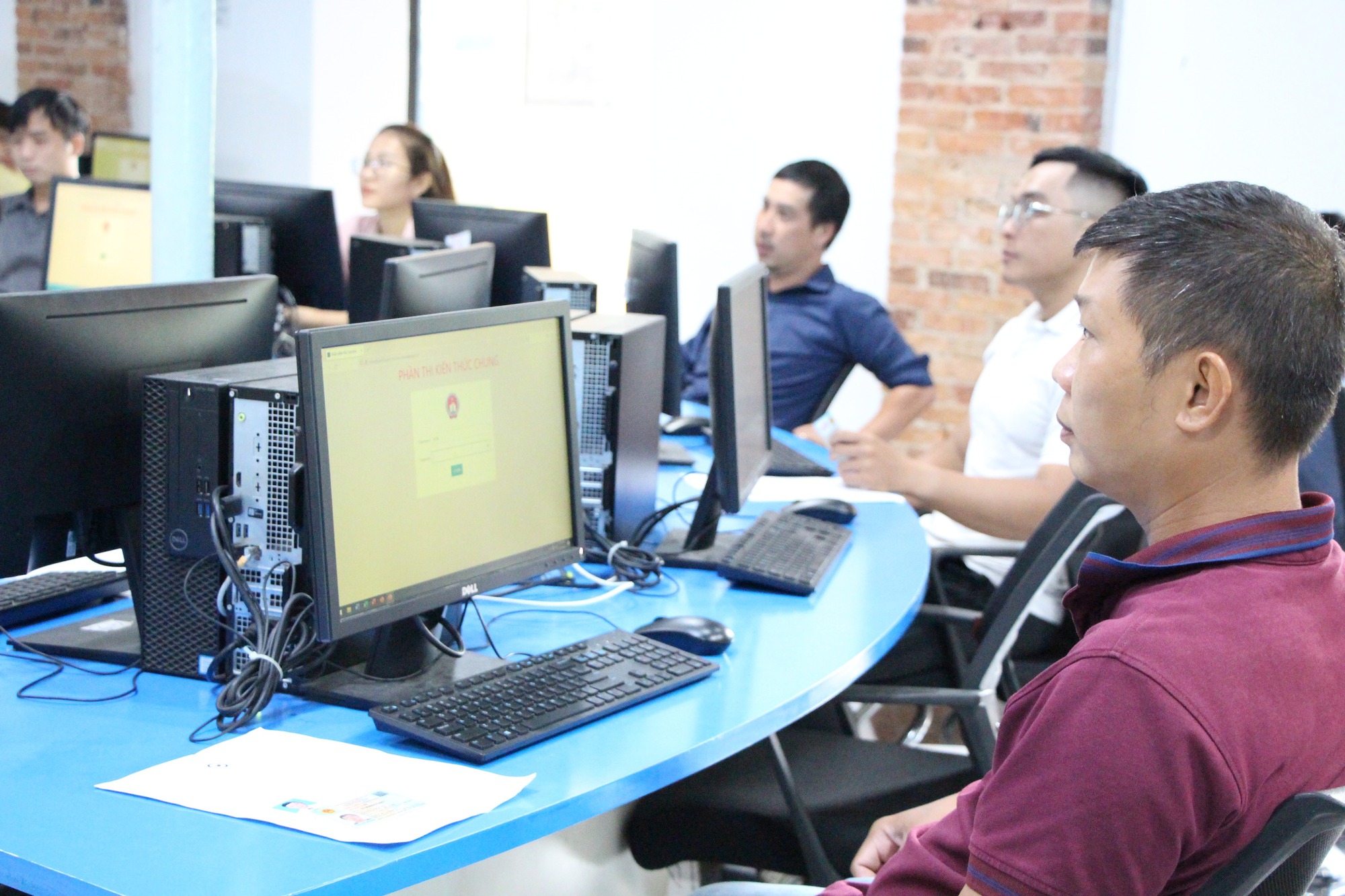
Candidates applying for teacher positions in Ho Chi Minh City will take a general knowledge test in mid-July.
The Director of the Thanh Hoa Department of Education and Training, Tran Van Thuc, also pointed out that when reforming general education, the demands on teachers are very high, the workload is heavier, and the pressure is greater, but the mechanisms and policies remain unchanged. For example, in primary school, the old curriculum required teaching one session per day, while the new curriculum requires two sessions per day, but there is no increase in benefits for teachers. Salaries do not increase, and extra tutoring is strictly managed. The workload is enormous, but the role and function of the Department of Education and Training in personnel management have not been adequately demonstrated.
"As long as the education sector cannot manage its own staff, it will not be stable. For example, our Department of Education and Training manages professional matters and personnel, but we don't know how the Department of Finance allocates funding to high schools. The same applies to personnel issues; the Department of Education and Training doesn't have control over how its staff is deployed, appointed, or rotated."
"I suggest that the Ministry of Education and Training should coordinate with the Ministry of Interior to research and advise the Government on how to ensure that the management functions of the education sector are seamlessly integrated from the ministry down to the localities, so that the implementation of the new general education program can be effective," Mr. Thuc emphasized.
Mr. Phan Viet Luong, Vice Chairman of the National Assembly's Committee on Culture and Education, argued that the role and responsibility of the Government in directing and managing the fundamental and comprehensive reform of education and training need to be clearly defined. He pointed out that the Ministry of Education and Training alone, no matter how much effort it puts in, cannot achieve the desired results. Many long-standing difficulties and limitations remain unaddressed, such as the persistent problem of localized shortages and surpluses of teaching staff, which is not a newly emerging issue.
The Department of Teachers and Educational Management proposed several solutions for the upcoming school year, emphasizing the implementation of the Law on Teachers; and the amendment of the circular on job positions and teacher staffing quotas. For localities, it is necessary to develop and implement a plan for the development of the teaching staff; and to review and redistribute teachers among educational institutions. Furthermore, localities need to coordinate the recruitment of all allocated staffing quotas. Along with this, they should develop local policies to attract, recruit, and retain teachers. Localities should establish a mechanism for "ordering" teacher training according to Decree 116/2020/ND-CP; pilot a mechanism for autonomy for educational institutions; and develop non-public education.
We propose a policy for rotating teachers between localities.
The National Assembly Standing Committee's monitoring team on the implementation of Resolution 88 of the National Assembly on reforming the general education curriculum and textbooks also pointed out that inadequacies in the teacher structure lead to localized surpluses and shortages; many localities lack teachers but cannot recruit them. A portion of teachers quit or leave the profession mainly due to inappropriate teacher staffing levels; salaries and allowances, especially for preschool and primary school teachers and newly hired teachers, are very low and disproportionate to the intensity, pressure of work, and training level.
Therefore, the supervisory delegation suggested that the Government implement policies to rotate teachers between localities and educational levels; address the issue of insufficient teacher recruitment according to staffing quotas; redefine teacher staffing levels to suit practical realities and establish a suitable roadmap to achieve regional and global standards. The Government should also promptly develop attractive incentive policies to attract talented teachers…
Source link


![[Image] Checking the security conditions at the exam site, ready for the 10th grade exam.](https://vphoto.vietnam.vn/thumb/1200x675/vietnam/resource/IMAGE/2026/05/28/1779943458889_z7872507660648-d764421a26e8cd7b61d70d142a48a685-jpg.webp)
![[Photo] Opening Ceremony of the National People's Council Conference on the Implementation of Directions and Tasks for the 2026-2031 Term](https://vphoto.vietnam.vn/thumb/1200x675/vietnam/resource/IMAGE/2026/05/28/1779939257690_ndo_br_bnd-1991-jpg.webp)



































































Comment (0)