


Members of the community digital technology group in Ninh Phu village, Da Loc commune, guide residents on using essential applications on mobile phones.
Promoting the role of community digital technology groups.
Recognizing that successful digital transformation must begin at the grassroots level, the province has established community digital technology teams in 100% of villages, hamlets, and neighborhoods. Members of these teams include village officials, Party branch secretaries, heads of mass organizations, youth union members, police officers, and others who are tech-savvy, enthusiastic, and close to the people.
During their operation, community-based digital technology groups have focused on disseminating information and guiding people to install and effectively use essential digital applications such as: the VNeID electronic identification application, online public service portals, cashless payments, applications in the fields of health, education , social insurance, reporting incidents, and receiving information from local authorities. In addition to supporting individuals, these community-based digital technology groups in the province also collect contributions and support funds through bank transfers; and disburse benefits and policies through bank accounts, contributing to transparency and saving time and costs.
Mr. Nguyen Tang Anh (community digital technology team of Ninh Phu village, Da Loc commune) shared: “Initially, people were hesitant to conduct transactions on their phones. We had to guide them step-by-step and remind them about protecting their personal information. When they saw that submitting applications online was quick and easy, without waiting, everyone was excited. To date, the village has installed surveillance cameras in public areas; more than 80% of households have security cameras; nearly 100% of people of smartphone age use smartphones and make online payments for electricity and water bills”...
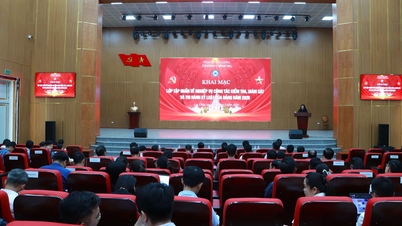
To date, the province has established 4,300 community digital technology groups with nearly 16,000 members who have been actively working alongside authorities at all levels to guide and support people in accessing digital technology in their lives, production, and business. Implementing the "Digital Literacy Movement," the province has organized direct training for 1,250 officials, civil servants, and members of community digital technology groups in the communes of Van Loc, Hoang Hoa, Bim Son, Kim Tan, Trieu Son, Thuong Ninh, Cam Thach, and Xuan Binh, contributing to raising awareness and digital skills and promoting comprehensive digital transformation among the people.
Developing digital habits in rural life
Although many localities in the province still face socio -economic difficulties, digital transformation has initially opened up new opportunities. Some cooperatives and agricultural producers have boldly brought their local specialty products onto e-commerce platforms and promoted them through social media. They have also developed codes for export-oriented crop growing areas, created QR codes, and utilized e-wallets and electronic payments, contributing to expanding product distribution channels and improving economic efficiency, especially for distinctive local products.
Pham Thi Hau, Director of the Happy Life Agricultural and Pharmaceutical Cooperative in Cam Thach commune, said: "Right from its inception, the cooperative has chosen to apply digital technology for marketing and communication, and organize live stream sales on digital platforms such as TikTok, Facebook, and Zalo... By simply watching short videos or checking the QR code on the packaging, customers can understand the production process of the product, thereby building trust with customers."
Along with the development of the digital economy, localities are also actively building digital governments. The digitization of civil registration records, population data, land management, etc., is being implemented synchronously, facilitating the handling of administrative procedures. Citizens can track the status of their applications and receive notifications of results via phone, reducing the need for multiple trips. Community groups on Zalo and Facebook have been established in many villages to promptly disseminate information on policies and guidelines; promote disease prevention and control; and warn against online scams. Information is therefore transmitted quickly, accurately, and saves costs and time spent on meetings. Notably, localities are also focusing on raising public awareness about cybersecurity.
To promote widespread digital transformation in residential areas, telecommunications businesses in the province have invested in building 9,398 mobile base stations, providing mobile coverage to 4,345 out of 4,357 villages and hamlets, achieving 99.72% of villages and hamlets having access to mobile broadband internet services. Communes like Trieu Son and Sam Son ward have pioneered the introduction of AI-powered reception robots into public administrative service centers. These AI robots can communicate in Vietnamese, guide people in obtaining queue numbers, look up information, direct them to application counters, and answer basic questions, making them easy to use for the elderly or those unfamiliar with technology.
When technology becomes widespread in every household, and each citizen becomes a "digital citizen" who knows how to utilize the benefits of digital platforms, it will contribute to improving the quality of life and promoting sustainable socio-economic development.
Text and photos: Le Hoi
Source: https://baothanhhoa.vn/xay-dung-lang-que-so-287989.htm
![[Image] "Journey of Hope" promotes the organ and tissue donation movement in Vietnam.](https://vphoto.vietnam.vn/thumb/1200x675/vietnam/resource/IMAGE/2026/05/20/1779294400833_1-8910-jpg.webp)




























































































Comment (0)