


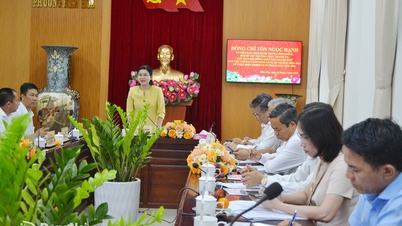
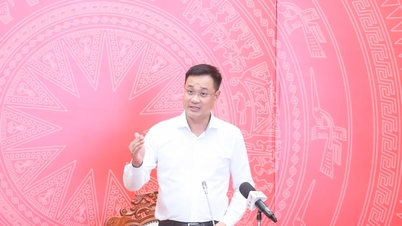
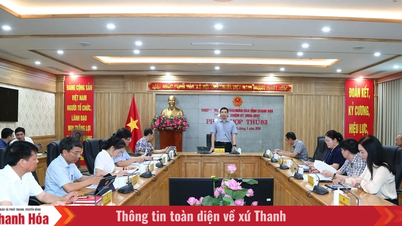
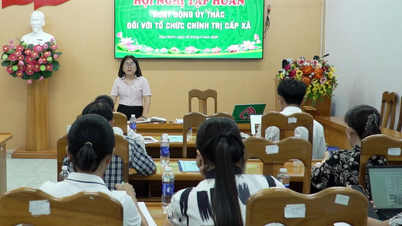
The leaders of Xuan Binh commune disseminated the Resolution of the Commune Party Committee's First Congress on socio -economic development and improving people's lives to the branch secretaries and village heads.
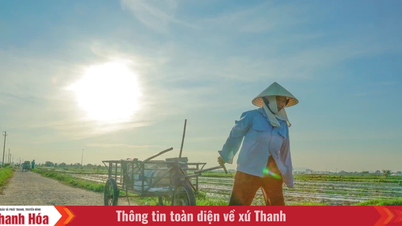
Xuan Binh possesses a large area of agricultural and forestry land, with a mixed hilly and mountainous terrain and a climate suitable for the development of long-term crops, fruit trees, forestry, and livestock farming. However, for a long time, the exploitation of these advantages has lacked coordination, resulting in low added value and failing to create a clear growth impetus.
Facing the reality head-on, the commune's Party Committee has clearly identified that achieving a breakthrough requires reorganizing production. The focus is on promoting land consolidation and concentration; shifting strongly from small-scale to large-scale production, and applying science and technology. The goal is that by 2030, the entire commune will have approximately 800 hectares of concentrated agricultural land, of which more than 260 hectares will utilize high technology; and the value of products per hectare of cultivated land will reach over 108 million VND. These are not merely symbolic figures, but a political commitment linked to the concrete responsibilities of the entire political system.
One notable step is the planning of production areas based on the advantages of each region. Villages such as Xuan Hop, Hung Tien, Xuan Khanh, Thanh Nien, etc., are being oriented towards developing fruit orchards, safe vegetable production, livestock farming, and aquaculture. This planning not only improves land use efficiency but also paves the way for production-consumption linkages, gradually forming agricultural value chains.
Simultaneously, developing livestock farming towards large-scale farms and family farms has been identified as the main direction. Livestock projects that have received investment approval are being facilitated for rapid implementation, linked to disease control and environmental protection. Utilizing the surface area of reservoirs for aquaculture development also opens up new avenues, contributing to the diversification of livelihoods.
Discussing the overall direction, Mr. Mai Cong Hoang, Chairman of the People's Council of Xuan Binh commune, affirmed: "The commune's Party Committee has identified leveraging the advantages of the hilly region as a central focus, but not merely exploiting natural resources. Production must be reorganized towards a modern and sustainable approach. The focus is on land consolidation, large-scale agricultural development, the application of high technology, and linking it with processing and product consumption." Mr. Hoang added: "If the administrative apparatus is not clean and lacks capacity, even with advantages, development is impossible. Therefore, building and reforming the Party, improving the quality of the cadre, especially key officials, is considered crucial. Each official must be a true role model, practice what they preach, and dare to take responsibility."
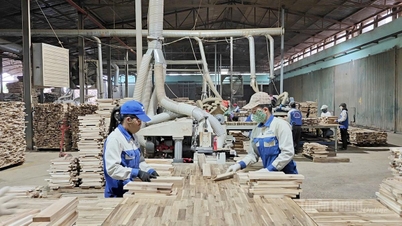
In the overall development strategy, forestry is identified as a long-term pillar. The focus is on developing large timber forests and concentrated raw material forests to serve the processing industry. This is a crucial shift in development thinking – from resource exploitation to resource nurturing, from short-term benefits to sustainable value. Forest management, protection, and fire prevention are tightened to ensure stability for the entire development strategy of the hilly region.
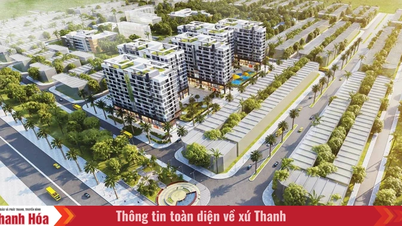
The Party Committee of Xuan Binh commune is focusing on exploiting the advantages of transportation infrastructure, especially the Ho Chi Minh Highway and the Nghi Son - Bai Tranh connecting axis. This is considered a "lever" to attract investment and develop industry and services. The two industrial clusters, Xuan Hoa and Bai Tranh, have been identified as new growth nuclei. Once the infrastructure is completed, these clusters will open up new development opportunities, create jobs, and promote the shift in labor structure.
Furthermore, Xuan Binh aims to develop trade and services in a modern direction, in line with practical needs. New business models are gradually taking shape, contributing to changing the face of the rural economy. The goal of building new rural areas by 2030 is not only to fulfill the criteria, but also to improve the quality of life for the people and build a civilized and modern living environment.
However, what sets Xuan Binh apart is not only its development orientation, but also its leadership and organizational implementation. From the beginning of the term, the Party Committee of the commune chose a clear approach: reviewing all tasks, assigning specific responsibilities to each individual, and holding them accountable. The overarching principle is that each task has a "responsible address," thoroughly eliminating vagueness and formalism.
Notably, the commune Party Committee has significantly reformed its leadership methods. The Party Committee directly monitors, supervises, and handles emerging issues. Meetings are organized concisely, focusing on key issues and resolving bottlenecks. The spirit of action is clearly instilled: what is clear should be done immediately, difficult tasks must have a roadmap, and there should be no avoidance. In this, the role of the leader is identified as a decisive factor. The Party Secretary, the Chairman of the People's Committee, and the heads of mass organizations are not only managers but also direct leaders, bearing ultimate responsibility. The principle of "clear person, clear task, clear responsibility, clear time" is strictly implemented, creating discipline and order throughout the entire system.
Text and photos: Minh Hieu
Source: https://baothanhhoa.vn/xuan-binh-phat-huy-loi-the-vung-doi-286232.htm

![[Image] Hanoi's urban life under the challenge of a "scorching hot" environment](https://vphoto.vietnam.vn/thumb/1200x675/vietnam/resource/IMAGE/2026/05/25/1779706979265_nang-nong-t5-2026-minh-duy-7-4636-jpg.webp)


![[Image] Close-up view of the interchange connecting the two expressways and Long Thanh Airport.](https://vphoto.vietnam.vn/thumb/1200x675/vietnam/resource/IMAGE/2026/05/25/1779703378210_ndo_br_z7863716673926-224453a31600126cce10622af6290afd-4549-jpg.webp)










































































Comment (0)