

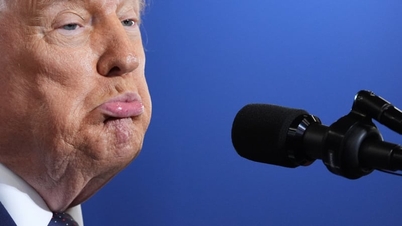
US President Donald Trump announced that Washington would eventually seize Iran's stockpile of highly enriched uranium, which the US believes could be used to build nuclear weapons, while Tehran insists it is for peaceful purposes only.
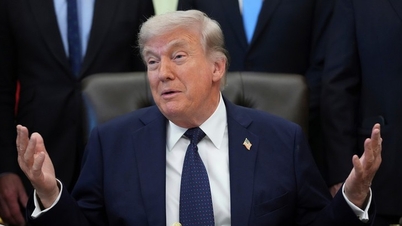
"We're going to get it. We don't need it, and we don't want it. Maybe after we recover it, we'll destroy it, but we're not going to let them have it," President Trump told reporters at the White House on May 21.
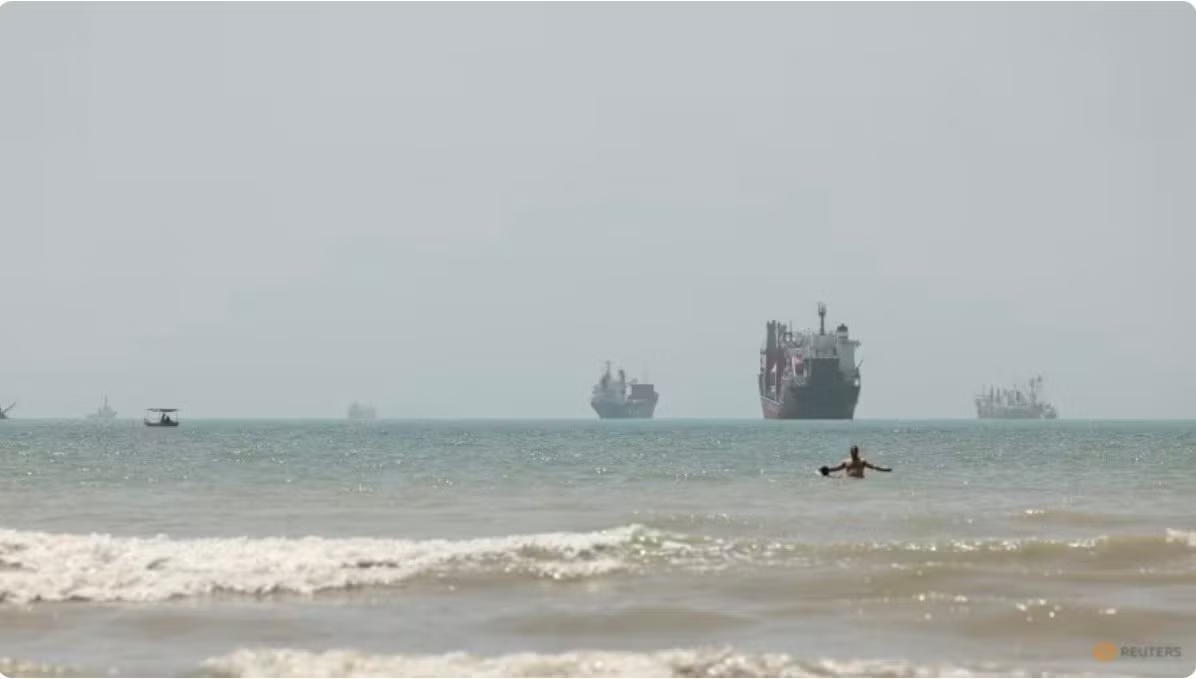
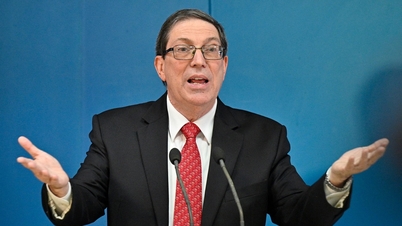
Foreign Minister Rubio stated that a diplomatic solution would be difficult to achieve if Tehran implemented a fee collection mechanism in the Strait of Hormuz. However, he also affirmed that negotiations had made some progress.
“There are some positive signs. I don’t want to be too optimistic… Let’s wait and see what happens in the next few days,” Rubio said.
Reuters, citing a senior Iranian source, reported that the two sides have not reached an agreement, but the gap has narrowed. According to this source, the issues of Iran's uranium enrichment and control of the Strait of Hormuz remain the main points of contention.
Previously, sources said that Iran's Supreme Leader Mojtaba Khamenei had instructed that uranium not be taken abroad.
President Trump also criticized Tehran's plan to charge a fee for passage through the Strait of Hormuz.
"We want this route to be open and free. We don't want tolls. It's an international waterway," Trump said.
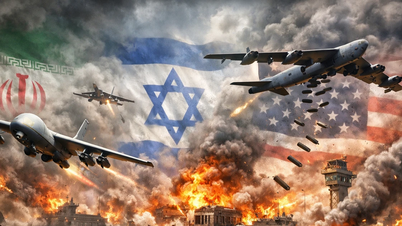
Iran's Islamic Revolutionary Guard Corps warned that any new attack would trigger retaliations extending beyond the Middle East.
The US president had previously stated his readiness to resume airstrikes against Iran if he did not receive a "suitable response" from the leadership in Tehran.
Despite the lack of significant progress in negotiations over the past six weeks, Pakistan's Chief of Staff, Asim Munir, is reportedly heading to Tehran to continue mediation efforts.
On May 20, Pakistani Interior Minister Syed Mohsin Naqvi made his second visit to Tehran this week, carrying a message from the United States, and held talks with Iranian President Masoud Pezeshkian, Foreign Minister Abbas Araqchi, and other Iranian officials, according to the ISNA news agency.
The current stalemate is having a serious impact on the global economy , primarily due to soaring oil prices and resulting inflationary pressure. President Trump also faces domestic pressure ahead of the midterm elections in November, with his approval ratings near their lowest levels since returning to the White House last year.
Source: https://tienphong.vn/xuat-hien-tin-hieu-tich-cuc-tu-dam-phan-my-iran-post1845310.tpo

![[Image] Hanoi's urban life under the challenge of a "scorching hot" environment](https://vphoto.vietnam.vn/thumb/1200x675/vietnam/resource/IMAGE/2026/05/25/1779706979265_nang-nong-t5-2026-minh-duy-7-4636-jpg.webp)


![[Image] Close-up view of the interchange connecting the two expressways and Long Thanh Airport.](https://vphoto.vietnam.vn/thumb/1200x675/vietnam/resource/IMAGE/2026/05/25/1779703378210_ndo_br_z7863716673926-224453a31600126cce10622af6290afd-4549-jpg.webp)











































































Comment (0)