This also creates conditions for many countries in the region to promote diplomatic activities, stabilize their economies, and seek new, more sustainable cooperation structures.
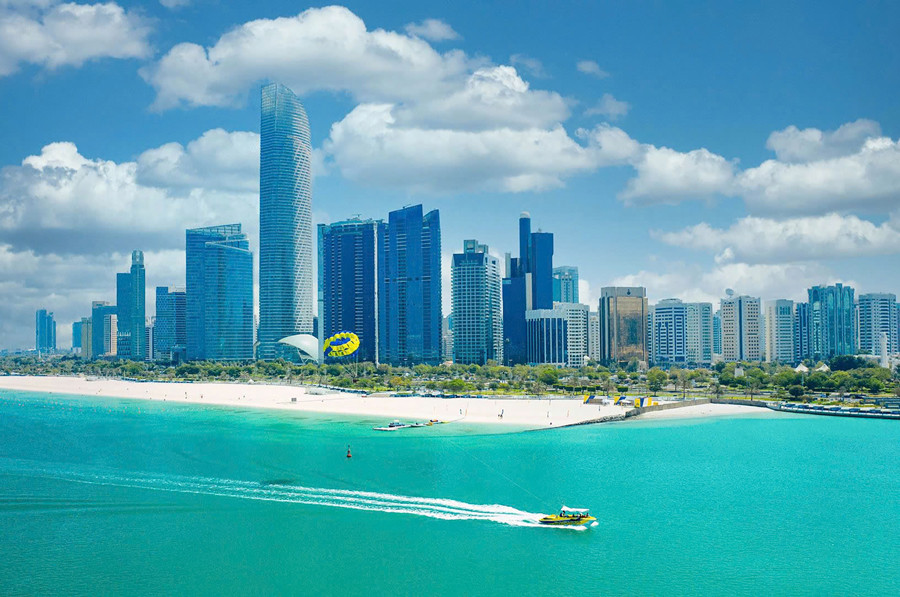
The first signs of reconciliation.
The recent confrontation between the US and Iran is considered one of the most serious crises in the Middle East since the beginning of the 21st century. Not only has it drawn in allied forces in the region, but the conflict also directly threatens maritime security in the Strait of Hormuz – a shipping route for approximately one-fifth of the world's oil supply.
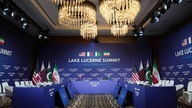
However, after many tense developments, particularly under pressure from the international community, recent weeks have shown signs that the parties are seeking a diplomatic way out. A turning point came when US Vice President JD Vance announced on June 15th that the US and Iran had electronically signed a peace agreement, which included provisions for restoring maritime activity in the Strait of Hormuz and moving towards a formal peace agreement.
Despite the continued existence of localized clashes, the temporary suspension of large-scale military operations by all parties has significantly de-escalated the regional security situation. This development has also been widely welcomed by Middle Eastern countries, with Gulf states expressing the strongest approval.
For Saudi Arabia, peace is not just a security issue but is also closely linked to long-term development goals. Riyadh is implementing a series of projects under its “Vision 2030” program, from the NEOM megacity to logistics, tourism , and technology centers. An unstable Middle East would create significant obstacles to attracting foreign investment. Therefore, Saudi Arabian leaders consistently emphasize that diplomatic solutions are the most viable path to ensuring regional stability.
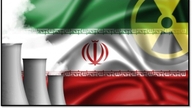
Similarly, the UAE quickly expressed support for the ceasefire efforts. Following the announcement of the agreement, the Dubai and Abu Dhabi stock markets surged more than most other markets in the region, reflecting investors' expectations of a more stable business environment.
Qatar also described the ceasefire agreement as "a first step toward de-escalation," and expressed hope that the parties would continue dialogue to address deeper disagreements. Meanwhile, Oman – a country that has long pursued a balanced foreign policy – continued to call on all parties to seize the current opportunity to build a new security mechanism for the entire region.


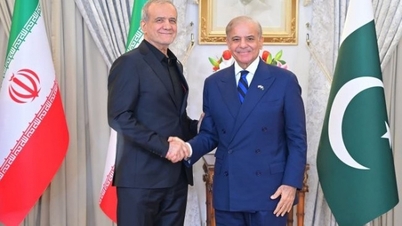
Not only the Gulf states, but Türkiye also welcomed the signs of détente. Ankara has repeatedly offered to play a mediating role and emphasized that stability in the Middle East is a prerequisite for maintaining economic growth and ensuring trade and energy routes connecting Asia with Europe.
It is noteworthy that, despite differences in strategic interests, most Middle Eastern countries have shown a relatively unified stance regarding the ceasefire agreement. After years of witnessing wars in Iraq, Syria, Yemen, and Gaza, countries in the region are increasingly aware that the costs of conflict far outweigh the geopolitical benefits that could be achieved.
This consensus reflects a new trend in the Middle East: prioritizing economic development over competing for influence through military confrontation. This is also why the Gulf Arab states have been a strong driving force in reconciliation efforts in recent times.
Opportunities to Reshape the Middle East
UN Secretary-General Antonio Guterres said that the agreement between the US and Iran on a peace deal was a “significant step” toward resolving the conflict in the Middle East. Of course, it is still too early to say that the Middle East has entered a new phase of stability. However, many scholars and research organizations believe that the reduction in tensions between the US and Iran could usher in far-reaching changes in the coming years.
First, there's the economic outlook. During the escalating conflict, sharply rising energy prices put pressure on the global economy. The World Bank (WB) warned that the war could drag global economic growth to its lowest level since the Covid-19 pandemic due to rising energy costs, inflation, and interest rates. In fact, as the risk of oil supply disruptions decreased, the energy market reacted positively with a significant drop in world oil prices. Many international financial institutions also predict that oil prices could stabilize if current agreements are maintained.
This creates favorable conditions for Gulf states to continue implementing ambitious economic transformation programs – exemplified by Saudi Arabia's Vision 2030, the UAE's economic diversification strategy, and financial and technology center projects in Qatar. Experts from the Middle East Institute (MEI) have repeatedly emphasized that international investors, who are highly sensitive to geopolitical risks, will only return to the region if the security environment improves in a stable and sustainable manner. Therefore, Gulf countries are increasingly prioritizing a development model based on stability and regional economic integration. This is also a crucial driving force for these countries to maintain conciliatory relations with Iran instead of returning to the confrontational state they once were.
Beyond economics, the structure of alliances in the Middle East could also change. For decades, the region has primarily operated along axes of confrontation. However, according to experts at the Atlantic Council (USA), the consequences of the war have made Middle Eastern countries more aware of their interdependence. Risks to supply chains, energy, and trade are forcing countries to strengthen cooperation rather than continue confrontation.
Therefore, recent developments show that more and more countries are choosing a "flexible balancing" strategy, maintaining relations with the US, China, Europe, and neighboring countries. The International Institute for Strategic Studies (IISS) believes that such a cooperation structure is entirely feasible and is gradually taking shape with the active participation of Saudi Arabia, Turkey, Egypt, and Pakistan. The goal is not only to ensure security but also to expand economic and trade cooperation and cross-regional infrastructure connectivity.
However, the road ahead is not entirely smooth. Many analysts suggest that sporadic attacks in Lebanon or controversies surrounding Iran's nuclear program could still derail the current reconciliation process. The agreements being developed are only an initial framework and depend on the extent of concessions from the parties involved.

Al Jazeera, citing several experts, believes the biggest challenge is not achieving a ceasefire, but rather building a collective security mechanism capable of preventing similar crises in the future. This requires the participation of all Gulf states and external powers.
An optimistic scenario is that the US and Iran reach a long-term agreement on security, maritime, and nuclear issues, thereby laying the groundwork for a period of relative stability in the Middle East. A neutral scenario is that the parties maintain a state of "no war but not complete peace," with periodic localized tensions. The worst-case scenario is that the negotiations break down, plunging the parties back into a cycle of confrontation.
After decades of conflict, the Middle East is clearly at a critical juncture. If the momentum for détente between the US and Iran can be harnessed, the region could not only reduce the risk of war but also usher in a new cycle of development based on economic cooperation, regional connectivity, and collective security. This would benefit not only the Middle East but also the entire global economy, which has already suffered greatly from the prolonged instability in one of the planet's most strategically important regions.
Source: https://hanoimoi.vn/xung-dot-my-iran-ha-nhiet-co-hoi-moi-cho-trung-dong-1208389.html


![[Photo] Prime Minister Le Minh Hung presides over the thematic session on promoting science and technology development and innovation.](https://vphoto.vietnam.vn/thumb/1200x675/vietnam/resource/IMAGE/2026/06/23/1782207872934_ndo_br_dsc-1724-jpg.webp)