

.jpg)
The alluvial plains awaken.
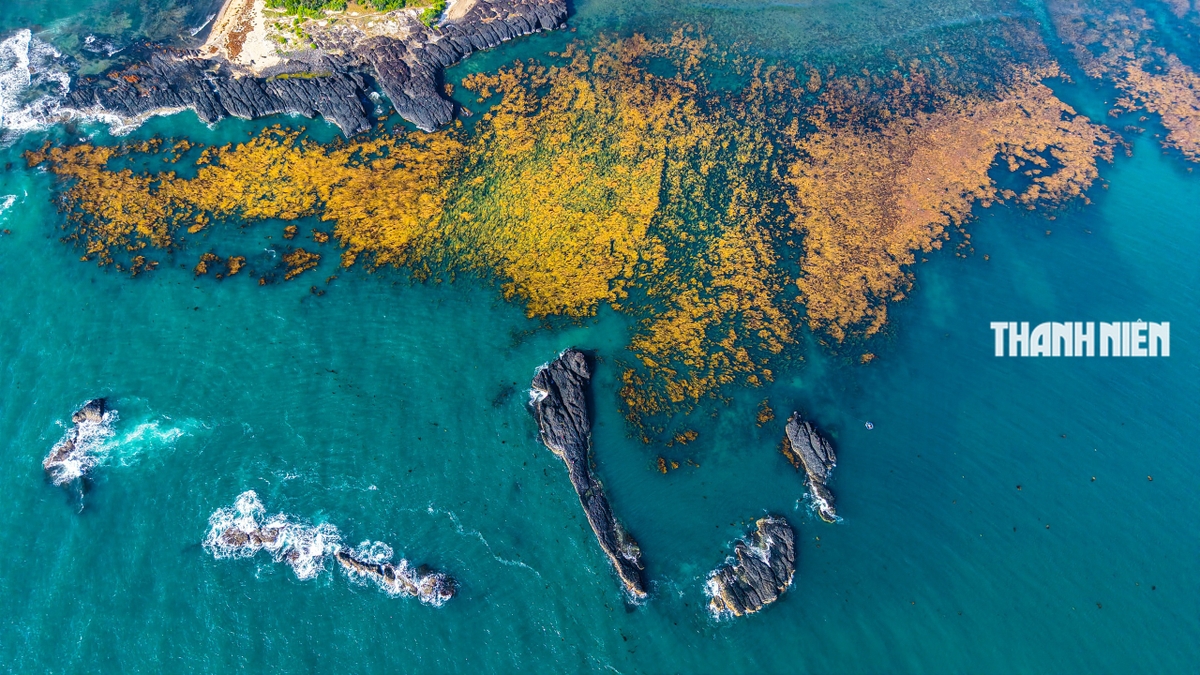
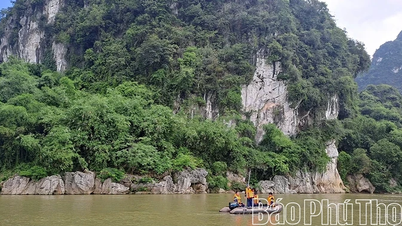
The Cha River has long carried within it a story of enduring life. After passing through rapids and bends, the Krông Nô River gently reveals alluvial plains blending with basalt slopes and volcanic rock formations. These alluvial plains have long been the source of livelihood for the people of the riverside communes of Lâm Đồng province, such as Quảng Hòa, Quảng Phú, and Nam Đà…
To date, life in the villages along the Krông Nô River has improved significantly, the poverty rate has decreased rapidly, and many hamlets and villages have achieved the standards of the new rural development program. Having lived in this area her whole life, Mrs. H'Mơn from Quảng Phú commune considers the Krông Nô River a close friend. "What could be more precious than alluvial land? The silt from the Cha River makes the fruit trees and vegetables flourish all year round," Mrs. H'Mơn said with a gentle smile.
Not only Mrs. H'Mơn, but thousands of households on both banks of the Cha River have been taking advantage of the land's resources for cultivation. Avocados, coffee, rice, vegetables... all thrive thanks to the thick, nutrient-rich alluvial soil. From a once difficult area, this place is gradually becoming a high-quality agricultural production region.
Downstream along the river, many alluvial plains seem to awaken, with lush green hills covered in fruit trees and riverside rice fields donning new colors. This area has developed the "Buon Choah Rice" brand, known for its sticky, subtly fragrant, and clean rice grains, highly favored by consumers. Further afield, the avocado hills of the Volcano area within the UNESCO Dak Nong Global Geopark, thanks to their ancient basalt soil, have created the "Volcano Avocado" brand, which meets OCOP standards and is distributed in many large supermarkets.
In the highlands along the river, coffee from farms that take advantage of the mild climate and basalt soil is grown according to OCOP standards. Many households participate in cooperatives, improving processing, helping the product gain market recognition, increasing value and income for hundreds of households.

Livelihoods from the alluvial soil of the Cha River
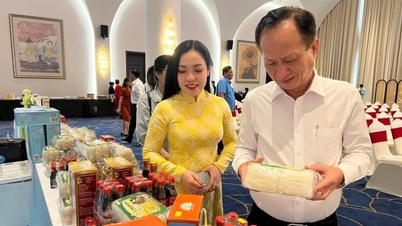
Along the Cha River, many OCOP products such as organic mandarin oranges, organic sweet tangerines; ground coffee and paper filter coffee; ST 25 rice, Volcano avocados… have helped people develop their economy .
According to Mr. Lang The Thanh, Director of the Thanh Thai Fair Agricultural Development Cooperative, in 2020, two products, ground coffee and paper filter coffee, received 3-star certification. Since then, the cooperative has upgraded and developed its products, conducted multi-channel trade promotion, and marketed its products nationwide and internationally.
Mr. Thanh stated: “Currently, the cooperative is cultivating coffee according to 4C standards on 500 hectares, with 240 affiliated members in the area. The cooperative also has over 8 hectares certified under the Dutch UTZ sustainable farming model, yielding over 200 tons, and 120 hectares certified under the RA model, with 60 participating households.”
Ms. Tran Thi Van, Head of the VietGAP Management Board of Buon Choah Agricultural Cooperative, said: “The cooperative focuses on developing OCOP products, while gradually improving production processes, enhancing quality and nutritional content, in order to expand the market for local rice products.”
To ensure the sustainable development of OCOP products, riverside communes support producers in applying science and technology, producing according to GAP, UTZ, 4C, and HACCP standards; building supply chains, improving product design, packaging, and branding, and promoting trade, thereby enhancing product quality and value.
Potential from the core area of the geopark
The area along the Krông Nô River has many favorable conditions for developing tourism associated with the UNESCO Dak Nong Global Geopark. Located at the intersection of the Central Highlands, South Central, and Southeast regions, and about 50 km from Buon Ma Thuot Airport, this area has the advantage of linking tours and routes between regions by road and air.
As the core area of the UNESCO Dak Nong Global Geopark, this region boasts a typical geological and geomorphological heritage system of Southeast Asia, with 2 out of 5 volcanic craters in the entire park. Notable among them is the Nam Blang volcano – the largest in the region, with 48 caves stretching approximately 25 km, and the C6-1 cave archaeological site containing prehistoric human remains dating back 6,500-7,000 years.
Not only is this region rich in geological resources, but it also boasts a diverse cultural identity. The two indigenous ethnic groups, the Ede and the M'nong, have resided here for generations, creating a rich heritage including the Central Highlands Gong Culture – an Intangible Cultural Heritage of Humanity; the Nau M'pring art; and unique traditional festivals and epics.
According to Mr. Ngo Xuan Dong, Chairman of the People's Committee of Nam Da commune, tourism infrastructure is being invested in comprehensively with many important projects such as the N'Trang Guh Memorial Area, the Global Geopark Information Center, rest stops, parking lots, and connecting roads. In addition, businesses have developed eco-tourism and resort services at the D'ray Sap - Gia Long waterfall, contributing to creating a new look for local tourism.
Currently, riverside communes have identified four main types of tourism: adventure tourism - exploring caves, volcanoes, and waterfalls; agricultural tourism - homestays linked to high-tech farming; community tourism associated with experiencing ethnic culture; and historical tourism - returning to one's roots. From this, many products have been developed, such as visiting volcanic caves, camping, agricultural tourism, experiencing gong music, traditional festivals, and revolutionary relics.
Following the Cha River today, one sees not only a river that nourishes the land, but also a flow that builds prosperity, nurturing dreams of a new rural life, where life is increasingly fulfilling, bright, and sustainable.
Source: https://baolamdong.vn/xuoi-theo-dong-song-cha-422665.html


























































Comment (0)