

Lieutenant Le Van Thinh, a young soldier of the 1st Special Police Unit - Mobile Police Command - Ministry of Public Security , was born in 2000 and grew up in a farming family in Dinh Hoa commune (Kim Son district, Ninh Binh province). Thinh is the youngest of three siblings. His mother is a kindergarten teacher, and his father works hard in the fields; the simple, honest life of the rice-growing countryside has shaped him into a gentle yet resolute young man.
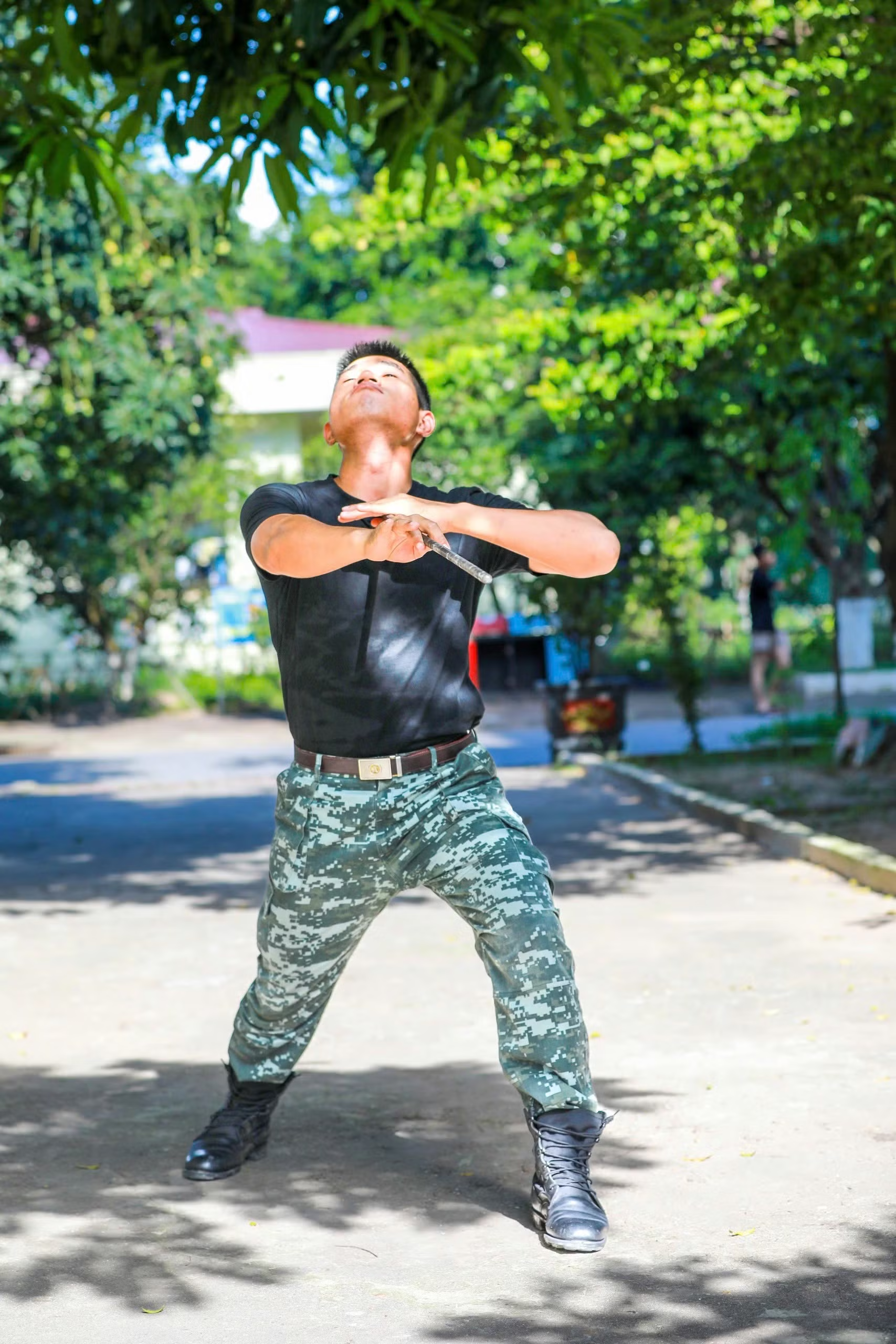
Immediately after graduating from high school, Thinh volunteered to enlist in the army. In his second year of military service, he applied for the entrance exam, passed with flying colors, and was sent by the Ministry of Public Security to train at the Special Forces Officer School ( Ministry of National Defense ). After four years of rigorous training in a disciplined environment, Thinh returned to work at Special Police Unit No. 1 - Mobile Police Command - Ministry of Public Security.
Thịnh's entry into special forces qigong was a matter of chance. From the films he watched while still in school, his curiosity gradually grew into a burning desire to train. However, there was an invisible gap between his thoughts and the reality of the training ground, a gap that the soldier had to bridge with sweat, even blood.
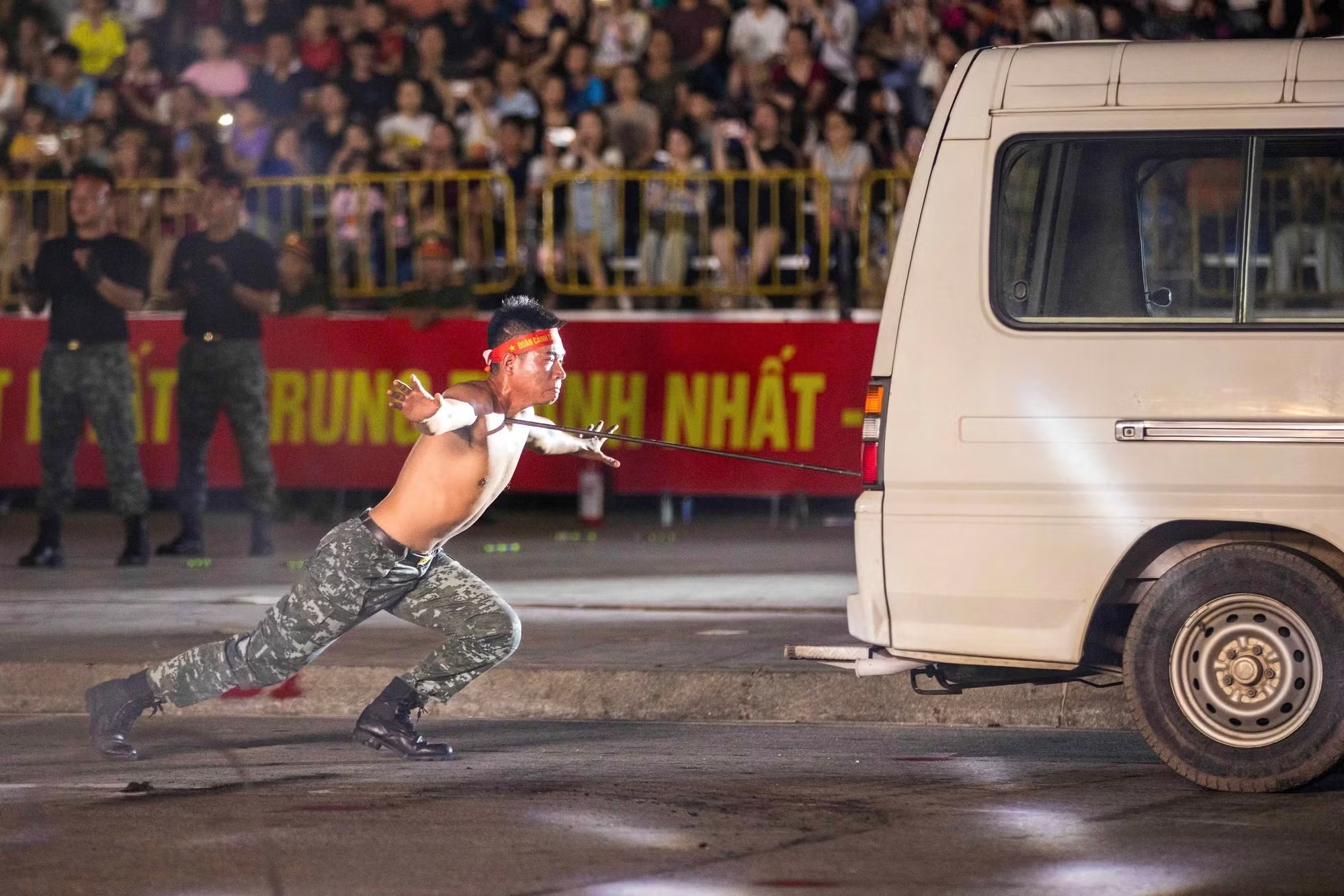
Lieutenant Le Van Thinh performed a stunt using a 14mm diameter iron bar placed against his throat to push a 3-ton vehicle on the night of May 23rd at the 2026 Police Military , Martial Arts and Sports Competition in Quang Ninh.
The larynx is a delicate part of the body, containing laryngeal cartilage, the thyroid gland, and a host of sensitive nerves. Even a normal strong impact is enough to cause suffocation, let alone placing a high-grade steel bar there and then pulling a 3-ton block of iron. In the midst of absolute stillness, a single misstep could lead to an accident at any moment.
The first few days of getting used to the exercises were a grueling ordeal for the body. The iron bar pressed straight down, digging deep into the neck, creating immense pressure on the esophagus and trachea. Lack of oxygen caused chest tightness, and intense, dry coughs ensued. The muscles around the neck, not yet adapted, became swollen, and even swallowing saliva became painful.
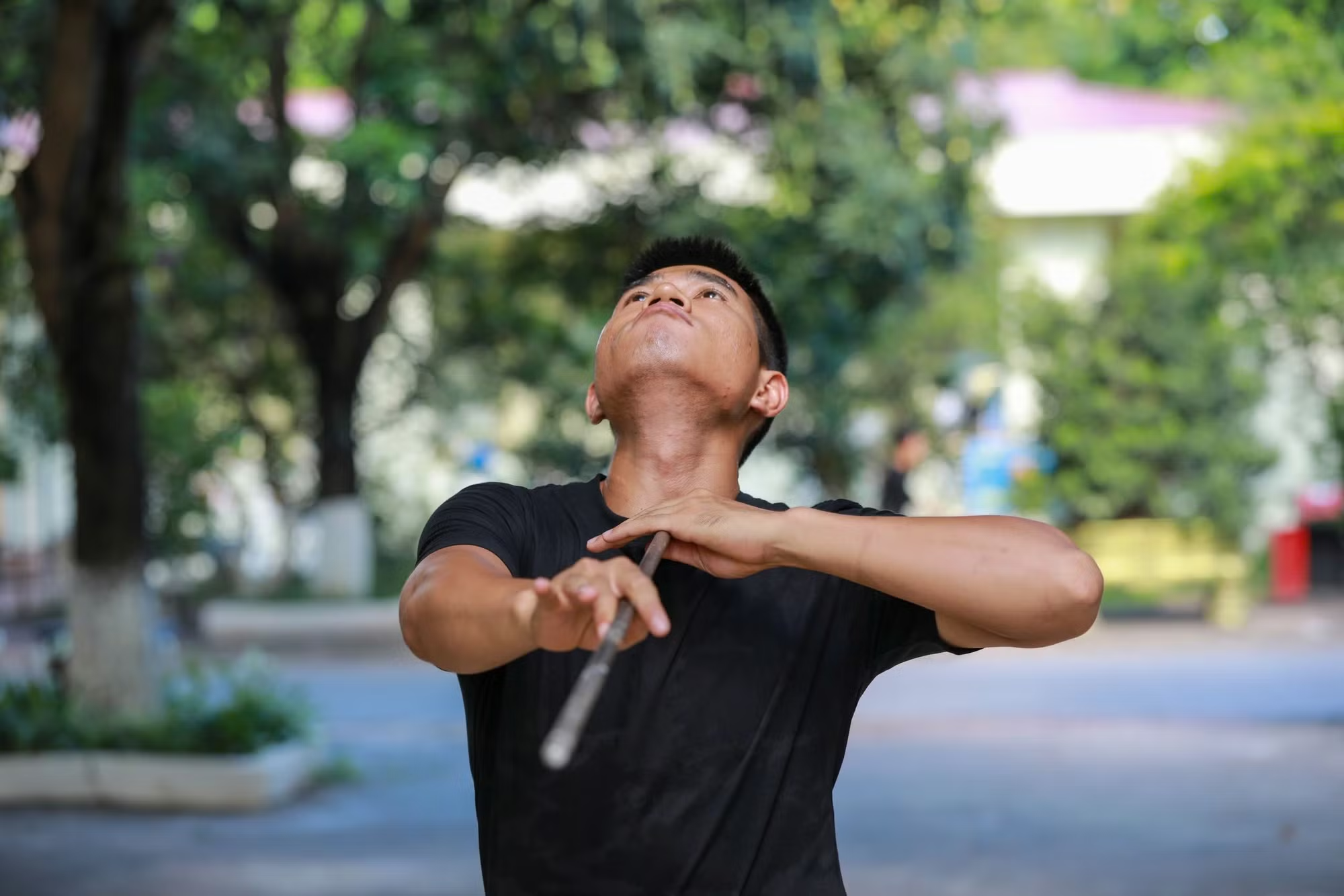
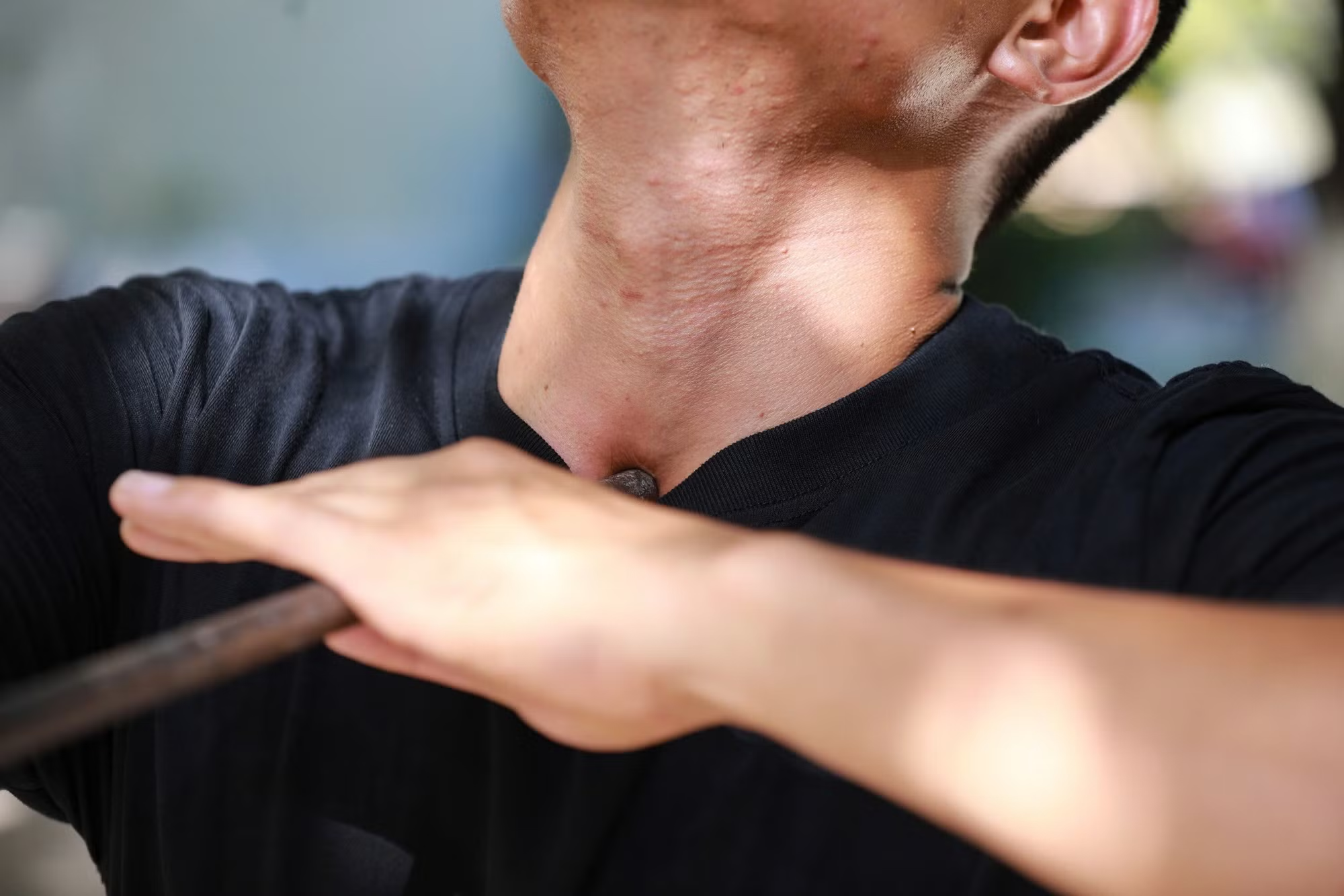
A close-up view of the location where the 14mm diameter iron rod is inserted into the throat.
Recalling those grueling days, Thinh confided: "In the beginning, my mind constantly conjured up the worst-case scenario: being seriously injured by the steel bar . There were times I thought about giving up. But to bend that steel bar, I had to suppress my fear, narrowing my vision to the distance from my nose, through the 14mm bar to my throat. In my mind, only one decisive command kept repeating: Advance or push! Thinking of a soldier's honor , thinking about who would advance if I retreated, I held my breath and charged forward."
When pain strikes, the natural reflex is to breathe quickly and shallowly, further increasing panic. But for a Qigong practitioner, they must direct their absolute focus to their breath. Thịnh concentrates his thoughts, guiding the breath down to the lower abdomen (dan tian), creating internal pressure that causes the muscles around his neck to stiffen like concrete. Simultaneously, this 100% concentration on controlling the breath forces the brain to forget the pain signals transmitted from the nerves. Although the throat hurts, the mind doesn't feel the pain.
The core motivation that keeps these young soldiers going through thousands of hours of grueling training is the ideal of wearing the People's Police uniform. They accept the side effects of excessive training, accepting the erosion of their health, sacrificing a healthy body for the strength to fight. This sacrifice is even more silent, because before the people and the cameras, they always appear with the utmost dignity; while the painful wounds that ache whenever the weather changes, they grit their teeth and hide behind a facade.
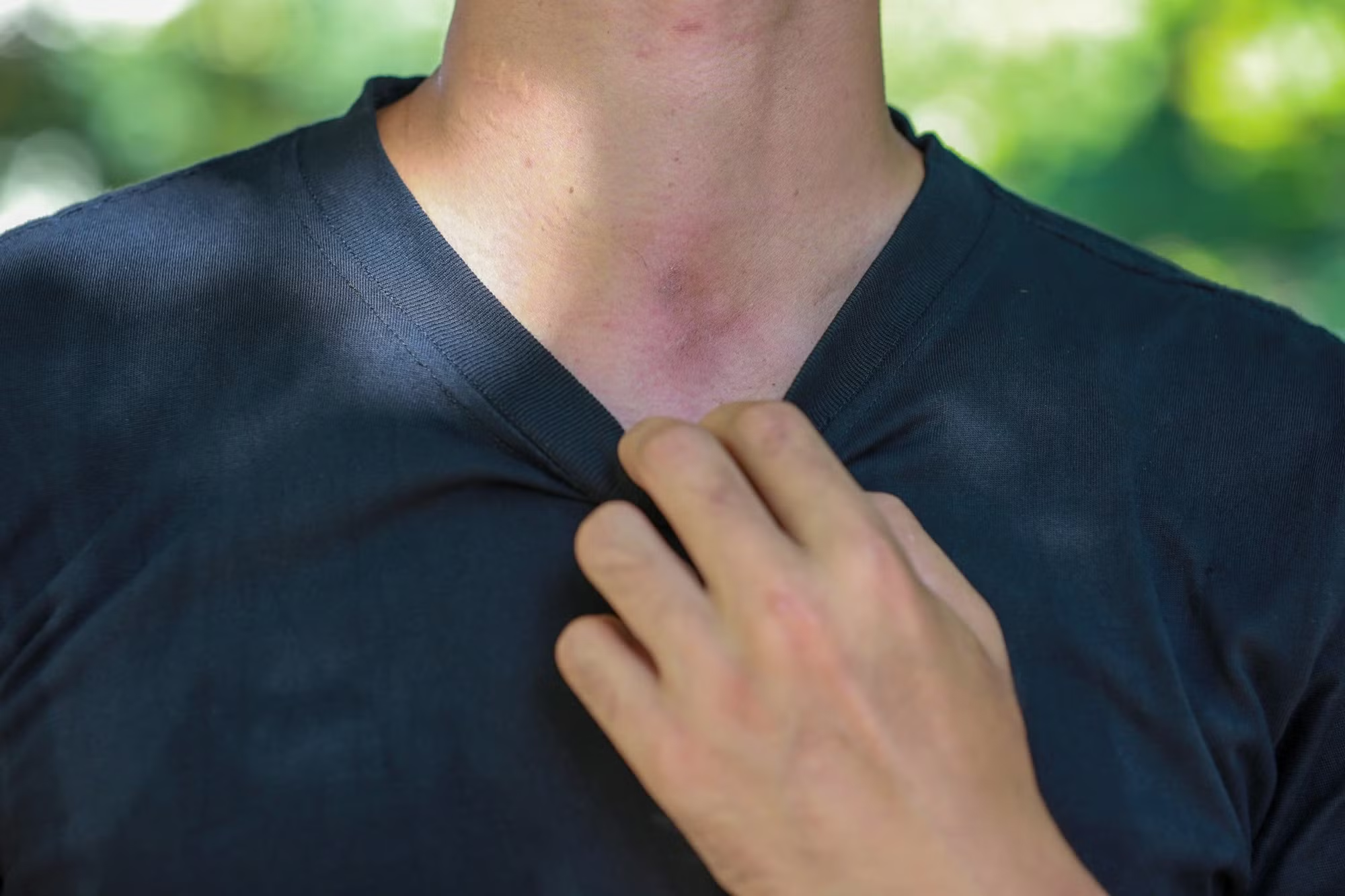
The calluses on his throat are the result of months of arduous training for Lieutenant Le Van Thinh.
Leaving the training ground, changing out of their sweat-soaked uniforms, what remains are the invisible pains that special forces soldiers bear themselves. "Many high-intensity training sessions leave my throat swollen, swallowing saliva brings tears to my eyes, let alone chewing food. At night, my joints ache terribly. During those times, calling home, hearing my mother's voice requires me to quickly clear my throat, suppressing my cough so I can speak and laugh loudly, afraid that my family back home will worry," Thinh said with a gentle smile, the kind smile of a young soldier accustomed to hiding his wounds behind his usual defiant demeanor. Behind their constant bravery, the order to fight is always paramount, even if it means missing family gatherings during holidays, celebrations, or times of joy and sorrow.
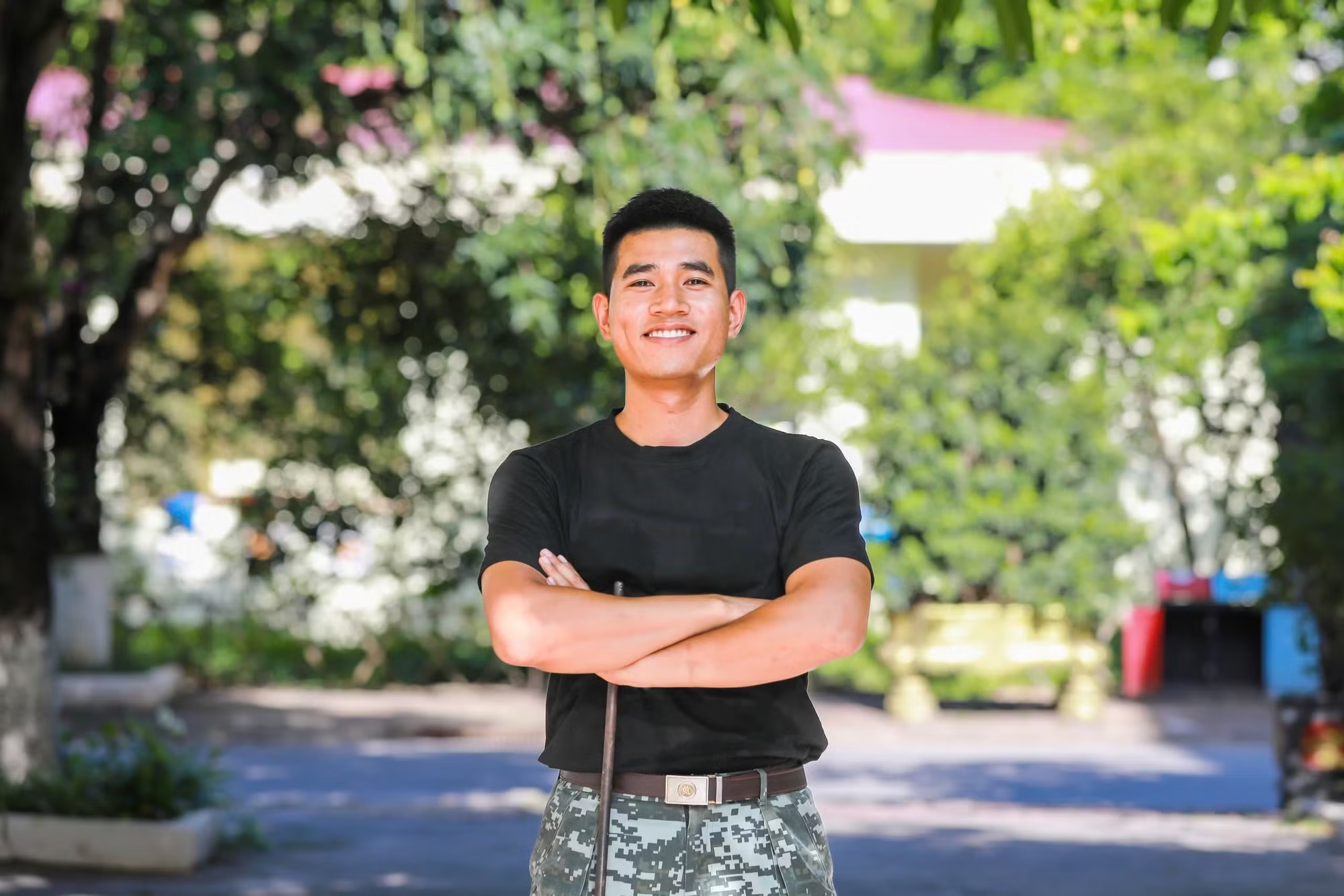
The gentle smile of Lieutenant Le Van Thinh, a member of the 2000s generation, Special Task Force No. 1 - Mobile Police Command - Ministry of Public Security.
On the evening of May 23rd, the central square in Quang Ninh was packed with people. The opening ceremony of the 2026 Police Military, Martial Arts, and Sports Games featured a dazzling performance of a man using his throat to push a 3-ton vehicle, leaving tens of thousands of spectators breathless before erupting in admiration.
That performance was not just about sweat and blood, but also a powerful message from a generation of soldiers like Thinh: Courage is not something that comes naturally; it is the result of forging in the crucible of fire. Always be steadfast, dare to take on difficult tasks, keep a cool head in the face of danger, and maintain a warm heart beneath your military uniform.
Source: https://cand.vn/yet-hau-thep-day-xe-nang-hon-3-tan-cua-thieu-uy-le-van-thinh-post812385.html



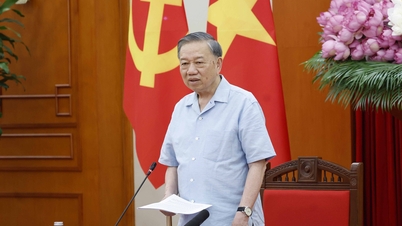
![[Photo] General Secretary and President To Lam presides over a meeting on preparations for the review of one year of operation of the three-tiered government system.](https://vphoto.vietnam.vn/thumb/1200x675/vietnam/resource/IMAGE/2026/06/02/1780391821195_a1-bnd-4595-9717-jpg.webp)

























































Comment (0)