

According to the Forestry Department (Ministry of Agriculture and Rural Development), green production and green supply chains are among the many activities businesses undertake to ensure sustainable business development.
Green production involves using green materials, energy, and technologies that emit fewer greenhouse gases. However, currently, wood processing businesses are not yet bold and thorough in pursuing green production aimed at sustainable values.
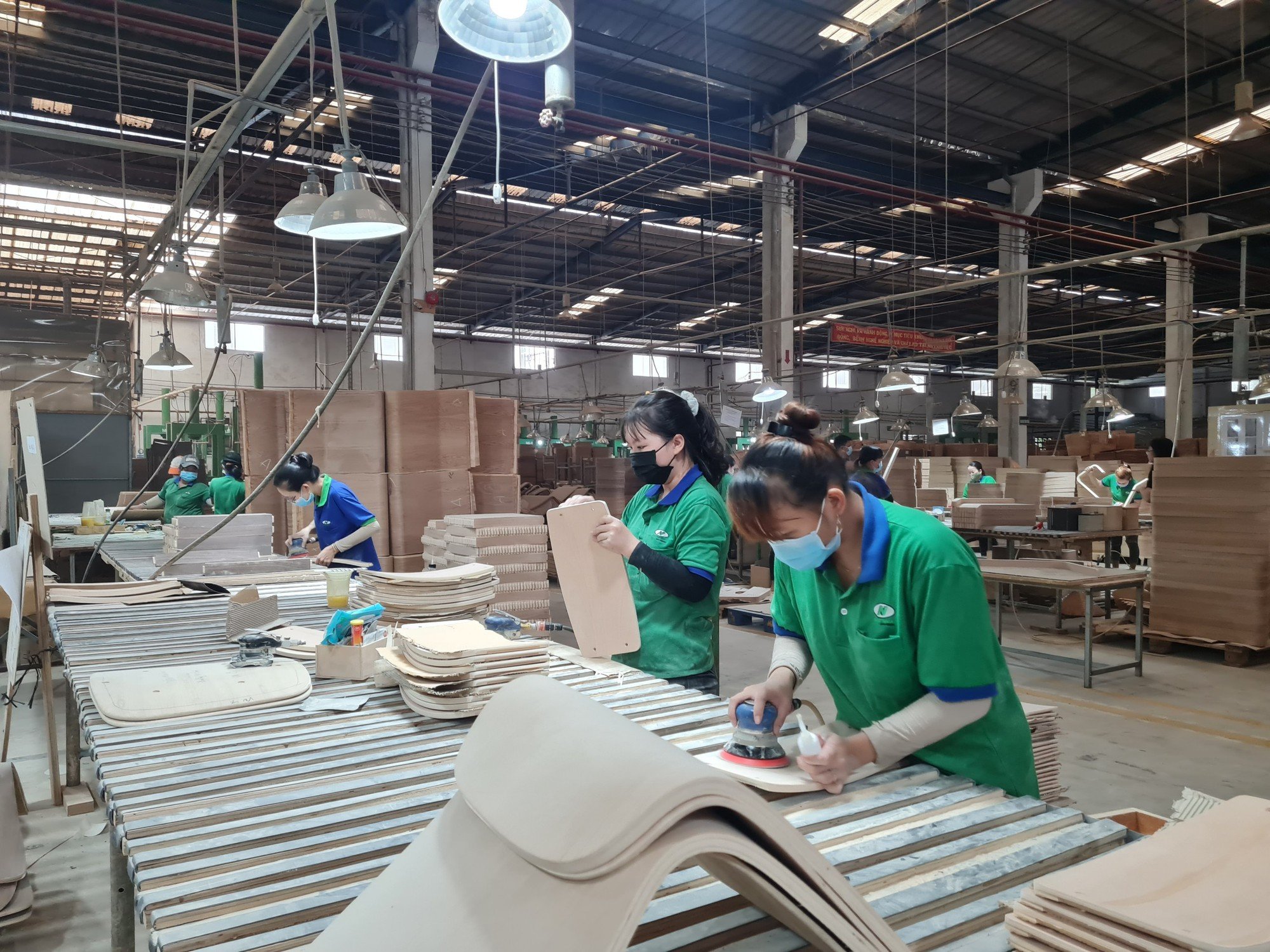
Forestry processing businesses that achieve green production and green supply chains will build trust and credibility with customers (illustrative image).
Mr. Tran Quang Bao, Director of the Forestry Department, pointed out three main reasons leading to this situation.
Firstly, the majority of businesses have yet to recognize the importance of transitioning to green production for sustainable development and are not yet willing to change.
The timber industry is not currently under much pressure from carbon emission reductions, but this will certainly be unavoidable in the future.
"The two major markets, the EU and the US, will soon be controlling and assessing the carbon content of imported products. Therefore, from now on, wood businesses need to change their traditional practices towards reducing emissions and greening their current supply chains, viewing this as an opportunity for transformation rather than a challenge," Mr. Bao said.
The second reason mentioned by the head of the Forestry Department is the lack of specific guidelines on how much greenhouse gas emissions from forest product processing technology is considered green, and guidelines for measuring greenhouse gas emissions.
Thirdly, the transition to green production increases production costs due to the shift to green manufacturing technologies, the use of green raw materials, fuels, and electricity; and changes in business management and operation processes during the green transition.
There are many advantages to achieving green production.
The head of the Forestry Department emphasized that if the goal of green production is achieved, timber processing businesses will have clear advantages.
The current trend is that consumers are increasingly focusing on green products – products that do not degrade or destroy forests and do not emit greenhouse gases during production. Therefore, businesses processing forest products that achieve green production and a green supply chain will build trust and credibility with customers.
Furthermore, in the future, only green products—products that do not degrade or deforest, and do not emit greenhouse gases during production—will be eligible for export to the EU market. This is a "demanding" market, requiring very high standards; therefore, products that meet EU export standards can be exported to all markets worldwide .
"In the near future, the Carbon Border Adjustment Mechanism will be implemented in Vietnam's main timber export markets such as the EU, the US, and Japan. Products that meet green production and green production chain targets will not have to pay greenhouse gas emission fees; these fees are usually higher than the cost of transitioning to green production," Mr. Bao said.
Source link



















![[Photo] Prime Minister Pham Minh Chinh attends the Conference on the Implementation of Tasks for 2026 of the Industry and Trade Sector](/_next/image?url=https%3A%2F%2Fvphoto.vietnam.vn%2Fthumb%2F1200x675%2Fvietnam%2Fresource%2FIMAGE%2F2025%2F12%2F19%2F1766159500458_ndo_br_shared31-jpg.webp&w=3840&q=75)



























































Comment (0)