

However, for those who lived through that era, the memories remain vivid. Among them, Mr. Vo Xuan Khue (80 years old, La Ha village, Nam Gianh commune, Quang Tri province) is always mentioned as a symbol of the "bomb-resistant, ferry-hopping" spirit - one of the people who kept the vital supply lines uninterrupted; contributing to the great flow that led to the Great Victory of Spring 1975, liberating the South and unifying the country.
Opening a channel through the heart of the fiery river.
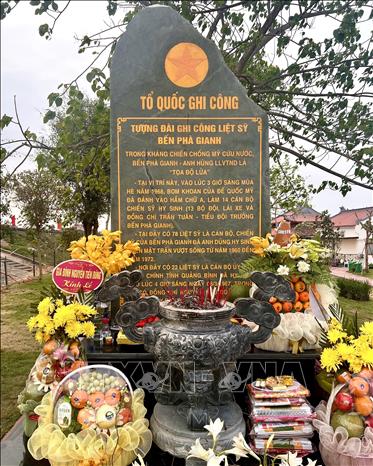
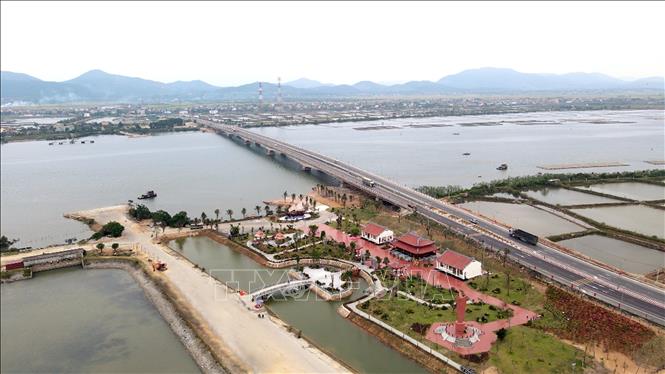
During the fierce years of the war, the Gianh ferry crossing was not just a simple river crossing point, but a particularly important link in the strategic North-South transport route. It connected vital transportation arteries, ensuring that people and weapons from the North could cross the Gianh River to continue their journey to the Southern battlefield. Not far from there, the Gianh port area was also one of the important starting points of the Ho Chi Minh Trail on the sea during the resistance against the American imperialists. From here, "ships without numbers" silently left the dock at night, carrying weapons and hope, braving the waves to the South.
Therefore, in the American military's calculations, the entire area became a target to be destroyed at all costs. Bombs, mines, air and underwater blockades… all were concentrated on this stretch of river with a single objective: to cut off the supply line. “There were days when the river water was no longer water, but fire and blood. The enemy attacked relentlessly, from night until dawn,” recalled veteran Pham Van Thi, a former soldier of Battalion 45, Quang Binh Provincial Military Command (formerly).
From 1965 to 1972, thousands of bombing raids, large and small, rained down on the Gianh ferry area. Not only were bombs and bullets dropped from the air, but mines were also densely laid in the riverbed, turning the waterway into a giant minefield. Destroying the ferry would have meant cutting off one of the vital transportation arteries supplying the battlefields in the South.
In that situation, Vo Xuan Khue, born in 1946, and his comrades managed to maintain control of the river. Lacking modern equipment, they creatively stretched metal-tipped ropes across the river to remotely detonate the mines. That was just the first step; the remaining mines lay dormant underwater, waiting to strike. Later, they chose a method that each time involved facing death: using speedboats to quickly detonate the mines.
Mr. Khue was the first to volunteer for the mission. “That day, I and two comrades were on the first boat trip to clear mines at Gianh ferry terminal. Before we left, the unit gave us three handfuls of rice, and we lit three incense sticks, as if performing a memorial service before going into battle. Fortunately, the trip went smoothly, and all three of us completed the mission and returned safely…” – Mr. Khue recounted.
“You have to floor the gas pedal, go as fast as you can, and stay in the right lane. A single misstep means there’s no chance of turning back,” Mr. Khue further shared. Each boat trip is a gamble with one’s life. At this “fiery zone,” 114 people have bravely fallen; including 78 ferry terminal officials and employees.
For Mr. Vo Xuan Khue, death has never been unfamiliar. He vividly remembers August 14, 1967, when a mine exploded, throwing him into the river. The waves dragged him to the bottom, but he struggled to push off the sand to stay afloat. Another explosion, and he was submerged again. The second time he surfaced, he grabbed a floating plank. Exhausted, he let himself drift with the current for dozens of meters before being rescued by his comrades. “My comrades pulled me out of the boat. On either side were the bodies of two fallen soldiers who had just died…” he recalled emotionally.
From 1965 to 1972, Mr. Khue remained stationed at this "fire zone," clearing mines. He himself can no longer remember how many navigation missions he undertook, how many times he faced danger. But what people remember him for is his unwavering loyalty and determination to fulfill his duty as a soldier.
Keep the flow of traffic going with blood and willpower.
If defusing naval mines is a confrontation with death underwater, then assisting arms convoys across the river is a life-or-death race against the blazing sky.
In late 1968, a convoy of missile launchers was traveling south at night. Upon reaching the Gianh ferry crossing, enemy aircraft spotted them, flares ripped through the darkness, and rockets rained down relentlessly. The convoy halted, and a delay of just a few minutes could have resulted in the entire formation being wiped out. At that moment, Mr. Vo Xuan Khue rushed to the lead vehicle, took the wheel, started the engine, and crossed the river amidst gunfire after realizing the driver had been killed. He then returned to assist the vehicles behind. Thanks to his efforts, those convoys silently crossed the Gianh River, joining the massive supply line of the war – a flow that contributed to the Great Victory of Spring 1975.
In 1972, amidst the height of the war, Mr. Khue was awarded the title of Hero of the People's Armed Forces. “Back then, being awarded the title didn't require a performance report. You just heard the commander announce that you had been awarded the title. The reward was 180 dong; I bought two pigs and several packs of cigarettes to treat my comrades in the unit, and I brought the remaining 20 dong home to my wife,” he recalled.
Recalling that title, Mr. Khue just smiled gently: “Back then, all the soldiers at the ferry crossing were brave, all deserving of being called heroes. I am a son of the Gianh River, raised by the waves, familiar with every channel and current, so I was often trusted by my superiors and given tasks during difficult, life-or-death moments. Thanks to that, I had the opportunity to complete my mission and receive recognition from my superiors.” These simple words, however, concealed a time of intense warfare.
After the country was reunified, Mr. Khue remained at the Gianh ferry terminal. From a soldier driving a speedboat, he became a transportation official, then a ferry manager; he married a female guerrilla fighter from his hometown and had five children. The river gradually returned to its alluvial soil. The ferries continued to operate, but the sound of bombs was gone.
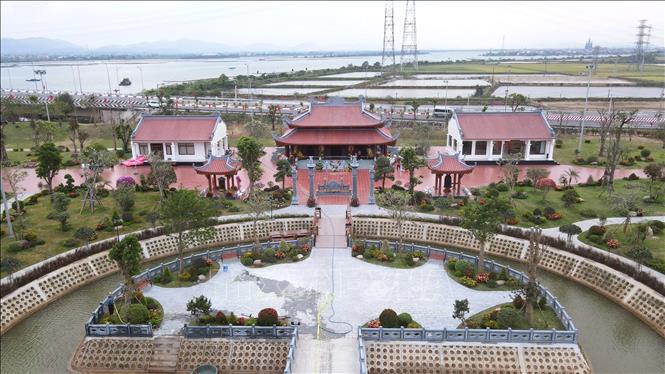
In December 1998, the staff, workers, and self-defense forces of the Gianh ferry terminal were honored with the title of Hero of the People's Armed Forces. On November 27, 1998, the Gianh Bridge was inaugurated. The joy of "crossing the river without waiting for the ferry" spread across both banks. On that day, Mr. Khue operated the last ferry trip – closing the historical role of a ferry terminal that had weathered the fires of war.
On the 51st anniversary of the Liberation of Southern Vietnam and the reunification of the country, returning to what was once a "hotbed of fire," everyone understands even more deeply that victory was not only achieved through major battles, but also through the quiet, simple lives of ordinary people. They didn't stand on a podium of glory, but stood at the ferry's bow, amidst the rain of bombs, guiding vehicles across the river, ensuring that the lifeblood of the nation never ceased to flow.
The Gianh River continues to flow, carrying alluvial deposits that enrich its banks, just as history silently builds the identity of a land where memories and aspirations for peace and unity are passed down through generations.
Source: https://baotintuc.vn/nguoi-tot-viec-tot/51-nam-thong-nhat-dat-nuoc-nguoi-mo-luong-trong-lua-dan-song-gianh-20260429094400281.htm

![[Image] Hanoi's urban life under the challenge of a "scorching hot" environment](https://vphoto.vietnam.vn/thumb/1200x675/vietnam/resource/IMAGE/2026/05/25/1779706979265_nang-nong-t5-2026-minh-duy-7-4636-jpg.webp)


![[Image] Close-up view of the interchange connecting the two expressways and Long Thanh Airport.](https://vphoto.vietnam.vn/thumb/1200x675/vietnam/resource/IMAGE/2026/05/25/1779703378210_ndo_br_z7863716673926-224453a31600126cce10622af6290afd-4549-jpg.webp)

































































Comment (0)