

According to Dr. Nguyen Thi Tra, a resident physician in the Traditional Medicine Department at Hanoi Medical University, the cause of dyslipidemia (phlegm syndrome) often stems from the impaired function of the spleen. The spleen is responsible for the digestion and metabolism of food and drink; if its function is impaired, food is not completely metabolized, leading to the production of phlegm and dampness. Over time, this accumulated phlegm and dampness enter the meridians, causing symptoms corresponding to high blood lipid levels in modern medicine.
Therefore, according to traditional medicine, when suffering from dyslipidemia, the principles of treatment should focus on: strengthening the spleen ( improving digestion ), dissolving phlegm ( dissolving dampness and phlegm ), and eliminating turbidity ( removing accumulated substances ).

Hawthorn helps lower blood cholesterol.
Several familiar herbal remedies help control blood lipids.
According to Doctor Nguyen Thi Tra, some of the following common herbal remedies can help control blood lipids:
1. Hawthorn (wild apple)
Uses: Aids digestion, disperses stagnation, dissolves accumulated waste, helps reduce blood fat, and especially helps the spleen and stomach digest food better when eating fatty foods.
Use:
- Wash thoroughly and slice thinly (if using dried fruit);
- Brewing tea: Use 10–15 g of tea leaves with 300–500 ml of boiling water, steep for 10–15 minutes.
- Alternatively, decoction: 10–15 g with 300–500 ml of water, simmer for 15–20 minutes, divide into 2–3 doses per day; can be taken after meals to aid digestion.

Lotus leaves help to cool the body, dissolve phlegm, and support the reduction of blood lipids.
2. Lotus leaf
Uses: Lotus leaves have a bitter taste and a cooling nature, and are effective in clearing heat and dissolving phlegm. Some studies show that lotus leaves help lower blood lipids and prevent atherosclerosis.
Instructions: Use 10–20 g of dried lotus leaves, steep in boiling water for 15 minutes.
It can be combined with hawthorn to increase effectiveness: Boil 10–15g of lotus leaves and 10–12g of hawthorn in 600–800ml of water for 15–20 minutes, then drink throughout the day after meals. It is best to drink during the day, avoiding drinking it too late in the day as it may cause stomach upset.

Job's tears strengthen the spleen, relieve dampness, and help reduce fat accumulation.
3. Job's tears (coix seeds)
Uses: Strengthens the spleen, eliminates dampness, improves the function of the spleen and stomach, and helps reduce fat accumulation.
Instructions: Soak 30–50 g of Job's tears in water for 2–3 hours before cooking.
To make porridge: Combine barley and rice (in a 1:1 or 2:1 ratio) and simmer until tender; lean meat or beans can be added to make it easier to eat. Eat 2–3 times a week; suitable for people with weak digestive systems.
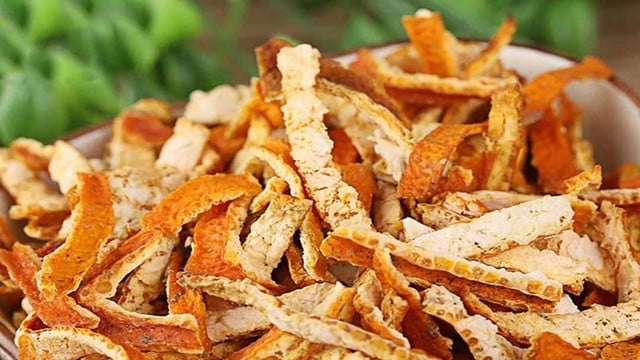
Dried tangerine peel helps reduce bloating.
4. Dried tangerine peel
Uses: Regulates Qi, dries dampness, dissolves phlegm, relieves bloating.
Directions: Use 3–6 g, decoct with 300 ml of water for 10–15 minutes or add to soup to aid digestion; suitable for people who often experience bloating and indigestion.
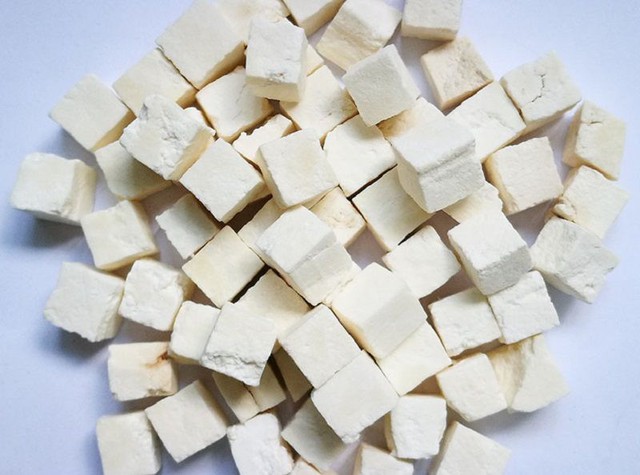
Poria cocos helps the body eliminate phlegm and dampness.
5. Poria cocos
Uses: Strengthens the spleen, promotes diuresis, and helps the body eliminate phlegm and turbidity.
Instructions: Brew 10–15 g in water and drink daily.
Alternatively, cook porridge with Job's tears and rice to enhance spleen-strengthening effects (Poria cocos 10–15 g, Job's tears 20–30 g, rice 50–70 g; soak Job's tears for 2–3 hours, you can decoct Poria cocos to extract the liquid beforehand; cook porridge with 700–900 ml of water until soft; use 2–3 times/week, eat warm).
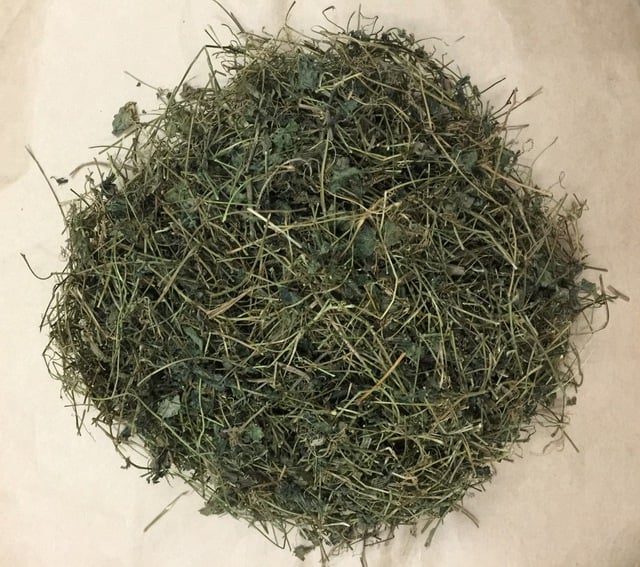
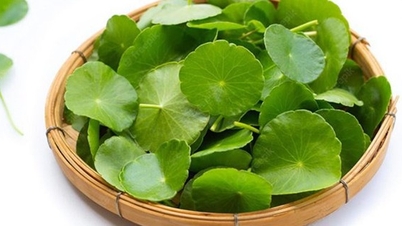
Gynostemma pentaphyllum helps lower cholesterol.
6. Gynostemma pentaphyllum
Uses: In the "Dictionary of Vietnamese Medicinal Plants," Gynostemma pentaphyllum is known for its effects such as supporting anti-aging, weight loss, cholesterol reduction, and cardiovascular protection.
Instructions: Use 10–15 g of dried leaves; steep in 400–500 ml of boiling water for 10–15 minutes; can be consumed throughout the day (no more than 1–2 times per day). It is best to drink in the morning or at noon, avoiding consumption on an empty stomach.
Notes on usage
- Users should take the correct dosage and avoid prolonged overuse.
- People with weak spleen and stomach (prone to cold stomach and diarrhea) should reduce the amount of cooling herbs (lotus leaves, Gynostemma pentaphyllum) or consult a doctor.
- Pregnant women and those taking medication should exercise caution.
- These herbal remedies only play a supportive role and do not replace prescription medications or treatment protocols of modern medicine.
See more trending articles:
Source: https://suckhoedoisong.vn/6-vi-thuoc-giup-hoa-dam-ho-tro-kiem-soat-mo-mau-169260429182704264.htm

![[Image] Hanoi's urban life under the challenge of a "scorching hot" environment](https://vphoto.vietnam.vn/thumb/1200x675/vietnam/resource/IMAGE/2026/05/25/1779706979265_nang-nong-t5-2026-minh-duy-7-4636-jpg.webp)


![[Image] Close-up view of the interchange connecting the two expressways and Long Thanh Airport.](https://vphoto.vietnam.vn/thumb/1200x675/vietnam/resource/IMAGE/2026/05/25/1779703378210_ndo_br_z7863716673926-224453a31600126cce10622af6290afd-4549-jpg.webp)



















































































Comment (0)