

While Gia Lai province insists on preserving the tea plantations to serve as tourist attractions, the managing enterprise is struggling with cost pressures, aging trees, and the challenge of maintaining economic efficiency.
The tea hills are barren, leaving tourists feeling regretful.
These days, many tourists travel hundreds of kilometers to see firsthand the century-old pine trees and famous tea hills in Bien Ho commune - one of Gia Lai 's signature destinations.
However, contrary to expectations, many people were disappointed to see large areas of tea plantations gradually withering and becoming barren. Along the road leading to the pine forest, many tea patches showed signs of leaf shedding, dry branches, and even complete plant death. Some areas were pruned, but the branches and leaves were not collected, making the landscape look unsightly and lifeless.
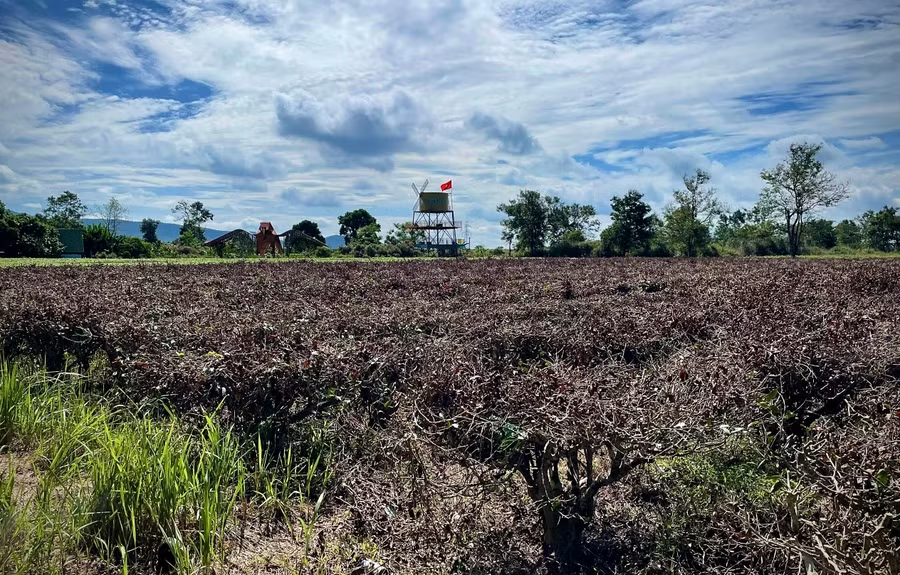
Ms. Pham Thu Tram (a tourist from Lam Dong province) had seen pictures of the Bien Ho tea hills on social media many times and always wished to visit the place someday.
"I thought the tea hills would be lush and green like in the photos, but when I arrived, many areas were bare, with old, withered trees. Although the scenery around here is still beautiful, I feel a little disappointed," Ms. Tram shared.
According to Ms. Tram, if the existing tea plantations are cleared to make way for coffee cultivation, Bien Ho Lake will lose its unique character. The neatly arranged rows of tea plants create a distinctive beauty that coffee plants can hardly replace. "If the tea plants are too old, they can be replaced with new varieties, maintaining production while preserving the landscape for tourism," Ms. Tram suggested.
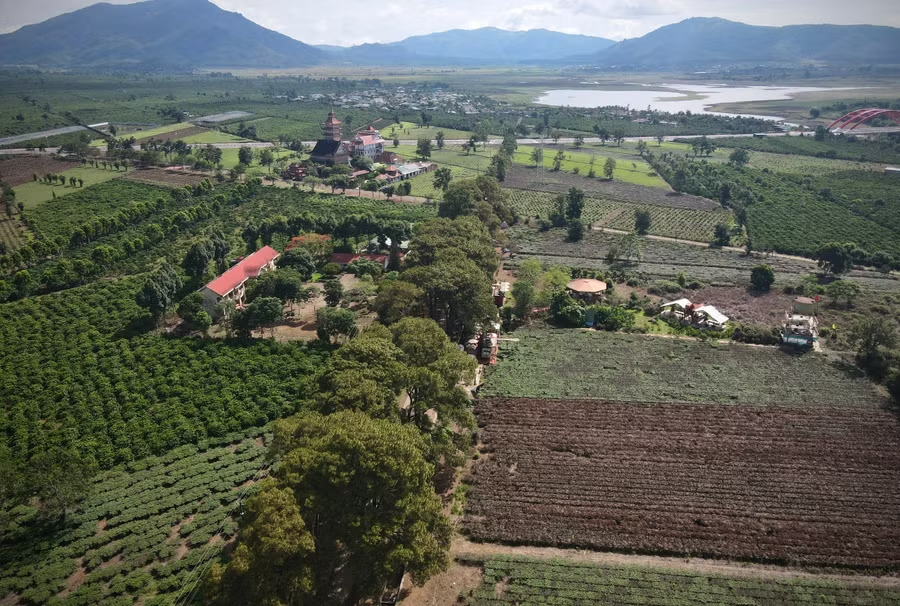
Similarly, Ms. Pham Thi Hien (residing in Thong Nhat ward, Gia Lai) said that every weekend she often takes her friends to the Bien Ho tea hill area to visit, take photos, and drink coffee.
"In the last few months, many tea plantations have noticeably deteriorated. In some places, weeds are growing profusely, the tea plants are shedding a lot of leaves, and pruned branches are not cleaned up, making them look quite unsightly. This detracts from the aesthetics and reduces the number of photo opportunities for tourists," said Ms. Hien.
According to Ms. Hien, when mentioning Pleiku, many tourists immediately think of the pine forests and the tea hills of Bien Ho Lake. Therefore, the locality needs effective conservation solutions to preserve one of the province's tourism symbols.
Reporters' observations on May 19th revealed that in many areas of the Bien Ho tea plantation region, hundreds of ancient tea trees have died, their trunks gray and silvery, their branches bare of leaves. Viewed from above, the entire tea area appears as a vast "burnt" expanse amidst the green of the pine trees and surrounding hills.
Many other tea plantations are also beginning to show signs of leaf burn, yellowing, and noticeable weakening of the plants after a long period of hot weather and lack of care. Numerous tea rows are left with only a few scattered patches of green, interspersed with withered plant stumps, creating a desolate scene.
Struggling with the dilemma of conservation and economic efficiency.
Speaking to reporters, Mr. Nguyen Van Quan, General Director of Bien Ho Tea Joint Stock Company, said that after equitization, the company was leased land by Gia Lai province to manage approximately 550 hectares of tea and coffee plantations.
Previously, the company was allowed by the province to convert 232 hectares of tea plantations to coffee plantations to improve economic efficiency. However, 62.7 hectares of tea plantations located along the Bien Ho area were required to be retained to serve as part of the tourism landscape.
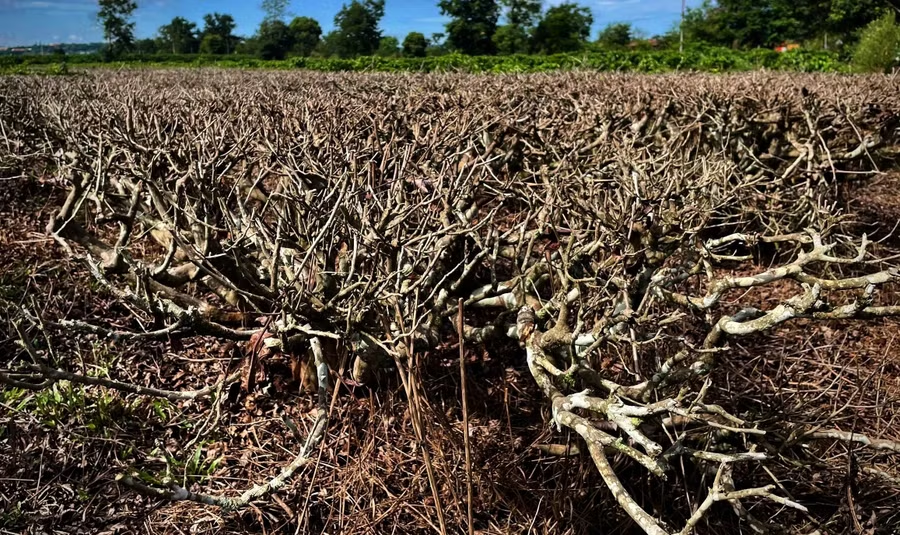
According to Mr. Quan, the company currently leases this area to 113 households for cultivation and purchases fresh tea leaves at a price of 4,000-6,000 VND/kg. However, maintaining the aging tea plantation while achieving low economic efficiency puts significant pressure on the company.
"Businesses still have to maintain factories, processing workers, and operating machinery to serve the raw material area, but business efficiency is not high. We have proposed that the province consider mechanisms to support losses, waive or reduce land rent, or support people who contract to maintain tea cultivation areas to serve tourism," Mr. Quan said.
According to a representative of Bien Ho Tea Joint Stock Company, most of the tea plantations are decades old, resulting in many old, degraded trees with significantly reduced yields, increased susceptibility to pests and diseases, and gradual death over time. In addition, prolonged hot weather has led to a lack of irrigation water in many areas, further weakening the tea plants.
Besides weather conditions and the age of the plants, the company also believes that the theft of tea plants over the years has significantly affected the landscape.
"There are beautiful old tea trees that people have secretly dug up and taken away to use as ornamental plants. Some tea plantations, which were contracted to be cared for by local households, have gradually died and been cut down for firewood. The company does not engage in the buying and selling of tea trees," a representative from the company's Planning and Organization Department affirmed.
The unit also stated that tea cultivation is currently facing many difficulties due to the lack of machinery and equipment among the contracted households. After pruning, many areas are not cleaned up promptly, resulting in an unsightly appearance.
Caught between the challenge of preserving the landscape and the pressure of economic efficiency, if appropriate solutions are not soon found to restore, care for, and support the maintenance of the tea-growing region, the green tea plantations that have been a hallmark of Pleiku tourism for decades risk remaining only in the memories of tourists and locals of the mountain town.
Source: https://baogialai.com.vn/62-ha-che-bien-ho-truc-nguy-co-lui-tan-post587623.html




![[Photo] Standing Committee member of the Party Central Committee Tran Cam Tu working with the Central Inspection Committee](https://vphoto.vietnam.vn/thumb/1200x675/vietnam/resource/IMAGE/2026/05/28/1779969579668_ndo_br_bnd-2495-jpg.webp)



























































































Comment (0)