

In winter, the cold is "sweet," and fog blankets the paths. In spring, plum and pear blossoms blanket the sky, pristine like a dream. In summer, Bac Ha is pleasantly cool in the highland breeze, while in autumn, golden sunlight bathes the hillsides and valleys. Standing on the high mountain slopes, one feels as if they can touch the vast, deep blue sky. There, life is slow, quiet, and unhurried. Hidden within that tranquility is a silent, persistent, and vibrant flow – the "flow" of its cuisine .

Bac Ha cuisine is not flashy or ostentatious, but rather deeply ingrained, guiding visitors into the cultural world of the Mong, Tay, Nung, Dao, and Phu La ethnic communities who have lived here for generations. Each dish tells a story, each flavor a memory, and each meal is a way for the people of Bac Ha to tell the story of their land.
Bac Ha cuisine is shaped by the natural conditions and lifestyle of the highlands. The cool climate year-round, the deep cold winters, the hilly terrain, and the terraced rice fields have created unique ingredients: corn, upland rice, wild vegetables, local spices, black pigs, black chickens… Based on these ingredients, each ethnic group has its own way of preparing, seasoning, and enjoying the food, creating a rich and multi-layered culinary landscape.
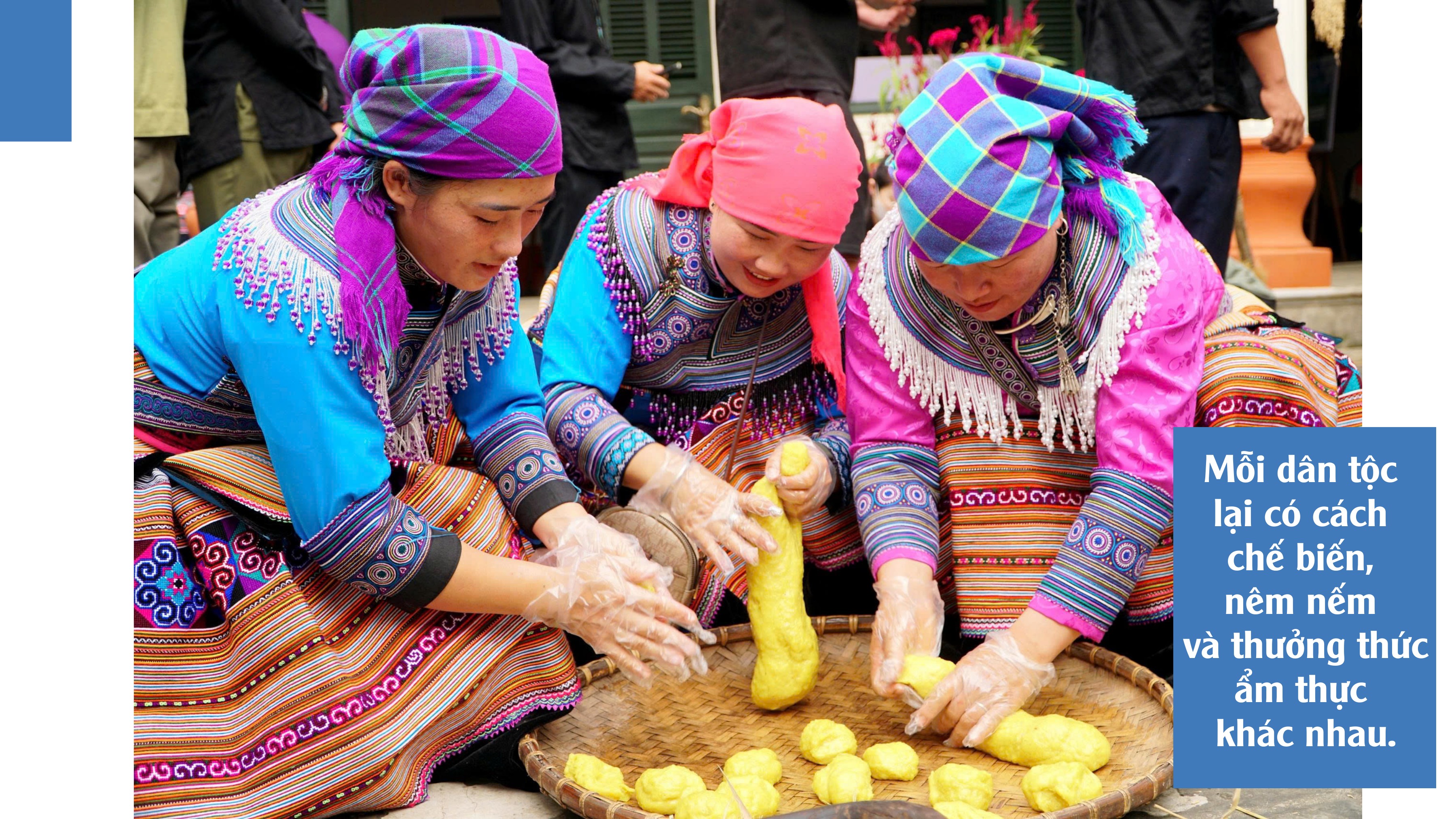
The Hmong are simple and robust in their cooking; the Tay and Nung are refined and unhurried; while the Dao are elaborate in their spices and culinary rituals. These differences are not separate but blend together, creating the common identity of Bac Ha cuisine - rich, simple yet profound, a taste you'll remember forever.

Some say that if you go to Bac Ha and haven't let your taste buds experience pho, it's like you haven't really been there. As for me, every time I rush back to Bac Ha, I have to stop by a pho restaurant and try all three types of pho: hot pho, sour pho, and mixed pho, all in the authentic Bac Ha style.
The pho here is simple, with a clear, light broth, fragrant with the aroma of simmered bones and wild cardamom. The noodles are made from local rice, with just the right balance of chewiness and softness. Eating pho in Bac Ha is like eating in the mist, amidst the scattered sounds of the market opening, and the slow pace of life of the highlanders. That's why people liken Bac Ha pho to "the bowl of pho of the morning mist." A hot bowl of pho not only warms the body but also marks the beginning of a journey to discover the flavors of the white plateau.
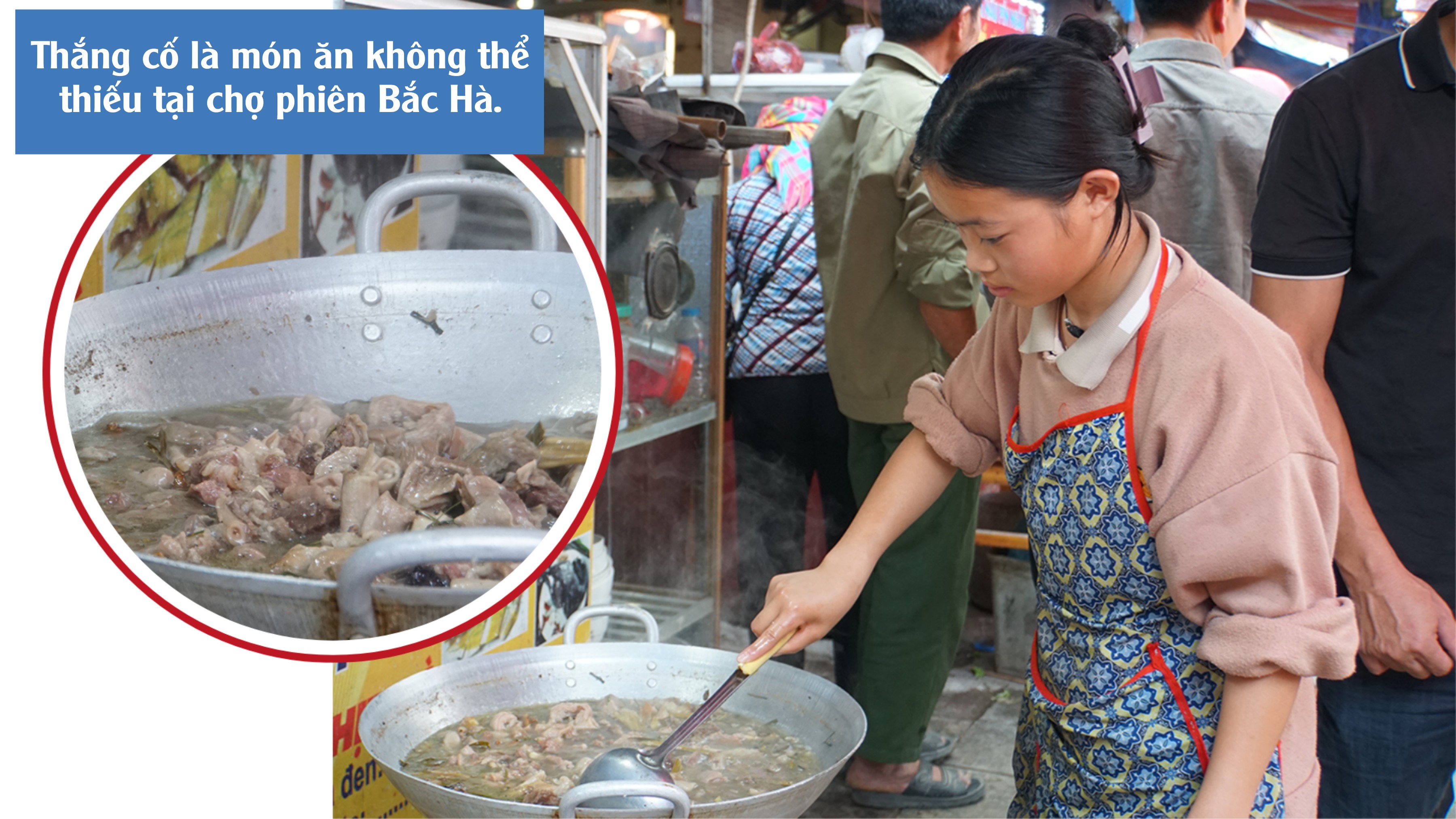
If Bac Ha pho evokes warmth and nostalgia, then Bac Ha thang co is a communal dish... like a "grand circle dance" on the white plateau, pulsating and steaming with rich flavors. The pot of thang co, emitting fragrant aromas of cardamom, galangal, cinnamon, and many other herbs found only in the highlands, is steaming. Traditionally, thang co is made from horse meat and offal; nowadays, beef and buffalo are added, but the slow, careful, and rich cooking method is still maintained. Sitting by the pot of thang co, sipping a glass of strong corn wine, and listening to the stories of the locals, visitors understand that thang co is not just a dish, but a "thread" that connects the community, a space for cultural exchange on the plateau.
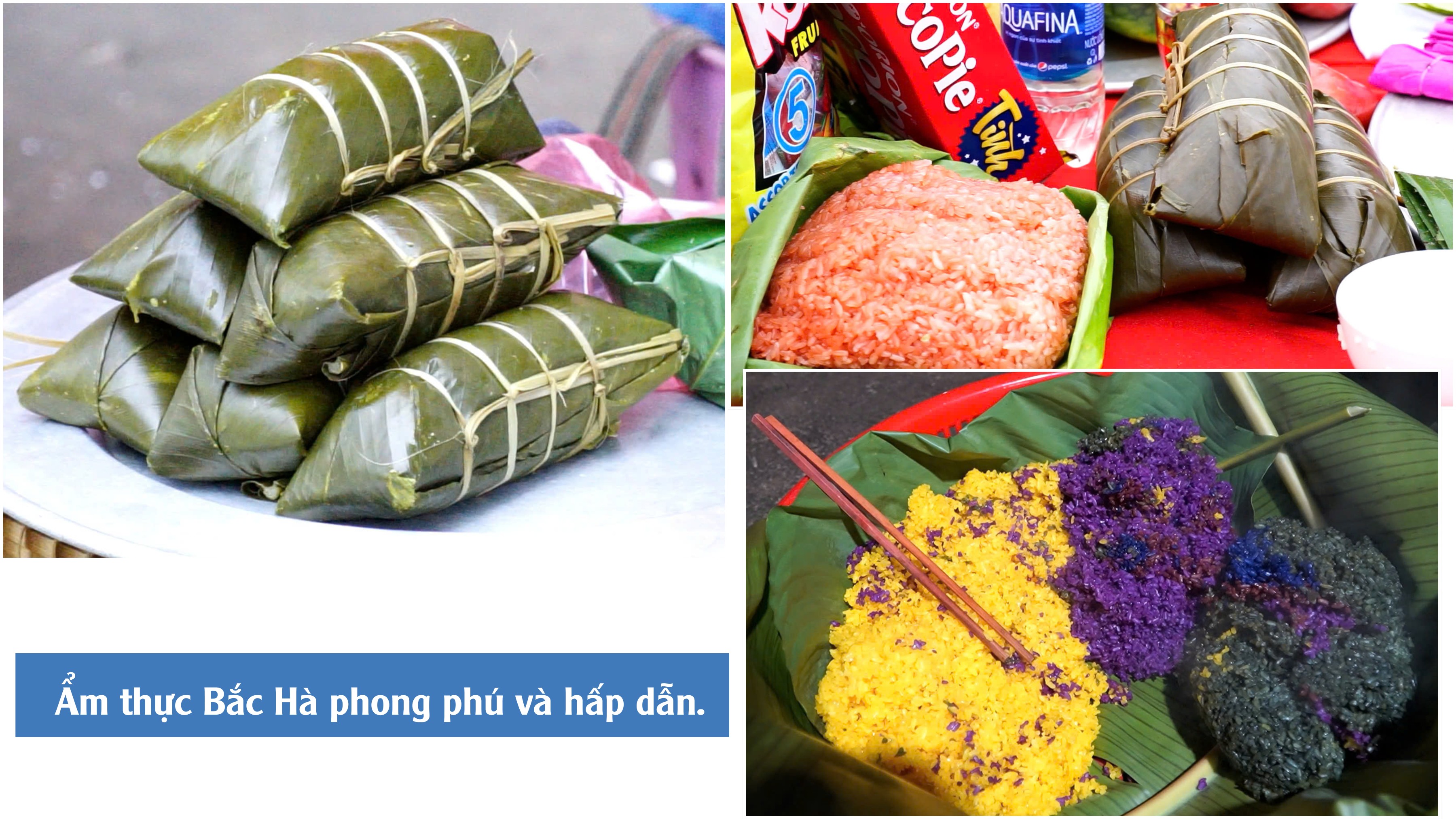
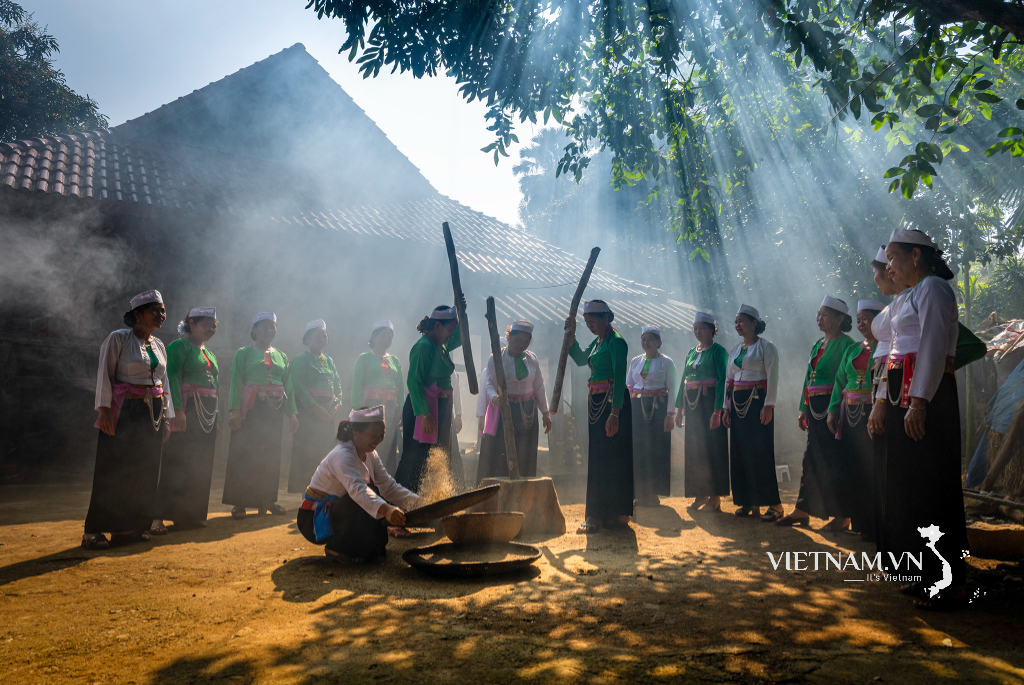
Amidst the smoky atmosphere and the aroma of broth, pho, and thang co (a traditional stew), you'll encounter the bright smiles of mothers and grandmothers beside pots of sticky rice, laden with vibrant colors. The five-colored sticky rice of the Tay and Nung ethnic groups is dyed entirely with natural forest leaves: red, yellow, purple, green, and white – five colors blending together like the mountains and forests of Bac Ha. Especially noteworthy is the black sesame sticky rice, with its unique flavor. The sticky rice grains are chewy, infused with the rich, nutty taste of finely ground black sesame seeds, making it even more appealing when eaten in the cold winter and spring. It's the kind of sticky rice that fills you up but leaves you wanting more, a taste you'll remember forever.
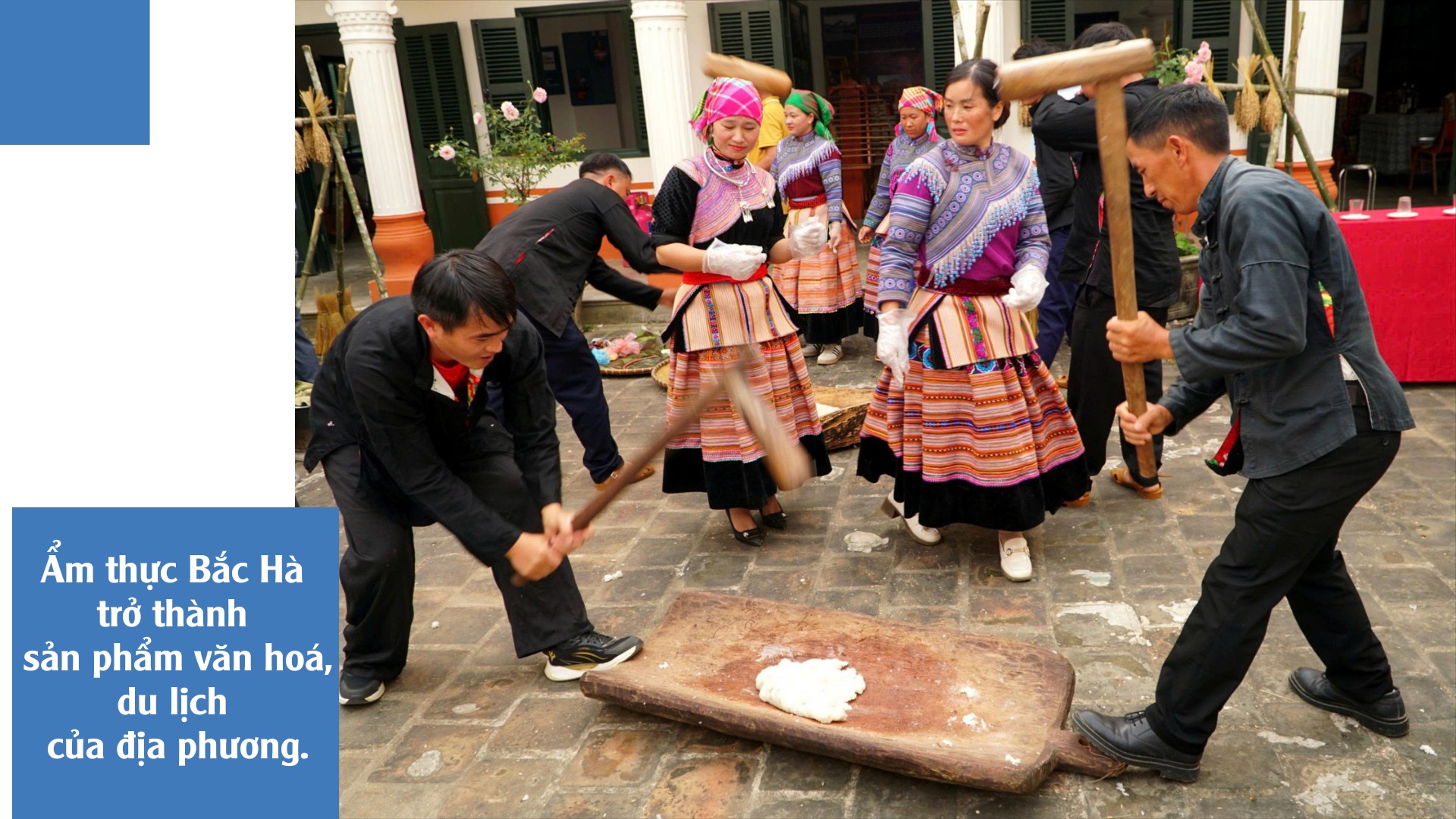
Bac Ha cuisine is not only famous for pho, thang co (a traditional stew), and five-colored sticky rice, but also for the richness of its traditional cakes. Sticky rice cakes, black glutinous rice cakes, fried cakes, corn cakes, corn-filled cakes… are all handcrafted by the skillful hands of highland women. The filling is usually finely ground mung beans, with a moderate sweetness that isn't overpowering. These simple cakes, eaten amidst the bustling market atmosphere, surrounded by the smoky aroma of cooking and grilled corn, evoke a familiar, warm feeling, like a part of childhood memories.
In the lives of the Tay, Nung, and Mong people in Bac Ha, the family meal always holds special significance. The meal includes tender, fatty braised pork, sticky black sticky rice cakes, cornmeal porridge made from mountain corn, seasonal wild vegetables, black pork, free-range chicken… Each dish is connected to labor, to the hills, and to the slow pace of life on the white plateau. From these family meals, Bac Ha has gradually elevated itself into the Bac Ha Family Meal Festival – where the essence of local cuisine is showcased in a complete and emotionally rich way.
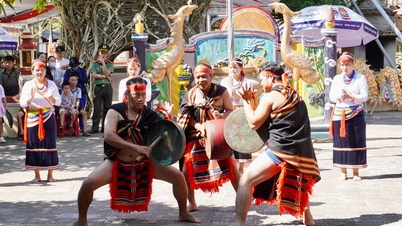
During food festivals and other celebrations, Bac Ha becomes more vibrant than usual. Tourists from all over flock there, immersing themselves in the colorful ethnic costumes, the sounds of flutes and drums, and the lively chatter of laughter. At the heart of this atmosphere are the elaborately prepared highland meals. Each meal is not just a food item, but a warm welcome from the people of Bac Ha. It contains flavors, stories, and memories. Visitors sit by the table, listening to locals recount cooking methods, seasonal harvests, and customs, realizing that cuisine is also a way to understand and explore a region. The festive atmosphere is therefore always full of excitement. Tourists eagerly experience, enjoy, take photos, and chat.
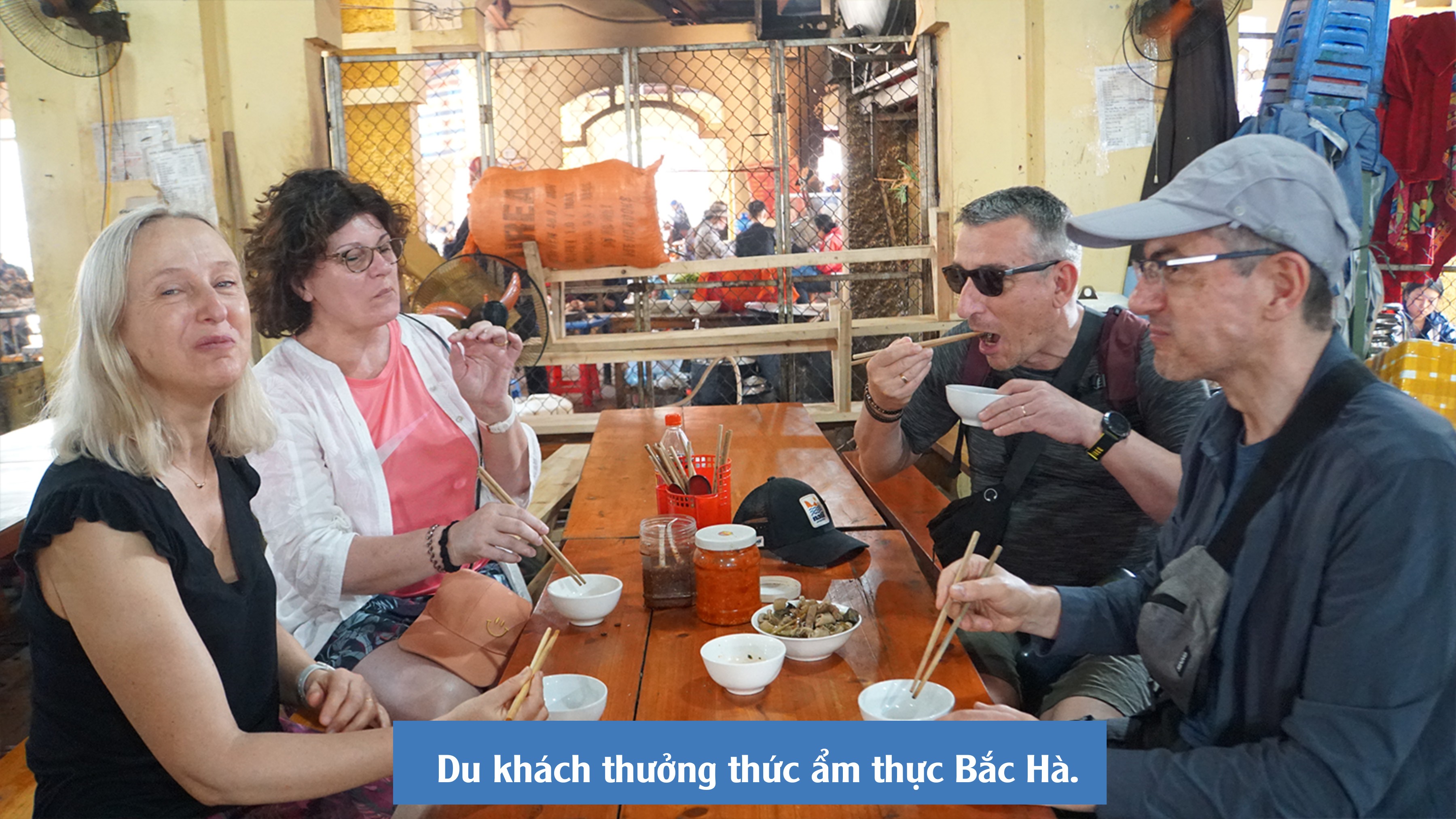
Therefore, Bac Ha cuisine is not just for eating, but for experiencing, for remembering, and for wanting to return to... Cuisine is becoming a distinctive tourism product, contributing significantly to local economic development. With its simple, sincere, and rich flavors, Bac Ha cuisine has been and continues to attract tourists, encouraging them to stay longer and explore more deeply. Developing tourism through cuisine not only helps preserve traditional cultural values but also creates sustainable livelihoods for the local people.
When leaving Bac Ha, what people remember most is not only the clouds and mountains, the plum and pear blossoms, the century-old Hoang A Tuong mansion, and the famous market of the Northwest region... but also the lingering flavors: the aroma of hot sticky rice in the early morning mist, the rich taste of thang co (a traditional stew), and the warm bowl of pho that lingers in the cold highlands. Bac Ha's signature cakes are also added to tourists' luggage… These flavors subtly guide and invite, making Bac Ha a place people always want to return to.
Source: https://baolaocai.vn/am-thuc-bac-ha-huong-vi-cao-nguyen-dan-loi-post891215.html






![[Photo] Reception to welcome General Secretary and President To Lam and his wife on their State visit to the Philippines](https://vphoto.vietnam.vn/thumb/1200x675/vietnam/resource/IMAGE/2026/06/01/1780295488620_vna-potal-chieu-dai-chao-mung-tong-bi-thu-chu-tich-nuoc-to-lam-va-phu-nhan-tham-cap-nha-nuoc-toi-philippines-8798060-7855-jpg.webp)
















































Comment (0)