

Traditional eating habits vs. modern eating habits
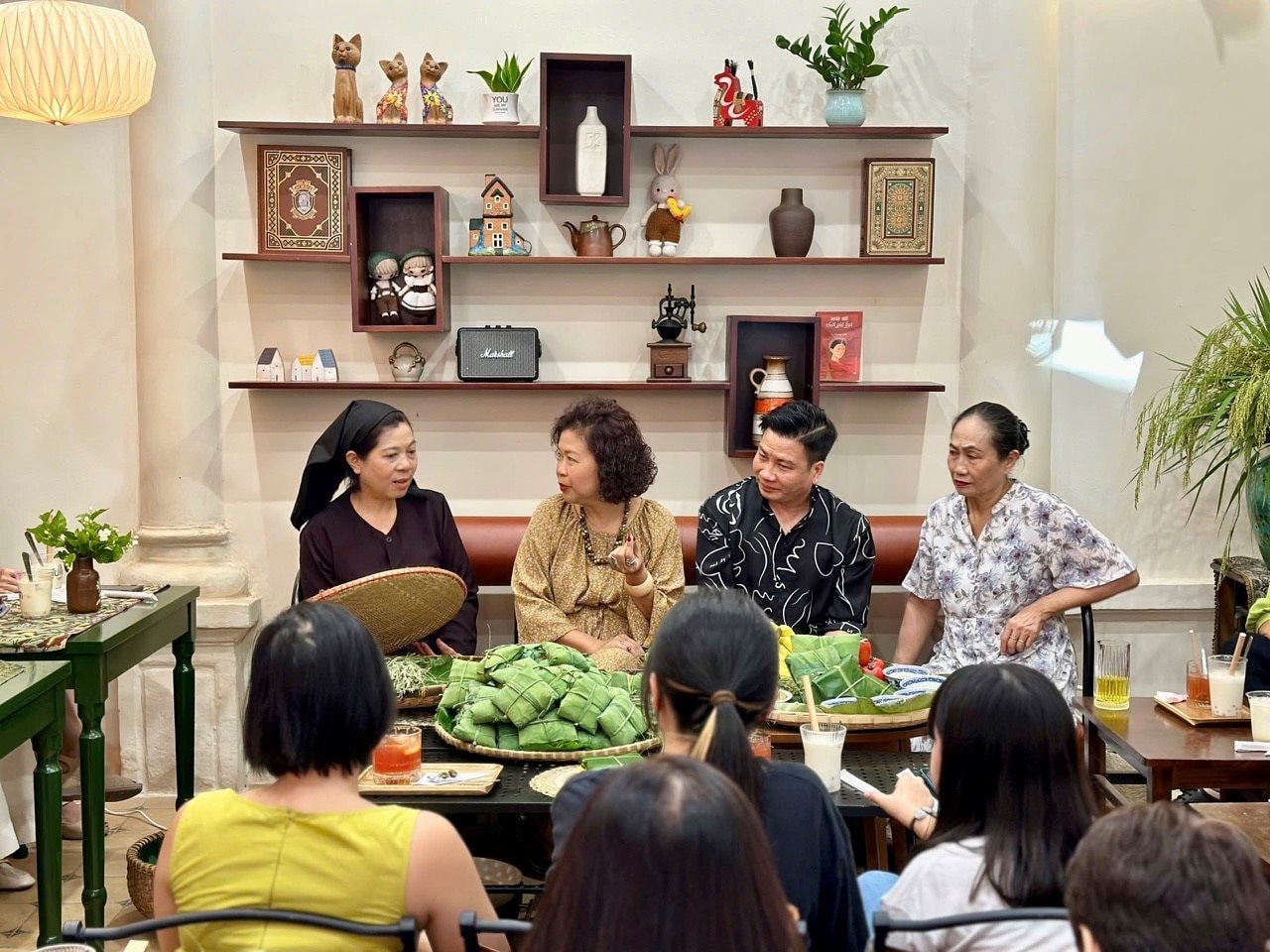
In the old house with its dark brown tiled roof and polished wooden floors on Hang Can Street, Hang Dao Ward, Hoan Kiem District, Hanoi , the large family of Mr. Nguyen Duc Thong and Mrs. Hoang Thi Lien, consisting of nine people across three generations, lives. A family meal consists of only one main dish, one soup, and one vegetable dish, but what makes each meal different is the preparation method and the customs surrounding it. Boiled vegetables must be green and loose when placed on a plate, preventing them from clumping together. Braised meat must be tender but not mushy, remaining intact when placed in the bowl but melting in the mouth when eaten. The soup must be clear, without turbidity or a film of oil. Most importantly, the atmosphere of the meal must be joyful and cozy, setting aside all outside worries. In their family, they always try to wait for everyone to gather around the wooden tray, a relic passed down from their ancestors, for each meal.
One of the traditions maintained in the family for hundreds of years is the custom of inviting everyone to eat at mealtimes. The phrases, "Father invites mother and children, grandmother and grandchildren to eat," "Son invites father to eat," "Son invites mother to eat," "Grandson invites grandfather to eat," "Granddaughter invites grandmother to eat,"... are always followed in a strict, orderly manner, from oldest to youngest, rather than inviting everyone together. Many visitors jokingly say, "If you invite like that, the rice will get cold," but for Mr. Thong and Mrs. Lien's children and grandchildren, these formal invitations seem to add a unique flavor to the traditional Hanoi family meals. At the end of the meal, the children and grandchildren respectfully say, "We ask permission from grandfather/grandmother/father/mother to stop eating," a tradition repeated ten times a year.
According to Ms. Hoang Thi Lien, the homeowner, this tradition of inviting guests has been maintained in the family for generations. Similarly, the preparation of meals for those who arrive late is done carefully. Each piece of meat and vegetable is placed on small, pretty plates, neatly arranged so that those who arrive late feel comforted, even if they can't eat with the whole family. On weekends, Ms. Lien often cooks beef pho, vermicelli soup with meatballs, or grilled pork patties with her daughter-in-law and daughter, offering a variety of "fresh" meals. This tradition of "eating fresh" dates back to the subsidy era and is still maintained, even though nowadays, chicken, fish, and vegetables are abundant, and one can prepare dishes to their liking every day. Ms. Lien says the secret to delicious weekend meals is the warmth, togetherness, and fresh ingredients.
The couple has four children, three sons and one daughter. Two of them are married and live separately, while the eldest and youngest sons, after getting married, still live with their grandparents. Therefore, the weekend "fresh meal" is an opportunity for the extended family, including the grandparents, eight sons and daughters, daughters-in-law and sons-in-law, and eight grandchildren, to gather and spend time together. Their narrow house in the old quarter, though cramped, is filled with laughter and conversation. Mrs. Lien said that the ancestral offering meal in Hanoi cannot be without stir-fried almonds (made with roasted peanuts, kohlrabi, carrots, and diced pork tenderloin) or stir-fried dried squid with shredded kohlrabi. These two dishes, though a bit elaborate, are delicious and visually appealing. At her house, on the third day of Tet (Lunar New Year), the offering meal to bid farewell to the ancestors is never without bun thang (a type of noodle soup), with the three daughters-in-law competing to showcase their cooking skills, each contributing a dish.
The culinary traditions of Mrs. Hang Thi Lien's family are probably not much different from those of other Hanoi families with older members born in the early decades of the 20th century. It's clear that Hanoi and its cuisine have always been a captivating subject for writers. Not only Nguyen Tuan with his famous pho, but also in works about life in Hanoi such as "The Season of Falling Leaves in the Garden" by writer Ma Van Khang (a work that won the ASEAN Literature Prize in 1998 and the State Prize for Literature in 2001), several sections are dedicated to describing the flavorful and colorful Tet feast of Hanoi. Sadly, fewer and fewer families still maintain such traditions, as the older generation is gradually passing away. The current heads of households are women busy with work and children, and therefore wish to ease the strictness and meticulousness of the previous generation's Hanoi culinary culture. Consequently, the risk of these traditions fading away is unavoidable. Even inside the house, the street vendors and snacks in Hanoi are different now than they used to be.
Journalist Vinh Quyen, former Deputy General Director of the National Assembly Television and Deputy Director of Joy FM channel, expressed her concern: “I feel that the refined culinary art of Hanoi today is being mixed and altered significantly compared to traditional cuisine. This can be seen in the changes to the dishes. For example, Hanoi's bun dau mam tom (vermicelli with tofu and shrimp paste) now has many additional side dishes (which young people often call "toppings") such as rice patties, fried spring rolls, boiled meat, sausage, imitation dog meat... Or from a light and refreshing bowl of bun rieu (crab noodle soup) consisting only of crab paste, tomatoes, and scallions cooked with fermented rice vinegar, it now has many additional side dishes such as pork sausage, tofu, pork cracklings, beef, fertilized duck eggs, and betel leaf rolls… It is also very difficult to find a bowl of bun thang that is truly authentic according to the old Hanoi style. Now, bun thang is almost like pho, overflowing with meat, liver, gizzard, and eggs, no longer the delicate bun thang of the past. "Just from the dishes mentioned above, we can see that many traditional Hanoi dishes have now been distorted in this way."
Has traditional culinary culture changed in the minds of young people?
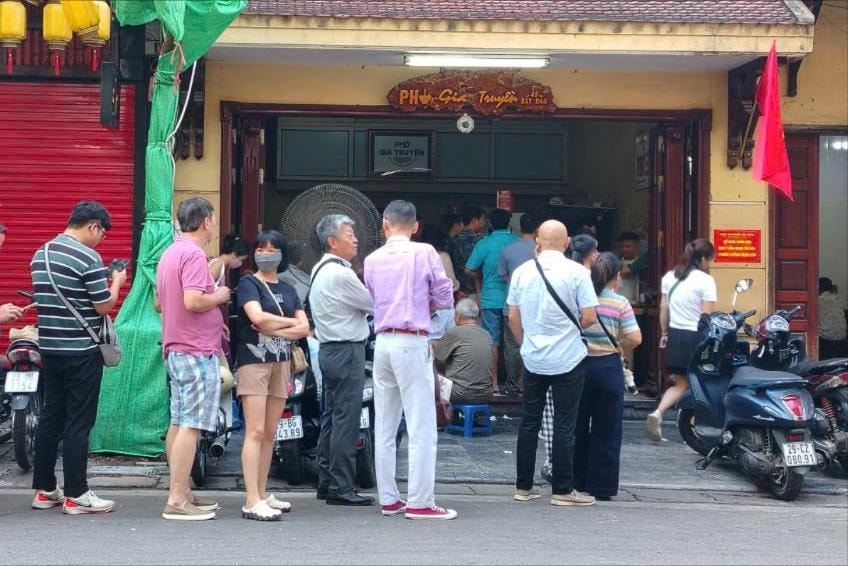
At a famous pho restaurant on Bat Dan Street, Hoan Kiem District, we met a young man named Hoanh Son patiently waiting in line for a traditional Hanoi pho. Son happily shared: “I’ve been in Hanoi for half a year now, and every weekend I’m drawn to the pleasure of discovering traditional Hanoi dishes. This is the second time I’ve lined up at this pho restaurant. Last time it was too hot, so I couldn’t wait and missed out.”
Hoành Sơn further shared, “As a food lover, I’ve been to many restaurants that are reviewed as must-try traditional restaurants when visiting Hanoi. But not every restaurant was as delicious as I expected. I really want to learn about the culinary culture of Hanoi, the capital city with a thousand years of history, because I’ve read about it in books and found it very fascinating, but I haven’t had many opportunities to explore it in more depth.”
This pho restaurant has long been famous for its traditional Hanoi-style pho. Many customers of all ages and backgrounds, regardless of the weather, quietly line up to take their own steaming bowls of pho to their tables. While many believe that Vietnam's queuing culture has disappeared, it's not uncommon to see long, orderly lines of people waiting their turn at traditional food establishments like this pho restaurant or the Bao Phuong traditional mooncake shop on Thuy Khue Street. This queuing serves as a silent affirmation of the enduring appeal of traditional culinary culture.
According to journalist Vinh Quyen, the desire of young people to learn about and explore the places they visit is an encouraging trend. Furthermore, to make the exploration process more enjoyable and fulfilling, Vinh Quyen believes that young people need to proactively equip themselves with knowledge to gain a certain understanding of the cuisine and the region they visit. This will provide a foundation for understanding and experiencing the local culture and traditional dishes in a truly complete and immersive way.
Journalist Vinh Quyen further shared that Hanoi's traditional cuisine is very refined and unique, different from the culinary culture of other regions – although every culinary culture has its own characteristics. Having served as the capital and center of the country for over 1000 years, Hanoi's cuisine has attracted delicacies from all over, resulting in a diverse, rich, and captivating culinary landscape. Furthermore, most people living in Hanoi have comfortable economic conditions and frequently host guests, leading to more elaborate, refined, and stylish food preparation. Therefore, many simple, rustic dishes, after being prepared by Hanoians, are presented more attractively, meticulously, and appealingly, creating a new visual impression for dishes that were once considered familiar. All of these factors contribute to the unique character of Hanoi's cuisine.
Refined, delicious, and clean – these are the goals Hanoi's cuisine should strive for.
Cuisine is increasingly becoming a cultural highlight of Hanoi, a cultural strength to attract tourists and promote the country. Many foreign tourists come to Vietnam not only to explore famous landmarks such as Ha Long (Quang Ninh), Trang An (Ninh Binh), Da Lat (Lam Dong)... but also to learn about the culture through experiencing the traditional cuisine of the thousand-year-old capital, a land of rich history and talented people.
Therefore, preserving the traditions and cultural style of Hanoi's cuisine is crucial. If each Hanoian does not work together to preserve it, allowing the sophistication and meticulousness in each step of preparation, especially in selecting hygienically safe food, to fade away, and allowing Hanoi's cuisine to gradually lose its identity, then at some point future generations will no longer retain any trace of these simple yet appealing dishes, rich in national identity and imbued with the refined flavors of Hanoi.
However, preserving traditional culture, including culinary culture, is not a simple problem. We cannot use administrative orders to force food producers, businesses, and processors to preserve culinary culture unless we help them see the benefits that preserving tradition brings.
Therefore, according to journalist Vinh Quyen, preserving the beauty of Vietnamese cuisine needs to be maintained within each family living in Hanoi, through the older generation passing on to the younger generation how to choose fresh and delicious food, how to prepare traditional dishes, and how to present them attractively. Tradition also needs to be absorbed through small actions such as arranging the table, setting the plates, serving, and inviting elders... As the Vietnamese saying goes, "The betel quid itself isn't beautiful, but the hand holding it is."
Furthermore, food lovers can also create groups and online communities to share information about traditional Vietnamese dishes, including those of old Hanoi, with their familiar flavors and aromas. They could also organize workshops on Hanoi cuisine, such as the weekly "For Beloved Hanoi" workshop organized by journalist Vinh Quyen, journalist Vu Thi Tuyet Nhung, and chef/culinary expert Nguyen Phuong Hai, to share the beauty of traditional Hanoi dishes. Through such practical actions, each person contributes a little passion, thereby spreading love for Hanoi cuisine to the younger generation.
Stories related to the history of a dish, its preparation methods, or in other words, the soul it embodies, will help food lovers build an understanding of Hanoi cuisine, thereby absorbing and spreading their love for a dish, because that dish is also a part of the soul of Hanoi, of the place where they live.
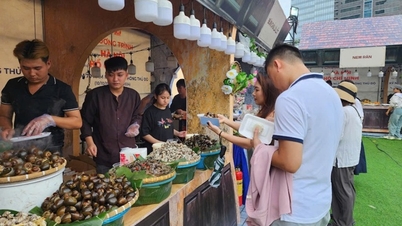
Western-style cuisine isn't entirely suited to the Vietnamese way of life. Of course, some segments of the population have become accustomed to this style of food. But the majority of Hanoi residents still maintain the essence of their national culture. Many restaurants still cook traditional dishes, such as eel, fish, and shellfish, in an appealing and hygienic manner, making them popular and consistently in high demand. Traditional, familiar eateries still have many opportunities for growth. It doesn't necessarily have to be Western cuisine with beef and red wine, especially since people are increasingly seeking healthier options, while red meat is considered unhealthy.
Hanoi also embraces the culinary culture of many other localities, especially traditional dishes and local specialties that are appealing to Hanoians, such as Hai Phong crab noodle soup. Therefore, the trend of reviving traditional dishes has become a need for people who want to live a simple life with the rustic dishes of the past. Elaborate Western-style dishes are mainly sold in large restaurants. However, Hanoians generally still choose to eat familiar, delicious, and reasonably priced dishes that are still nutritious. The fundamental issue is that during the cooking process, whether in a luxurious restaurant or a simple eatery, the food must be fresh, have a clear origin, the establishment must be clean, and the cook must maintain hygiene. Even if not luxurious or glamorous, the food will still be delicious and healthy, without affecting health.
Assoc. Prof. Dr. Nguyen Duy Thinh, Institute of Biotechnology and Food - Hanoi University of Science and Technology
My family has been selling pork rib porridge in the Old Quarter for nearly half a century, passed down from my mother to me. Although I don't advertise or ask anyone to post on social media, many young tourists – both Vietnamese and foreigners – have taken photos and videos after trying our porridge, sharing it online both domestically and internationally. As a result, more and more tourists have come. But our main customers are still regulars, either locals from the Old Quarter or people who used to live there but have moved elsewhere. I have customers who now live in Tay Ho or Dong Da districts, but they still ride their motorbikes to my house on weekends to eat on the sidewalk, or drive their cars to buy a few boxes to take away. Actually, there's no secret recipe; it's simply about choosing fresh, delicious ingredients, preparing it cleanly, making it palatable, and putting my heart into it. I usually simmer bone chunks instead of marrow bones, which tend to have an unpleasant smell. The bones are washed thoroughly with water and then boiled with a few grains of salt. After boiling, they are washed again, and this process is repeated three times before being stir-fried with chicken fat. Then, water is added and the mixture is simmered until tender. This method gives the porridge a naturally sweet, fragrant, and wholesome flavor, which customers love. I also buy the fried dough sticks from a familiar supplier and avoid using oil that has been reused multiple times.
Ms. Tran Thi Huong Lien - owner of the pork rib porridge shop on Hang Bo Street, Hanoi.
Source: https://daidoanket.vn/am-thuc-ha-noi-trong-doi-song-hien-dai-10292588.html






































































Comment (0)