In a recent interview, Thai actor Pond Panavit gave an answer that delighted tens of thousands of Vietnamese fans. "Which restaurant would you take your girlfriend to on your first date?" - "If I had the chance, I'd take her to eat Vietnamese food. I've tried it before, and Vietnamese savory sandwiches are delicious!"
This isn't the first time an international star has expressed their love for Vietnamese food.
Over the past three years, Thai cinema has begun to strongly penetrate the Vietnamese market, especially targeting young people. With the endearing enthusiasm of Vietnamese fans and the convenient geographical location, Vietnam has become one of the top choices for Thai idol stars to hold fan meetings. Pond Panavit is one of the young artists who held a fan meeting in Ho Chi Minh City over a year ago, marking his first time in Vietnam. Despite only staying for two short days, Pond learned many Vietnamese words, frequently interacted with Vietnamese fans, and always hopes to return to Vietnam soon to hold fan meetings and explore more Vietnamese cuisine . Just a few months after Pond Panavit, actor Siraphop Manithikhun (Net) also fell in love with Vietnamese food, especially grilled spring rolls and iced coffee with milk. Before coming to Vietnam, Net had eaten grilled spring rolls many times in Thailand, and as soon as the fan meeting ended, he and his team "raided" a grilled spring roll restaurant in Ho Chi Minh City, then posted it on his personal Instagram page with a "delicious" emoji.
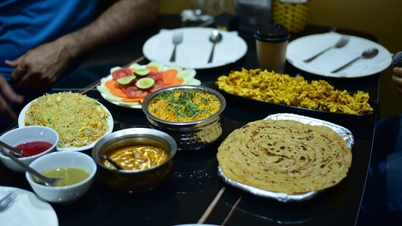
Tourists experience Vietnamese cuisine.
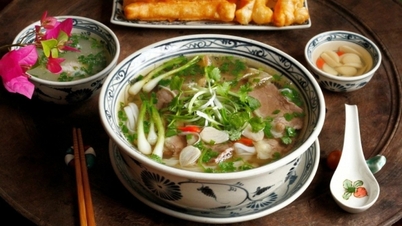
When talking about celebrities who love Vietnamese food, the girls from the popular South Korean girl group BlackPink are definitely at the top of the list. Rosé, in particular, is famous for her "undying love" for pho, even being dubbed the "ambassador of Vietnamese pho" by Vietnamese Blinks (Blink is Blackpink's fandom). On her personal Instagram and during her shows, she always praises pho. Whenever she has free time, she seeks out Vietnamese restaurants in Korea to enjoy Vietnamese food. Most recently, during her Born Pink concert in Hanoi , the star of the hit song "On the Ground" caused a sensation when she posted a picture of herself slurping up a bowl of pho broth at the Backstage restaurant in the Capella Hanoi hotel – one of Hanoi's Michelin Selected restaurants.
For Asians accustomed to heavily spiced foods, the rich flavors of Vietnamese cuisine are easily captivating. However, Vietnamese food has also won over diners from distant Europe and America, where tastes differ considerably. "What's your favorite food?" – "Definitely Vietnamese food" – Emma Myers' (the famous "rainbow wolf" who rose to fame playing Enid in Netflix's Wednesday) answer in a Q&A on Instagram in late 2022 created a sensation on social media. Interestingly, until the answer was published, there was no official information about Emma Myers ever visiting Vietnam. Many of her fans speculated that she fell in love with Vietnamese cuisine through pho and banh mi, while others believed she was undoubtedly captivated by bun cha. The online community then eagerly invited Emma Myers to Vietnam to treat her to delicious dishes like hu tieu, bun rieu, and com tam, so she would "forget her way home to film the second part of Wednesday."
Western tourists eating pho at a Vietnamese pho restaurant on Pham Ngu Lao Street, District 1.
Around the world , Vietnamese banh mi, pho, and bun cha confidently "conquer" every country. Nearly two years studying abroad in Japan, Tuan Vu (from Cu Chi, Ho Chi Minh City) has almost never experienced the feeling of "missing home-cooked meals." Because, even though he lives in a village quite far from the city center of Hokkaido (Japan), a simple Google search reveals dozens of Vietnamese restaurants within a 3km radius. "Vietnamese restaurants and banh mi shops are always packed. There are Vietnamese, Thai, and Korean people, but mostly Japanese. My friends love eating bun bo (Vietnamese beef noodle soup). They praise the fish sauce aroma and flavor. This surprised me because I thought Japanese people only like bland, raw food with few spices. Young people even cook pho at home. You can buy any Vietnamese food you want here. Banh xeo (Vietnamese savory pancake), braised pork, banh canh (Vietnamese rice noodle soup), hu tieu (Vietnamese noodle soup)... whatever I crave, I can buy the ingredients right away and cook it myself. Seeing foreigners eating the food I cooked, nodding and praising how delicious it is, makes me very happy and proud," Tuan Vu excitedly recounted.
It's not just out of "diplomatic courtesy" that Philip Kotler, the father of modern marketing, suggested 17 years ago: "If China is the world's factory, India the world's office, then Vietnam should be the world's kitchen." Vietnam possesses a culinary tradition that the whole world envies. According to the Chairman of the Vietnam Culinary Culture Association, Nguyen Quoc Ky, Vietnamese cuisine has many advantages that even Vietnamese people themselves haven't fully recognized. Vietnamese dishes are natural, close to nature, nutritious, beneficial to health, yet also elegant, fitting the current global trend of limiting fat. For example, we eat raw and boiled vegetables, with few fried or stir-fried dishes; meeting most of the requirements of modern cuisine. From very ordinary ingredients, through the "magical" hands of Vietnamese chefs, they can become very delicious and unique dishes. Although it's the same pork rib dish, when served with star anise sauce and a thin slice of cinnamon from Quang Nam province, it will surprise and delight even the most discerning diner. Furthermore, the manner and culture of Vietnamese dining are highly valued. The subtlety, tradition, and cultural nuances are clearly reflected in the way food is enjoyed, avoiding excessive indulgence. This is the essence, the soul, that creates the unique and special appeal of Vietnamese cuisine.
Tourists at Ho Thi Ky Food Street (District 10)
However, if we look back at the travelogues of international tourists in Vietnam in the early 21st century, "Vietnam's tourism products" seem to be the tireless creations of… local housewives. In 2005, Taylor Holliday went to Ben Thanh Market to do a report on Vietnamese cuisine for The New York Times. At that time, American tour operators were offering 10-day Vietnamese culinary experiences for $4,000-$5,000. After more than 30 years of development, Vietnamese-American chefs had established themselves on the American culinary map. Names like Charles Phan, Michael Huynh, and Mai Pham won major awards, built star restaurants, wrote books, and fueled the craze for Vietnamese cuisine. However, many American tourists who "rushed" into traditional markets might only end up… disappointed. That was the case for Taylor Holliday.
At Ben Thanh Market, Taylor was lost in a "maze" of "unrecognizable" items, "overwhelmed by the smells of raw and cooked food," and "surrounded" by an "overly aggressive force of vendors," leaving her feeling overwhelmed. In Hanoi, Taylor visited the 19/12 Market – the capital's formerly infamous "Underworld Market," now a bookstore. She was greeted by whole roasted dogs baring their teeth on the stalls. "It's well worth a visit, but if you haven't been to enough markets to distinguish between Vietnamese coriander and ginger, or between banana blossoms and dragon fruit, the experience can be incredibly frustrating!" she wrote.
Since then, Vietnamese cuisine has continuously progressed and made profound marks on the international stage. We consistently appear on lists of the world's most attractive culinary destinations. In early 2023, the renowned travel magazine Travel + Leisure also suggested Vietnam as a top culinary destination in Asia for its 2023 travel itinerary. However, it was only with the inclusion of the Michelin Guide that Vietnam truly stepped from the periphery into the "sanctuary" of global culinary excellence.
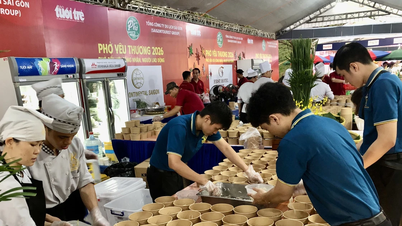
Saigontourist Group's 2022 Culinary Culture Festival and Delicious Dishes
Michelin is a term that exudes the essence of creativity and rigorous standards for culinary art. The most prestigious names on the global culinary map, such as Italy, France, Spain, and Japan, all boast a long list of Michelin-starred chefs and restaurants. To date, 40 countries worldwide have a Michelin Guide. On June 6th, the first list of Michelin-starred restaurants in Vietnam was announced in Hanoi, marking a historic milestone for Vietnamese cuisine. According to the Director General of the Vietnam National Administration of Tourism, Nguyen Trung Khanh: "The awarding of Michelin stars to Vietnamese restaurants will be a major and important step in achieving world-class service quality. Therefore, the arrival of the Michelin brand in Vietnam will create a new trend for tourists visiting Vietnam."
On the very first day of his official visit to Vietnam in early June, Australian Prime Minister Anthony Albanese chose to enjoy draft beer and banh mi (Vietnamese baguette sandwich). He lavished praise on Vietnamese banh mi and happily drank beer amidst the cheers of other diners at a beer quán on Duong Thanh Street in Hanoi. The Australian Prime Minister praised Vietnamese cuisine for its deliciousness and diverse dishes. He also ate boiled peanuts, fish cakes, grilled pork belly, fried tofu... the perfect accompaniments to beer.
Images of foreign heads of state and leaders strolling and enjoying street food have become a tradition whenever Vietnam hosts international dignitaries. Canadian Prime Minister Justin Trudeau and Prince William of Wales have both enjoyed sidewalk coffee; former US President Barack Obama ate Hanoi's bun cha in 2016; and former US President Bill Clinton marked his first visit to Vietnam in 2000 with a memorable bowl of pho... These visits by foreign dignitaries further affirm that Vietnamese cuisine always leaves a beautiful impression on international friends, alongside the hospitality of the people. Following these visits, the establishments that have hosted dignitaries in Vietnam receive strong media attention, becoming famous.
Huynh Hoa Bread
However, if only a few dishes or restaurants rely on "free publicity" from politicians or celebrities, the journey to becoming the world's culinary hub will certainly be a long one. It's difficult to expect "good wine needs no bush" because not only Vietnam, but many countries are also actively promoting their culture, cuisine, and tourism beyond their borders.
The most successful example to date is probably South Korea. In Vietnam, Korean food is becoming increasingly popular, appealing to everyone from young people to middle-aged housewives. It's no longer just about eating barbecue or bibimbap at restaurants… kimchi has even become an indispensable part of daily meals for many Vietnamese families. This success stems from an extremely successful promotional strategy through film. Almost every Korean film features a scene of a character eating Korean food. Korean cuisine appears so frequently in films that audiences worldwide can easily recognize dishes from this country such as kimchi, noodles, pancakes, rice cakes, and soju… Even the way Korean idols eat with their mouths puffed out and cheeks wide open became a trend among Vietnamese youth for a time.
Looking back at the journey of promoting Vietnamese cuisine, it's clear that most Vietnamese dishes and culinary art are known to tourists primarily through foreign travel agencies, travel websites, and even foreign film companies, rather than through our own systematic efforts.
Bread workshop organized by Thanh Nien Newspaper at Van Lang University.
Known as a culinary "ambassador" tirelessly bringing traditional Vietnamese cuisine to the international stage, culinary artist Pham Thi Anh Tuyet is completely confident that Vietnamese cuisine has the potential to reach the world. Not just one or two dishes, but any Vietnamese dish is unique and can delight international diners. What's missing is the right strategy and plan to develop and elevate Vietnamese cuisine into a brand.
"Cuisine is one of the most effective factors in attracting tourists to return. Vietnamese cuisine has many opportunities, but we haven't yet seized them to promote and build a brand. Many countries around the world have done a great job of marketing their cuisine. For example, South Korea, with just simple vegetable dishes, has elevated them into a brand. Vietnamese cuisine, however, lacks a clear strategy for promotion and development. Promotion cannot happen overnight; it requires a long process, through many stages. We need a worthy promotion strategy to successfully bring Vietnamese cuisine to the world," said culinary artist Anh Tuyet.












![[Image] Checking the security conditions at the exam site, ready for the 10th grade exam.](https://vphoto.vietnam.vn/thumb/1200x675/vietnam/resource/IMAGE/2026/05/28/1779943458889_z7872507660648-d764421a26e8cd7b61d70d142a48a685-jpg.webp)

![[Photo] Opening Ceremony of the National People's Council Conference on the Implementation of Directions and Tasks for the 2026-2031 Term](https://vphoto.vietnam.vn/thumb/1200x675/vietnam/resource/IMAGE/2026/05/28/1779939257690_ndo_br_bnd-1991-jpg.webp)










![[Video] Long Bien Bridge officially reopens to traffic.](https://vphoto.vietnam.vn/thumb/402x226/vietnam/resource/IMAGE/2026/05/28/1779948569792_img-3589-565-png.webp)

























































Comment (0)