


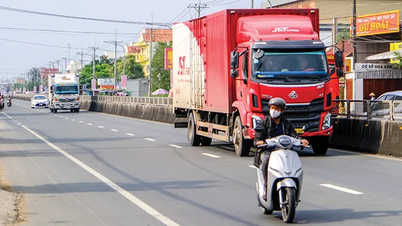
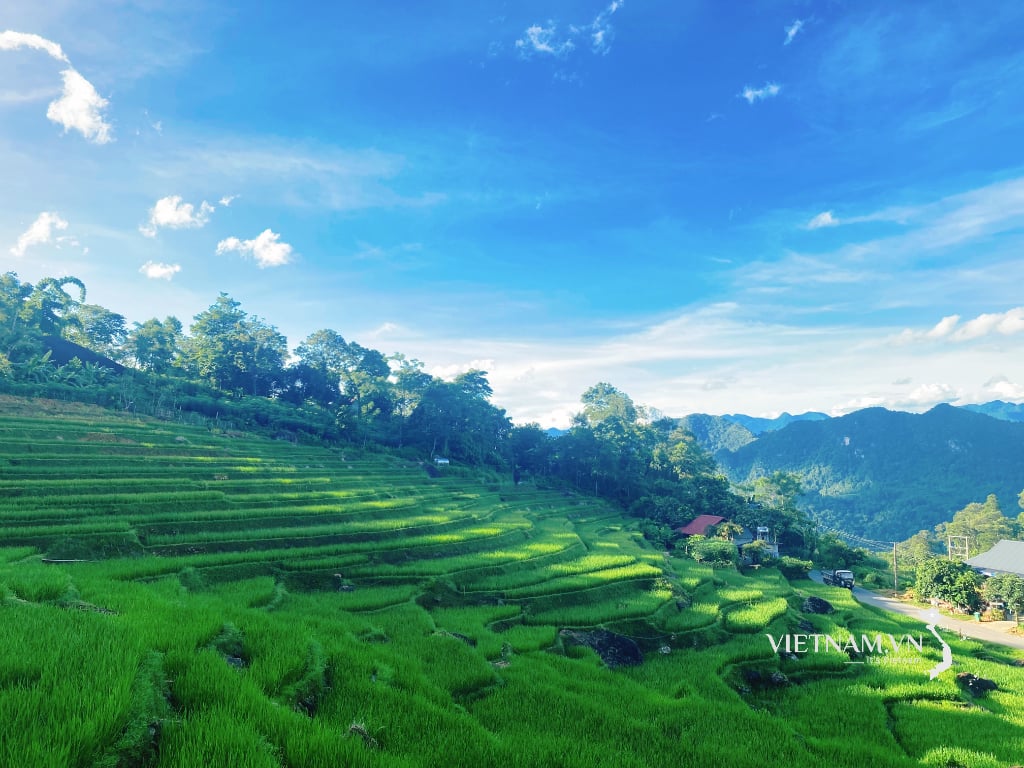
National Highway 91, the section passing through the rice fields of Binh My commune.
Spring arrives in An Giang amidst the vibrant movement of nature and people. The salty sea breeze blows along the bustling fishing ports. Along the border with Cambodia, the border gates are filled with long lines of cargo trucks in the early morning sun. In the inland areas, the winter-spring rice fields ripen to a golden hue, and farmers joyfully welcome the first harvest of the year. The three spheres – sea, border trade, and the delta – blend together to form a solid foundation, providing An Giang with the confidence and aspiration for breakthroughs as it enters a new phase.
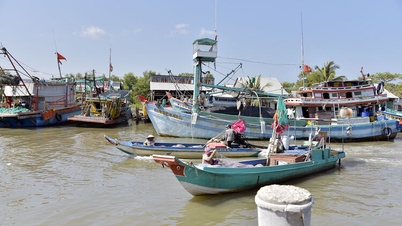
THE SEA OPENS THE WAY FROM THE PORT TO THE VALUE CHAIN
An Giang is currently one of the region's major fisheries centers, with a diverse product range from pangasius, shrimp, and marine fish to offshore aquaculture. By 2025, the total output of exploited and farmed aquatic products is estimated to reach 1.6 million tons, mostly for processing and export. The fisheries sector is being developed in a comprehensive manner, from exploitation and aquaculture to processing and logistics, contributing to increased added value and creating stable jobs for coastal residents.
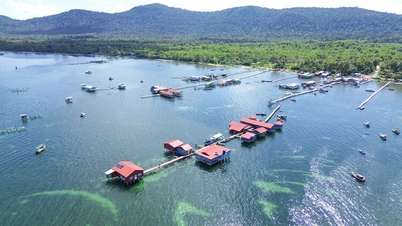
Along with fisheries, An Giang is promoting investment in marine economic infrastructure and developing coastal ecological urban areas. Several fishing ports, storm shelters, and tourist ports have been upgraded. Seafood exports maintain stable growth. Marine and island tourism is experiencing strong growth, especially in Phu Quoc, gradually establishing itself as an international-class destination and contributing significantly to the budget. Currently, the value of marine economic growth accounts for nearly 80% of the province's total GRDP, clearly reflecting the effectiveness of the strategy for exploiting the Western Sea.
These steps align with expert assessments. Associate Professor, Dr. Nguyen Chu Hoi - Standing Vice President of the Vietnam Fisheries Association, commented: “The marine economy is a significant advantage of An Giang compared to many localities in the Mekong Delta. This is the main growth driver linked to security, national defense, and the potential for marine and island tourism , especially Phu Quoc, which is being oriented to become an international-class tourism center.” According to Dr. Hoi, the sea and islands of An Giang are rich in biological resources and have a diverse tropical ecosystem, making them very favorable for the sustainable development of aquaculture and fisheries.
Based on scientific and practical foundations, An Giang is strongly shifting from exploiting its potential to creating a space for the in-depth, systematic, and sustainable development of the marine economy. The Provincial Party Congress for the 2025-2030 term sets the goal that by 2030, An Giang will become a strong national marine economic center, affirming its determination to transform the Western Sea into a driving force for sustainable growth.
BUSTLING BORDER TRADE, LOGISTICS BECOMES A NEW "CHANNELS"
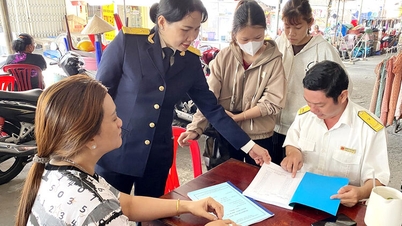
From the vast open sea, the development trend continues to spread along the northwestern border. In the early days of spring, at the Khanh Binh National Border Gate, a stream of container trucks lined up to complete import and export procedures. Trader Le Van Thanh, who has been involved with this border gate area for many years, said: “Goods are flowing smoothly, and procedures are streamlined. Stable trade allows businesses to confidently expand production right from the beginning of the year.”
An Giang province has over 148km of land border with the Kingdom of Cambodia, with 7 border gates, including 3 international border gates: Vinh Xuong, Tinh Bien, and Ha Tien. This border gate system creates a significant advantage for the province to develop border trade, becoming a strategic transit gateway for goods between the Mekong Delta and Cambodia and the Gulf of Thailand region. According to the Provincial Economic Zone Management Board, by 2025, the total number of people and vehicles crossing the border gates will reach nearly 1 million, with import and export turnover exceeding 1.16 billion USD, making a positive contribution to trade and service growth.
Vice Chairman of the Provincial People's Committee Le Trung Ho affirmed that border trade not only has economic significance but also contributes to consolidating security and strengthening friendly relations between Vietnam and Cambodia. During the period 2021-2025, import and export turnover through border gates increased by an average of 12.7% per year, becoming a bright spot in the province's economic development picture. Border trade is gradually becoming an important lever, closely connecting with the maritime economy, promoting logistics, services, and exports.
THE PLAINS SERVE AS THE "PILLARS" FOR NURTURING LONG-TERM EXPLOSIVE STRENGTH
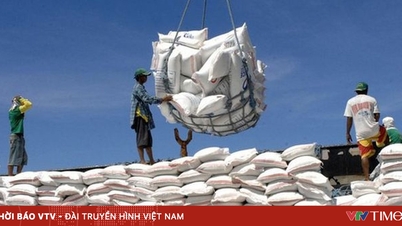
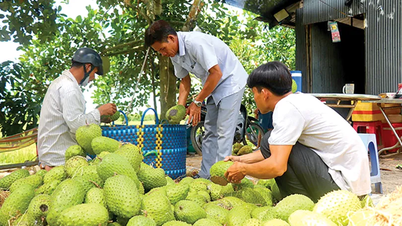
Situated between the maritime and border trade areas, the An Giang delta region plays a solid foundation for the province's entire economic structure. For a long time, An Giang has been considered one of the country's major rice granaries, playing a crucial role in ensuring national food security. After the merger, the province's development space has expanded, with a larger and more diverse agricultural land area, ranging from rice and freshwater aquaculture to fruit trees and coastal farming. By 2025, the province is expected to cultivate over 1.34 million hectares, with a rice production of nearly 8.8 million tons, further affirming An Giang's key position in the national agricultural sector.
An Giang's agriculture is shifting strongly from a "do more" mindset to a "do better" mindset, from purely production to an agricultural economy. Large-scale farming models, concentrated production areas, and value chain linkages with businesses and cooperatives are increasingly developing. Mr. Nguyen Van Tu, a farmer from Hon Dat commune, shared: "With cooperatives and businesses guaranteeing sales, farmers feel more secure in their production and have more stable incomes than before."
Today, the delta region opens up a new axis for urban development, services, and logistics, connecting cities such as Long Xuyen, Rach Gia, Chau Doc, and Ha Tien. This chain of cities plays a central role in the consumption, processing, and transshipment of agricultural and aquatic products for the entire province and region. The flood season, once a challenge, has now become a resource for development. Rice-fish farming models, ecological aquaculture, and flood season tourism help people adapt flexibly to climate change, while creating additional livelihoods and added value. Therefore, the An Giang delta is not just a "rice granary" but is transforming into a sustainable agricultural economic space in harmony with nature.
Some experts believe that few provinces possess the same comprehensive advantages as An Giang: a vast sea on one side, a national border on the other, and a fertile, prosperous delta in the middle. These three pillars do not exist in isolation but complement each other, forming a solid foundation for An Giang's all-round development. The sea provides added value from fisheries, tourism, and services; border trade expands markets, promotes commerce and logistics; and the delta ensures food security and sustainable livelihoods for the people.
Leveraging its potential and advantages, An Giang is skillfully connecting its economic pillars, transforming potential into growth drivers, and creating a closed and sustainable value chain. Central Committee member, Deputy Secretary of the Provincial Party Committee, and Chairman of the Provincial People's Committee Ho Van Mung emphasized: “The marine economy and border trade have become strategic pillars. Coastal infrastructure, tourism, services, and aquaculture are developing synchronously, creating strong growth momentum for the province.” With this foundation, An Giang aims for an economic growth rate of 8.39% in 2025, ranking first in the Mekong Delta, creating a solid foundation for a new phase of development.
For the 2025-2030 term, the Provincial Party Congress has set the goal of making An Giang a relatively developed province in the country, with the development of the marine economy as one of the strategic breakthroughs. The border economic zone and the system of border gates will become a center for trade in goods and services, contributing to ensuring national defense and security in the border region. Minister of National Defense Phan Van Giang assessed that An Giang has been effectively developing high-tech agriculture, border trade, and the marine economy; tourism and marine services are experiencing strong growth, becoming an important driving force for the next term.
To become a province with a relatively developed economy nationwide, Central Party Committee member and Provincial Party Secretary Nguyen Tien Hai stated that An Giang will focus its resources on investing in infrastructure development. The province will concentrate on developing an integrated coastal-border-inland space, with five dynamic urban centers – Rach Gia, Phu Quoc, Ha Tien, Chau Doc, and Long Xuyen – playing a leading role in promoting coastal growth and cross-border linkages.
From the expansive Western Sea, across the vibrant border region, to the fertile alluvial plains, An Giang enters a new spring with a new stature, a new mindset, and a desire for sustainable development. This solid "three-legged stool" not only helps the province stand firm against change but also creates momentum for An Giang to move faster, further, and more sustainably on its journey ahead.
TU LY
Source: https://baoangiang.com.vn/an-giang-but-pha-tu-ba-chan-kieng--a476734.html
![[Photo] My Son at night: A thousand-year-old heritage site amidst the Milky Way](https://vphoto.vietnam.vn/thumb/1200x675/vietnam/resource/IMAGE/2026/04/15/1776261039184_ndo_br_chon6-jpg.webp)
![[Photo] Mrs. Ngo Phuong Ly meets and exchanges views with Mrs. Peng Li Yuan](https://vphoto.vietnam.vn/thumb/1200x675/vietnam/resource/IMAGE/2026/04/16/1776277858080_phu-nhan-1-jpg.webp)
![[Photo] The General Secretary, President and his wife meet with Vietnamese-Chinese friendship leaders.](https://vphoto.vietnam.vn/thumb/1200x675/vietnam/resource/IMAGE/2026/04/15/1776264829725_vna-potal-tong-bi-thu-chu-tich-nuoc-to-lam-gap-mat-nhan-sy-huu-nghi-viet-nam-trung-quoc-8703641-3130-jpg.webp)
![[Photo] National Assembly Chairman Tran Thanh Man attends the opening session of IPU-152](https://vphoto.vietnam.vn/thumb/1200x675/vietnam/resource/IMAGE/2026/04/16/1776277863731_ctqh5-jpg.webp)



















































Comment (0)