

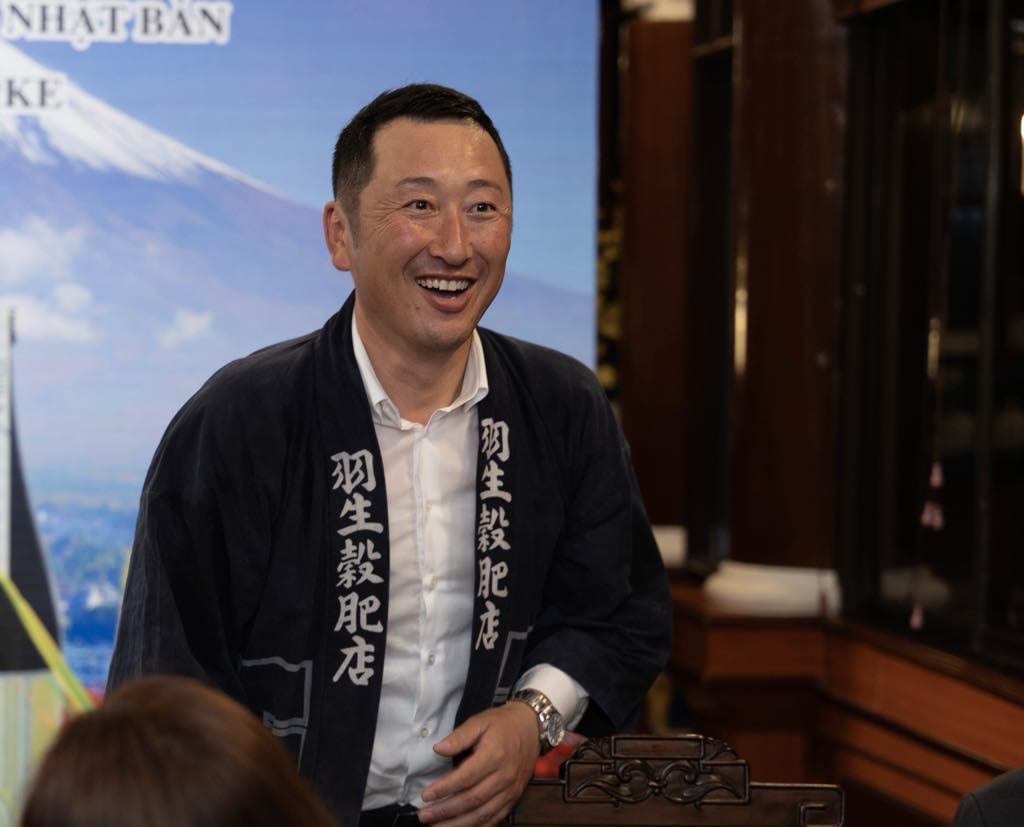
Mr. Sosuke Hanyu (Japan) - the 38th generation of the Hanyu family, who have a long history of rice cultivation in Japan. Now he has decided to bring Japanese rice varieties to Vietnam for cultivation - Photo: Provided by the interviewee.
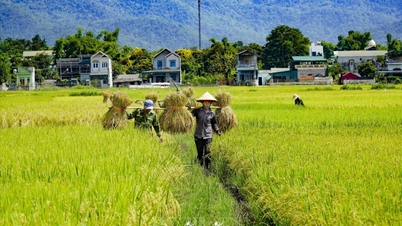
Last year, Mr. Hanyu started a trial planting on 2 hectares, entirely with Japanese rice varieties. Surprisingly, the planted area has now expanded to 150 hectares.
Bringing Japanese rice to be grown in Vietnam.
Every month, Hanyu brings engineers from Nagoya University and Tokyo University (Japan) to directly interact with the people of Thai Binh .
If any abnormalities arise (pests, weather, etc.) on any given day, Japanese engineers will discuss them with farmers, and then provide timely advice.
According to Mr. Hanyu, the advantage of growing rice in Vietnam is the ability to harvest two to three rice crops a year. However, the weather in the North is hot in the summer and very cold in the winter, which is a limitation for Vietnamese agriculture . Therefore, experimenting with many different rice varieties, especially Japanese rice, to find the most suitable variety is essential.
Mr. Hanyu pointed out another factor affecting the quality of Vietnamese rice: the habit of storing paddy at room temperature, which makes the rice susceptible to rodent infestation. In contrast, in Japan, paddy is always stored in cold storage, which helps maintain the freshness of the rice.
Through trial plantings, the rice varieties that Mr. Hanyu brought to Vietnam were not truly suitable for the soil, the harvest yield was not large enough, and the quality did not meet expectations.
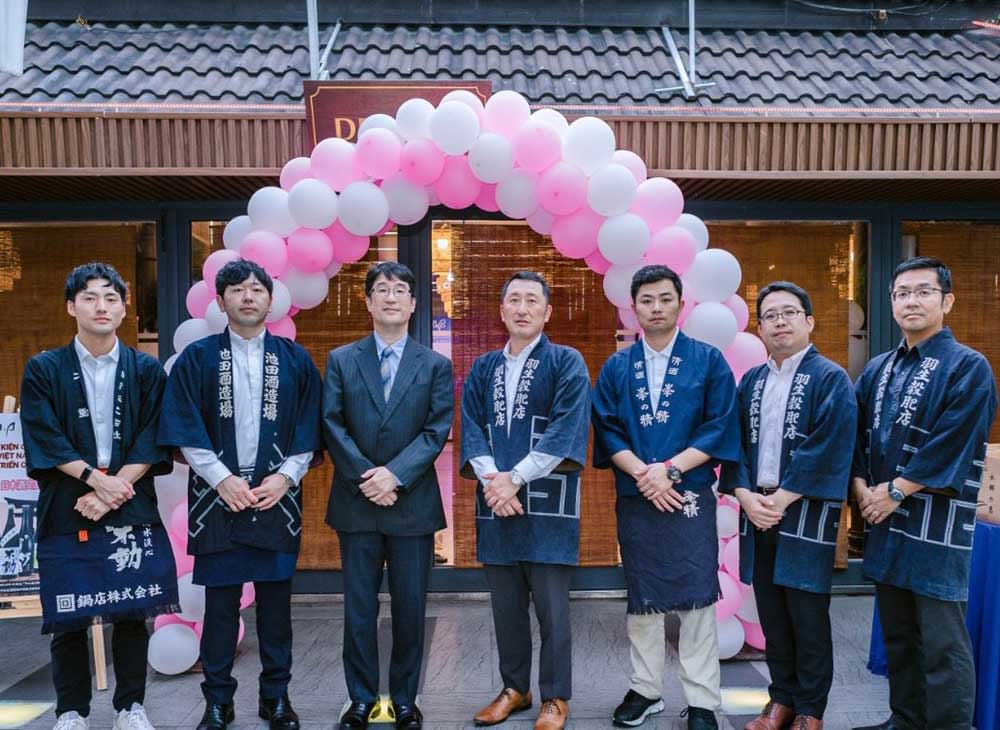
The Hanyu family has run a rice production business in a village for generations and began growing Japanese rice in Vietnam in 2023 - Photo: Provided by the family.
Not stopping at just growing rice.
In the near future, he plans to conduct trials of more Japanese rice varieties in Vietnam. Once the trials yield positive results and sufficient data is available to analyze their adaptability to the climate and soil, his company will expand the cultivation area to other provinces.
Regarding the decision to expand rice cultivation to Vietnam, Hanyu said he believes it will help continue the family tradition, bringing the family company to its 100th anniversary with many new achievements. This is especially significant because currently in Japan, no other family has such a long tradition of rice production as his family. Many farmers in Japan have shifted from farming to other professions.
"I always strive to reinvent myself, connect with others, and meet new people to create new business opportunities. I hope Vietnam will be a destination that brings good fortune and opportunities to my family company," said Sosuke Hanyu.
Speaking further about the future, Mr. Hanyu hopes to be able to grow Japanese rice in Vietnam of sufficient quality to produce sake (he has already brought finished rice grown in Vietnam back to Japan to test its sake production - PV).
If successful, he would be the first Japanese person to have the opportunity to produce sake overseas.
However, he believes that in order to build a production plant in Vietnam, besides ensuring the quality of the rice, a truly pure water source is also needed, not tap water or ordinary filtered water. He hopes to find a suitable water source in Vietnam in the near future.
Source: https://tuoitre.vn/anh-nong-dan-chuan-nhat-dua-lua-nhat-sang-trong-o-viet-nam-20240626174228584.htm




















































Comment (0)