

Stony Point Conference - The first step towards humanitarian cooperation
In 1989, the world situation underwent significant changes, moving from conflicts to solutions. Vietnam withdrew all its troops from Cambodia (September 26, 1989), and the Soviet Union and the United States declared an end to the Cold War (at the summit in Malta on December 2-3, 1989).
From December 10th to 13th, 1989, at Stony Point (New York, USA), numerous US non- governmental organizations such as the American Friends Service Committee (AFSC), the Vietnam Veterans of America Foundation (VVAF), World Vision USA, Save the Children, and the US-Indochina Reconciliation Project (USIRP) organized a conference on humanitarian assistance for Vietnam.
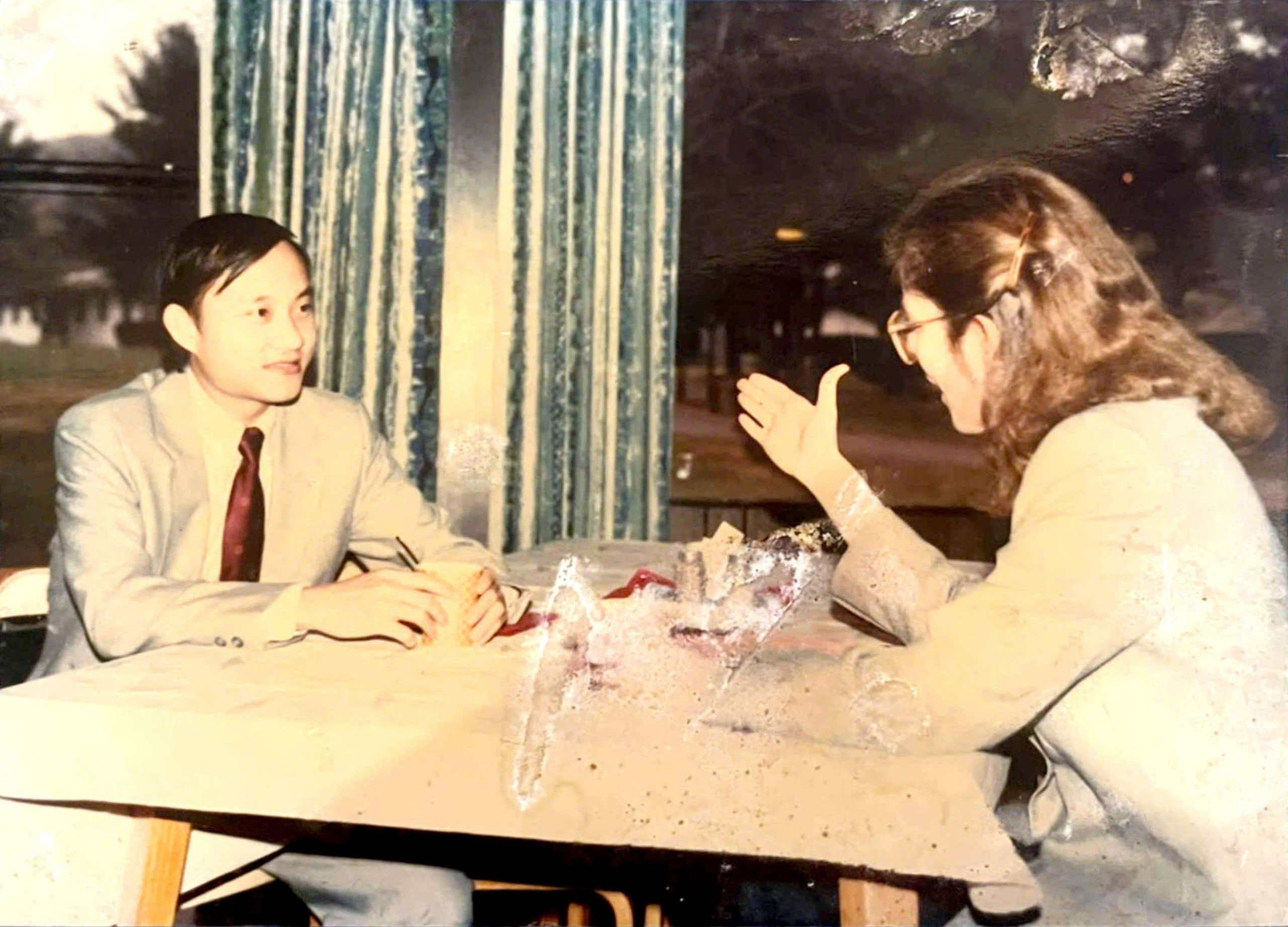 |
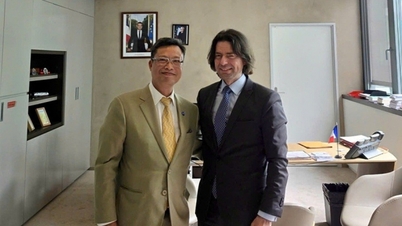
| Mr. Ha Huy Thong converses with a representative of a US non-governmental organization on the sidelines of a conference in Stoney Point, New York, held from December 10 to 13, 1989. (Photo: Provided by Mr. Ha Huy Thong) |
Attending the conference were representatives from the US Department of State (Mr. Michael Marine, Deputy Director of the Vietnam-Laos-Cambodia Section), the Permanent Mission of Vietnam to the United Nations in New York, and the People's Aid Coordination Committee (PACCOM) - a newly established unit on June 10, 1989, tasked with coordinating relations and mobilizing foreign non-governmental aid, in collaboration with central ministries and agencies and provinces and cities to support humanitarian and development activities of foreign non-governmental organizations in Vietnam.
Mr. Ha Huy Thong, who was then working at the Permanent Mission of Vietnam to the United Nations in New York and accompanied the Vietnamese delegation, recounted: "This was a special event: for the first time, US non-governmental organizations were encouraged by the US government to cooperate with Vietnam in the fields of humanitarian aid and post-war recovery. The hall was packed that day. Many people who had opposed the Vietnam War were now sitting together to discuss how to support Vietnam's reconstruction."
According to Mr. Thong, the conference of non-governmental organizations at Stony Point, attended by hundreds of representatives, created a new wave in people-to-people relations between the two countries. Following the conference, many US non-governmental organizations began coming to Vietnam to implement programs supporting healthcare, prosthetics, education, demining, and assistance for people with disabilities. Goodwill was transformed into action, laying the social foundation for a long-term reconciliation process. Among them, Operation Smile was one of the first organizations to arrive, collaborating with Vietnamese hospitals and doctors to perform surgeries on many children with cleft lip and palate deformities.
Michael Marine, the policy speaker at the conference who later became the US Ambassador to Vietnam (2004-2007), stated that Stony Point connected many key figures who played a bridging role in the transformative phase of bilateral relations.
"Peace Tree" from the United States to Quang Tri (Vietnam)
The spirit of Stony Point was continued with the founding of PeaceTrees in 1995. The establishment of diplomatic relations between the United States and Vietnam prompted Danaan Parry and Jerilyn Brusseau (of Seattle, Washington) – who were grieving the loss of loved ones in the Vietnam War – to found an organization aimed at helping to mitigate the legacy of landmines in Vietnam.
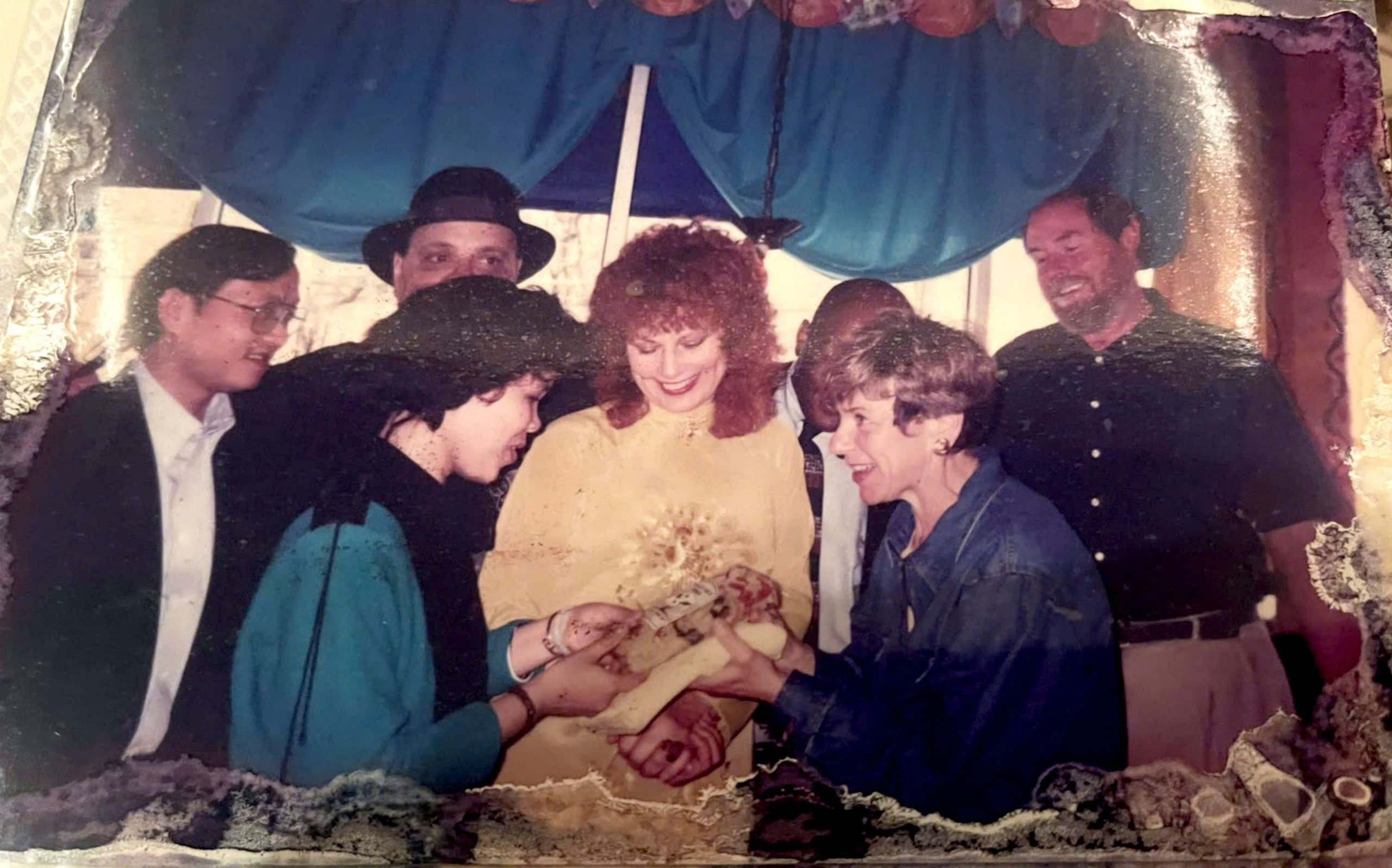 |
| Mr. Danaan Parry (far right) and Ms. Jerilyn Brusseau (second from right) participated in the groundbreaking ceremony for the Peace Tree planting project in Atlanta, USA, in September 1996, before arriving in Quang Tri. (Photo: Provided by Mr. Ha Huy Thong) |
Mr. Ha Huy Thong recounted: In September 1996, amidst the vibrant atmosphere of the recently concluded Atlanta Olympics, PeaceTrees invited the newly opened Vietnamese Embassy in the United States to attend the launch ceremony of the "peace tree planting" project – an initiative aimed at bringing resources to support demining in Quang Tri and greening the land that had suffered the most intense fighting.
"That day, we planted the first 'peace trees' together – a symbol of the beginning of a new relationship between the two nations," Mr. Thong said.
Not long after, PeaceTrees arrived in Quang Tri, planting the first trees in the land still littered with unexploded ordnance, and then developing a series of humanitarian projects: demining, accident prevention education, victim support, livelihood development after demining, and exchanges of local people and students.
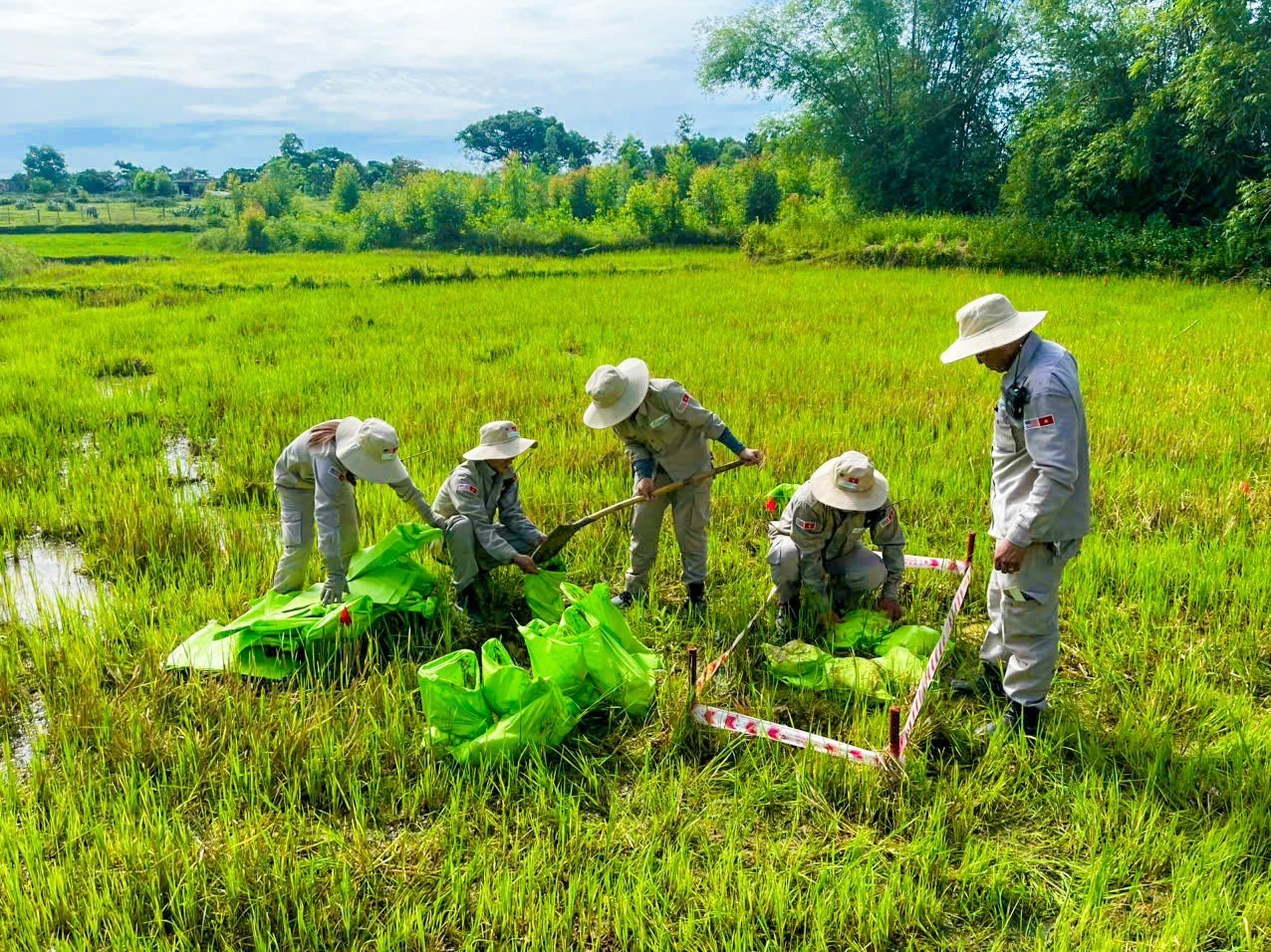 |
| PeaceTrees Vietnam assists in clearing landmines found during the search for missing U.S. servicemen from the Vietnam War, June 2025. (Photo: PeaceTrees Vietnam) |
Over the past three decades, PeaceTrees has become a model of humanitarian cooperation. According to statistics from PeaceTrees Vietnam on the occasion of its 30th anniversary: from 1996 to the present, the organization has cleared and returned more than 46 million square meters of land to safety, successfully collected and disposed of more than 157,000 dangerous explosive devices, and provided mine accident prevention education to more than 230,000 people. In addition, the organization has built 24 kindergartens, 12 libraries, and 2 community centers in disadvantaged areas; supported families of mine victims and the community through livelihood projects, clean water wells, and scholarships. PeaceTrees Vietnam also welcomed 1,277 US volunteers to Quang Tri through people-to-people diplomacy programs.
"PeaceTrees are a prime example of people-to-people diplomacy between the United States and Vietnam," Mr. Thong emphasized.
Looking back over three decades, Mr. Ha Huy Thong believes that people-to-people diplomacy has built a social foundation, fostered trust, and forged the first connections in the process of normalizing relations between Vietnam and the United States. That journey continues to this day, with "peace trees" planted by both sides – green trees of memory, of closing the chapter on suffering, and of looking towards the future.
Source: https://thoidai.com.vn/bai-2-nhung-hat-giong-hoa-binh-217738.html
![[Photo] Secretary of the National Assembly Party Committee, Chairman of the National Assembly presides over the meeting of the Standing Committee and Executive Committee of the National Assembly Party Committee.](https://vphoto.vietnam.vn/thumb/1200x675/vietnam/resource/IMAGE/2026/06/03/1780480353201_ndo_br_bnd-2585-jpg.webp)
![[Photo] First session of the 14th Congress of the Vietnam Trade Union](https://vphoto.vietnam.vn/thumb/1200x675/vietnam/resource/IMAGE/2026/06/03/1780465947883_ndo_br_img-3852-jpg.webp)
![[Photo] General Secretary and President To Lam presides over a meeting with the Central Organizing Committee.](https://vphoto.vietnam.vn/thumb/1200x675/vietnam/resource/IMAGE/2026/06/03/1780482764658_a1-bnd-4741-3342-jpg.webp)






















![[Video] Sunset at Lap An Lagoon – Where the sun sets over the fishing nets](https://vphoto.vietnam.vn/thumb/1200x675/vietnam/resource/IMAGE/2026/05/31/1780192137701_beach-landscape-sea-water-nature-grass-745871-pxhere-com.jpeg)























Comment (0)