


Offshore wind power project in Lai Hoa commune, Can Tho city. Photo: MINH HUYEN
Creating a green value chain
The transition to a green economic model is no longer an option but an urgent requirement, a new driving force for businesses in the Mekong Delta to adapt and break through, confidently entering the arena of integration.
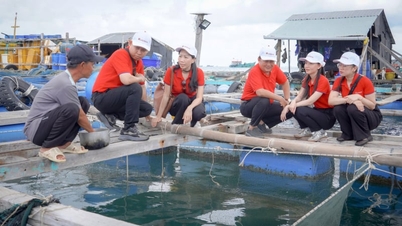
Southern Shrimp Joint Stock Company, located in Ca Mau province, currently has 3 ASC-certified shrimp farming areas, including 2 super-intensive and intensive farming areas and 1 ecological mangrove shrimp farming area. When participating in the ecological shrimp certification program, farmers receive annual training on safe and ecological farming practices. In addition, the company provides support of 20,000 shrimp fry/hectare/year and subsidizes forest environmental service costs equivalent to VND 250,000/hectare/year. Southern Shrimp aims to expand the area of certified ecological shrimp farming to approximately 5,500-6,000 hectares by 2030.
According to Ms. Bui Ngoc To Nga, Head of System Management Department, Southern Shrimp Joint Stock Company, the payment for forest environmental services and support for shrimp fry in ecological shrimp farming areas is driving up input costs significantly. This trade-off is inevitable, but it also reveals a paradox: When businesses strive to "green" to achieve a global passport, they seem to be bearing the compliance costs alone. Without a compensation or subsidy mechanism during the transition period, will domestic businesses have enough "resilience" to complete the harsh Net Zero path? Nevertheless, this is an irreversible trend to penetrate demanding markets such as the US, Japan, and Europe. Ecological shrimp products not only meet international standards but also create a distinct competitive advantage. Therefore, the company remains committed to expanding the area of mangrove shrimp farming with environmental service payments, determined to work with the Government to realize the commitment of net zero emissions.
According to Mr. Le Dinh Huynh, Secretary General of the Vietnam Sustainable and Clean Shrimp Alliance, the Alliance is committed to working alongside local authorities and partners to promote strategic projects. The focus is on maintaining and developing environmentally friendly production models such as shrimp-mangrove, shrimp-rice, and traditional extensive farming to reduce the carbon footprint per unit of product, helping to meet stringent international standards. At the same time, the Alliance actively connects with international organizations and donors to mobilize resources and support cooperatives and businesses in value chain linkages. This will gradually eliminate inefficient, fragmented production that negatively impacts the environment and ecosystem. Furthermore, the Alliance will promote communication to businesses and the public about ESG and market signals so that stakeholders in the value chain can adapt now and keep pace with the new rules of the international market. "In reality, international barriers are not the biggest obstacle; what's important is whether we are willing to change our mindset to adapt and develop!" - Mr. Le Dinh Huynh shared.
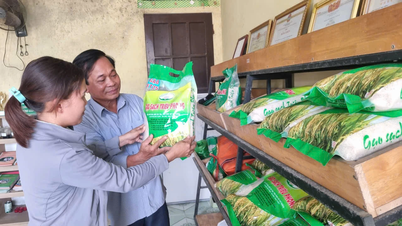
After more than 32 years of partnering with the agricultural sector and farmers, Loc Troi has built a closed-loop agricultural ecosystem, creating "long-term livelihood solutions" that help increase crop yields, improve and restore soil health, reduce production costs, especially reduce greenhouse gas emissions, and increase sustainable profits for farmers.
According to Mr. Huynh Van Thon, Chairman of Loc Troi Group, in December 2025, Loc Troi Group signed a memorandum of understanding with Thanh Thanh Cong - Bien Hoa Joint Stock Company (AgriS) to develop the Vietnamese rice value chain in a sustainable, modern way and integrate it deeply into the global market. The two agricultural groups will cooperate in developing standardized raw material areas, commercializing high-quality rice varieties, building a comprehensive support ecosystem for farmers, and developing high-value-added processed products. This comprehensive support ecosystem will help farmers access: standardized supplies; capital and financial services based on the Supply Chain Finance (SCF) model; farming technology and digital transformation; sustainable technical training; and guaranteed purchase and stable output. From there, they will complete the journey "from field to table" for Vietnamese rice.

Local residents of Bai Gia hamlet, Tran De commune, Can Tho city, harvest nipa palms under the mangrove canopy to develop a "green livelihood". Photo: MY THANH
Unlocking green investment opportunities.
In recent years, green credit in the Mekong Delta has recorded promising growth, focusing on areas such as green agriculture, green energy, green processing industry, and green transportation. Green finance is a strategic leverage that helps the Mekong Delta transform strongly towards a circular economy model, effectively adapt to climate change, and realize the nation's Net Zero commitment.
According to Mr. Tran Quoc Ha, Acting Director of the State Bank of Vietnam, Branch 14, green credit is no longer an option but has become an inevitable trend globally. In the Mekong Delta, the current highlight is the Sustainable Development Project for 1 million hectares of high-quality, low-emission rice cultivation linked to green growth in the Mekong Delta by 2030. The project mobilizes resources from commercial banks with policies supporting participating businesses and cooperatives to access credit with preferential interest rates 1-1.5% lower per year than the general average. However, the current difficulty lies in verifying projects that meet the "green criteria" to benefit from preferential policies. When projects are quickly verified as meeting the "green criteria," credit capital and international incentive packages will be more effectively channeled. Besides green agriculture, credit for renewable energy is also a major pillar. In the Mekong Delta, outstanding loans for wind and solar power investments account for a very large proportion, demonstrating the strong support of the banking sector for clean energy.
Ca Mau is the only province in the country with three sides bordering the sea, boasting a coastline of approximately 310km and a sea area of about 120,000km². In response to the impacts of climate change, Ca Mau has proactively invested in key infrastructure projects to enhance resilience, such as constructing 112km of coastal protection embankments (4,848 billion VND), upgrading approximately 61km of sea dikes (1,500 billion VND), and investing in 32.5km of riverbank protection embankments (approximately 3,372 billion VND). The system of 12 irrigation works and over 700km of dikes and embankments has been completed with a flexible approach, adapting to salinity and freshwater conditions, effectively serving production and people's lives. The province particularly focuses on "soft infrastructure" through the transformation of adaptive production models, such as rice-shrimp farming, shrimp-mangrove farming, and ecological aquaculture; strengthening vocational training, supporting livelihoods, and raising community awareness about climate change adaptation.
Mr. Le Van Su, Vice Chairman of the People's Committee of Ca Mau province, shared the province's consistent viewpoint: proactive adaptation, harmony with nature, and harmonious development between the economy and the environment, with the people at the center. Therefore, the province is orienting towards developing "green livelihoods" along the coast, attracting green investment to develop a sustainable marine economy. The province is committed to preserving and restoring mangrove forests, considering them an "ecological shield" and a foundation for sustainable development. Simultaneously, it is developing integrated marine economic models in a green, circular, and climate change-adaptive direction. Furthermore, Ca Mau is focusing on perfecting mechanisms and policies to attract strategic investors, improving the business environment, and linking development with environmental protection and climate change adaptation.
***
Creating a green value chain is not just about farming techniques, but a synthesis of indigenous knowledge, modern technology, and a solid social security foundation. It's a journey to give familiar agricultural products from the Mekong Delta a new look, with superior quality and unique value, enabling them to cross the ocean and achieve a global green passport through low-emission and adaptive agriculture projects.
(To be continued)
Final article: Shifting the development axis, breaking through to the future.
MINH HUYEN - MY THANH
Source: https://baocantho.com.vn/bai-4-cuoc-dua-net-zero-xanh-hoa-de-hoi-nhap-a201873.html

![[Video] Sunset at Lap An Lagoon – Where the sun sets over the fishing nets](https://vphoto.vietnam.vn/thumb/1200x675/vietnam/resource/IMAGE/2026/05/31/1780192137701_beach-landscape-sea-water-nature-grass-745871-pxhere-com.jpeg)





![Water security in the Mekong Delta: [Part 2] 'The vicious cycle of degradation' is difficult to reverse.](https://vphoto.vietnam.vn/thumb/402x226/vietnam/resource/IMAGE/2026/05/29/1780020596526_4209-han-dbscl1-094000_891.jpeg)





![[Video] Sunset at Lap An Lagoon – Where the sun sets over the fishing nets](https://vphoto.vietnam.vn/thumb/340x192/vietnam/resource/IMAGE/2026/05/31/1780192137701_beach-landscape-sea-water-nature-grass-745871-pxhere-com.jpeg)


















































Comment (0)