

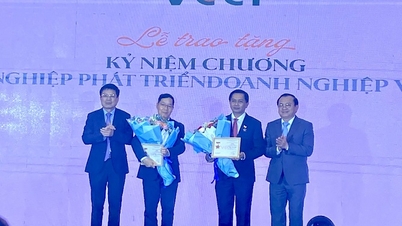
For the Mekong Delta to achieve breakthroughs in the new context, it requires not only more investment resources but also a shift in development thinking, improved quality of businesses, and strengthened regional linkages. These were the issues shared by economic experts and managers at the announcement ceremony of the 2025 Annual Economic Report of the Mekong Delta.
Mr. Le Minh Hoan, former Vice Chairman of the National Assembly :
We need to change our development mindset.
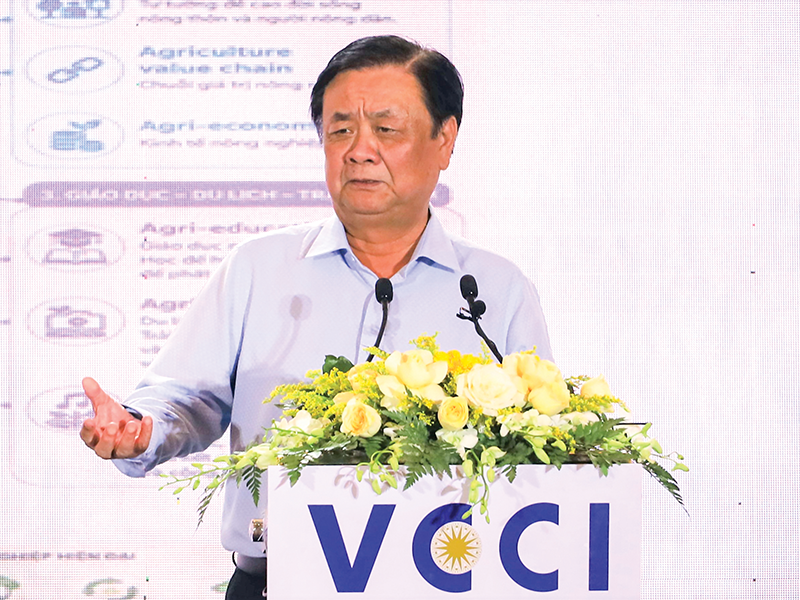
Local authorities have long talked about "rolling out the red carpet for eagles"—that is, attracting large investors—but rarely mention "making nests for sparrows"—that is, creating favorable conditions for local small and medium-sized enterprises (SMEs) to develop. Eagles may come and go when the incentives end, but the "sparrows" nurtured in their hometowns will stay for a long time and make sustainable contributions to the locality.
Currently, more than one million people from the Mekong Delta are working in provinces and cities outside the region. In my opinion, instead of just viewing this as labor migration, we should see it as a potential resource that will allow them to return to their hometowns in the future with their knowledge, experience, and accumulated capital. To achieve this, localities must create a favorable environment for young people to have opportunities to start businesses and develop their careers right in their hometowns.
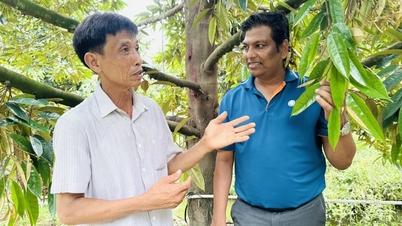
For agriculture , the requirement is to shift from a production-oriented agricultural mindset to an economic-oriented agricultural mindset. Furthermore, instead of focusing solely on challenges such as inadequate infrastructure, high logistics costs, climate change, saltwater intrusion, or land subsidence, the Mekong Delta needs to re-examine its existing values. These include fertile land, a unique river and water ecosystem, the sea, forests, estuaries, centuries of farming experience, a distinctive garden culture, and a network of universities, research institutes, and experts. The issue is not just about creating something new, but also about recognizing new values from what is already familiar.
Another issue is regional linkage thinking. The Mekong Delta cannot develop based on a "my province" mindset but must shift to a "our region" mindset. Can Tho, An Giang, Dong Thap, Ca Mau, Vinh Long, and other localities cannot develop in isolation but must become links in a common development ecosystem. Each locality needs to clearly define its specific role, such as a logistics center, an innovation center, a deep processing center, a marine economy center, or an ecotourism center.
Mr. Dau Anh Tuan, Deputy Secretary General of VCCI:
Businesses in the Mekong Delta need more support to become a driving force for growth.
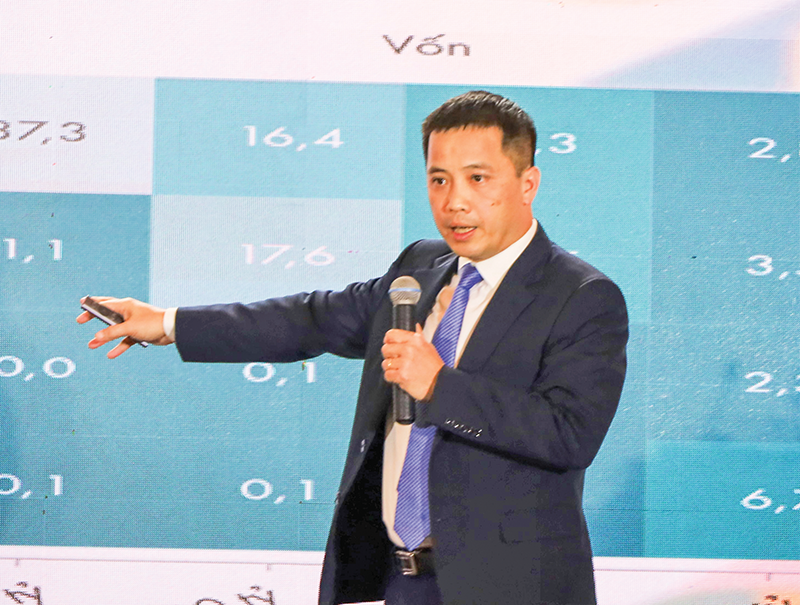
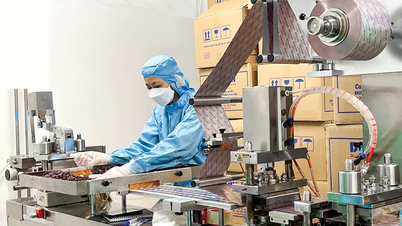
- The private sector is expected to become a crucial driving force for economic growth in the Mekong Delta region. However, reality shows that the business community in the region still faces many difficulties and challenges that need to be addressed. Notably, the biggest difficulty for businesses today is no longer a lack of capital, but rather finding customers and expanding product markets. In addition, access to credit remains a significant obstacle due to reliance on collateral. The level of technology application, innovation, and digital transformation is still limited, while the majority of businesses still operate under a family-run model, hindering the process of enhancing competitiveness.
To ensure that the business sector truly becomes a driving force for growth in the Mekong Delta, localities need to strengthen trade promotion and support businesses in connecting with domestic and international markets. At the same time, it is necessary to expand policies supporting access to capital, promote digital transformation, improve management capacity, and encourage household businesses to transform into enterprises.
In the new context, the role of local authorities is not limited to creating a favorable business environment but also requires proactive collaboration and the development of practical support programs. This will be a crucial factor in helping businesses in the Mekong Delta develop sustainably, enhance competitiveness, and contribute more effectively to regional economic growth.
Mr. Vu Thanh Tu Anh, Head of the research team for the 2025 Annual Economic Report of the Mekong Delta:
The Mekong Delta is lacking "pillars" and "support structures".
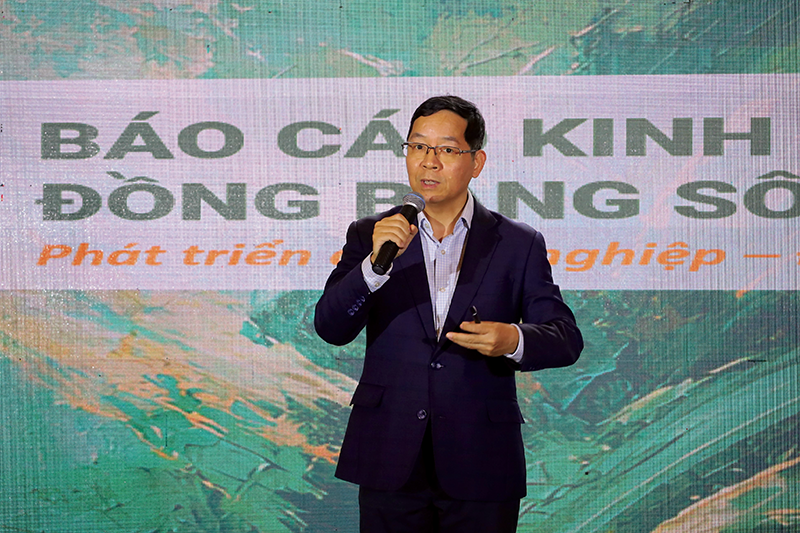
- The Mekong Delta is severely lacking growth poles. Even Can Tho City, with its current labor productivity, is not yet truly playing the role of a growth pole for the region.
Labor productivity is one of the direct bottlenecks of the region's economy. Only the agricultural sector has higher productivity than the national average, while industrial and service labor productivity is lower. Investment is also a major bottleneck in the Mekong Delta, especially private investment. This is a crucial bottleneck because without investment resources, development is very difficult... Another problem is the gap in FDI. While FDI is an important driving force for many economic regions such as the Red River Delta or the Southeast, it is very weak in the Mekong Delta... In 2025, credit nationwide is expected to grow very strongly, approximately 20%, but credit in the Mekong Delta is expected to decrease. This reflects a worrying imbalance, showing that the capital absorption capacity and endogenous capacity of businesses in the region are still limited...
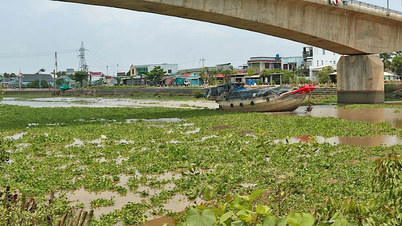
The Mekong Delta is facing a downward spiral. From a business perspective, this spiral begins with weak infrastructure and logistics, causing logistics costs to account for 20-25% of total production costs. This reduces competitiveness, erodes profits, and makes it difficult for businesses to accumulate capital, expand, and develop.
When profits are low, new businesses and FDI investors lack the incentive to enter the market. The consequence is a lack of investment accumulation, weakened competitiveness, and a declining position in the international market. We believe that developing the business ecosystem is the most fundamental solution to break this downward spiral.
NAM HUONG (Editor)
Source: https://baocantho.com.vn/thay-tu-duy-san-xuat-xay-be-do-vung-a205960.html
![[Image] Hanoi Police officially crowned champions of V-League 2025/2026](https://vphoto.vietnam.vn/thumb/1200x675/vietnam/resource/IMAGE/2026/05/31/1780244769054_ndo_br_039d561b692be875b13a-jpg.webp)
![[Photo] Solemn bathing ceremony and Buddha procession in Hue](https://vphoto.vietnam.vn/thumb/1200x675/vietnam/resource/IMAGE/2026/05/31/1780228263543_1-jpg.webp)
![[Photo] Admire the coral "masterpiece" amidst the million-year-old heritage of Dak Lak province.](https://vphoto.vietnam.vn/thumb/1200x675/vietnam/resource/IMAGE/2026/05/31/1780221235105_anh-man-hinh-2026-05-31-luc-16-53-27.png)


![[Photo] The General Secretary, President and his wife begin their state visit to the Philippines.](https://vphoto.vietnam.vn/thumb/1200x675/vietnam/resource/IMAGE/2026/05/31/1780230559452_anh-man-hinh-2026-05-31-luc-19-28-11.png)














![[Video] Sunset at Lap An Lagoon – Where the sun sets over the fishing nets](https://vphoto.vietnam.vn/thumb/340x192/vietnam/resource/IMAGE/2026/05/31/1780192137701_beach-landscape-sea-water-nature-grass-745871-pxhere-com.jpeg)







































![[Photo] Admire the coral "masterpiece" amidst the million-year-old heritage of Dak Lak province.](https://vphoto.vietnam.vn/thumb/402x226/vietnam/resource/IMAGE/2026/05/31/1780221235105_anh-man-hinh-2026-05-31-luc-16-53-27.png)






























Comment (0)