

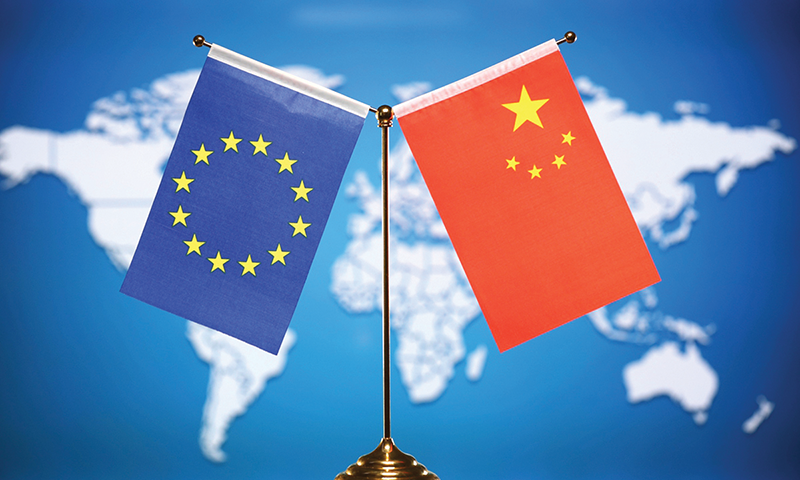
The EU and China are on the verge of what analysts describe as a "trade war." Photo: VCG
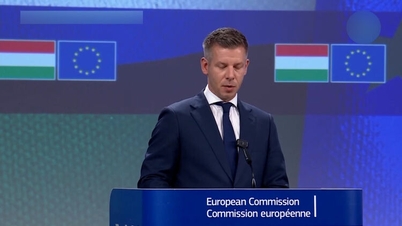
The European Commission declared that the current trade and investment relationship between the EU and China is “unsustainable,” emphasizing that as economic and security interests become increasingly intertwined, both aspects will require a stronger and more consistent response from Brussels toward Beijing.
"The China Panic"
The EC's move indicates that the EU is shifting from a case-by-case defensive approach to a more systematic industrial protection strategy against pressure from China.
Prior to the meeting, EC Vice President and High Commissioner for Foreign Policy and Security Kaja Kallas stated that ending Europe's dependence on China was like trying to cure a disease. She said that this disease might require "chemotherapy," and that it could be painful.
Meanwhile, EC Vice President and Commissioner for Industry Stéphane Séjourné argued that Europe's current measures are "too restrictive and too slow." He warned that if Brussels does not protect industry, Europe risks "breaking up into separate states."
In an article titled "Has Europe Finally Awakened to China?" on May 29, Euronews quoted a blunt statement from an EU official that in recent weeks, Europe has been witnessing "a China panic" as cheap Chinese goods continue to flood the EU, a problem that has been "ignored for too long."
In fact, recently, European public opinion has been talking a lot about the fear of a "China shock 2.0" threatening to cripple the continent's industries. The first "China shock" is believed to have occurred after Beijing joined the World Trade Organization (WTO) in 2001, causing many traditional American industries to go bankrupt.
Mr. Séjourné also acknowledged that the EC debate on May 29 reflected a growing consensus in Europe on the need to act in the face of the “China 2.0 shock.”
A dilemma
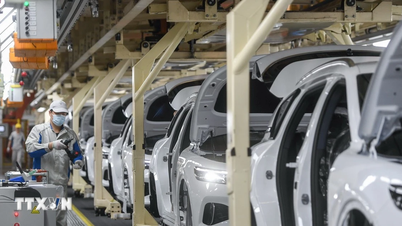
The EU's biggest concern right now is the increasing influx of cheap Chinese goods into European markets. After years of supplying European businesses, China is now directly competing with many of the EU's core industries. Many Chinese manufacturing sectors have production far exceeding domestic demand and have expanded into foreign markets, including Europe.
The EU's trade deficit with China is growing, from €312 billion in 2024 to €360 billion in 2025, equivalent to €1 billion per day. As the US imposes tariffs, Chinese goods are increasingly directed toward the EU. In the early months of 2026, Chinese goods are expected to continue their influx into the EU amidst conflict in the Middle East, prompting European consumers to switch to electric cars and clean energy equipment.
Increased imports from China are crippling many European industries and leading to job losses. A total of 200,000 jobs have been lost in EU industry – particularly in energy-intensive sectors and the automotive industry – since 2024, and a further 600,000 jobs are expected to be lost this decade in the automotive sector alone. The European Central Bank (ECB) has also warned that 29 million jobs in Europe could be affected by the surge in Chinese exports.
In fact, concerns about cheap goods from China have been raised by the EU for many years. Relations between the two sides have even deteriorated since EC President Ursula von der Leyen called Beijing a “systemic rival” in a 2023 speech. In 2024, the EU imposed tariffs on electric vehicles from China. In April 2026, the EU agreed to double import tariffs on steel exceeding EU quotas. On May 28th, the EU decided to fine the Chinese online retail platform Temu €200 million for allowing the sale of illegal products, including toys dangerous to children and faulty chargers.
Clearly, as analysts have noted, the EU has no shortage of tools to regulate its trade balance with China. However, the EU is facing a dilemma because some member states are concerned about retaliation from Beijing. China has repeatedly warned it will retaliate against any action that hinders the free flow of global trade. In 2025, China blocked exports of rare earth minerals, which are crucial for the EU's green technology and defense, as well as essential chips for the European automotive industry.
DUC TRUNG
Source: https://baocantho.com.vn/eu-tim-giai-phap-ngan-cu-soc-trung-quoc-2-0--a205982.html


















![[Photo] Reception to welcome General Secretary and President To Lam and his wife on their State visit to the Philippines](https://vphoto.vietnam.vn/thumb/1200x675/vietnam/resource/IMAGE/2026/06/01/1780295488620_vna-potal-chieu-dai-chao-mung-tong-bi-thu-chu-tich-nuoc-to-lam-va-phu-nhan-tham-cap-nha-nuoc-toi-philippines-8798060-7855-jpg.webp)


















































Comment (0)