Driven by a good intention to make history more accessible to young people, the author uses a dialogue format between a teacher and a student, employing an everyday, direct, and familiar writing style. The book's title clearly states its purpose: through "new narratives" and dialogues, to vividly and concretely portray "light"—a metaphorical tribute to President Ho Chi Minh. However, the author's inexperienced approach and subjective understanding contradict this good intention. It's worth noting that, globally , there is a trend towards "popularizing" or "democratizing" history, meaning retelling and rewriting history in a way that is as relatable and accessible as possible so that everyone can grasp and understand it.
2. Symbols are understood as common conventional signs of a community, built up over time by layers of cultural sediment. As the core, the fundamental element expressing the essence and identity of culture, in the era of global integration, symbols are considered reliable messengers connecting communities and nations. As a product of the times, and also a fundamental element shaping the discourse of the times, symbols are contemporary and contain many meaningful messages. Embodying beliefs, hopes, and aspirations, positive symbols always radiate idealism. President Ho Chi Minh is a prime example. Transcending national borders, he has become a symbol of universal significance. The United Nations Educational , Scientific and Cultural Organization (UNESCO) once affirmed that President Ho Chi Minh was “an outstanding symbol of national self-affirmation, who dedicated his entire life to the cause of national liberation of the Vietnamese people, contributing to the common struggle of nations for peace, national independence, democracy and social progress.” Recent international scientific conferences further demonstrate the immense stature of Uncle Ho. On May 14, 2022, the Ho Chi Minh and India Conference was held in Kolkata, India. Even the conference's title is a symbolic and meaningful one: India – one of the world's most populous countries, with a rich culture, religious depth, and spirituality – still considers Ho Chi Minh to be on par with its own nation. In October 2019, the Global Ho Chi Minh Conference was held in New York City, USA... The conferences all affirmed that in Nguyen Ai Quoc-Ho Chi Minh, three cultural streams beautifully converged: Vietnamese patriotic culture; the culture of peace, equality, and fraternity of progressive humanity; and the Marxist culture of human liberation. Studies emphasized that Ho Chi Minh was not only a national liberation hero but also a bridge between Vietnam and the world, and his personality had a global influence. This confirms the respect of contemporary world scholars for Uncle Ho. His thoughts and noble cultural values are being embraced by all of humanity.
 |
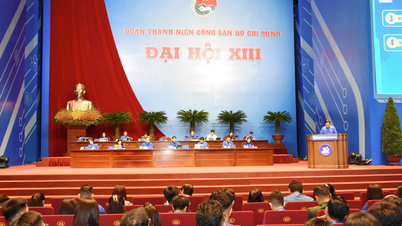
| Illustrative image. |
3. Created by the community and the times, symbols always carry taboo principles. The larger the symbol, the stricter the taboos. The biggest mistake of author Nguyen Thanh Nam is approaching the sacred symbol of President Ho Chi Minh with a "casual" tone. Many have pointed out and analyzed these violations of "taboos" adequately. It should be added that, besides being a revolutionary leader, President Ho Chi Minh is also a moral symbol, a cultural symbol, and a national symbol. Any discourse related to him is inevitably received with special emotional sensitivity. Even a small violation of a taboo can easily be misinterpreted, so extreme caution is necessary.
4. From a reader's perspective, the book's genre is unclear. Is it a history book? A literary work? A self-help book? A fictional dialogue book?... It's very difficult to categorize the content. Meanwhile, literary researchers consider genre to be the "main character." This is because literary history is essentially the history of genre evolution; genre is the fundamental form of existence of literary works, determining how they approach and reflect reality... Readers are already constrained by the content, and then further constrained by the form. The flaw in the content also stems from this: the lack of a defined genre leads to an unstable and unreliable approach and reflection of reality.



Genre plays a crucial role in preparing the reader's mindset, knowledge, and experience to receive the content. Like a "reading contract"—an unspoken agreement between author and reader—unclear genres can easily lead to misunderstandings and unwarranted conclusions. Therefore, innovation in historical writing must be accompanied by the establishment of distinct genre characteristics. Readers will be able to anticipate and prepare to receive a research paper, a literary work, or an inspirational book...
5. According to the author, one of the reasons for writing the book was inspiration from reading "Ho Chi Minh : A Life" by American historian William J. Duiker. However, relying solely on this one book to develop his arguments is one-sided, emotional, and extreme. The principle of cultural assimilation must always be systematic. Only through a system can one gather many concepts, perspectives, and evaluations, and on that basis, filter enough necessary data to create new knowledge and new models. By only accepting one book, Nguyen Thanh Nam has put himself in a position of dependence, "following." Regarding this issue, let me reiterate President Ho Chi Minh's own teachings on learning and absorbing foreign cultures. According to Uncle Ho, “we must broaden our knowledge of world culture, ... but at the same time avoid the risk of becoming imitators... The cultures of other nations need to be studied comprehensively; only then can we absorb more for our own culture” (Multiple authors. 2010. Ho Chi Minh with artists and writers, artists and writers with Ho Chi Minh, Vietnam Writers Association Publishing House, volume 3, p. 56). Several theoretical issues emerge here: We need to absorb diversity, but only what is progressive; we must be proactive, not imitative, and know what is unique. To achieve this, we must study to absorb comprehensively and systematically. The negative consequence of this “dependence” is that the book is unsuitable for Vietnamese culture. This is most evident in the way we address people. Because of the dependence (quoting verbatim) from William J. Duiker's book, calling Uncle Ho and some other respected leaders in a “blank” way easily leads to moral judgments (disrespectful).
6. Why was the book still launched with such fanfare? This case exemplifies a current "disease" prevalent among many people: unwillingness to read, or reading superficially and perfunctorily. The fault lies with the editor, who neither read carefully nor possessed in-depth expertise (as explained above). Journalists didn't read the book, yet still presented its "basic essence"... A painful but necessary lesson: Besides carefully reading the text, one must also envision how the publication will be received. Because the meaning of a text is primarily formed during the reception process, not solely within the text itself. Of course, the starting point still remains the original text.
The book's errors were discovered by a large number of readers who were deeply committed to Uncle Ho, the revolution, culture, and literature. Like sparks of dialogue, they formed a vast sphere of public opinion, illuminating every small mistake. These sparks refracted and reflected each other, ultimately discovering the truth. It's regrettable that the author and publisher didn't create their own sparks of dialogue, further fueling public outrage.
That's a lesson everyone should learn.



Source: https://www.qdnd.vn/van-hoa/van-hoc-nghe-thuat/bai-hoc-tu-mot-cuon-sach-vua-bi-thu-hoi-1045398



![[Photo] Prime Minister Le Minh Hung presides over the thematic session on promoting science and technology development and innovation.](https://vphoto.vietnam.vn/thumb/1200x675/vietnam/resource/IMAGE/2026/06/23/1782207872934_ndo_br_dsc-1724-jpg.webp)