

However, during its development, the company is facing many difficulties and obstacles stemming from complaints from citizens, from government agencies at all levels, and from conflicts among telecommunications companies themselves.
Difficulties from the people's side
The reason for the public's complaints and protests against the installation of BTS stations is the public's concern about the health effects of these stations. In the November 2024 National Assembly session, Minister of Information and Communications Nguyen Manh Hung stated that approximately 800 base stations, accounting for 6% of the total, are currently facing difficulties due to public opposition stemming from health concerns.
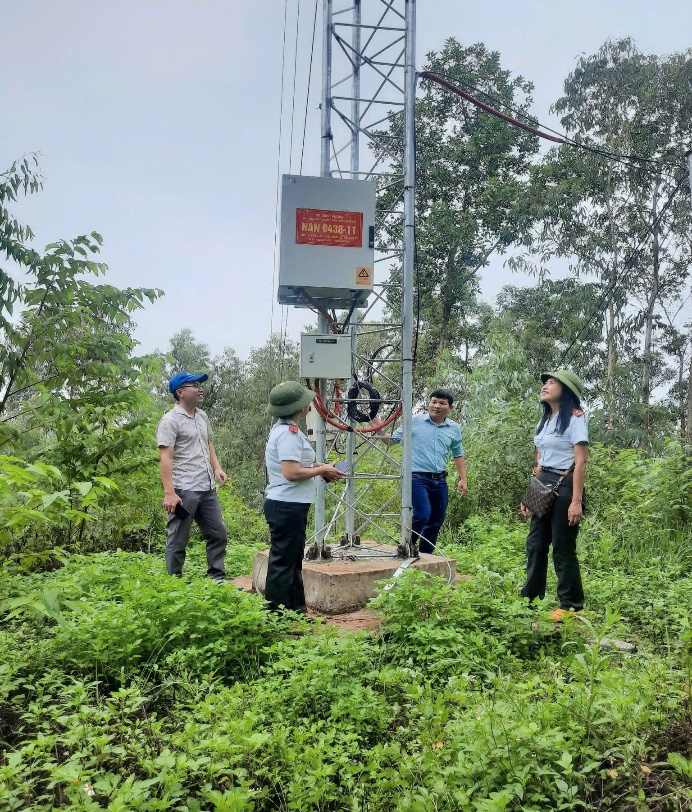
Regarding this issue, the World Health Organization has confirmed that there is currently no evidence to prove that the electromagnetic fields from base transceiver stations can have harmful effects on humans. Although the power of base transceiver stations is many times greater than that of mobile phones, electromagnetic waves attenuate rapidly after 5 meters. People's use of mobile phones and their impact on health is a more concerning issue than the waves from base transceiver stations.
In telecommunications, technical standards are very strictly regulated worldwide . The International Telecommunication Union (ITU) is an organization that issues these standards. These standards clearly define the maximum transmission power to avoid health risks; the appropriate transmission frequency to avoid interference with other devices; lightning protection; and the principle that sharing a power source within a household should not affect neighboring devices. Vietnam also applies these standards, just like other countries. When a base station is allowed to broadcast, it must be inspected by a licensed entity to ensure all conditions meet the above regulations. Only after meeting the standards is it permitted to broadcast. Similarly, equipment imported into Vietnam must also meet these standards.
However, there are also many other reasons from the residents that prevent the construction of BTS stations from proceeding. In many locations, homeowners agree, but for some reason, their neighbors disagree, leading to lawsuits and difficulties. Besides citing health concerns, residents also cite the mechanical safety of the BTS stations as grounds for complaint, "making things difficult" for the company and pressuring them to dismantle the stations.
According to regulations, when installing a BTS station on an existing structure, the business must invite a qualified organization to assess the durability and load-bearing capacity of the structure where the BTS is to be installed. This assessment is compiled into a construction permit application and submitted to the construction licensing authority. Based on this application, the construction licensing authority will review and grant a construction permit if all regulations are met. Although the business had completed all the necessary procedures to build, install, and operate the BTS station, some residents living near the station still protested and obstructed the construction, ultimately forcing the business to dismantle the BTS station.
A representative from MobiFone in Nghe An province stated that the construction of new base stations in Vinh city, town centers, and some populated areas such as Dien Ngoc, Quynh Thanh, and Nghi Lien has always faced opposition from residents, despite the company having completed all necessary procedures and permits. Currently, the company has approximately 30 BTS stations in these areas that cannot be built.
According to reports from businesses, as of January 2025, there are 42 locations where residents are filing complaints, preventing installation or forcing the removal of the equipment.
Dismantling legally installed BTS stations not only causes economic losses and affects the mobile telecommunications infrastructure planning of businesses, but also impacts the quality of mobile telecommunications services, thereby affecting the rights of users.
Difficulties stemming from both government agencies and telecommunications companies themselves.
To manage the implementation of the plan and promote the effective use of shared telecommunications infrastructure, in 2016, the Department of Information and Communications advised the Provincial People's Committee to issue Decision No. 50/2016/QD-UBND dated August 29, 2016, regulating the management and shared use of passive telecommunications infrastructure in Nghe An province.
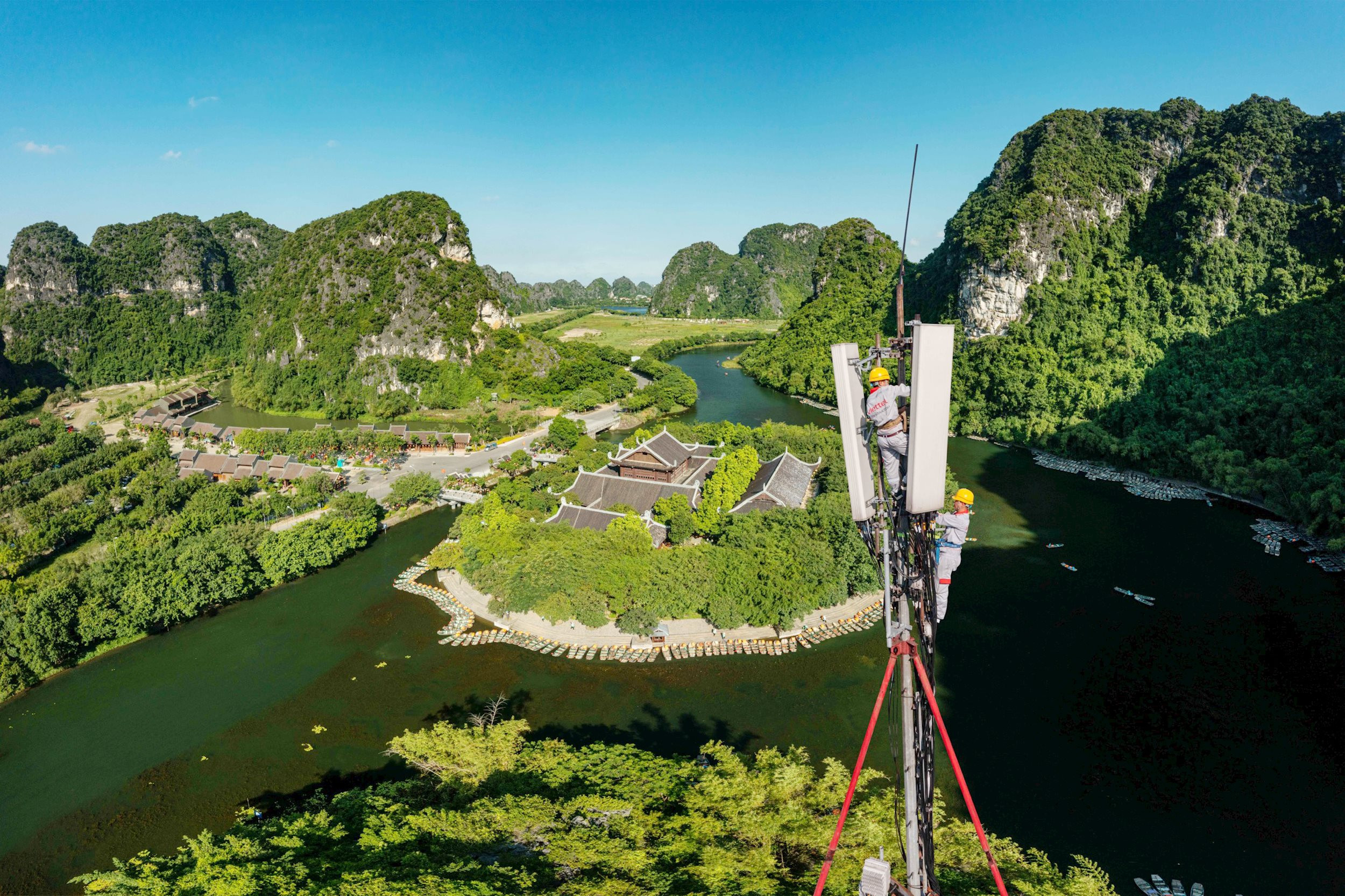
However, as of the end of May 2024, the number of shared BTS towers was 325 locations, reaching only 8.6%, significantly lower than the target set in Decision No. 3724/UBND-CN of the Provincial People's Committee approving the Passive Telecommunications Infrastructure Planning until 2025 (40-45%). Thus, the sharing and common use of telecommunications infrastructure to ensure urban aesthetics, save infrastructure investment costs for businesses and between sectors remains limited and lacks coordination in implementation.
Although the Telecommunications Law and the Land Law generally allow the construction and installation of telecommunications facilities on public land, the lack of specific guidelines from ministries and agencies means that the implementation of this policy is still facing difficulties. Businesses are struggling to access the technical infrastructure of transportation and construction projects, especially highway projects, due to the absence of breakthrough mechanisms regarding investment procedures and coordination.
During the November 2024 National Assembly session, Minister Nguyen Manh Hung stated that one of the reasons for the slow deployment of base stations is that the State does not invest in telecommunications infrastructure; instead, businesses are responsible for this investment. Therefore, local authorities have shown little interest and have not actively assisted telecommunications companies. Furthermore, local authorities have not yet truly considered telecommunications infrastructure as a strategic and crucial infrastructure, unlike transportation or electricity infrastructure.
Besides the objective difficulties mentioned above, it must be frankly admitted that in many cases, telecommunications companies have created difficulties for themselves. These difficulties stem from a lack of common ground in communication and shared infrastructure. The construction of BTS stations by telecommunications companies currently still detracts from urban aesthetics and wastes investment capital. Even worse, in the same location, there are 2-3 BTS antenna towers belonging to 2-3 different mobile telecommunications providers, with no one willing to share anything with anyone else.
It is time for businesses to reassess themselves, adjust inappropriate practices, ensure a balance of interests between businesses, the people, and the locality, and effectively utilize investment costs that ultimately come from the State. Only then can we create a sustainable and harmonious telecommunications market.
According to a report from the Nghe An Department of Science and Technology, there are currently 3,688 4G base stations and 109 5G base stations in the province. Regarding 5G service provision, after a pilot period in several locations in Vinh City, Viettel has now commercialized 5G services in Vinh City with 109 5G broadcasting locations. Vinaphone and MobiFone are currently conducting trials in Vinh City (Vinaphone has 2 locations, MobiFone has 3 locations). In addition, infrastructure development in remote and rural areas has not met expectations due to mountainous terrain hindering phone signals; businesses have to invest heavily but the number of subscribers is small.
What are the solutions to the BTS station problem?
Compared to previous generations of technology (2G, 3G, and 4G), the number of base stations (BTS) needed for 5G is enormous. While 2G only required 20,000 BTS stations to cover 100% of Vietnam's area; 3G needed 30,000-35,000 stations, and 4G needed 40,000-60,000 stations, 5G requires up to 200,000 stations. This is not an easy goal because the investment capital for terminal equipment is huge, while the economic efficiency problem remains unresolved, even though it is known that this will be a leading technology for Vietnam to realize goals such as developing the digital economy, innovation, and promoting science and technology.
In parallel with the development of telecommunications businesses, the Government has introduced many important support policies. Resolution No. 57-NQ/TW clearly states: The State is committed to investing heavily in digital infrastructure, including 5G networks and submarine fiber optic cables, to create infrastructure that leads the country's development.
Following this, Resolution No. 193/2025/QH15 of the National Assembly on piloting a number of special mechanisms and policies to create breakthroughs in the development of science, technology, innovation and national digital transformation officially realized this policy, stipulating support for network operators to invest in 5G infrastructure. The government will provide support of up to 15% of the total investment value if the enterprise deploys at least 20,000 base stations in 2025. This special support policy is considered a "foundation" for telecommunications enterprises to accelerate 5G coverage nationwide in 2025. The resolution allows the investment approval authority to decide on the use of direct contracting to implement the bidding packages under the investment project for implementation in the 2025-2030 period, to promptly meet the telecommunications infrastructure development requirements of enterprises.
To achieve the goals set out in Resolution 57 in Nghe An province, it is first necessary to strengthen propaganda to help people and authorities at all levels understand the importance of digital and telecommunications infrastructure to social life and its impact on health. This will help people support the development of base stations, and encourage authorities at all levels to participate and create favorable conditions for businesses to implement the projects.
In addition, government agencies need to coordinate, and businesses must proactively propose sharing infrastructure with each other to reduce the number of base stations. Strict monitoring is necessary to ensure that 100% of base stations are measured and meet technical and safety standards before becoming operational.
To ensure the quality of mobile communication coverage, meet the service needs of agencies, organizations, and individuals, serve the requirements of digital transformation, socio-economic development, and contribute to ensuring security and national defense in the province, in addition to the attention and support of relevant agencies, the involvement of local authorities, telecommunications enterprises, and the support of the people are urgently needed.
Source: https://baonghean.vn/bai-toan-phat-trien-he-thong-tram-bts-phuc-vu-chuyen-doi-so-10295925.html




![[Image] Close-up view of the interchange connecting the two expressways and Long Thanh Airport.](https://vphoto.vietnam.vn/thumb/1200x675/vietnam/resource/IMAGE/2026/05/25/1779703378210_ndo_br_z7863716673926-224453a31600126cce10622af6290afd-4549-jpg.webp)
![[Image] Hanoi's urban life under the challenge of a "scorching hot" environment](https://vphoto.vietnam.vn/thumb/1200x675/vietnam/resource/IMAGE/2026/05/25/1779706979265_nang-nong-t5-2026-minh-duy-7-4636-jpg.webp)





















































































Comment (0)