

 |
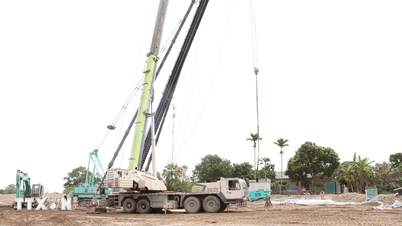
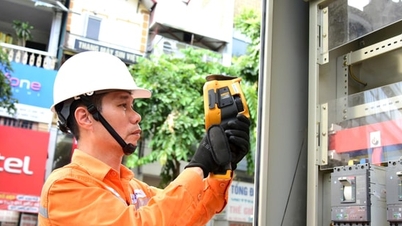
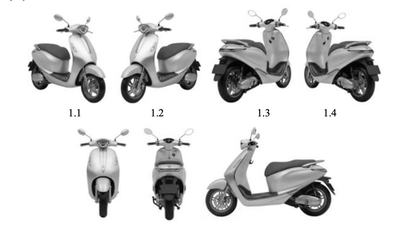
| Workers at Kim Long Motor Hue Joint Stock Company operate the equipment during the work process. |
Building the foundation
The period 2021-2025 marks a significant shift in Hue's development thinking, as the city proactively lays the foundation for high-tech industries based on science and technology , digital infrastructure, and digital transformation.
Over the past five years, Hue has implemented 13 national-level science and technology projects, while maintaining a budget allocation of approximately 1.5% for this sector. However, the most significant highlight remains its digital infrastructure: 97.3% of public services are online, almost all adult residents use smartphones, and Hue ranks second nationwide in the Digital Transformation Index (DTI). These achievements contribute to the formation of a crucial foundation for the digital economy and high-tech industries.
According to Ms. Vo Thi Que Huong, Deputy Director of the Department of Finance, digital infrastructure is identified as the central pillar; developing information technology, digital platforms, and science and technology infrastructure are prerequisites for improving productivity, promoting the digital economy, and smart urban governance.
Despite having established an initial foundation, Hue's high-tech industrial landscape still lacks leading "locomotives." The city has not yet seen many large-scale projects in core areas such as microchips, semiconductors, industrial robots, or new materials. High-tech activities are mainly limited to applications, focusing on pharmaceuticals, high-quality building materials, and some medium- and small-scale electronic devices.
In reality, out of the 9 science and technology development targets for the 2021-2025 period, only 3 have met or exceeded the plan.
According to the draft Hue City Industrial Development Plan for the period 2025-2030, with a vision to 2045, Hue still faces a shortage of high-tech human resources, especially in the fields of microchips, automation, and new materials; the level of meeting business needs is only about 70%. The city also lacks a concentrated high-tech zone, and businesses remain scattered, limiting linkages and sharing of R&D infrastructure. Notably, although FDI accounts for 60-70% of industrial capital, technology transfer remains weak and has not created a spillover effect in the ecosystem.
Mr. Tran Dinh Thien, former Director of the Vietnam Institute of Economics, believes that Hue needs to quickly develop a systematic training strategy for new industries such as semiconductors and artificial intelligence in order to anticipate the wave of high-tech industrial relocation.
 |
| Improved infrastructure in industrial parks contributes to attracting many high-tech businesses. |
Industrial space restructuring
By 2030, Hue has identified industrial development as modern, green, and technology-based. The city aims for over 70% of industrial enterprises to apply high technology and digital technology; at least 30% to apply technologies of the Fourth Industrial Revolution; to establish and operate high-tech and digital technology zones; and to ensure 100% of industrial zones meet environmental standards with centralized wastewater treatment systems.
A key element in the city's industrial development strategy is the "integrated ecosystem" model. In this model, the digital industry plays a foundational role, electronics and semiconductors are the pillars, and supporting industries create space for further development.
According to the Ministry of Industry and Trade's guidelines, Hue needs to restructure its industrial space towards large-scale, ecological, and environmentally friendly practices; prioritizing green industrial zones, "industrial-urban-service" models, linked with logistics, renewable energy, and digital transformation.
Development spaces are distributed according to the advantages of each region: the Chan May - Lang Co Economic Zone focuses on foundational industries, mechanical engineering, supporting industries, and energy; the Phu Bai area becomes a high-tech industrial center linked to the international airport and logistics services; Phong Dien develops deep processing industries for agricultural, forestry, and aquatic products; the central area aims for creative and cultural industries; the western mountainous region develops medicinal herb processing; and the coastal and lagoon areas prioritize ecological industries and the circular economy.
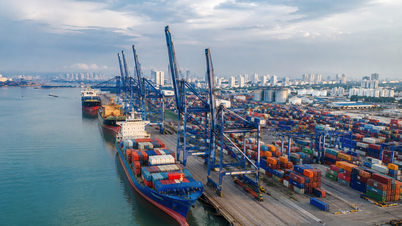
Alongside this is the need to form industry clusters, closely linking production, logistics, and export; and to synchronize transportation, energy, and urban infrastructure to reduce costs and enhance competitiveness.
Currently, Hue is focusing on investing in many key infrastructure projects such as expanding the Cam Lo - La Son and La Son - Tuy Loan expressways, extending the To Huu road to Phu Bai airport, the coastal road system, bridges, and strategic transportation axes. Nguyen Khac Toan, Member of the Central Committee of the Party, Deputy Secretary of the City Party Committee, and Chairman of the City People's Committee, emphasized that transportation infrastructure not only expands urban space but also facilitates effective connections between production areas and the logistics system, thereby enhancing the competitiveness of the economy.
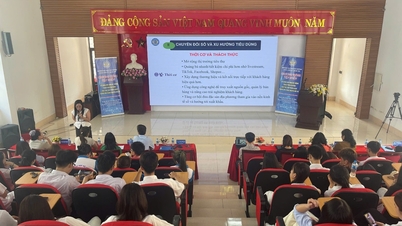
According to the draft Hue Industrial Development Plan for the period 2025-2030, with a vision to 2045, human resources are identified as a key factor. The city aims to become a center for training high-quality industrial human resources in Central Vietnam, based on a "State - School - Enterprise" linkage model.
Source: https://huengaynay.vn/kinh-te/khoa-hoc-cong-nghe/dinh-hinh-he-sinh-thai-cong-nghe-cao-166013.html


![[Image] Hanoi's urban life under the challenge of a "scorching hot" environment](https://vphoto.vietnam.vn/thumb/1200x675/vietnam/resource/IMAGE/2026/05/25/1779706979265_nang-nong-t5-2026-minh-duy-7-4636-jpg.webp)




























































Comment (0)