

Keep the kitchen clean.
Every day at 7 a.m., the kitchen area of Quang Tri Ethnic Boarding High School is lit up. The school's management board, medical staff, and kitchen management team directly inspect the food arriving at the school before it is processed.
With nearly 500 boarding students, the school places special emphasis on controlling its food supply. Every type of vegetable, root crop, meat, and fish is thoroughly inspected for quality and origin. Food that does not meet standards is not allowed in the school cafeteria. All food suppliers must sign contracts and fully comply with food safety regulations.
Ms. Dinh Thi Thu Huong, Deputy Principal of Quang Tri Ethnic Boarding High School, said: “School meal monitoring is carried out daily with the participation of many departments. Not only administrators and teachers but also parents are given the opportunity to participate in monitoring to ensure transparency in organizing meals for students.”
According to the school's catering management plan for the 2025-2026 school year, all school catering staff will receive annual food safety training, undergo regular health checkups, and be assigned specific tasks in each food preparation stage. The school kitchen currently uses nutrition software to create menus and calculate appropriate meal portions for students. Menus are changed weekly and seasonally to ensure nutritional balance and suitability to students' tastes.
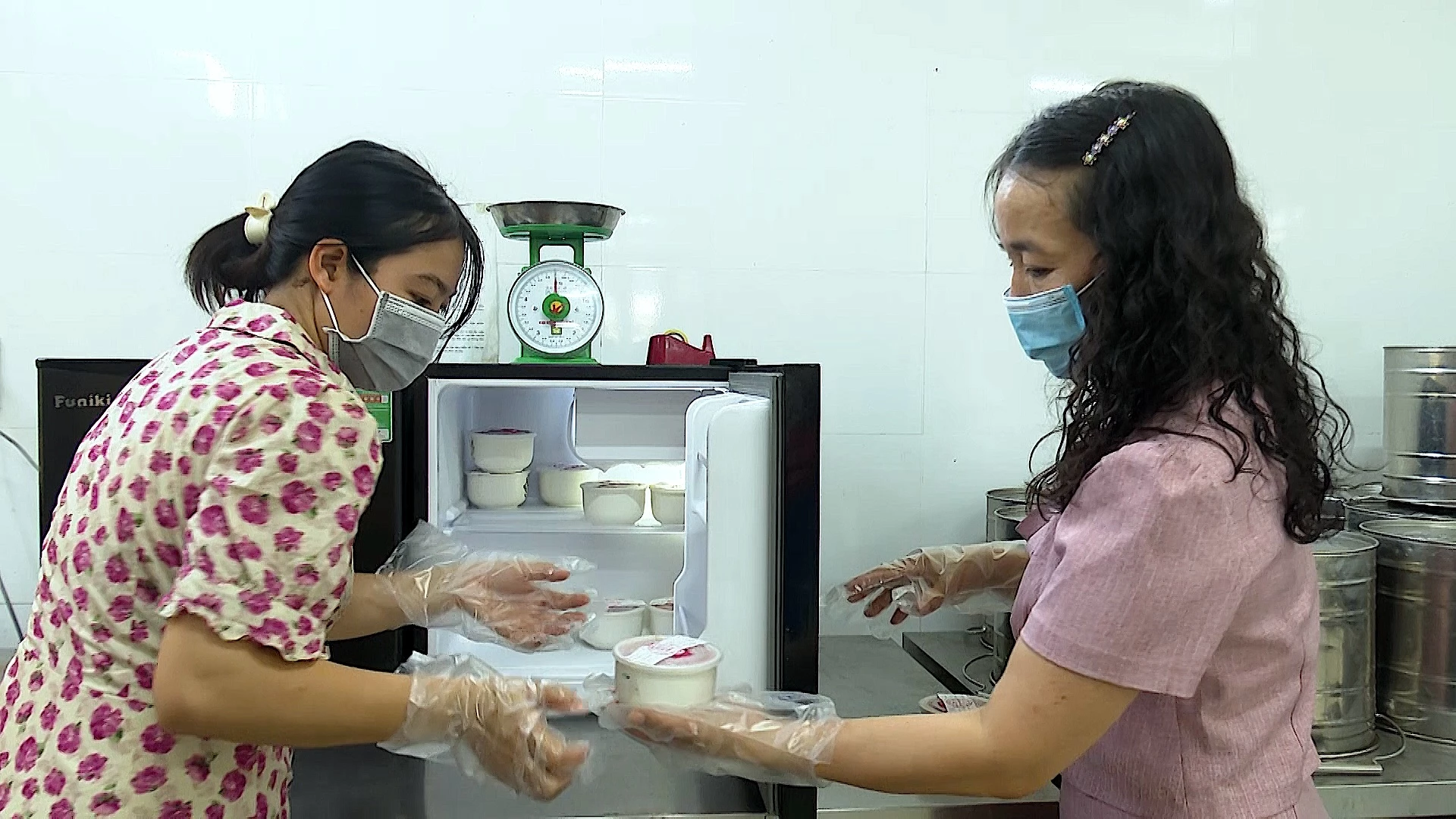 |
| Food samples are being stored at Quang Tri Ethnic Boarding High School - Photo: QN |
During the past school year, the school invested in renovating the cafeteria and adding equipment to serve the boarding school's meals. Through regular health check-ups, there were no cases of malnutrition among students or food poisoning incidents at the school.
 |
| Safe meals at Quang Tri Ethnic Boarding High School - Photo: QN |
Cao Thi My Le, a student in class 10B, shared: “Many boarding students consider school meals like family meals. The dishes are now quite diverse and suit their tastes, so most students finish their portions.”
At Hoa Hong Kindergarten (Dong Hoi ward), which serves approximately 500 children with three meals a day, food safety is strictly enforced from the sourcing of ingredients to the processing stage.
Ms. Nguyen Thi Hong Sen, Deputy Principal of Hoa Hong Kindergarten, said: “All food brought into the school must have a clear origin and is inspected daily before being brought into the kitchen. Food that does not meet quality standards will be discarded right from the start.”
 |
| The seasonal vegetable garden at Hoa Hong Kindergarten supplies the school's canteen - Photo: QN |
Notably, the school utilizes its grounds to grow seasonal vegetables for the school's canteen. These small vegetable plots in the schoolyard not only supplement the supply of clean food but also become a familiar experiential activity for the children. In addition, Hoa Hong Kindergarten is using nutrition software to manage meal portions and track food input and output. In the near future, the school plans to implement food traceability using QR codes to enhance transparency in school canteen management.
 |
| Food preparation area at Hoa Hong Kindergarten - Photo: QN |
Strengthen management accountability.
Quang Tri province currently has over 400 schools, primarily preschools, that provide meals for students attending school on a half-day or full-day basis. This large scale of service necessitates increasingly stricter management of food safety within schools.
 |
| A healthy and enjoyable meal at Hoa Hong Kindergarten - Photo: QN |
Ms. Mai Thi Lien Giang, Deputy Director of the Department of Education and Training, emphasized: “Educational institutions must strictly control the entire process of organizing meals, from food selection to processing and serving to students. Food must have a clear origin, be inspected daily, and contracts must be signed with suppliers to ensure compliance with regulations.”
According to Ms. Mai Thi Lien Giang, the responsibility of the head of the educational institution is a key factor in ensuring food safety. The principal must bear full responsibility for the school cafeteria, from selecting food sources to organizing processing and serving students. Schools must proactively develop specific control plans, clearly assign responsibilities to each department, and strengthen self-inspections to promptly address food safety risks. In addition, the education sector continues to coordinate with the health sector, local authorities, and parent-teacher associations in inspecting and monitoring cafeteria conditions and food sources. Regular and unscheduled inspections are maintained to promptly address any emerging issues.
In addition to maintaining the three-step food inspection process and retaining food samples as required, the local education sector is also stepping up training for management staff, teachers, and employees directly involved in school meal services; and mobilizing additional resources to invest in facilities and improve the quality of school meals.
Quang Ngoc
Source: https://baoquangtri.vn/xa-hoi/202605/bao-daman-toan-bep-antrongtruong-hoc-7ce0eeb/


![[Image] Close-up view of the interchange connecting the two expressways and Long Thanh Airport.](https://vphoto.vietnam.vn/thumb/1200x675/vietnam/resource/IMAGE/2026/05/25/1779703378210_ndo_br_z7863716673926-224453a31600126cce10622af6290afd-4549-jpg.webp)

![[Image] Hanoi's urban life under the challenge of a "scorching hot" environment](https://vphoto.vietnam.vn/thumb/1200x675/vietnam/resource/IMAGE/2026/05/25/1779706979265_nang-nong-t5-2026-minh-duy-7-4636-jpg.webp)
































































Comment (0)