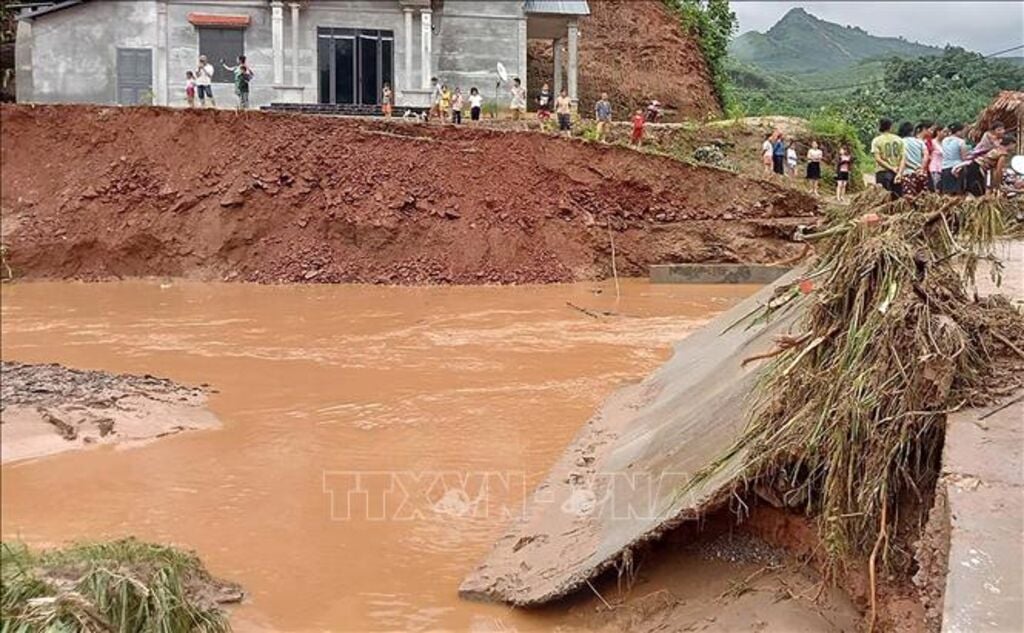
Meanwhile, along with the increasingly complex developments of climate change, from now until the end of the year, according to the assessment of Associate Professor, Doctor, Director of the National Center for Meteorological and Hydrological Forecasting Mai Van Khiem, it is predicted that there will be about 2-4 typhoons and tropical depressions in the East Sea, with 1-2 of them potentially affecting the Vietnamese mainland.
These developments show that increasingly unpredictable weather patterns require proactive measures to address the risk of successive storms and floods, as well as the strict and scientific operation of hydroelectric reservoirs. Ensuring absolute safety for the structures and people in downstream areas is extremely important and must be a constant priority.
Prime Minister Pham Minh Chinh has just signed Official Dispatch No. 188/CD-TTg dated October 6, 2025, requesting ministries, sectors, and localities to proactively respond to the risk of heavy rain, flash floods, landslides, and mudslides caused by the impact of Typhoon No. 11. In this Official Dispatch, the Prime Minister directed and assigned the Chairmen of the People's Committees of provinces and cities to proactively closely monitor and regulate the operation of dams to ensure safety, preventing consecutive floods or floods caused by subjective factors; implement measures to ensure the safety of dikes; and promptly mobilize forces and means for prevention, control, and immediate remediation in case of incidents.
Regarding ensuring the safety of dams, hydropower plants, and irrigation systems, at the meeting on the afternoon of October 4th, Deputy Prime Minister Tran Hong Ha assigned the Ministry of Agriculture and Environment the responsibility of regulating, controlling, and deciding on the timing of flood releases and flood mitigation, to prevent "consecutive floods and serious urban flooding"; and requested increased information exchange with China on hydrology of rivers across the border, especially flood release data.
In Official Dispatch No. 7631/CĐ-BCT on responding to Typhoon No. 11, the Ministry of Industry and Trade also clearly stated the requirement for hydropower dam owners to strictly implement the approved operating procedures for interconnected and single reservoirs, especially when unusual situations arise. The goal is to prevent artificial flooding and contribute to flood reduction in downstream areas. Early notification to the public before flood release operations is paramount to ensure safety and proactively prevent damage.


In addition, hydropower units are strengthening inspections and assessments of the condition of dams, equipment, and flood discharge and water intake operations, as well as the flood warning system in downstream areas. Any defects or incidents detected are promptly rectified, and plans are implemented to ensure safety for downstream areas of the reservoir and unfinished construction projects, especially at vulnerable points. Problems from previous floods that have not yet been resolved are also being addressed to prevent the emergence of new risks.
To ensure smooth communication and coordination in disaster response, hydropower reservoirs are equipped with comprehensive satellite communication systems. Satellite phone numbers and contact points for receiving operational orders are provided to the Chairman of the Provincial People's Committee, the head of the Provincial Civil Defense Command, the Director of the Department of Industry and Trade, the Chairman of the People's Committee at the commune and ward levels, and the Department of Industrial Safety Engineering - Ministry of Industry and Trade. Operational information and reservoir data are regularly reported to the competent authorities for monitoring and timely response.
The Vietnam Electricity Group (EVN) also directed hydropower projects under its management to strictly implement assigned tasks, focusing on ensuring sufficient manpower, materials, and logistical support according to the "four on-the-spot" principle to respond to Typhoon No. 11 and its aftermath.
Hydropower units perform three main tasks: Organizing meteorological and hydrological monitoring and data collection, proactively grasping the situation and strictly implementing directives from the National Civil Defense Steering Committee, the Ministry of Agriculture and Environment, and the local Civil Defense Command; deploying plans to ensure the safety of dams and downstream areas, especially at vulnerable points; and deploying forces to proactively and promptly handle unsafe situations, especially emergency flood releases.
Mr. Trinh Van Thuan, Deputy Director of the Department of Industrial Safety and Environmental Engineering, Ministry of Industry and Trade, stated that, given the complex and intense nature of natural disasters, including numerous superstorms and floods exceeding historical records, ensuring the safety of dams and reservoirs is becoming increasingly difficult, especially for structures in mountainous, remote, and isolated areas, which disrupt communication and operational coordination.
Although meteorological and hydrological forecasts have improved in quality, data collection from upstream countries remains limited, hindering remote reservoir regulation. Some inter-reservoir operating procedures approved in 2018-2019 are no longer suitable for current practices, given the numerous new or upgraded projects being invested in the basin.
From July 1st, 2025, the operation of the two levels of government coinciding with the flood season will also affect operational coordination. In addition, resources and means for disaster prevention and control are limited, and real-time reservoir water level monitoring equipment is not yet widespread.


In the coming period, reservoir management units need to strictly adhere to the inter-reservoir operating procedures and water level control, proactively review and recalculate design flood characteristics, add flood discharge items, and organize drills for disaster response plans. Self-inspection and assessment of dam safety must be carried out regularly to detect and rectify deficiencies.
Provincial People's Committees need to decisively address violations of flood drainage corridors, enhance the capacity of civil defense agencies, inspect all hydropower projects in their areas, closely coordinate with the Department of Industrial Safety and Environmental Engineering in inspection and supervision, and require dam owners to strictly comply with regulations on dam and reservoir safety.
Source: https://baotintuc.vn/kinh-te/bao-dam-an-toan-ho-dap-khong-de-xay-ra-lu-chong-lu-20251006190636164.htm


![[Photo] Prime Minister Le Minh Hung presides over the thematic session on promoting science and technology development and innovation.](https://vphoto.vietnam.vn/thumb/1200x675/vietnam/resource/IMAGE/2026/06/23/1782207872934_ndo_br_dsc-1724-jpg.webp)