

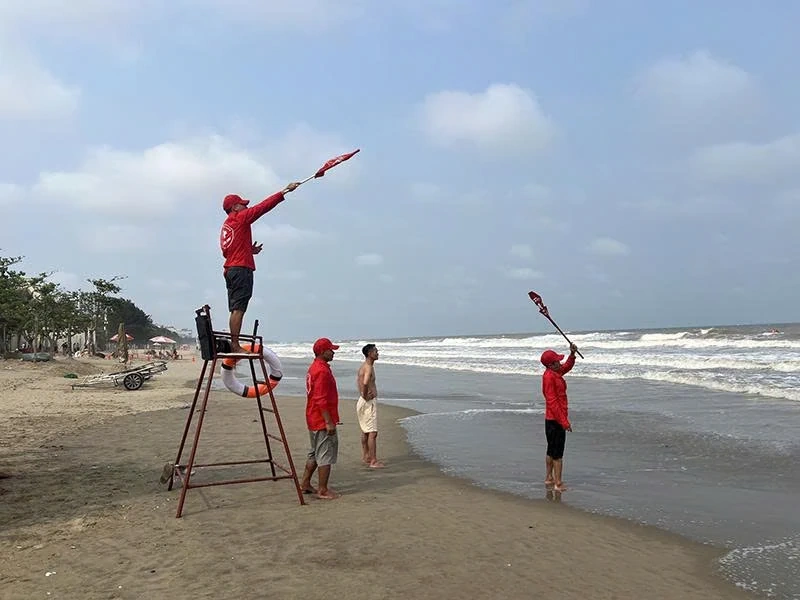
The rescue team deployed personnel to warn and guide tourists in the beach area during the drill.
According to the plan, the designated swimming area is clearly defined, stretching approximately 3.5km from the foot of the Doc Cuoc Temple to the Van Chai tourist area. Swimming times are specifically regulated for each period of the year, taking into account weather and hydrological conditions, ensuring the safety of visitors. Dividing swimming time slots not only helps to better control activities at sea but also facilitates the effective work of rescue forces.
Notably, the rescue force was professionally organized and divided into phases. During the peak tourist season (from April 11th to September 10th), the total number of personnel reached 63, including rescuers, medical staff, firefighters, and beach broadcasting team. Shifts were arranged continuously from early morning to evening, and even emergency shifts were provided when the weather was unpredictable or incidents occurred.
Not only is the number of personnel important, but the organization of the rescue force is also scientifically planned. Rescue teams are assigned to specific beach areas A, B, C, and D, ensuring comprehensive monitoring of the nearshore area. Simultaneously, offshore patrol forces using jet skis and specialized boats, combined with the deployment of buoys, help control the sea area, promptly detecting and handling dangerous situations.
In addition, first aid services are provided at four fixed checkpoints, fully equipped with medical equipment, from oxygen tanks and stretchers to a supply of medicine. This is an important "shield," helping to promptly handle accident situations right on the beach, minimizing risks before transferring patients to medical facilities.
One of the new features of the 2026 plan is the enhancement of communication and warning efforts. The beach public address system will operate continuously during peak season, not only broadcasting swimming regulations but also assisting in the search for lost children and providing emergency notifications in case of incidents.
Besides organizing its forces, Sam Son ward places special emphasis on comprehensive solutions to improve management efficiency and risk prevention. This includes the strict implementation of signage, buoys, and no-swimming zones at dangerous points such as the foot of Hon Co Giai island and areas with deep holes. These are "soft barriers" that play a significant role in guiding the behavior of beachgoers. Simultaneously, inspection and enforcement of violations are also intensified. Cases of swimming outside of permitted hours, exceeding buoy limits, or engaging in uncivilized behavior will be handled according to regulations, with coordination between the rescue team and local police. This strict enforcement not only ensures safety but also contributes to building a civilized and friendly tourism image.
Another noteworthy point is the involvement of accommodation establishments in ensuring safety. Hotels and guesthouses are required to post beach regulations, guide tourists, and coordinate in handling incidents. This shows that rescue work is not only the responsibility of specialized forces but also a shared responsibility of the entire tourism system.
For tourists, the plan also includes specific recommendations such as not swimming when tired or intoxicated, not exceeding the buoy zone, and not swimming in dangerous areas. These regulations may seem simple, but they are crucial in preventing drowning accidents – the main cause of incidents at sea.
Furthermore, investing in modern equipment is also a key highlight. The fleet includes ambulances, jet skis, patrol boats, along with hundreds of lifebuoys, life vests, and medical supplies, enhancing rescue capabilities in all situations. Adequate preparation of supplies not only demonstrates proactiveness but is also a crucial factor in determining the effectiveness of rescue operations.
Furthermore, systematic training for rescue personnel has been organized since the beginning of the year. Swimming, first aid, and emergency response skills are regularly practiced, ensuring that each rescuer possesses the necessary competence and confidence to perform their duties.
It is clear that Sam Son ward's 2026 maritime rescue, relief, and first aid plan is not just an action plan, but also a strong commitment to protecting tourists. From proactively developing the plan and organizing forces to implementing comprehensive solutions, everything is aimed at the highest goal of preventing unfortunate incidents at sea, contributing to affirming the image of a safe, civilized, and trustworthy destination in the hearts of tourists.
Text and photos: Tran Hang
Source: https://baothanhhoa.vn/bao-dam-an-toan-tam-bien-286858.htm


















![[Infographics] List of diseases requiring vaccines and biological products in mandatory immunization.](https://vphoto.vietnam.vn/thumb/402x226/vietnam/resource/IMAGE/2026/05/23/1779529325271_infographics-da-w1200t0-di2620d272d6160707t11600l1-cover8.webp)































































Comment (0)