

“We must organize health check-ups and screenings for 100% of the population living in the city by 2026.” This directive was issued by Politburo member and City Party Secretary Tran Luu Quang at the 5th Conference of the Ho Chi Minh City Party Committee for the 2025-2030 term on April 1, 2026, aiming to realize Resolution No. 72-NQ/TW dated September 9, 2025, of the Politburo on some breakthrough solutions to strengthen the protection, care, and improvement of people's health. Immediately, the health system mobilized to organize a large-scale free health check-up campaign. Ho Chi Minh City became the first locality in the country to provide free health check-ups and screenings for all citizens.
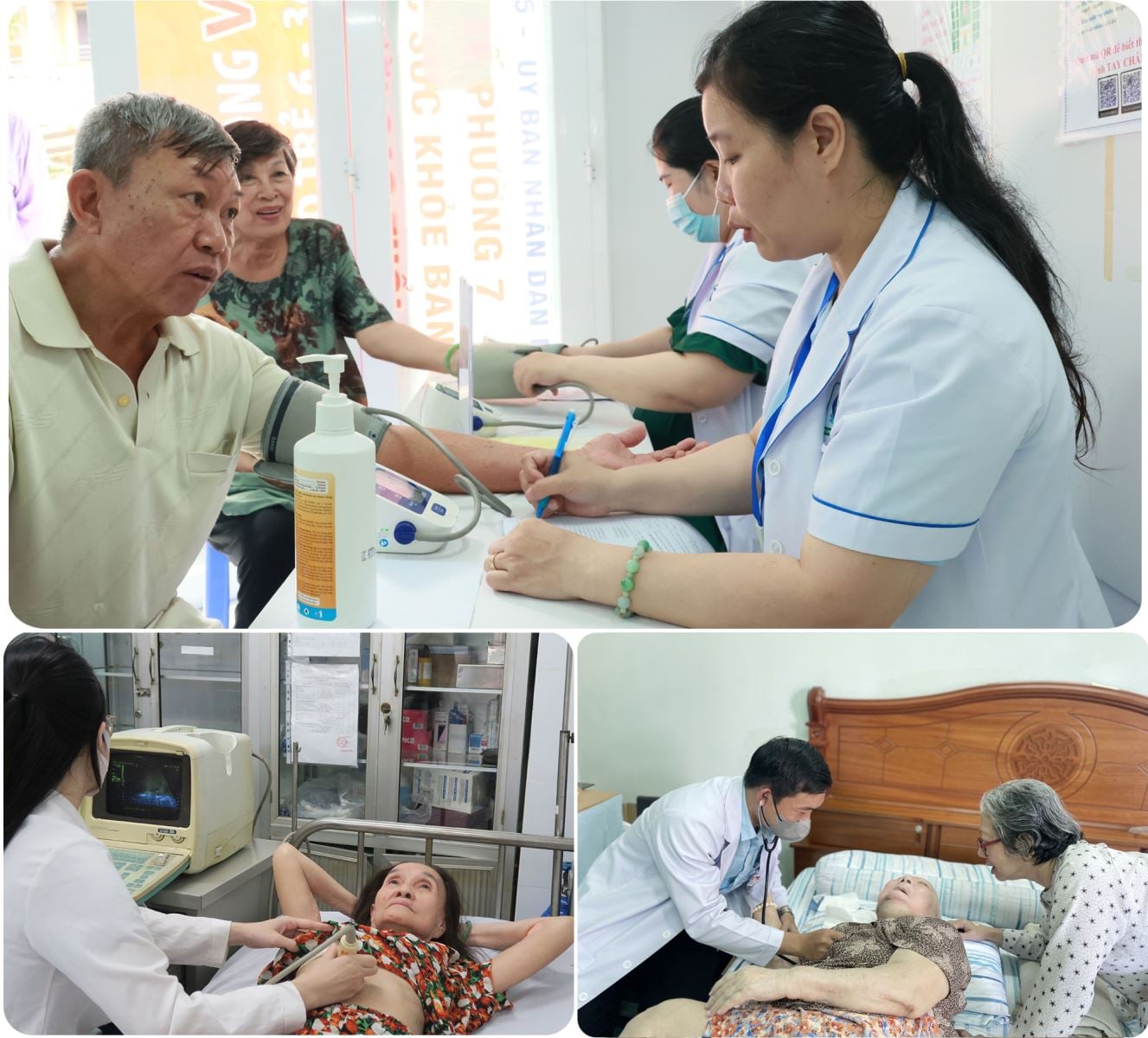
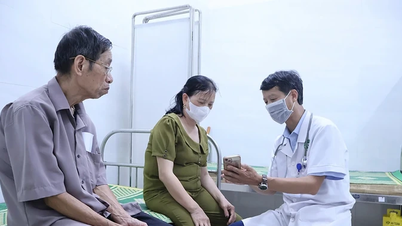
Ho Chi Minh City is implementing a large-scale free health check-up program for the elderly.
In mid-April 2026, upon hearing the news that all residents of Ho Chi Minh City would receive free health checkups, Mr. Hoang, 52, a ride-hailing driver residing in Di An ward, went to 535/6 Le Hong Phong Street, Phu Loi ward, to register for a health checkup. For the past four years, Mr. Hoang had never had a health checkup because he did not have an employment contract. After measuring his height, weight, and blood pressure, Mr. Hoang had blood tests, an ultrasound, an X-ray, and met with a doctor for consultation. “The health checkup was free, but it was conducted with all the same steps as at companies; I was really surprised,” Mr. Hoang shared.
Meanwhile, Ms. Mai, 55, a small business owner at Thu Dau Mot market, discovered she had symptoms of diabetes after a free health check-up. She said: “The doctor advised me to change my diet and lifestyle to prevent the disease from worsening. Thanks to this check-up, I detected the disease early.”

Free health check-ups for residents at Cho Lon Ward Health Station.
April 17, 2026 became a major free health check-up event in Ho Chi Minh City. The program took place simultaneously at 168 commune, ward, and special zone health stations, much to the excitement and joy of the people. To implement this unprecedented large-scale health check-up, the city mobilized medical staff from 101 public and private hospitals; including 6 hospitals under ministries/sectors, 69 general and specialized hospitals of the city, and 26 private hospitals. Notably, this health check-up not only provided people with access to multi-specialty services right where they lived, but also focused on groups requiring more attention, such as the elderly, people with chronic diseases, self-employed workers, vulnerable groups, and high-risk groups. At the same time, the activity also contributes to raising public awareness of the role of regular health check-ups, early detection of diseases, and continuous health management in the community.
In just one day of the campaign, approximately 30,000 people received free health checkups. Many were diagnosed with illnesses or risk factors for the first time, leading to early treatment advice, referrals to specialists, or continued monitoring at the local level. Doctors recorded 19,088 cases with health problems, accounting for 64.3% of those examined. Of these, 10,634 people needed continued monitoring at the health station; 8,447 cases were referred to specialists, higher-level facilities, or continued treatment. The most common were non-communicable chronic diseases such as hypertension, diabetes, and cardiovascular diseases. Many cases of diseases in other fields such as obstetrics and gynecology, ophthalmology, dentistry, respiratory, ENT, dermatology, hepatitis B, and hepatitis C were also detected through the health checkups.

According to Associate Professor, Doctor Tang Chi Thuong, Director of the Ho Chi Minh City Department of Health, the city's free health check-up program for all citizens has initially yielded clear results, helping people detect diseases early, reducing the risk of serious illnesses, and supporting treatment referral and reducing the burden on higher-level hospitals. This is also an important step in the transition from a "cure" mindset to a "prevention" mindset, building a proactive healthcare system, strengthening primary healthcare, and moving towards the goal of managing people's health throughout their lifecycle across the entire city.
To ensure effective and sustainable free health check-ups for all citizens, guaranteeing that at least every citizen receives a health check-up once a year as directed by the Secretary of the Ho Chi Minh City Party Committee, the Department of Health has planned to implement a "three-pronged" model with three comprehensive, mutually supportive solutions to ensure no citizen is left out. Specifically, the city will conduct health check-ups across administrative boundaries, tailored to the characteristics of the population, which includes many self-employed workers, temporary residents, and those who frequently move. The city's health sector's viewpoint is that "healthcare must follow the people," allowing citizens to choose the most convenient facility regardless of their place of residence. This approach helps expand coverage, increase flexibility, and reduce the risk of omissions.


One of the key requirements mentioned in Resolution 72-NQ/TW is the shift from "treating diseases" to "preventing diseases for the entire population," with primary healthcare as the foundation. Based on this, Ho Chi Minh City has implemented significant reforms to its primary healthcare system. Health stations have begun operating under a new model, becoming the "first point of contact for healthcare" with the goal of providing increasingly better healthcare for the people.
For over a month now, residents of Hiep Phuoc commune have become familiar with the sight of doctors and nurses from the commune's health station coming to their homes to check and monitor their health, especially the elderly and those with mobility difficulties. "Before, every month I had to ask my nephew to take me to the hospital for checkups for hypertension and diabetes. But now, I don't need to go anymore; the doctors come to my house to examine me. It's so good," shared Mrs. Le Thi Mang (78 years old, residing in Hamlet 34, Hiep Phuoc commune).
Hiep Phuoc is one of the first three communes in Ho Chi Minh City to establish continuous health care teams linked to residential areas starting from April 7, 2026. According to Dr. Nguyen Van Gam, Director of Hiep Phuoc Commune Health Station, since its launch, the health care teams of the commune health station have taken turns visiting the homes of the elderly, disadvantaged people, and those with underlying health conditions to check their health. With 43 doctors and nurses and 148 community health collaborators, Hiep Phuoc Commune Health Station has formed 7 continuous health care teams, responsible for the health of over 75,000 people in the area.
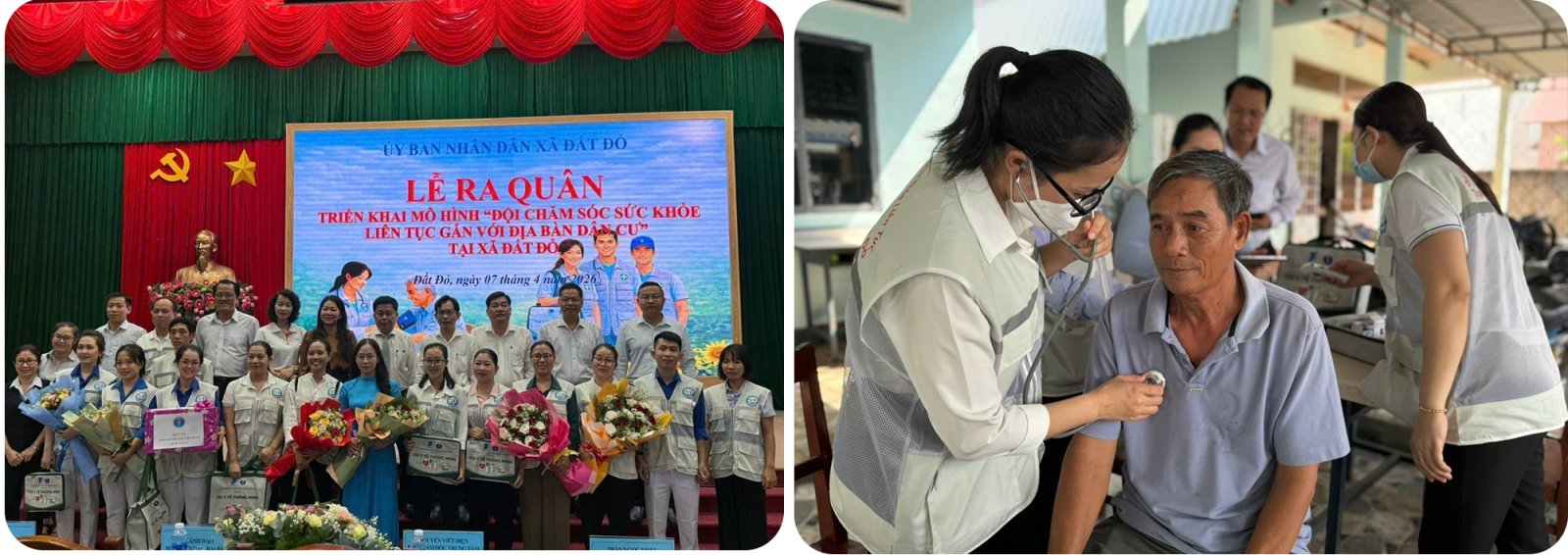
Launching the Community-Based Continuous Healthcare Team in Dat Do Commune.
Similarly, in Dat Do commune, healthcare teams have been continuously providing home-based healthcare services to residents, especially the elderly and those with mobility difficulties, since their launch on April 7th. When doctors and nurses from the Dat Do Commune Health Station came to his home for a check-up, Mr. Nguyen Van Muoi (70 years old, Hiep Hoa hamlet) was surprised but then delighted: “Never before have we received such dedicated healthcare. The city's policy of bringing healthcare to people's homes is truly commendable.”
Dr. Phan Thi Tuyet Xuan, Director of the Dat Do Commune Health Station, said that the locality has established four continuous health care teams that directly visit people's homes to examine them. Initially, the unit prioritizes visiting the homes of the elderly, those living alone, and those with underlying health conditions. Simultaneously, the continuous health care teams in Dat Do commune will create electronic health records for all residents. The goal is for every resident, especially the elderly, to have their health managed and cared for continuously, right where they live.
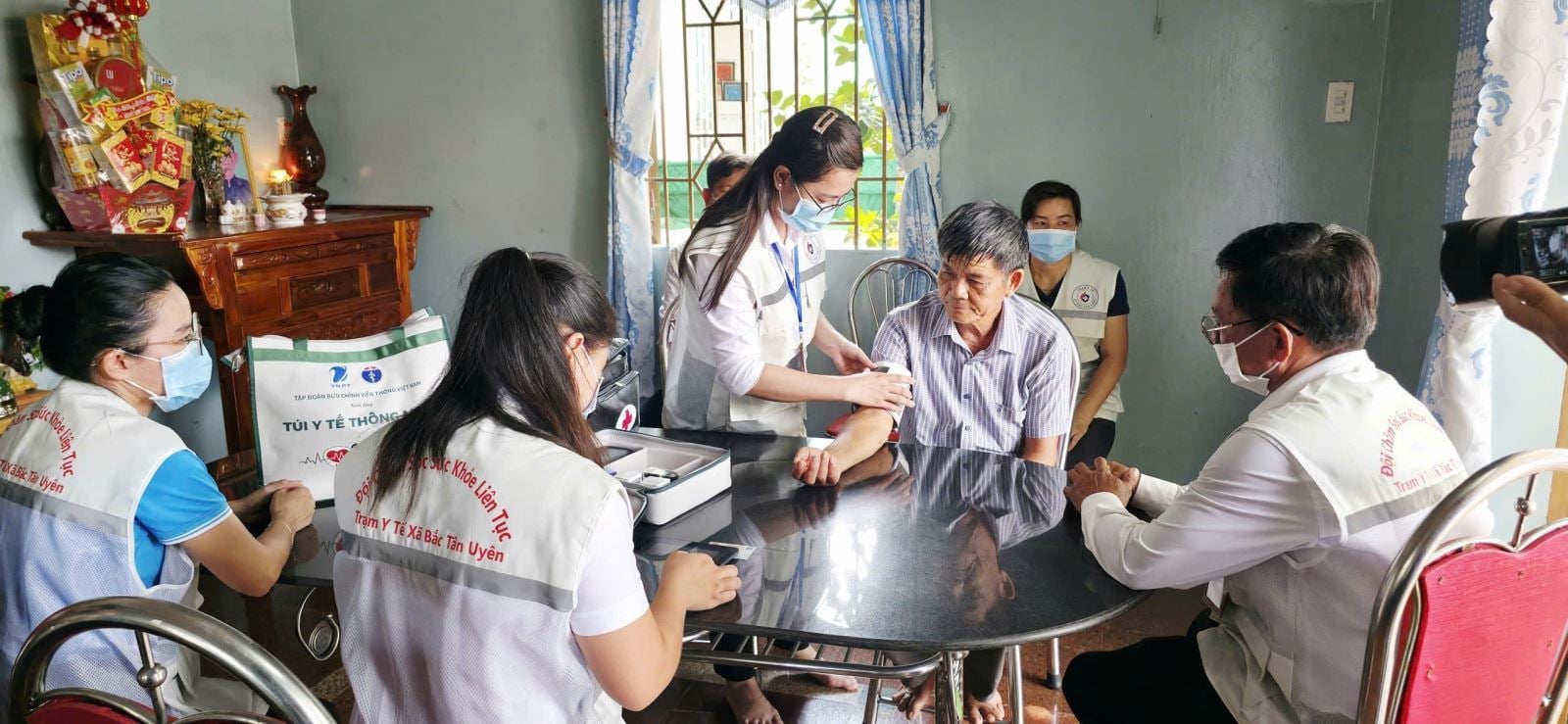
The healthcare team is continuously deployed to the residential area of Bac Tan Uyen commune, providing home-based health check-ups for residents.
Associate Professor, Doctor Tang Chi Thuong, Director of the Ho Chi Minh City Department of Health, informed that the implementation of the model of health care teams linked to residential areas is a practical step to bring medical services closer to the people. This not only contributes to improving the quality of primary healthcare in localities but also helps to gradually shape a multi-tiered healthcare system, in which grassroots healthcare truly plays the role of "gatekeeper" of the healthcare system. It is expected that after the three communes of Hiep Phuoc, Dat Do, and Bac Tan Uyen, the Department of Health will continue to expand this model to many other communes and wards in the city.
Meanwhile, instead of going to a higher-level hospital, recently, Mrs. Tran Thi Lan (72 years old, residing in Ward 12, Binh Dong Commune) has been going to the commune's health station to register for regular check-ups for diabetes and hypertension. Mrs. Lan said that the commune's health station has all the necessary specialties and blood tests similar to those at a hospital. She feels completely at ease being examined there: "The doctors at the health station are very dedicated and attentive to each patient. I only went for check-ups twice, and the doctors already remember my face and name, giving careful and thorough instructions."
According to Dr. Hoang Van Cuong, Director of Binh Dong Ward Health Station, from January 1, 2026, Binh Dong Ward Health Station officially received modern and spacious facilities along with the team of doctors and medical staff from the former District 8 Health Center. In particular, inheriting the operations of the General Clinic of the former Health Center, Binh Dong Ward Health Station now provides medical examination and treatment in many specialties: General Internal Medicine, General Surgery, Dentistry, Pediatrics, Dermatology, Ear, Nose and Throat... Especially, the Traditional Medicine Clinic combined with modern medicine is one of the highlights of Binh Dong Ward Health Station, attracting many patients in the area for examination and treatment.

Doctors from the Ho Chi Minh City Dermatology Hospital examine patients in Xuan Hoa ward.
Similarly, the Xuan Hoa Ward Health Station also inherited the former administrative headquarters of Vo Thi Sau Ward, District 3, with spacious facilities and significant investment in modern medical equipment. Currently, the Health Station has 63 staff members, including 18 doctors, tasked with providing healthcare to over 38,000 residents in the area. These are exemplary health station models that Ho Chi Minh City will build in the future.
According to the Ho Chi Minh City Department of Health, health stations in the city are being reorganized and operated according to a new model. Besides implementing national target programs such as community health management and improvement; protection and care for mothers, children, and the elderly; care for people with disabilities and social welfare…, health stations are also promoting medical examinations and treatment, health counseling, and basic first aid. More importantly, health stations are now undertaking the task of creating electronic health records for all residents in the city.
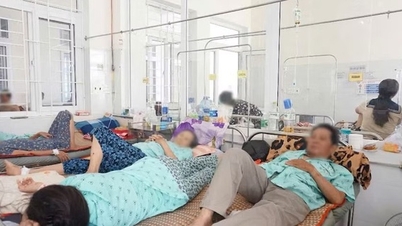
Ho Chi Minh City is providing free health check-ups for 16,000 residents.
According to the plan, Ho Chi Minh City will strengthen and improve the capacity of commune-level health stations in terms of human resources, ensuring the structure and sufficient number of doctors according to their functions and tasks; maintain a team of community health collaborators and population collaborators according to their functions and tasks; and ensure basic facilities, medicines, and medical equipment. In the period 2026-2030, the city will rotate and assign at least 1,000 doctors to work temporarily at commune-level health stations each year; and add permanent doctors to commune-level health stations so that by 2030 there will be enough doctors according to their functions and tasks. Each commune-level health station will also be invested with sufficient basic medical equipment as prescribed, with priority given to allocating land and funding for construction and upgrading to ensure that the health stations meet national standards.
The city has also significantly reformed the operational model of health centers, shifting from a passive approach of waiting for people to come for examinations to a model of "continuous health care teams linked to the local area," proactively monitoring and managing people's health right from the community level, with people at the center and disease prevention as the foundation. Mr. Tang Chi Thuong affirmed: "These solutions not only overcome the long-standing limitations of grassroots healthcare, but also create a foundation for health centers to truly become the 'first point of contact' for people - where primary healthcare is provided proactively, continuously, and comprehensively, in line with the spirit of Resolution 72 and the sustainable development orientation of the health sector."

For a long time, people in remote and rural areas had to spend a lot of time, effort, and money traveling to central medical facilities for examinations and treatment. This was because the specialized primary healthcare system had not yet reached these areas. To address this problem, Ho Chi Minh City has pioneered bringing doctors and expanding hospitals in remote areas and islands to improve access to healthcare services for all citizens.

Experts from Thong Nhat Hospital are assisting the Con Dao Military-Civilian Medical Center in establishing and operating a Hemodialysis Unit so that residents can receive dialysis treatment right at the center.
No longer needing to travel to the mainland for extended stays to receive dialysis treatment as before, since May 6th, kidney failure patients in the Con Dao Special Zone can now receive dialysis treatment locally thanks to the support of dialysis machines and expertise from Thong Nhat Hospital in Ho Chi Minh City. Immediately after becoming operational, the Artificial Kidney Unit of the Con Dao Military-Civilian Medical Center received 3 kidney failure patients for regular dialysis. According to Dr. Le Cong Tho, Director of the Con Dao Military-Civilian Medical Center, with the two existing dialysis machines, the unit can serve a maximum of 12 patients undergoing dialysis. In the future, as demand increases, the Con Dao Military-Civilian Medical Center will expand to a maximum of 10 machines, providing treatment for approximately 60 patients.
Previously, starting in September 2025, the Ho Chi Minh City Department of Health began rotating doctors from top-tier specialized hospitals to the Con Dao Special Zone Military-Civilian Medical Center with the goal of improving the quality of emergency care, medical examinations and treatment, and ensuring the safety of the people there. According to the Department of Health's leadership, instead of waiting for large-scale infrastructure investment and the addition of sufficient permanent staff – tasks that require a lot of time – the city's health sector chose a more feasible approach: bringing high-quality human resources from top-tier hospitals to the island on a rotational basis, ensuring continuity and succession.

Specialist doctors collaborated to perform emergency surgery on residents in Con Dao.
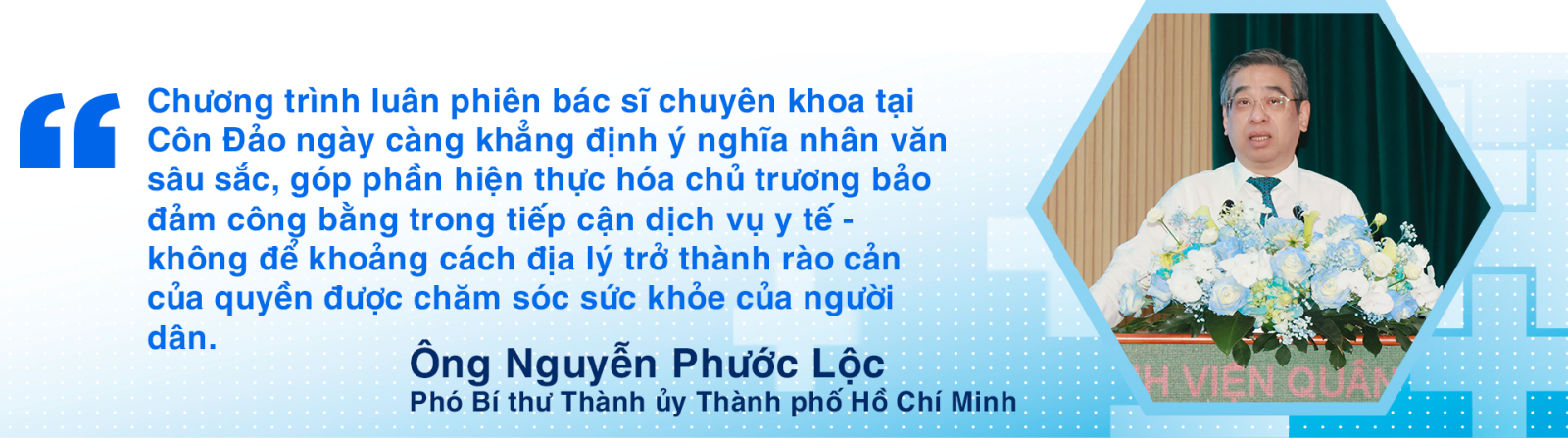
To date, the Department of Health has sent 10 teams of doctors to reinforce Con Dao and has achieved encouraging results. Since the arrival of doctors from higher-level hospitals, the number of medical examinations and treatments at the Con Dao Military-Civilian Medical Center has increased sharply from an average of about 80 visits/day to over 200 visits/day. Notably, dozens of surgeries have been performed, including many severe and complex emergency cases – which previously could only be urgently transferred to the mainland. Many advanced techniques have also been implemented for the first time, saving the lives of patients right on the island, such as emergency thrombolytic therapy for stroke patients, multiple trauma surgery, and microsurgery for vascular and nerve repair…
In another remote area of Can Gio, since December 2025, residents have been rejoicing at the construction of a new hospital right in their locality. This is Tu Du Hospital, Branch 2 – the first integrated multi-specialty hospital model in Vietnam. This hospital brings together medical staff from 9 tertiary hospitals to provide high-quality healthcare services to the people of Can Gio with a full range of specialized technical services. Since its opening, Tu Du Hospital, Branch 2, has received thousands of patients each month. Many complex surgeries have been performed, and the rate of patient transfers to hospitals in the city center has decreased significantly.
The areas of Binh Duong and Ba Ria - Vung Tau were previously considered "medical backwaters" of Ho Chi Minh City after the merger. In response to this situation, the Ho Chi Minh City Department of Health has assigned eight specialized hospitals in the city to sign cooperation agreements with Vung Tau General Hospital for the period 2025-2028 to support the development of specialized fields such as emergency medicine, internal medicine, surgery, obstetrics, pediatrics, orthopedics, anesthesia and resuscitation, hemodialysis, diagnostic imaging, rehabilitation, pathology, dentistry, otolaryngology, and ophthalmology.
Most recently, the Department of Health also assigned five higher-level hospitals to provide professional support to Ba Ria General Hospital – gradually developing this medical facility into a strategic "gateway hospital" in the southeastern area of the city. Ba Ria General Hospital will play a role in receiving and handling initial emergency cases, treating common diseases, and effectively connecting with the city's network of specialized hospitals when needed.

Doctors from Binh Duong General Hospital examine patients in Bac Tan Uyen commune, Ho Chi Minh City.
In the former Binh Duong area, the Ho Chi Minh City Department of Health has identified the construction of Binh Duong General Hospital with a capacity of 1,500 beds as a comprehensive, specialized medical facility, a key center of the Southeast Ho Chi Minh City medical cluster. The hospital is targeted for key areas including: orthopedics, interventional cardiology, intensive care, and oncology. It is also directed to expand its expertise in endovascular intervention, urology and andrology, pediatric intensive care, and specialized obstetrics; while strengthening its capacity in assisted reproduction, prenatal diagnosis, genetics, and anesthesia and resuscitation.
In parallel with providing professional support, the Ho Chi Minh City Department of Health will also develop second and third-tier hospital models in the former Binh Duong and Ba Ria - Vung Tau areas. Several overcrowded tertiary hospitals, such as the Oncology Hospital, Tu Du Hospital, and Orthopedic and Trauma Hospital, will open second and third-tier facilities in these areas in the near future.
According to the Director of the Ho Chi Minh City Department of Health, Tang Chi Thuong, the city is planning to develop a multi-polar healthcare system, using gateway hospitals as "strategic checkpoints" to facilitate early treatment, initial patient flow management, reduce the burden on higher-level hospitals, and shorten the time and cost of accessing healthcare services for people in remote areas. This is part of a strategy to build a multi-center healthcare system, aiming for healthcare equity, ensuring that all citizens have access to high-quality services near their homes; while also creating conditions for central hospitals to focus on specialized development, ensuring balanced and sustainable development for the city's healthcare system.
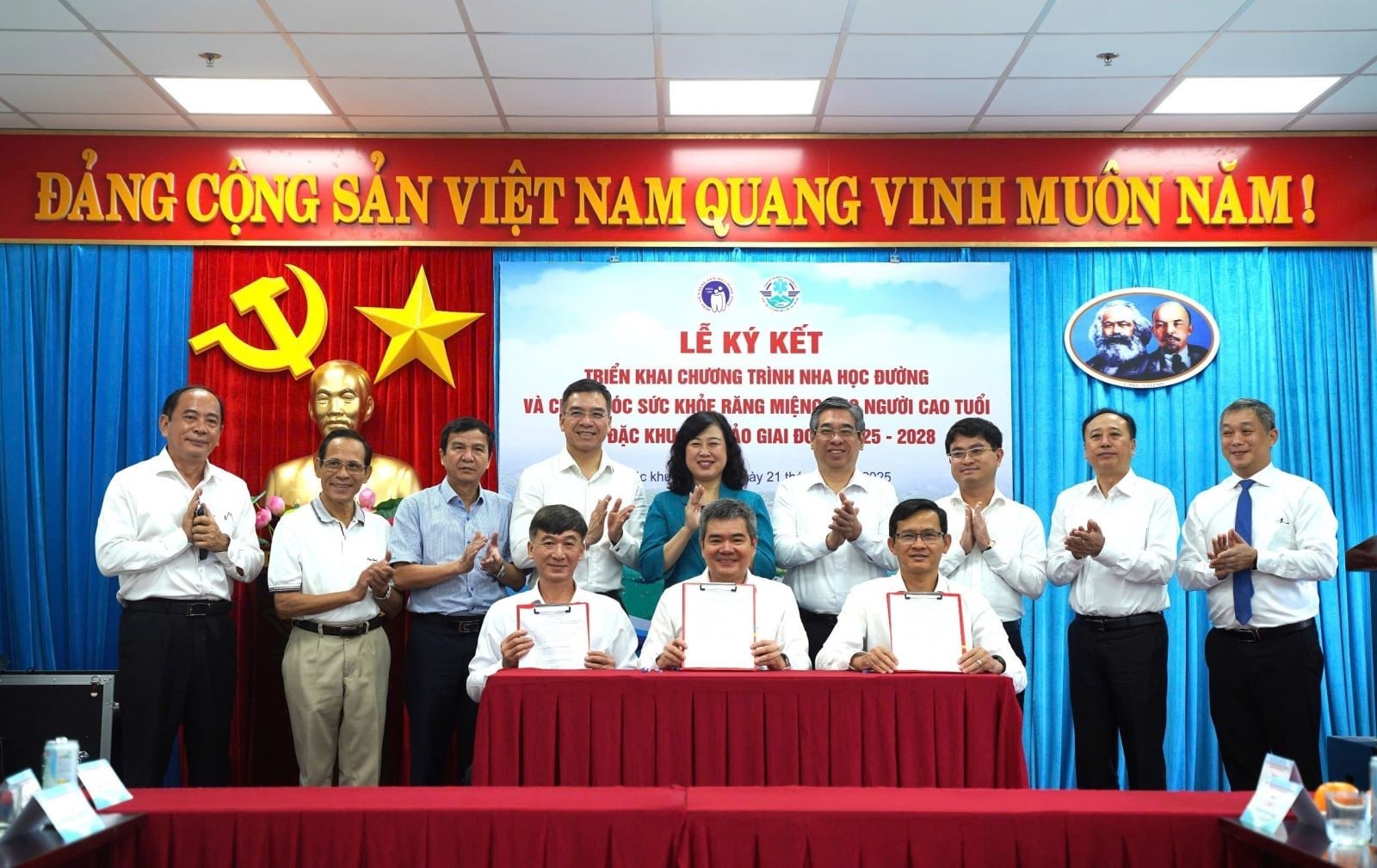
Minister of Health Dao Hong Lan and leaders of Ho Chi Minh City witnessed the signing ceremony for the implementation of the School Dental Program based on the school-station model and oral health care for the elderly in Con Dao during the period 2025-2028.
***
Article by: Dinh Hang
Photos, graphics, videos: VNA - VNA publishing
Editor: Ky Thu
Presented by: Phung Sac - Nguyen Ha
Source: https://baotintuc.vn/long-form/megastory/bao-phu-y-te-toan-dan-20260529164350947.htm







![[Image] Nearly 125,000 Hanoi students completed the Literature exam for the 10th grade entrance exam.](https://vphoto.vietnam.vn/thumb/1200x675/vietnam/resource/IMAGE/2026/05/30/1780117233041_ndo_br_thiet-ke-chua-co-ten-2-png.webp)

























![[Photo] Admire the coral "masterpiece" amidst the million-year-old heritage of Dak Lak province.](https://vphoto.vietnam.vn/thumb/1200x675/vietnam/resource/IMAGE/2026/05/30/1780107638639_y25-jpg.webp)































































Comment (0)