


The task force responsible for protecting the forests of Xuan Son National Park patrols and protects the forest, contributing to the preservation of the natural ecosystem.
In recent years, along with the rapid pace of urbanization, industrialization, and population growth, natural resources in the province have been under considerable pressure. Overexploitation of resources, biodiversity loss, environmental pollution, and climate change pose numerous challenges. In response to this reality, Phu Tho has implemented a comprehensive set of solutions to preserve its "green lungs," protect its ecosystem, and strike a balance between development and conservation.
One of the outstanding highlights in the province's nature conservation efforts is Xuan Son National Park – a particularly important nature reserve in the northern midland and mountainous region. It is one of the few national parks in Vietnam with a relatively intact primary forest ecosystem on limestone mountains, covering an area of over 15,000 hectares. Xuan Son is considered a "green treasure" of Phu Tho, home to thousands of plant and animal species, many of which are rare and listed in the Red Book of Vietnam and the world .
According to statistics, this area has more than 1,200 species of flora and fauna, many of which are highly endemic. Not only is it a valuable "gene bank," Xuan Son National Park also plays a crucial role in regulating the climate, protecting water resources, limiting soil erosion, and mitigating the impacts of natural disasters.
To effectively protect forest resources, Phu Tho province has directed the specialized forest protection force of the National Park to strengthen patrols and controls, prevent illegal logging, and promote the application of technology in monitoring forest resources. The contracted forest protection program for local people has been implemented effectively, creating stable livelihoods while enhancing community responsibility in forest conservation.
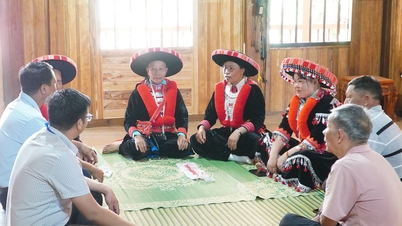
One of Phu Tho's great successes is promoting the role of the people in conservation efforts. In the buffer and core areas of Xuan Son National Park, the Dao, Muong, Kinh, and other ethnic groups are no longer marginalized but have become a core force participating in forest management and protection. Many households have received support to develop livelihoods through medicinal plant cultivation, livestock farming, and community tourism , thereby reducing the pressure on the exploitation of natural forest resources.
In addition to focusing on forest protection, Phu Tho also prioritizes biodiversity conservation through the investigation and assessment of endangered and rare species; the restoration of degraded ecosystems; and the protection of native genetic resources. Widespread reforestation programs, including the greening of barren land and the restoration of watershed forests, have contributed to the increasingly stable forest cover rate of the province.
In addition, the province has also intensified propaganda and raised community awareness about nature protection. Activities in response to World Environment Day, National Week for Clean Water and Sanitation, and tree planting are regularly organized, attracting the participation of many people, especially the younger generation.
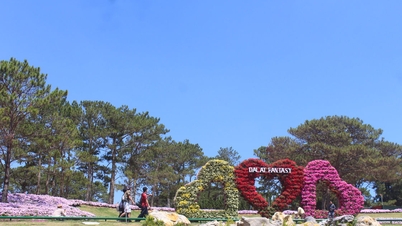
One direction identified by the province is the development of ecotourism linked to nature conservation. With the advantage of mountainous landscapes, caves, waterfalls, and rich ethnic cultural identities, locations such as Xuan Son National Park, Hang Kia - Pa Co Nature Reserve, Ngoc Son - Ngo Luong Nature Reserve, Phu Canh Nature Reserve, and Thuong Tien Nature Reserve are becoming attractive destinations for nature-loving tourists. Well-planned homestay models and experiential tourism focusing on forest exploration are being developed, creating jobs and income for local people.

The vast forests in Thu Cuc commune are the "green lungs," contributing to environmental protection and sustainable development.
Ecotourism not only brings economic value but also helps spread the message of environmental protection. When people realize that forests can sustainably generate profit from tourism, they will have more motivation to preserve the forests, landscapes, and indigenous culture. In reality, economic development does not mean sacrificing the environment. On the contrary, well-preserved nature will create a foundation for long-term development, helping localities increase their resilience to climate change, ensuring livelihoods for the people, and improving their quality of life.
For Phu Tho, nature conservation is not only an immediate task but also a responsibility to future generations. Preserving the green of the forests, maintaining the richness of the ecosystem, protecting water resources, land, and clean air is essentially preserving "precious assets" for development.
In the journey to building a rapidly and sustainably developing province, nature cannot be sidelined. Nature conservation must be placed at the center of all development strategies. And when the government, businesses, and people work together, the forests, streams, and ecosystems of the ancestral land will continue to be preserved, becoming a solid foundation for Phu Tho's green future.
Nature conservation for sustainable development is becoming a concrete action in our homeland – where people are learning to live in greater harmony with nature, to develop today without losing tomorrow.
Hoang Huong
Source: https://baophutho.vn/bao-ton-thien-nhien-vi-phat-trien-ben-vung-254948.htm

![[Photo] Standing Committee member of the Party Central Committee Tran Cam Tu working with the Central Inspection Committee](https://vphoto.vietnam.vn/thumb/1200x675/vietnam/resource/IMAGE/2026/05/28/1779969579668_ndo_br_bnd-2495-jpg.webp)
















































































Comment (0)