

The thefts have shaken the ginseng-growing region.
On the Ngoc Linh mountain range, perpetually shrouded in clouds, at an altitude of 1,700-2,000 meters above sea level, the precious ginseng gardens are being cared for by the Xo Dang people as the most valuable asset of their families.
From a medicinal plant discovered by local people in the forest, Ngoc Linh ginseng has become a source of wealth, helping many households build houses, educate their children, and gradually escape poverty. However, along with the increasing value of this medicinal herb, ginseng theft has also become more complex.

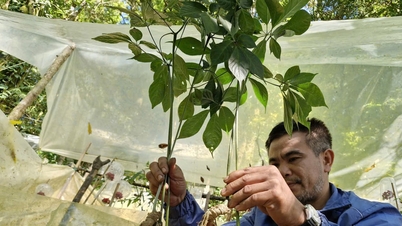
Ngoc Linh ginseng is grown under the forest canopy. Photo: VH
It is worth remembering that during the Lunar New Year of 2024, numerous ginseng gardens in the communes of Dak Na, Dak Sao, Te Xang, and Ngoc Lay in the former Tu Mo Rong district were broken into by thieves. More than 800 ginseng plants, aged 4-10 years, were stolen, causing estimated losses of billions of dong.
Following a tip-off from a household that had lost 38 ginseng roots, authorities traced the source of medicinal herb purchases and transactions on social media to track down the suspect.
Also in 2024, an individual in Tu Mo Rong commune was caught stealing 350 Ngoc Linh ginseng plants after accidentally discovering an unattended ginseng garden in the forest.

The group of suspects were prosecuted for stealing Ngoc Linh ginseng. Photo: Mang Ri Commune Police.
Most recently, at the end of May 2026, the Criminal Investigation Agency of the Quang Ngai Provincial Police Department initiated a case and prosecuted 13 defendants in Mang Ri commune for theft. In just one night, this group of individuals broke into a ginseng garden belonging to a business in Dak Ron village, stealing 250 ginseng roots and 1,380 grams of ginseng leaves, with a total value of nearly 300 million VND.
According to the police, most of the ginseng thieves are locals who are familiar with the terrain and have a good understanding of the garden owners' guarding habits. This is also a factor that makes prevention efforts difficult.
Build multiple layers of protection around the ginseng growing area.
In reality, ginseng gardens are often located deep within pristine forests, with difficult access, and in many places, it takes hours of walking to reach them. When theft occurs, investigating the crime scene and tracking down the perpetrators faces numerous obstacles.
In particular, many households tend to keep information about the quantity and location of their ginseng gardens confidential for fear of revealing their production secrets. This somewhat affects the management and protection of the growing areas.

The ginseng growing area is enclosed by a sturdy fence and has a securely locked gate. Photo: VH
In response to this situation, the local authorities and the police force have implemented a comprehensive set of measures to protect the ginseng growing area.
In areas with concentrated ginseng cultivation, the B40 mesh fence system is reinforced more robustly. Many households invest in installing surveillance cameras, warning systems, and watchtowers on high mountains. Self-governing groups and ginseng protection teams have been established, regularly organizing patrols day and night.
Mr. A Tran, a ginseng farmer in Dak Don village, Mang Ri commune, said his family is currently cultivating nearly 1,000 Ngoc Linh ginseng plants deep in the forest. Previously, monitoring the ginseng garden was difficult due to unreliable phone signals. Now, with the expansion of telecommunications coverage, households have proactively installed security cameras to assist in monitoring and investigations when necessary.
Ginseng protection relies not only on technological equipment but also on community awareness. In areas with large ginseng plantations, people take turns staying in guard huts for days, even weeks at a time. At the end of the year, when the risk of theft increases, many households choose to celebrate Tet (Lunar New Year) in the mountains to protect their ginseng gardens.

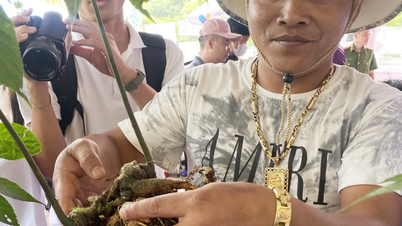
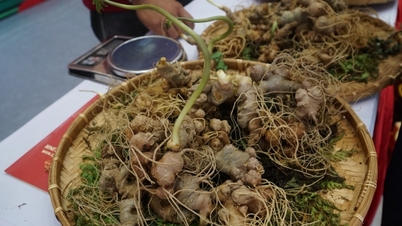
Ngoc Linh ginseng is a valuable medicinal herb and a driving force for economic development in the highland communes of Quang Ngai province. Photo: VH .
Mr. Pham Xuan Quang, Chairman of the People's Committee of Mang Ri commune, said: "The tradition of people going to the forest to 'celebrate Tet with ginseng' has become a long-standing custom. Despite the lack of living conditions and the long distances, the people are still willing to stand guard to protect their property and preserve their family's livelihood."
In parallel, the Mang Ri commune police regularly coordinate with village elders and influential people to disseminate information and encourage people to report crimes; inspect the buying and selling of medicinal herbs; and review the area, quantity, and location of ginseng cultivation to serve management purposes.
Originating from the precious medicinal plants of the Xơ Đăng ethnic group, Ngọc Linh ginseng has become a renowned medicinal brand and a driving force for economic development in the high mountain region. Therefore, each ginseng garden, when safely protected, is not only an asset of the people or businesses, but also a way to preserve rare genetic resources, protect the national brand, and safeguard the livelihoods of thousands of households at the foot of Ngọc Linh mountain.
Source: https://nongnghiepmoitruong.vn/bao-ve-quoc-bao-giua-dai-ngan-ngoc-linh-d814718.html
![[Photo] General Secretary and President To Lam presides over a meeting with the Central Organizing Committee.](https://vphoto.vietnam.vn/thumb/1200x675/vietnam/resource/IMAGE/2026/06/03/1780482764658_a1-bnd-4741-3342-jpg.webp)
![[Photo] Secretary of the National Assembly Party Committee, Chairman of the National Assembly presides over the meeting of the Standing Committee and Executive Committee of the National Assembly Party Committee.](https://vphoto.vietnam.vn/thumb/1200x675/vietnam/resource/IMAGE/2026/06/03/1780480353201_ndo_br_bnd-2585-jpg.webp)















































![[Video] Sunset at Lap An Lagoon – Where the sun sets over the fishing nets](https://vphoto.vietnam.vn/thumb/1200x675/vietnam/resource/IMAGE/2026/05/31/1780192137701_beach-landscape-sea-water-nature-grass-745871-pxhere-com.jpeg)






























Comment (0)