

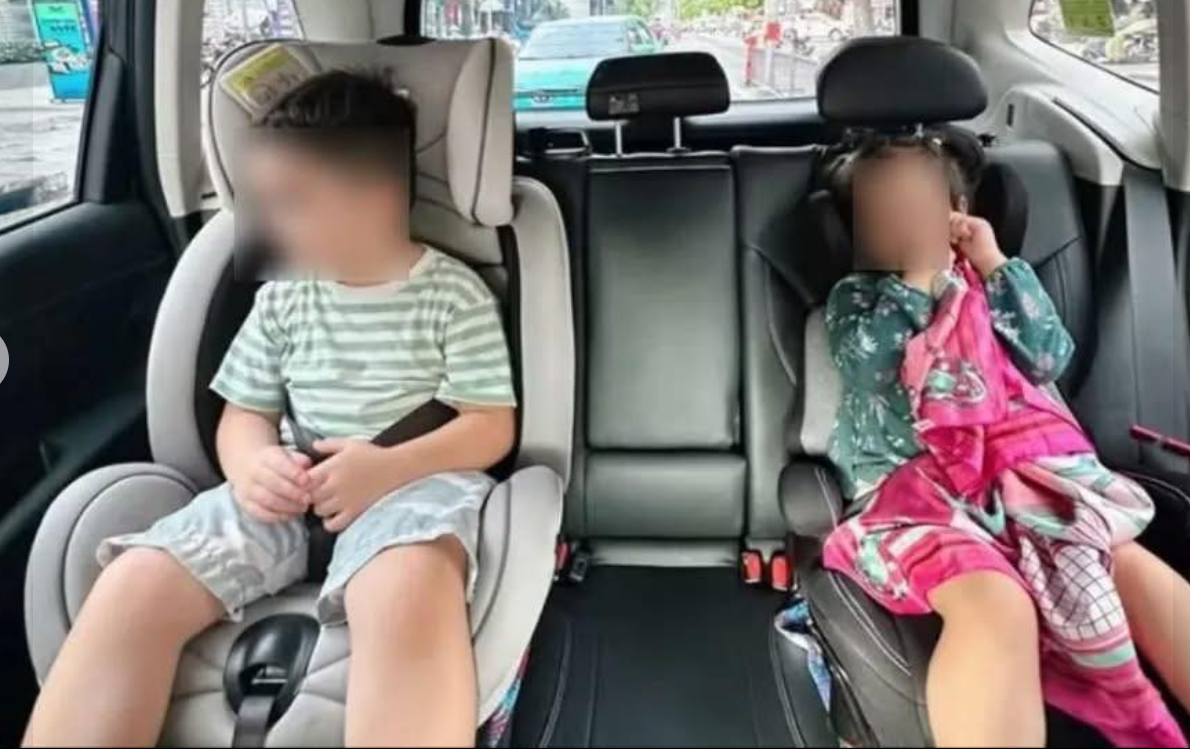
 |
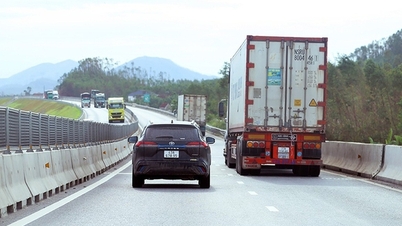
| Illustrative image |
Based on international research and experience, regulations aim to protect the safety of children, the most vulnerable group in accidents. The World Health Organization recommends that child-specific safety equipment is the most effective measure to reduce injuries. The greatest risk when children sit in the front seat lies in airbags, which are designed for adults and can deploy at speeds of 150-300 km/h.
For young children, this impact force is enough to cause serious injury. The front seat seatbelt is also unsuitable and can pinch the child's neck; even adults cannot hold a child in a collision at speeds of only 30-60 km/h. Cases where a baby carrier is placed in the front seat are even more dangerous because the airbag, when deployed, can push the carrier away.
However, alongside the agreement in principle, the regulation has also raised many concerns regarding practical conditions in Vietnam. Most families use common 4-5 seater cars. When there are two young children, grandparents, or more than two adults, the back seats are often already full. Absolutely prohibiting children from sitting in the front seat makes seating arrangements difficult, and some families even have to consider using other means of transportation, causing inconvenience and expense.
Another issue relates to the use of specialized car seats, the optimal safety solution for children under 1.35m tall. Although not yet mandated by law, when children have to sit in the back seat, a specialized car seat is almost a required choice to ensure safety. However, these seats are expensive and take up considerable space in the car, especially in mainstream models. This is a financial burden for many families, especially those with average incomes who already have to balance many monthly expenses.
Despite remaining concerns, the regulation's goal is clearly to create a more civilized traffic environment where children's safety is paramount. For the regulation to be effectively implemented, preparation is needed from both sides. The government needs to strengthen communication and promote the selection and use of specialized car seats; and research policies to subsidize pricing to alleviate the economic burden. On the parents' side, it is crucial to proactively change their perceptions, prioritizing their children's safety over temporary convenience.
Initial difficulties are unavoidable, but with the support of authorities and a sense of responsibility from each family, the regulations will soon become a new safe habit. Because protecting children when participating in traffic is protecting their future, something that cannot be sacrificed for any convenience.
Source: https://baothainguyen.vn/xa-hoi/202511/bao-ve-tre-em-tren-o-to-3104676/
![[Photo] Standing Committee member of the Party Central Committee Tran Cam Tu working with the Central Inspection Committee](https://vphoto.vietnam.vn/thumb/1200x675/vietnam/resource/IMAGE/2026/05/28/1779969579668_ndo_br_bnd-2495-jpg.webp)

















































































Comment (0)