

The project is turning from profitable to loss-making.
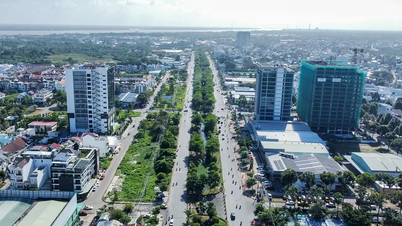
According to the leader of a well-known real estate company in Ho Chi Minh City, the biggest obstacle for real estate projects today is the calculation of land use fees, including supplementary land use fees. Previously, many projects were granted preferential treatment by the city, allowing for provisional land use fee calculations to enable businesses to proceed with construction and sales. Now, after projects have been completed and residents have lived there for many years, land use fees are calculated at the current time, not from the time the land was allocated. This has caused significant losses and frustration not only for businesses but also for homebuyers.
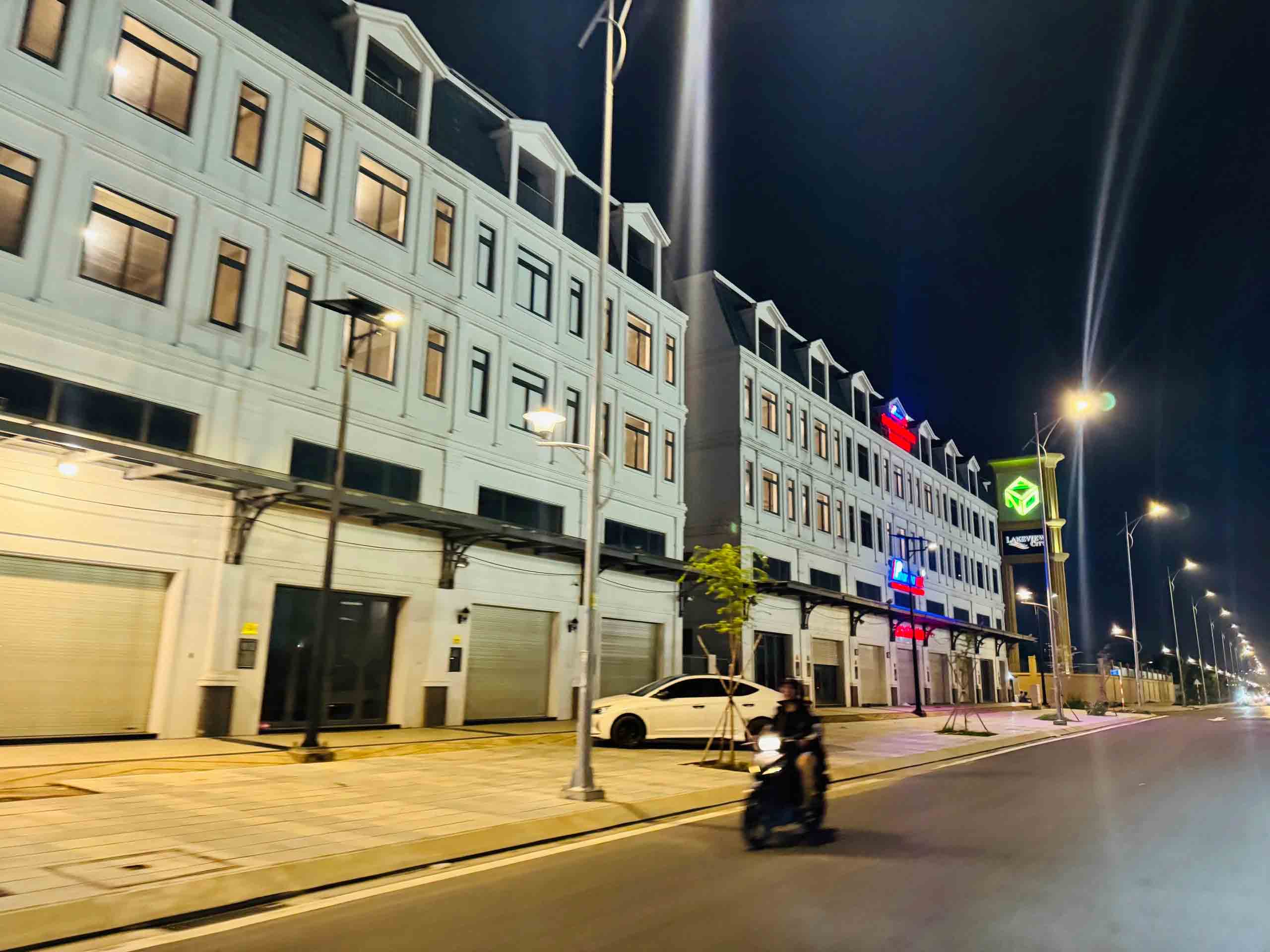
The Lakeview City project is being required by Ho Chi Minh City to pay an additional land use fee of over 4,664 billion VND, causing the company to face difficulties and losses.
"The law stipulates that the time for land valuation and calculation of land use rights is the time when a decision is made to allocate land, permit land use conversion, or allocate land on-site. However, in reality, whenever there are any changes that prolong the land use rights calculation, the authorities value the land and land use rights at the current time. Another difficulty is that businesses cannot proactively manage the progress and the amount they have to pay. Businesses lack the expertise and are not authorized to discuss a reasonable method of calculating land use rights with the authorities."
Therefore, businesses have to hire another valuation firm to find a fair result. Currently, businesses are still dependent on the calculations of the authorities and are not allowed to challenge them. Meanwhile, for safety reasons, land use tax is currently calculated very high by state officials. Many projects previously had their land use tax provisionally calculated at a certain figure, and businesses used that figure to structure the selling price to customers. Now, after many years, when the authorities recalculate the land use tax, the figure is many times higher than the provisional calculation. This causes many profitable projects to suddenly suffer heavy losses, and some businesses are even unable to pay," this person said.
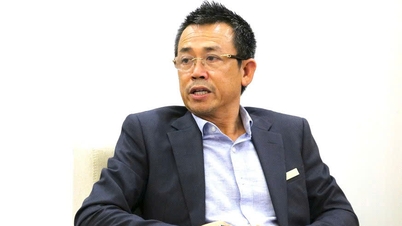
In a document sent to the Prime Minister and the Ministry of Finance providing feedback on the draft, Mr. Le Hoang Chau, Chairman of the Ho Chi Minh City Real Estate Association, suggested that when a decision is made to adjust the detailed planning, the land use tax (TSD) should be recalculated for the entire project at the time of the adjustment decision. The amount of TSD that the enterprise had previously paid should be recalculated at the time of the re-approval of the planning and deducted from the TSD after recalculation, with the amount deducted not exceeding the TSD payable.
If the enterprise has not paid land use tax before the detailed planning of the project is adjusted, it must pay the land use tax at the time of the planning adjustment. Any land use tax already paid (if any) will be recalculated at the time of the planning adjustment, taking into account inflation, and will be deducted from the recalculated land use tax. The amount deducted shall not exceed the amount of land use tax due. Simultaneously, the enterprise must pay late payment penalties for land use tax if it has received a notice to pay the land use tax.
Mr. Chau cited the example of a commercial housing project in District 7 (Ho Chi Minh City) built on a 5.2-hectare plot of land for which the competent state agency issued a land allocation decision in January 2021 with a land use coefficient of 3.05 times and a maximum construction density of 35%. The project includes an apartment building with a maximum height of 27 floors containing 903 apartments and a low-rise townhouse area with 110 townhouses. In March 2021, the company paid 850 billion VND in land use fees. Subsequently, the investor requested an adjustment to the detailed planning, increasing the land use coefficient to 4.57 times, the maximum construction density to 40%, and raising the total number of apartments to 1,355 units. This was approved by the competent state agency in March 2024. According to the draft Decree, the project would have to pay an additional land use fee of 425 billion VND, but according to Mr. Chau's proposal, the enterprise would only have to pay an additional land use fee of 325 billion VND.
"If the business has already sold the properties and collected the money, then according to the calculation method in the draft Decree, the business will have to use its own money to compensate, leading to the risk of losses. If the project has not yet been sold, the land use tax will be added to the selling price, thus pushing up house prices, and ultimately, the homebuyers will be the ones bearing the burden," Mr. Chau calculated.
Only one case remains eligible for land rent exemption.
According to the draft Decree, only one case of land use for production and business purposes in investment-incentive sectors within investment-incentive areas is currently exempt from land rent. The draft has significantly narrowed the cases eligible for land rent exemption compared to current regulations. If this regulation is approved, there are concerns that investors, including foreign investors, will no longer benefit from the land rent exemption policy because these localities are not considered investment-incentive areas.
Furthermore, according to Mr. Le Hoang Chau, the draft Decree no longer stipulates the policy of exempting land use fees during the basic construction period of a project or after the exemption period for land and water surface lease fees during the basic construction period. Therefore, it fails to inherit the current investment incentive policy stipulated in Decree 46. The new regulation has rendered ineffective the special investment incentive policy stipulated in the 2020 Investment Law and Prime Minister 's Decision 29 on special investment incentives. This could negatively impact investment attraction policies, reducing the attractiveness of Vietnam's investment environment to foreign investors.
"This is a very significant issue, so the Government and relevant state agencies need to pay special attention to it before issuing the Decree to build a superior, highly competitive investment incentive policy framework that ensures national and ethnic interests both in the short, medium, and long term, while also guaranteeing the legitimate interests of investors. This is especially important in the context of fierce competition among countries to attract foreign direct investment (FDI), particularly in the financial, high-tech, chip, and semiconductor sectors; for example, even the US has just enacted laws on chips and semiconductor technology," Mr. Chau suggested.
Lawyer Tran Minh Cuong (Ho Chi Minh City Bar Association) analyzed that while the Land Law stipulates that annual land rent is applied stably for a 5-year cycle from the time the State decides to lease the land, allowing for land use conversion associated with the conversion to the form of state land lease with annual rent payment, the adjustment rate is regulated by the Government for each period, but the increase in land rent can be equal to or lower than inflation. However, the draft Decree stipulates that the adjustment rate for land rent increase is equal to inflation. Therefore, the Decree needs to consider limiting the increase in land rent for each 5-year cycle to not exceed the CPI increase but not more than 15%. This helps businesses reduce financial risks and be ready to invest in large projects with long capital recovery periods.
After consulting with businesses, the Vietnam Chamber of Commerce and Industry (VCCI) also believes that compared to the current policy in Decree 46, the exemption and reduction policy in the draft is less attractive. According to current regulations, there are cases where businesses are completely exempt from land rent, not just reduced for a certain number of years. Some cases that are 100% exempt from land rent for the entire lease term under current regulations include: investment projects in specially prioritized investment sectors located in areas with particularly difficult socio-economic conditions; projects using land to build student dormitories with state budget funds, where the unit assigned to manage and use the land for student accommodation is not allowed to include land rent costs in the rental price; agricultural land for ethnic minorities; land for protective forest planting projects, land reclamation projects, etc. Therefore, the Decree needs to consider expanding the cases eligible for land rent exemption, instead of just reducing rent. If this can be achieved, it will attract investment to disadvantaged areas or sectors with special incentives.
Source: https://thanhnien.vn/bat-cap-cach-tinh-tien-su-dung-dat-185240630222853391.htm
![[Photo] Prime Minister Pham Minh Chinh presides over a meeting on private sector economic development.](/_next/image?url=https%3A%2F%2Fvphoto.vietnam.vn%2Fthumb%2F1200x675%2Fvietnam%2Fresource%2FIMAGE%2F2025%2F12%2F20%2F1766237501876_thiet-ke-chua-co-ten-40-png.webp&w=3840&q=75)












































































Comment (0)