

.jpg)
Planning restrictions
For nearly 20 years, commercial chicken farms have flourished in the Dam Thuong area (Viet Khe commune), with large-scale operations accounting for 28 out of 31 farms in the entire commune. Each farm in this area covers from 1,900 m² to nearly 4,000 m² , raising an average of over 10,000 to over 24,000 commercial chickens. This model effectively exploits economic potential, generating high profits of nearly 20 billion VND per year for nearly 30 households and creating jobs for dozens of local workers.
However, none of the farms in the Dam Thuong area have been legally recognized because residents converted land designated for aquaculture to commercial chicken farming many years ago. According to the Economic and Infrastructure Department of Viet Khe commune, in 2002, the city planned 30 hectares of land in the Dam Thuong area for aquaculture, but due to inefficiency, households switched to raising commercial chickens from 2006 onwards. Without a legal basis, residents face significant obstacles in investing and expanding production.
Furthermore, in Chi Linh ward (western Hai Phong), the natural conditions from the Thuong and Thai Binh rivers create a significant advantage for the development of cage fish farming, making it a local strength. The entire ward currently has 450 cages for aquaculture, generating billions of dong in income annually for local residents.
According to Nguyen Thi Thanh Thuy, Secretary of the Party Committee and Chairwoman of the People's Council of Chi Linh Ward, this area has not yet been included in the planning for cage aquaculture. Residents have not been granted registration certificates for cage aquaculture, and the locality has not been officially recognized as a concentrated aquaculture zone. Therefore, households investing in cage aquaculture lack coordination and frequently face the risk of damage from storms, changes in water flow, water pollution, and unsafe waterway traffic.
According to the Hai Phong Fisheries, Livestock and Veterinary Sub-Department (under the Department of Agriculture and Environment), after the merger, the city has 12 concentrated livestock farming areas covering over 220 hectares, and 8,900 aquaculture cages on the river, mainly in more than 10 communes and wards in western Hai Phong. Most of these cage aquaculture areas are developed independently by local people. In eastern Hai Phong, due to low efficiency, some concentrated farming areas have been converted by residents, such as in Viet Khe commune.
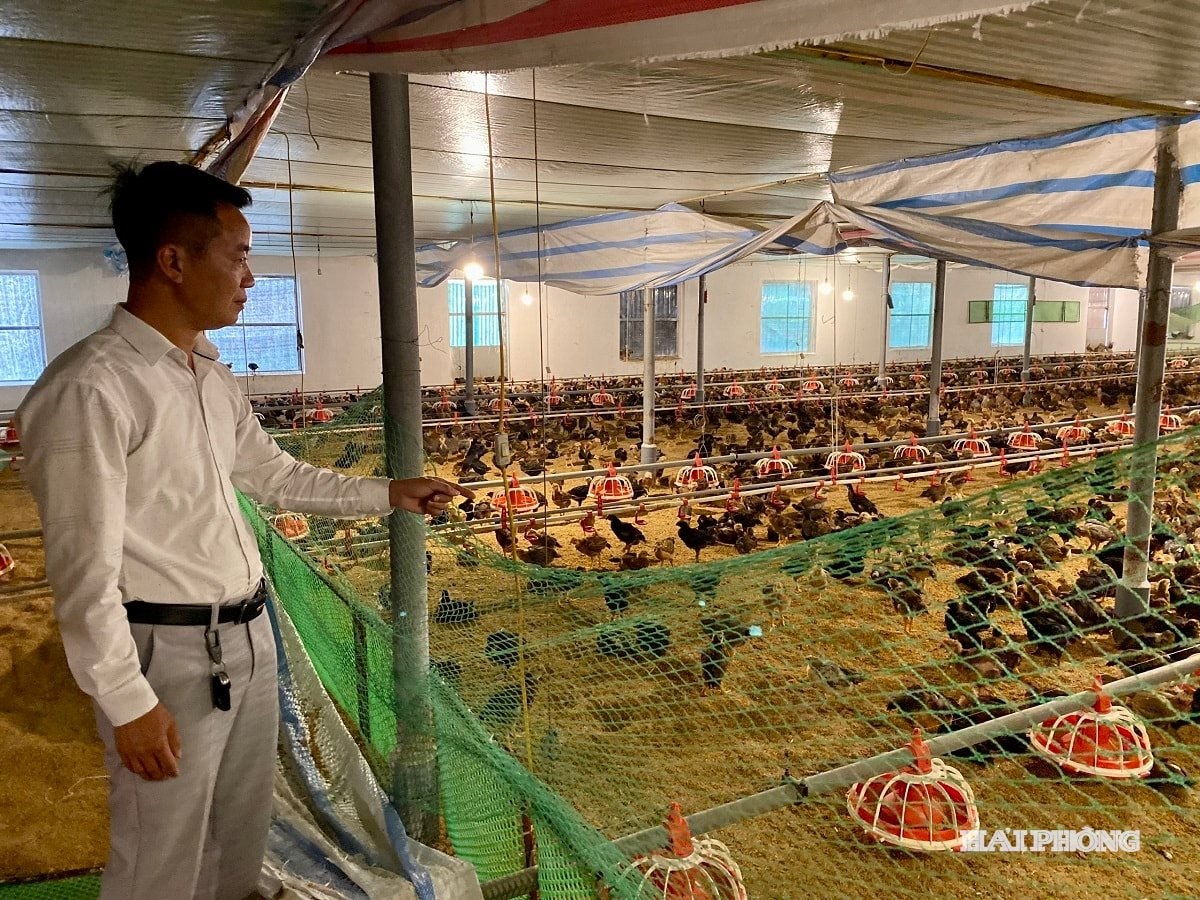
Appropriate planning paves the way for concentrated production areas.
Faced with the aforementioned long-standing obstacles, voters in various localities have repeatedly petitioned the relevant departments and agencies to advise the City People's Committee to review and adjust the planning according to actual production conditions, in order to create a legal framework and conditions for sustainable development of the economic strengths of the localities.
Regarding this matter, Deputy Head of the Fisheries, Livestock and Veterinary Sub-Department (Department of Agriculture and Environment) Nguyen Manh Hung said that the Department is reviewing and integrating concentrated livestock farming areas, in accordance with the general planning of the new Hai Phong city and the land use plans of the localities. In addition, the sub-department proposes that the Department advise the city on developing a plan for cage aquaculture. Currently, the sub-department is coordinating with localities and consulting units to research and specifically evaluate the effectiveness of cage aquaculture areas, in accordance with the general planning of the new city and regulations on dike corridors, flood drainage corridors and waterway traffic safety. Based on that, sustainable and efficient livestock and cage aquaculture areas will be developed. During this process, the sub-department requests that localities maintain the current status of poultry and aquaculture farming areas.
From a local perspective, Vu Thanh Quang, Head of the Economic and Infrastructure Department of Viet Khe Commune, stated that in the future, the Dam Thuong area is planned for the construction of an inland port and a portion for the preservation of the stake field associated with the Battle of Bach Dang Giang in 1288. Therefore, this area cannot be planned as a concentrated poultry farming zone. However, recognizing this as an effective model, the local authorities are still creating conditions for households to continue production, but require them to maintain the current status quo and not build additional farms or residential buildings on land designated for aquaculture. In the long term, as the city is developing its master plan until 2050, the local authorities propose including the Phu Yen area, approximately 10 hectares, into the commune's concentrated poultry farming zone plan. If approved, residents will have the opportunity to borrow capital, standardize their farms, apply high technology, and develop along the value chain.
At the recent year-end regular session of the 16th term of the Hai Phong City People's Council in 2025, Mr. Le Anh Quan, Standing Vice Chairman of the Hai Phong City People's Committee, informed that over 40% of the city's population lives in rural areas, primarily engaged in agricultural production. Therefore, prioritizing the development of concentrated production areas is a crucial task. The city is reviewing and developing agricultural development policies for the period 2026-2030, focusing on supporting concentrated commodity production areas, especially those with clear advantages. Simultaneously, the city is developing a master plan for Hai Phong City until 2050, with a vision to 2075. Based on this plan, the city will recalculate agricultural land use targets to maximize land efficiency and promote sustainable agricultural development.
BUI HUONG
Source: https://baohaiphong.vn/go-vuong-quy-hoach-phat-trien-vung-san-xuat-tap-trung-529733.html

![[Image] Leaked images ahead of the 2025 Community Action Awards gala.](/_next/image?url=https%3A%2F%2Fvphoto.vietnam.vn%2Fthumb%2F1200x675%2Fvietnam%2Fresource%2FIMAGE%2F2025%2F12%2F16%2F1765882828720_ndo_br_thiet-ke-chua-co-ten-45-png.webp&w=3840&q=75)
![[Live] 2025 Community Action Awards Gala](/_next/image?url=https%3A%2F%2Fvphoto.vietnam.vn%2Fthumb%2F1200x675%2Fvietnam%2Fresource%2FIMAGE%2F2025%2F12%2F16%2F1765899631650_ndo_tr_z7334013144784-9f9fe10a6d63584c85aff40f2957c250-jpg.webp&w=3840&q=75)
![[Photo] Prime Minister Pham Minh Chinh receives the Governor of Tochigi Province (Japan)](/_next/image?url=https%3A%2F%2Fvphoto.vietnam.vn%2Fthumb%2F1200x675%2Fvietnam%2Fresource%2FIMAGE%2F2025%2F12%2F16%2F1765892133176_dsc-8082-6425-jpg.webp&w=3840&q=75)

![[Photo] Prime Minister Pham Minh Chinh receives Lao Minister of Education and Sports Thongsalith Mangnormek](/_next/image?url=https%3A%2F%2Fvphoto.vietnam.vn%2Fthumb%2F1200x675%2Fvietnam%2Fresource%2FIMAGE%2F2025%2F12%2F16%2F1765876834721_dsc-7519-jpg.webp&w=3840&q=75)



































![[Video] Independence and self-reliance linked with international integration through 40 years of reform](https://vphoto.vietnam.vn/thumb/402x226/vietnam/resource/IMAGE/2025/12/16/1765899635777_1-1-8054-png.webp)




















Comment (0)