

In the context of developing cultural industries and community tourism , the traditional costumes of the Red Dao people in Ta Phin not only showcase their ethnic identity but also hold value as a cultural resource.
Ta Phin village (Sa Pa, Lao Cai ) is a mixed-habitation area of the Hmong and Dao people, where many cultural practices are intertwined in daily life. Within this context, the Red Dao community living there has maintained relatively stable traditional cultural practices.
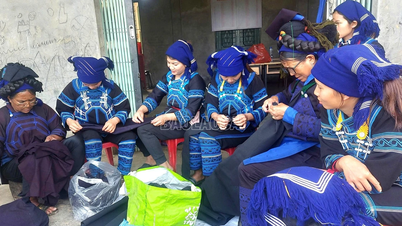
Besides widely known cultural practices such as traditional medicine and herbal bath remedies, they are also closely associated with embroidery and the making of traditional clothing. Currently, the traditional clothing of the Red Dao people is still maintained with a stable basic structure, including a red headscarf, a long, split-hem dress, a bodice, a belt, trousers, and leggings.
However, in modern life, the structure and use of clothing have diversified. The Dao people now divide their clothing into everyday attire, which is simpler for work and daily life, and ceremonial attire, which is more elaborate in patterns, jewelry, and accessories, serving a more performative and expressive purpose.
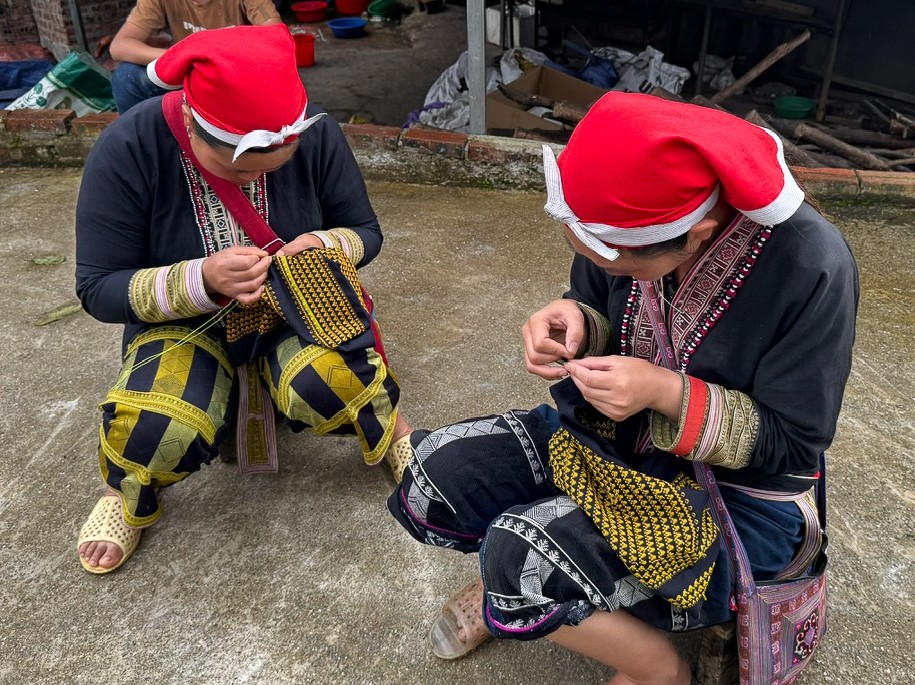
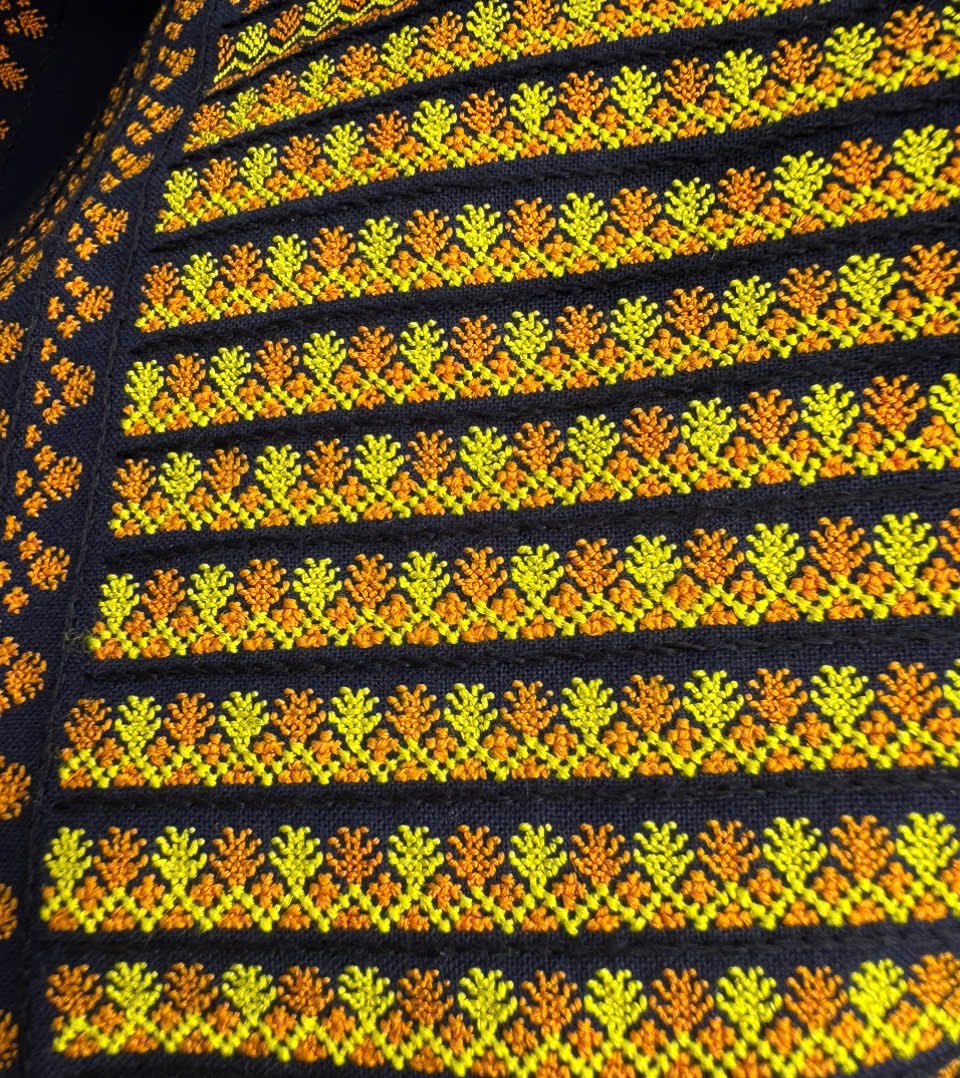
According to Master Dien Thi Hoa Hong, the outstanding characteristic of Dao people's traditional clothing lies in its entirely handcrafted sewing and embroidery techniques. Cross-stitch and beadwork embroidery are meticulously performed on a dark blue-green fabric, highlighting the dominant red color. Dao women play a central role in creating, maintaining, and transmitting these aesthetic and cultural values through generations.
Symbolically, the color red in Dao people's clothing is often associated with beliefs about vitality, blessings, and spiritual protection, while also contributing to the identification of their ethnic identity within a multi-ethnic community. Indigo, with its deep shades, is seen as representing resilience and a close connection to the natural environment; in the Dao people's beliefs, their indigo color possesses a distinctive durability and depth. Furthermore, embroidered motifs such as trees, animals, and birds not only serve a decorative function but also reflect layers of religious beliefs and ancestor worship in their spiritual life.
The Dao people view clothing as a cultural institution, not merely an item worn on the body, but a form of "informal cultural institution" that preserves historical memory, ethnic identity, and collective memory. The embroidered patterns and motifs reflect the residential area, living environment, and even have a high ritualistic significance, connected to the worldview and spiritual life of the community.
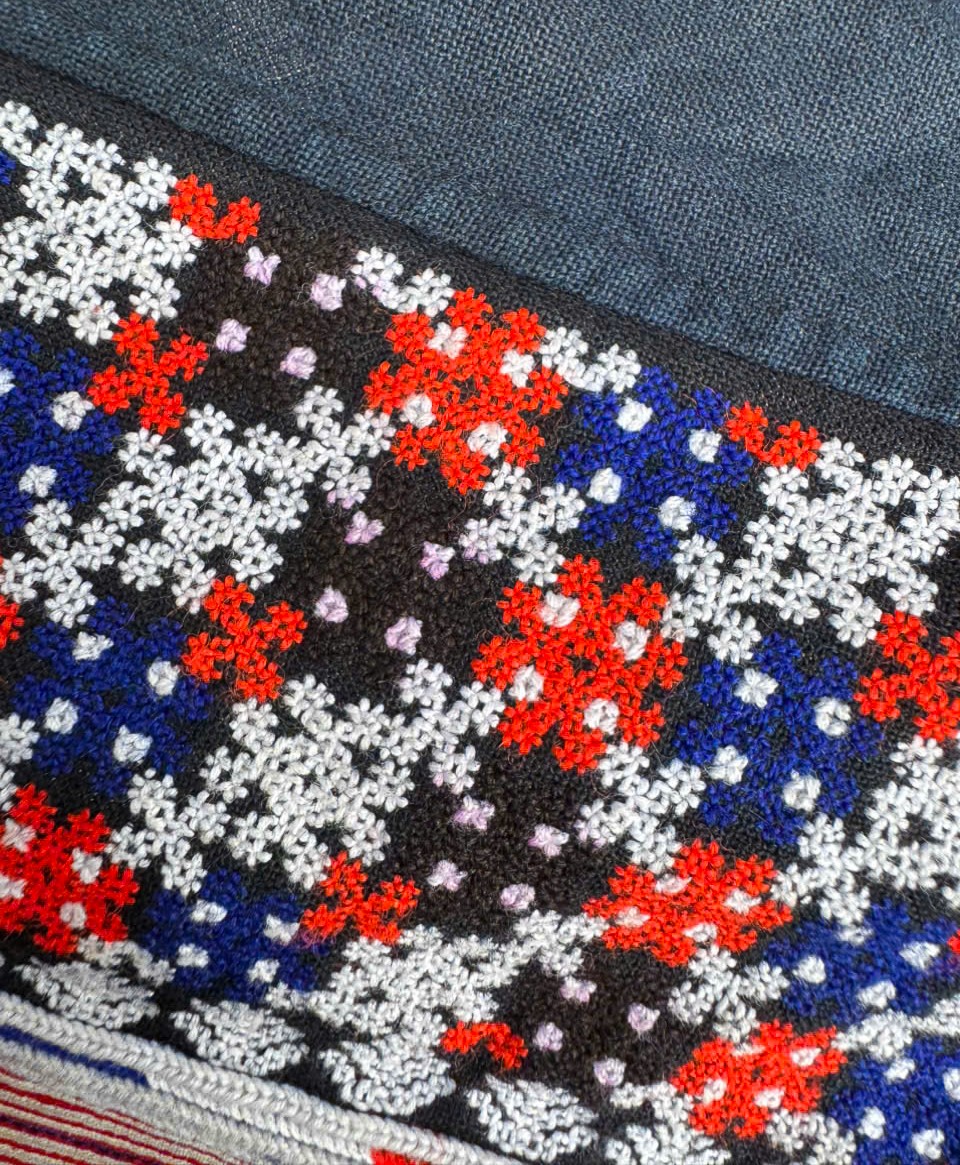
In a broader sense, Dao ethnic clothing can be seen as a "cultural text," encoding social knowledge and values such as gender, age, and status. In this process, Dao women play a central role as creators, transmitters, and guardians of cultural norms through their handicrafts.
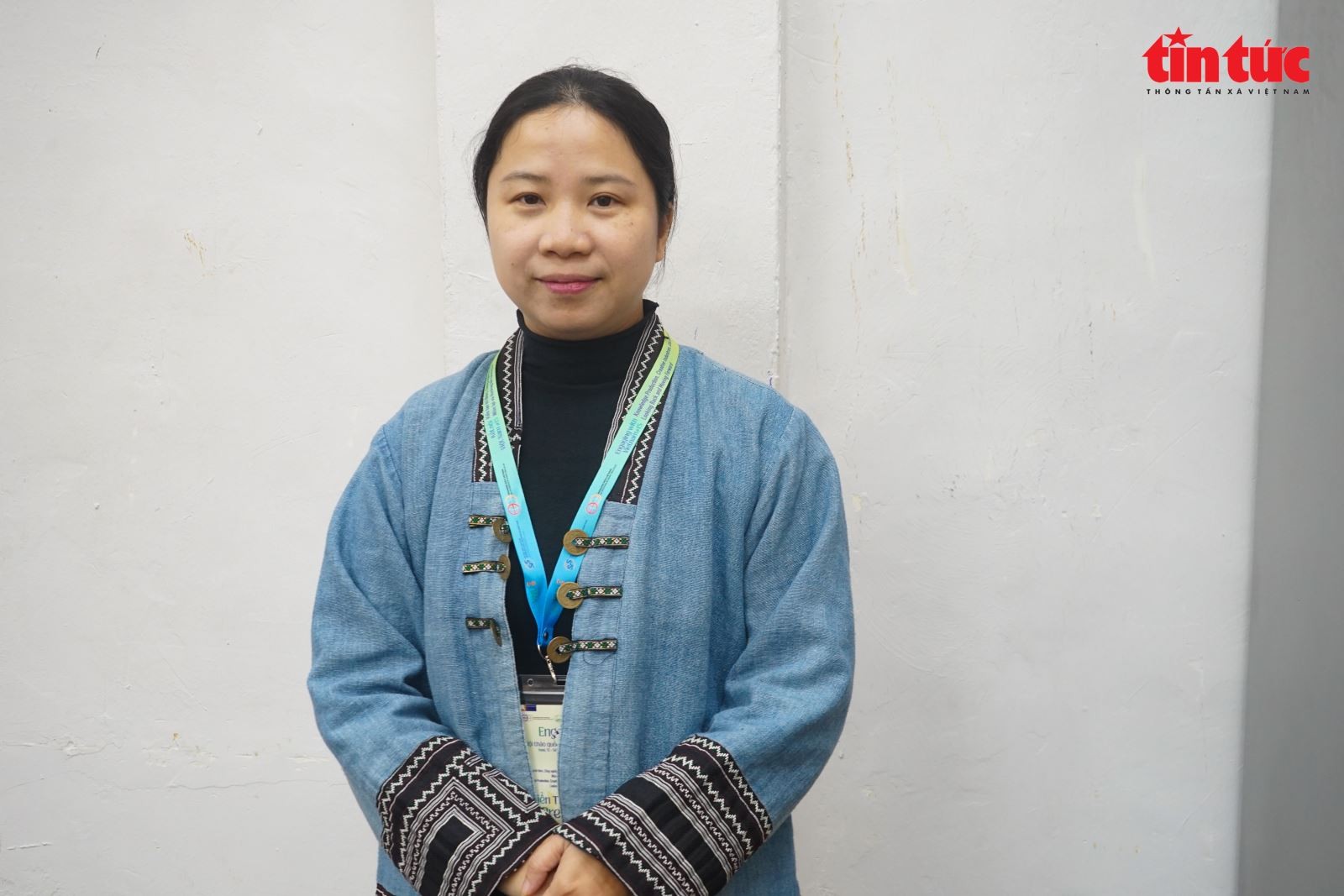
“In the context of development and integration, traditions are not immutable but are always evolving and being recreated according to new circumstances. The traditional clothing of the Dao people is also part of this flow. When the Dao community participates in tourism, considering tourism as a new source of livelihood, traditional practices are recreated in the form of performances: re-establishing rituals, inviting tourists to experience them, thereby both preserving and adapting to contemporary life,” said Ms. Dien Thi Hoa Hong, M.A.
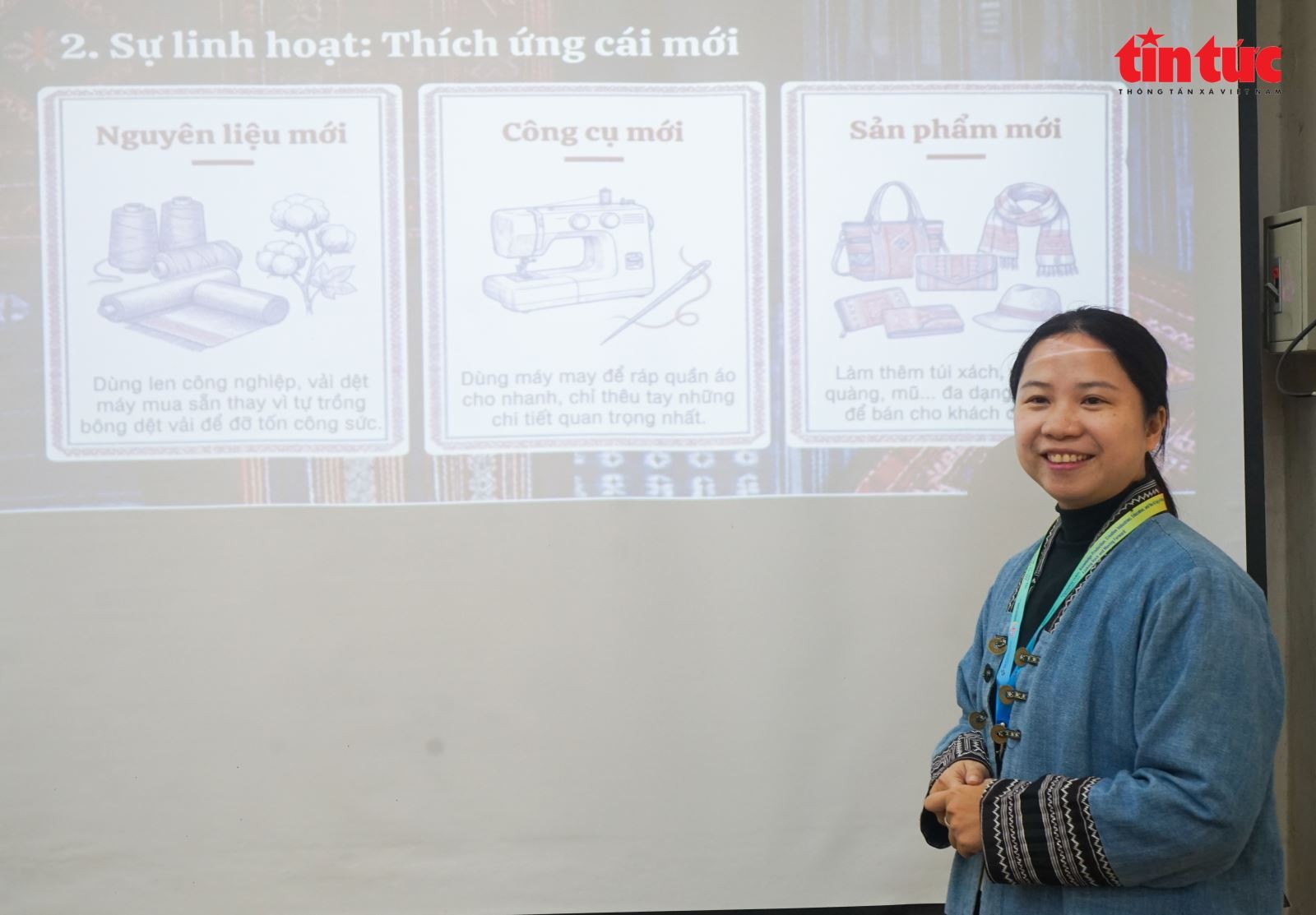
Nowadays, along with changes in production and living conditions, the Dao people are gradually using industrial wool and machine-woven fabrics instead of growing their own cotton and weaving their own cloth as before. Sewing machines are used to some extent in assembling clothing, while distinctive details are still done by hand embroidery. Based on traditional materials and patterns, the community also develops products such as handbags, wallets, scarves, and hats to meet the needs of tourists, thereby integrating Red Dao costumes into contemporary economic and cultural activities.
The evolution of the Red Dao people's traditional clothing demonstrates that tradition is not static, but is constantly being recreated in new contexts. When heritage is linked to livelihoods and tourism, the clothing is not only preserved but also continues to live on, spreading and affirming its cultural value in the modern world.
Source: https://baolaocai.vn/trang-phuc-cua-nguoi-dao-do-ta-phin-trong-dong-chay-cong-nghiep-van-hoa-post889045.html
![[Photo] Prime Minister Pham Minh Chinh receives Lao Minister of Education and Sports Thongsalith Mangnormek](/_next/image?url=https%3A%2F%2Fvphoto.vietnam.vn%2Fthumb%2F1200x675%2Fvietnam%2Fresource%2FIMAGE%2F2025%2F12%2F16%2F1765876834721_dsc-7519-jpg.webp&w=3840&q=75)
![[Image] Leaked images ahead of the 2025 Community Action Awards gala.](/_next/image?url=https%3A%2F%2Fvphoto.vietnam.vn%2Fthumb%2F1200x675%2Fvietnam%2Fresource%2FIMAGE%2F2025%2F12%2F16%2F1765882828720_ndo_br_thiet-ke-chua-co-ten-45-png.webp&w=3840&q=75)
![[Photo] Prime Minister Pham Minh Chinh receives the Governor of Tochigi Province (Japan)](/_next/image?url=https%3A%2F%2Fvphoto.vietnam.vn%2Fthumb%2F1200x675%2Fvietnam%2Fresource%2FIMAGE%2F2025%2F12%2F16%2F1765892133176_dsc-8082-6425-jpg.webp&w=3840&q=75)
![[Live] 2025 Community Action Awards Gala](/_next/image?url=https%3A%2F%2Fvphoto.vietnam.vn%2Fthumb%2F1200x675%2Fvietnam%2Fresource%2FIMAGE%2F2025%2F12%2F16%2F1765899631650_ndo_tr_z7334013144784-9f9fe10a6d63584c85aff40f2957c250-jpg.webp&w=3840&q=75)































































Comment (0)