

This can be seen as a declaration of national vision, a turning point in development thinking. From viewing culture primarily as a "spiritual foundation," we are elevating it to the position of a driving force for growth, a pillar of the knowledge economy , and a soft power in the era of deep integration.

Never before has culture been so clearly recognized as it is today: It is both a soft power to create influence and attractiveness in international relations, an economic sector with specific value chains, businesses, markets, products, revenue, and jobs, and a common language for Vietnam to engage in dialogue with the world in the context of globalization.
Behind this are profound transformations: Digital technology, artificial intelligence, and big data are reshaping the "map" of cultural product production, distribution, and consumption; films, songs, games, and design products can reach the world with just a click; and cultural brands are becoming far more effective "ambassadors" than traditional advertising campaigns.
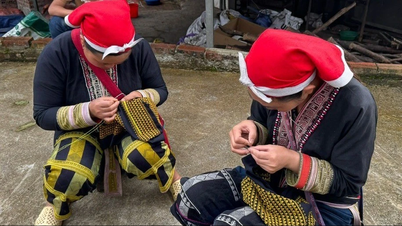
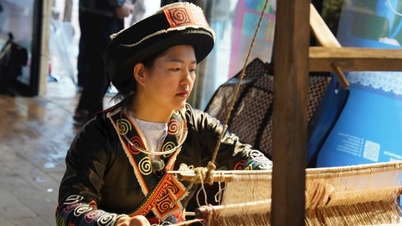
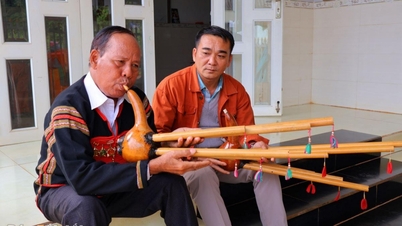
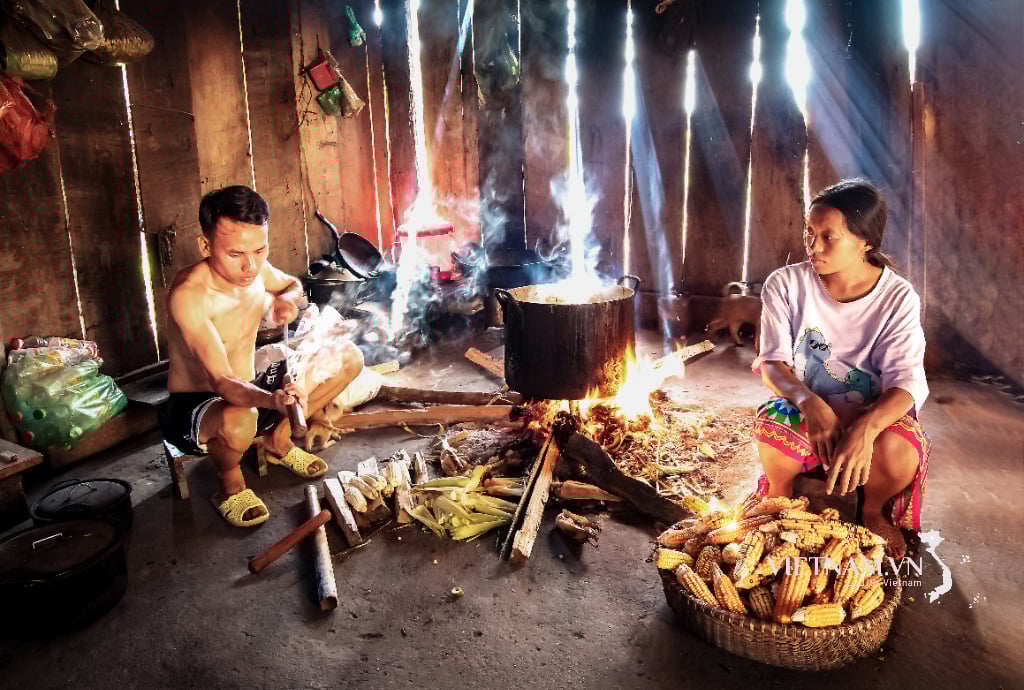
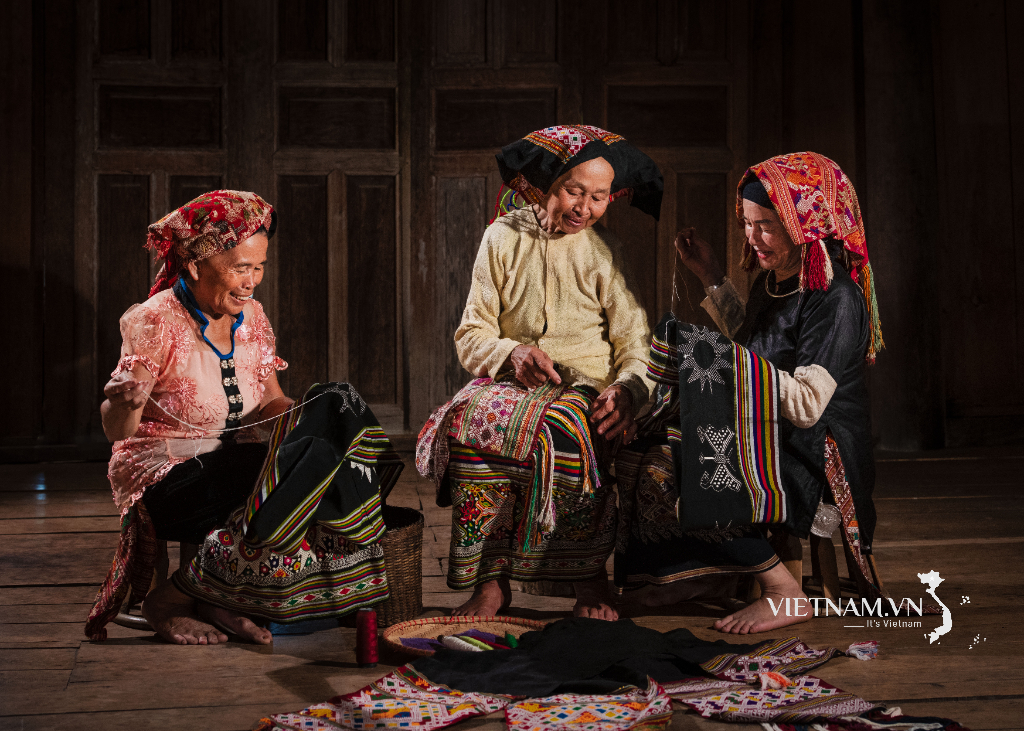
Over the years, many Asian countries with similar cultural backgrounds to Vietnam have demonstrated the breakthrough power of the cultural industry when invested in the right direction… Vietnam is entering a new phase with many advantages that cannot be overlooked: A market of over 100 million people, a young population, and the ability to quickly adopt technology; a diverse culture from North to South, from highlands to lowlands, from royal heritage to folk culture; and a growing creative community in film, music, design, fashion, games, and digital content.
The strategy for developing cultural industries until 2030 aims to transform all those advantages into national competitiveness, at a time when the world is strongly shifting towards a creative economy model.
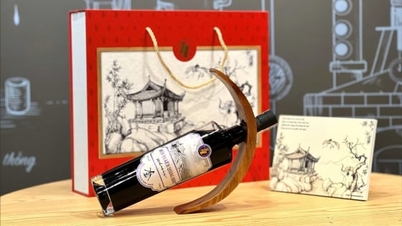
The first highlight of the Strategy is its comprehensive yet selective vision. Instead of viewing the cultural industries vaguely, the Strategy clearly outlines 10 key sectors, ranging from film, performing arts, fine arts, photography, and exhibitions to software, entertainment games, creative design, advertising, cultural tourism, fashion, and publishing…
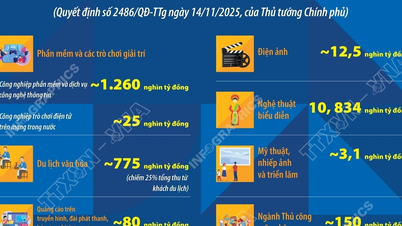
Six key sectors have been identified as priorities for the period up to 2030: film; performing arts; software and entertainment games; advertising; handicrafts; and cultural tourism. These are all fields with broad markets, export potential, high added value, and are well-suited to Vietnam's identity and capabilities. Avoiding trying to do everything at once is a wise choice given limited resources and increasingly fierce international competition.
More notably, the Strategy sets ambitious goals: an average annual growth rate of approximately 10% for cultural industries; by 2030, cultural industries will contribute about 7% to GDP; the workforce in the creative sector will account for 6 to 8% of the total social workforce; and the majority of cultural products will be digitized and competitive on global platforms. These are not just dry numbers, but an affirmation: Vietnam chooses to follow a path of development based on knowledge, creativity, and technology, rather than prolonging a growth model based on resource exploitation and cheap labor at all costs.
Equally important, the Strategy's approach revolves around building a more complete ICT ecosystem rather than simply "pumping" more money into a few individual programs and projects.
From institutional and policy reforms; perfecting laws on intellectual property, film, and digital technology; developing infrastructure and creative spaces such as cultural industry centers, studios, film sets, and art spaces; training creative human resources; supporting businesses; to expanding markets, protecting copyrights, and promoting international cooperation, all are seen as links in a value chain. When these links are well connected, the cultural industry value chain can operate smoothly…
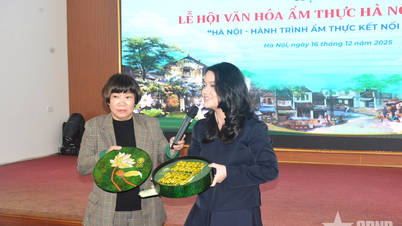
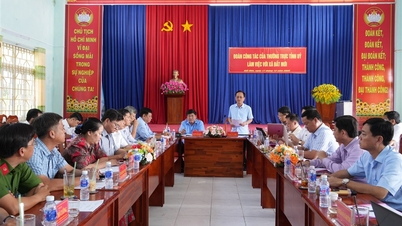
In that overall picture, localities are the "front line" of the 2030 Strategy. This is because all creative spaces, festivals, events, craft villages, tourist areas, cinema complexes, shopping malls, food courts, etc., are located within the provinces and cities.
Local authorities are responsible for deciding on land use planning for creative spaces, shaping policies to support businesses, selecting key industries, and organizing products and events to ensure that the cultural industry doesn't remain just a slogan. When a city clearly defines its goal as a "creative culinary city," a "film city," or a "festival city," all decisions regarding infrastructure, products, human resources, and events will gradually revolve around that priority.
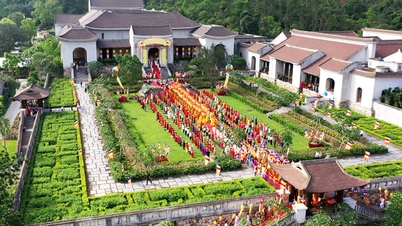
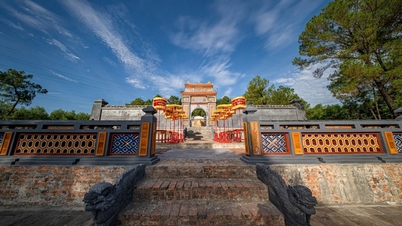
Hue is a prime example of a cultural industry development model based on heritage. With its complex of ancient capital relics, royal court music, documentary heritage system, unique cultural spaces along the Perfume River, traditional craft villages, rich cuisine, and established festivals, Hue has all the conditions to become a cultural industry center with its own identity, a "creative capital of heritage".
If we can connect the four-season Hue Festival with a professional performing arts market; build a cultural and creative zone along the Perfume River with studios, film sets, and laboratories for lighting and sound design; create spaces for ao dai (traditional Vietnamese dress), heritage fashion, and a creative craft village ecosystem such as enamelware, pottery, lacquerware, and paper flowers… then each festival and each heritage site will not only be a story of memories, but will become a vibrant "factory" producing living cultural products.
From that perspective, the Cultural Industry Strategy to 2030 opens a very wide door, but whether or not one can pass through that door depends on the level of decisive action taken in practice. At the national level, it is necessary to continue improving the legal framework, considering the development of a Law on the Cultural Industry or an equivalent framework law; establishing a sufficiently strong inter-sectoral coordinating agency; implementing appropriate financial, credit, and tax mechanisms tailored to the specific characteristics of creative businesses; and making targeted investments in creative infrastructure. At the local level, each province and city needs its own strategy, clearly identifying two or three key industries, linked to spatial planning, tourism development, and urban branding.
Vietnam possesses all the prerequisites to become a strong cultural industry nation in the region: a rich history, diverse identity, creative people, and breakthroughs in digital technology. The remaining question is whether we dare to translate thinking into action, identity into competitive strength, heritage into assets, and potential into results. If we seize opportunities, persevere in reforms, invest strategically, and create an open environment for creative forces, culture can absolutely become a new driving force for development, the cultural industry can become a key economic sector, and Vietnam can rise to a new level on the global creative map.
Source: https://baovanhoa.vn/van-hoa/dong-luc-moi-va-vai-role-quyet-dinh-cua-dia-phuong-189304.html
![[Photo] Prime Minister Pham Minh Chinh receives the Governor of Tochigi Province (Japan)](/_next/image?url=https%3A%2F%2Fvphoto.vietnam.vn%2Fthumb%2F1200x675%2Fvietnam%2Fresource%2FIMAGE%2F2025%2F12%2F16%2F1765892133176_dsc-8082-6425-jpg.webp&w=3840&q=75)
![[Image] Leaked images ahead of the 2025 Community Action Awards gala.](/_next/image?url=https%3A%2F%2Fvphoto.vietnam.vn%2Fthumb%2F1200x675%2Fvietnam%2Fresource%2FIMAGE%2F2025%2F12%2F16%2F1765882828720_ndo_br_thiet-ke-chua-co-ten-45-png.webp&w=3840&q=75)

![[Photo] Prime Minister Pham Minh Chinh receives Lao Minister of Education and Sports Thongsalith Mangnormek](/_next/image?url=https%3A%2F%2Fvphoto.vietnam.vn%2Fthumb%2F1200x675%2Fvietnam%2Fresource%2FIMAGE%2F2025%2F12%2F16%2F1765876834721_dsc-7519-jpg.webp&w=3840&q=75)

![[Live] 2025 Community Action Awards Gala](/_next/image?url=https%3A%2F%2Fvphoto.vietnam.vn%2Fthumb%2F1200x675%2Fvietnam%2Fresource%2FIMAGE%2F2025%2F12%2F16%2F1765899631650_ndo_tr_z7334013144784-9f9fe10a6d63584c85aff40f2957c250-jpg.webp&w=3840&q=75)










































































Comment (0)