

A baby boy in Hai Duong suffered from atopic dermatitis since he was one month old, but due to improper care from his family, he frequently experienced skin lesions on his face, with oozing, scaling, and signs of infection.
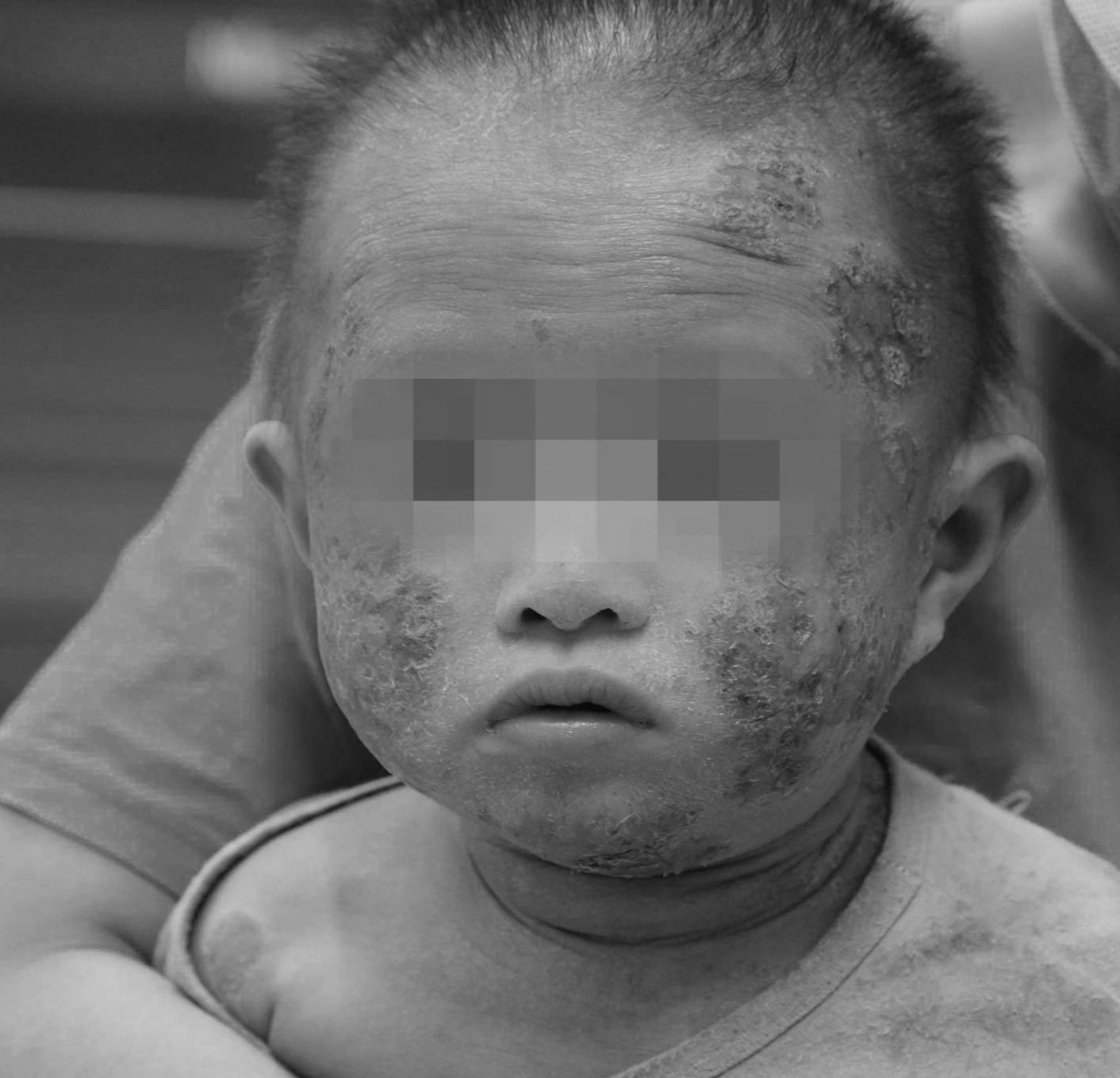
Boy with worsening atopic dermatitis - Photo: BSCC
The disease is common but difficult to control.
Baby T.D.N. (1 year old, from Hai Duong) showed unusual symptoms when she was only one month old.
Initially, the baby's cheeks may show slight redness, dryness, and flaking.
However, within just a few weeks, the condition worsened, spreading to the area behind the ears and the skin folds, causing oozing, scabbing, and excessive crying in the child.
The child's mother shared that the family had taken their child to many doctors and received prescriptions for ointments and herbal baths… At times, the condition improved slightly, but every time the weather became dry, N.'s skin would peel more severely. The worst case was when N. developed an eyelid abscess at 6 months old.
According to Dr. Nguyen Tien Thanh, a member of the Vietnam Dermatology Association and the doctor who directly treated baby N., atopic dermatitis is a chronic disease commonly found in infants and young children.
Globally , approximately 20% of children under 2 years old suffer from this disease, with many severe cases significantly impacting their quality of life.
"The patient presented with widespread red, scaly, dry, cracked skin lesions, some areas oozing fluid, red, swollen scabs, and signs of secondary infection. The main causes were the child's allergic predisposition, dry weather, inappropriate care, and uncontrolled scratching," Dr. Thanh explained.
The doctor also shared that while atopic dermatitis is not life-threatening, it can cause serious complications if not treated properly.
Why does the disease easily become severe?
According to experts, atopic dermatitis is a disease related to immune and genetic factors, often greatly influenced by the living environment. In young children, cold, dry weather in the North is a major factor that exacerbates the condition.

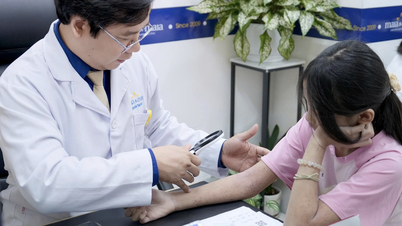
Doctor Thanh examines a young patient - Photo: BSCC
Furthermore, a baby's skin is delicate and easily damaged. Constant scratching due to itching not only further damages the baby's skin but also opens the door for bacteria to enter, leading to infection.
Given the child's critical condition, Dr. Thanh applied a combined treatment including infection control, moisturizing the skin, and instructing the family on home care.
To control infection, children need to use anti-inflammatory topical medications to treat damaged skin areas showing signs of secondary infection.
If the wound is wet and oozing with infection, low-energy laser therapy can be combined to help the wound dry faster. Consider using systemic antibiotics if the child shows signs of infection.
In addition, combined with moisturizing, this helps restore the baby's skin barrier with intensive moisturizing cream, used regularly to reduce dryness, cracking, and itching.
During childcare, families should avoid irritants such as chemicals, harsh soaps, excessively hot water, and drying or irritating plant leaves. In particular, families need to take measures to control the child's scratching behavior.
"Conditions like atopic dermatitis require long-term collaboration between doctors and families. Proper treatment not only reduces symptoms but also helps children and their families overcome psychological stress and improve their quality of life," Dr. Thanh emphasized.
What should you do if you discover your child has atopic dermatitis?
According to Dr. Nguyen Tien Thanh, atopic dermatitis is a common disease in young children but is easily overlooked or mistaken for other common dermatological conditions.
Therefore, parents should absolutely not be complacent. As soon as they notice any unusual signs such as dry, scaly, or red and irritated skin, they should take their child to a medical facility with a dermatology specialist as soon as possible for an accurate diagnosis.
Furthermore, do not attempt to treat your child's illness on your own. Using topical medications of unknown origin or applying folk remedies can worsen the condition and cause dangerous complications.
"Moisturizing is key to controlling the condition. Use appropriate moisturizing creams, avoid irritants, and maintain a clean, well-ventilated living environment. Avoid bathing with herbal remedies or saltwater, as these can damage the skin," Dr. Thanh advised.
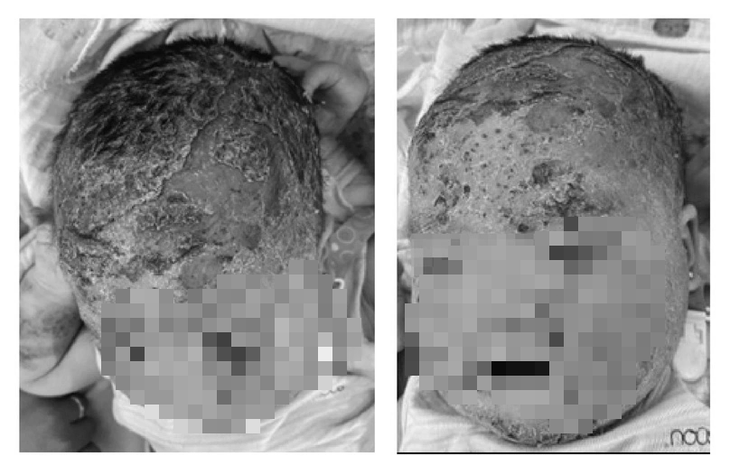 Baby boy's scalp cracked after bathing with herbal remedies for atopic dermatitis.
Source: https://tuoitre.vn/be-trai-1-tuoi-phong-rop-ca-mat-chay-dich-vi-viem-da-co-dia-20241214114118654.htm
![[Image] Close-up view of the interchange connecting the two expressways and Long Thanh Airport.](https://vphoto.vietnam.vn/thumb/1200x675/vietnam/resource/IMAGE/2026/05/25/1779703378210_ndo_br_z7863716673926-224453a31600126cce10622af6290afd-4549-jpg.webp)
![[Image] Hanoi's urban life under the challenge of a "scorching hot" environment](https://vphoto.vietnam.vn/thumb/1200x675/vietnam/resource/IMAGE/2026/05/25/1779706979265_nang-nong-t5-2026-minh-duy-7-4636-jpg.webp)










![[Video] Preventing and avoiding sunstroke and heat exhaustion during hot weather](https://vphoto.vietnam.vn/thumb/402x226/vietnam/resource/IMAGE/2026/05/26/1779753818307_hinh00-01-19-09still001-png.webp)




















































































Comment (0)