

 |
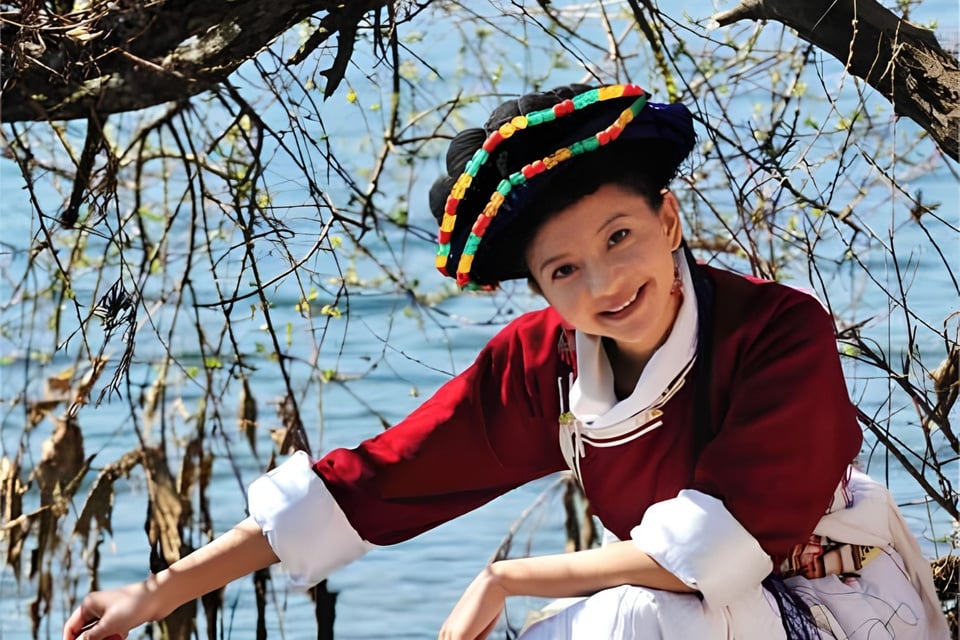
The Mosuo people are said to live a safe and peaceful life. Photo: Baike . |
In the novel Journey to the West, author Wu Cheng'en mentioned the "Kingdom of Women"—a land where women held the power to decide everything and were virtually the center of society. For many years, this image has piqued the curiosity of many, as they thought it only existed in legend.
However, in the area around Lake Lugu, located between Yunnan and Sichuan provinces (China), there still exists a community that can be described as a real-life "Women's Kingdom." This is the Mosuo people, also known as Ma Thoa, a community of about 40,000 who have maintained many rare matriarchal customs for thousands of years.
The Mosuo people live in a valley at the foot of the Himalayas. The nearest city is about a six-hour drive away, via dirt roads winding through the mountains. This geographical isolation has allowed many of their traditional customs to be preserved to this day.
A unique matriarchal society
According to historical records, the Mosuo people are believed to be descendants of the ancient Qiang people who migrated south from the Hehuang region. They have lived around Lake Lugu for over 2,000 years.
The most distinctive feature of this community is the still very strong presence of a matriarchal system. In Mosuo families, women hold a central role, managing property, distributing money and food, and making important decisions.
The basic social unit of the Mosuo people is the matriarchal family, where multiple generations live together under one roof. Members are counted by maternal lineage. A family can consist of several dozen people, including the maternal grandmother, mother, children, maternal uncles, and siblings from the maternal side.
The oldest, most capable, and most respected woman becomes the head of the household, known as "Dat Bo." She is responsible for managing the family's assets and overseeing all household affairs.
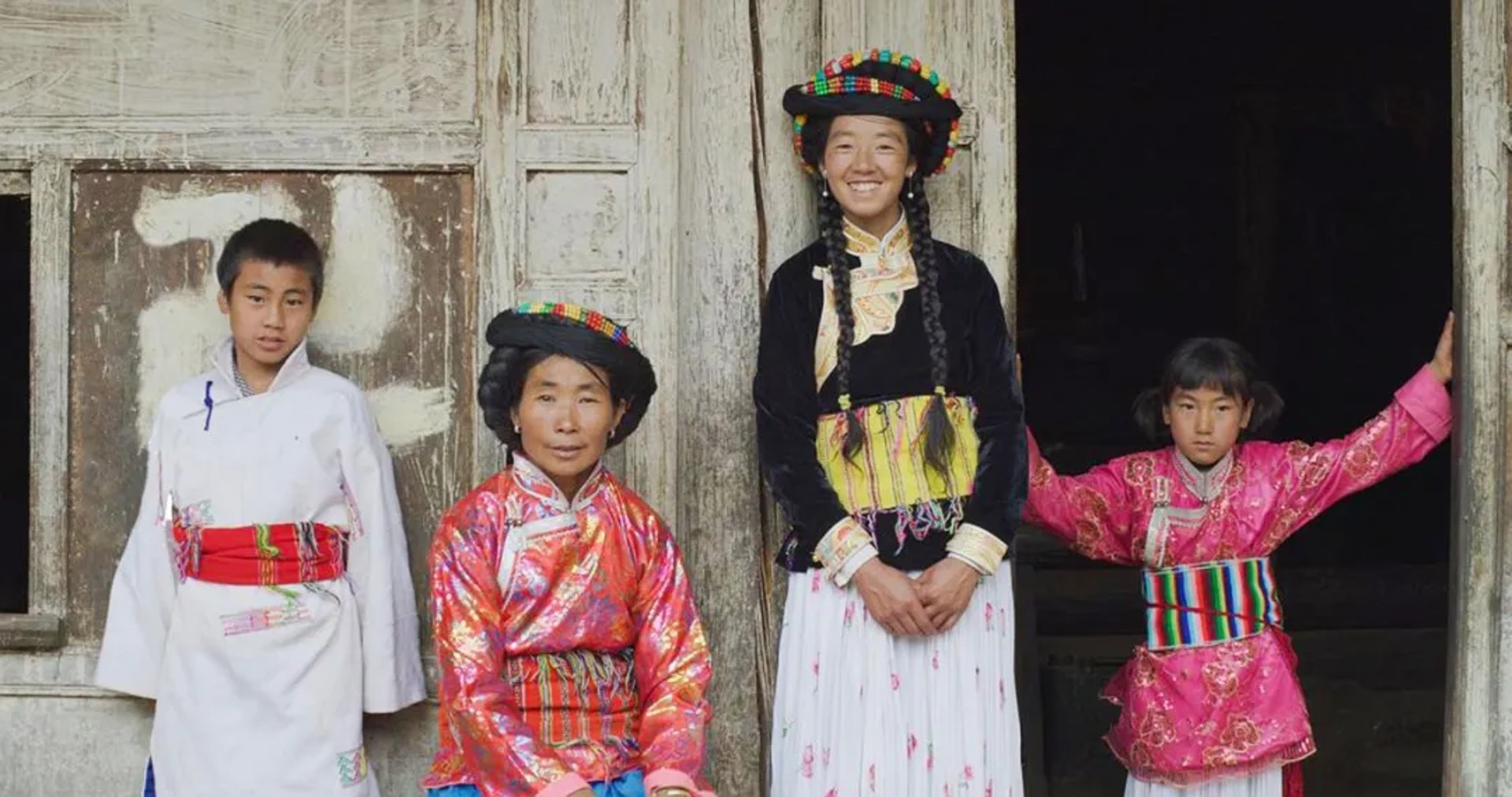 |
According to Mosuo tradition, older women become the heads of the household. Photo: HK01. |
Meanwhile, Mosuo men primarily undertake physically demanding tasks such as building houses, hunting, fishing, or heavy labor. They often spend more time caring for their sisters' children than their own.
According to Mosuo beliefs, children belong to the maternal side of the family. Therefore, the role of the maternal uncle is very important. In old age, Mosuo men will also be cared for and supported by their maternal grandchildren.
The Mosuo people have a rather unique way of addressing each other. All women of the same generation as the mother are called "mother," while men of the same generation are called "uncle." In many large families, children sometimes don't know exactly who their biological mother is because they are raised by the entire extended family.
According to researchers, the extended family model helps reduce the pressure of raising children for each individual. Levels of jealousy and domestic violence are also believed to be lower in this community compared to many other communities.
Dr. Jose Yong of James Cook University in Singapore said the biggest difference among the Mosuo people is that marriage does not exist in the common sense found in many parts of the world .
The custom of elopement is intriguing.
The Mosuo people are famous for their custom of "walking marriage," also known as "reciprocal marriage." According to this custom, men do not marry, and women do not get married. Two people in love continue to live with their respective mothers' families instead of starting their own families.
At night, the man would go to the woman's house to meet her. The next morning, he would return to his mother's home. They did not form a separate family, had no shared property, and were not bound by the obligations of a typical marriage.
If the woman agrees to start a relationship, she will tell the man where she lives. The two come together entirely on mutual consent.
Children born into this family are raised by their mother's side and retain their maternal bloodline. The father does not live with the children and does not play a primary role in their upbringing.
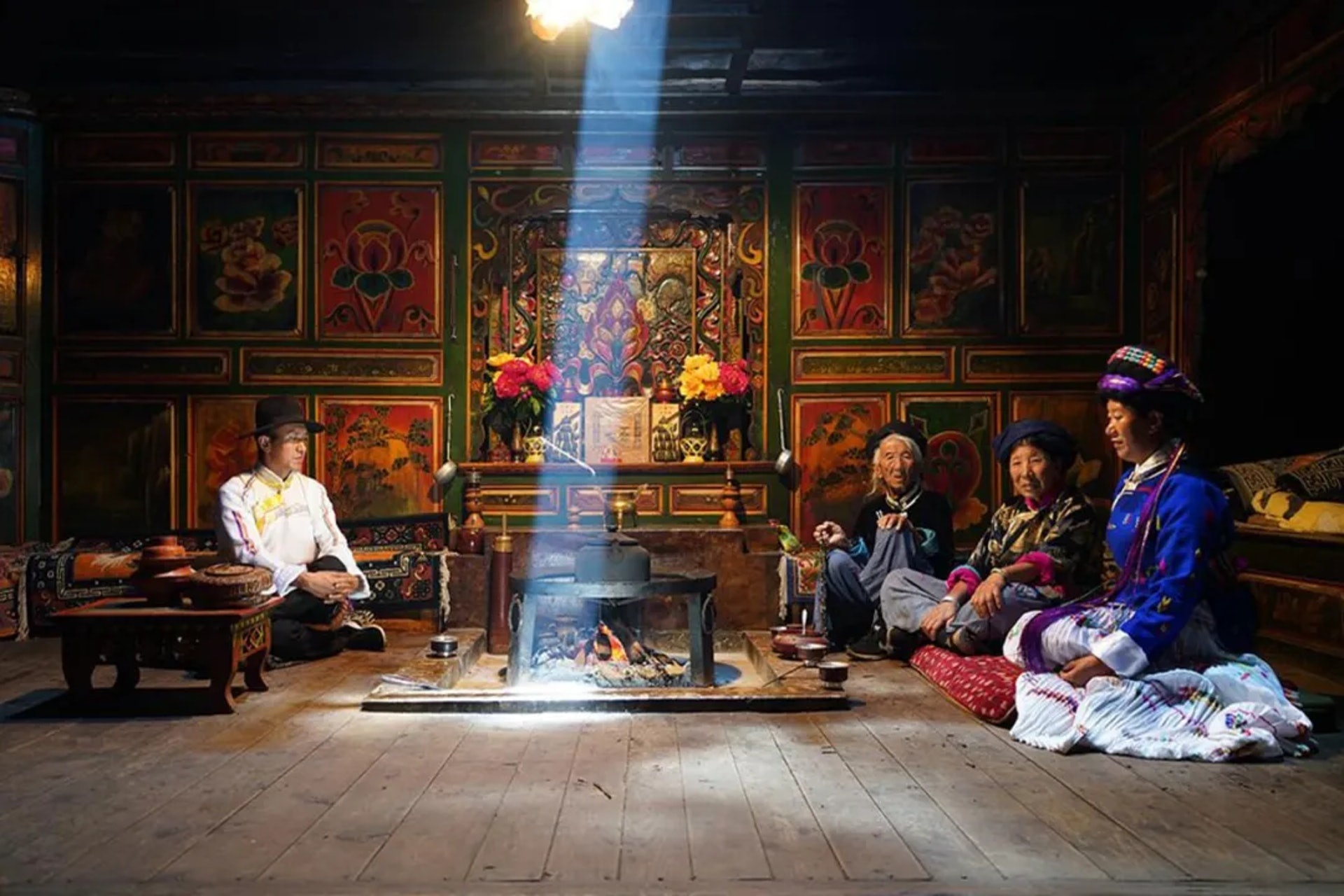 |
In Mosuo marriages, the couple in love still live with their mother's family. Photo: HK01. |
According to Dr. Jose Yong, in Mosuo culture, it is not considered shameful for a child not to know who their biological father is. The responsibility for caring for the child rests with the maternal extended family.
Although quite unusual compared to many other places, elopement is not a casual relationship as many outsiders believe. The Mosuo people have strict rules such as prohibiting marriages between blood relatives, forbidding multiple partners at the same time, and ensuring that relationships only last as long as both parties still have feelings for each other.
If they are no longer compatible, the two will separate without disputes over property or child custody. According to Mosuo beliefs, children always have the support of their mother's family, so women do not need to choose a partner based on money or ability to provide for them.
Researchers suggest that this family structure has shaped the Mosuo people's rather unique concept of love. Women tend to be more interested in personality and compatibility rather than a partner's status or wealth.
Currently, in the Lugu Lake region, both elopement and monogamous marriage coexist. Some Mosuo people have adopted a modern lifestyle and become involved in tourism , while many other families maintain a traditional matriarchal way of life.
Nevertheless, for many Mosuo people, their mother's house remains the most important home and the place where they spend their entire lives.
Source: https://znews.vn/ben-trong-nu-nhi-quoc-ngoai-doi-thuc-post1651316.html
![[Image] A brilliant symphony and explosive power in the skies of Da Nang.](https://vphoto.vietnam.vn/thumb/1200x675/vietnam/resource/IMAGE/2026/05/31/1780196945787_anh-man-hinh-2026-05-31-luc-10-08-51.png)







![[Video] Sunset at Lap An Lagoon – Where the sun sets over the fishing nets](https://vphoto.vietnam.vn/thumb/340x192/vietnam/resource/IMAGE/2026/05/31/1780192137701_beach-landscape-sea-water-nature-grass-745871-pxhere-com.jpeg)




























































Comment (0)