

The road is too narrow; you can't drive fast even if you want to.
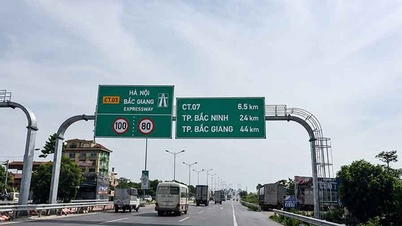
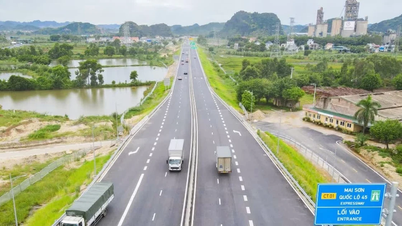
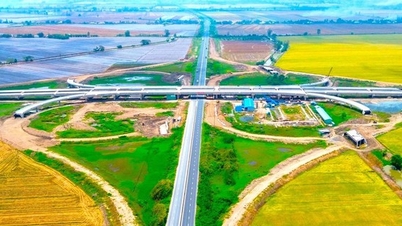
Besides the maximum speed limit of only 80 km/h, a major disappointment for many when the North-South Expressway's component sections came into operation was the modest number of lanes. Several sections of the expressway, completed and put into operation according to a phased plan, such as the Cao Bo - Mai Son, Trung Luong - My Thuan, Nha Trang - Cam Lam, Vinh Hao - Phan Thiet, Mai Son - National Highway 45 sections, and soon the National Highway 45 - Nghi Son section, all only have 4 lanes.
"Why are these new, key highways stretching across the country only built with four lanes? The roads are so narrow, even driving at 80 km/h is risky, let alone going faster," complained Mr. T. Sang, a businessman who frequently travels between Ho Chi Minh City and My Tho.
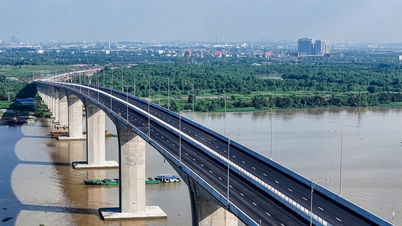
In reality, there are too many examples of newly opened expressways quickly becoming overloaded due to their narrow 2-4 lane capacity. For instance, just one year ago, people in Southern Vietnam eagerly awaited the opening of the Trung Luong - My Thuan expressway, hoping to escape the "hardship" of long queues to travel to the Mekong Delta during holidays and Tet (Lunar New Year). However, the Trung Luong - My Thuan expressway quickly became a nightmare when, less than two months after its opening, 38 traffic accidents and 297 vehicle breakdowns occurred on the route. Concerned that this expressway would soon become a bottleneck, the People's Committee of Tien Giang province immediately proposed to the Prime Minister to invest in phase 2 of the Trung Luong - My Thuan expressway project according to the plan of 6 expressway lanes and 2 emergency lanes before 2030. The People's Committee of Tien Giang province believes that the current traffic volume on the Trung Luong - My Thuan expressway is too high. The investment scale for phase 1 was calculated based on the number of vehicles 10 years ago, and is no longer suitable for the increase in vehicles and people's needs. The newly inaugurated vital expressway is already... a decade outdated.
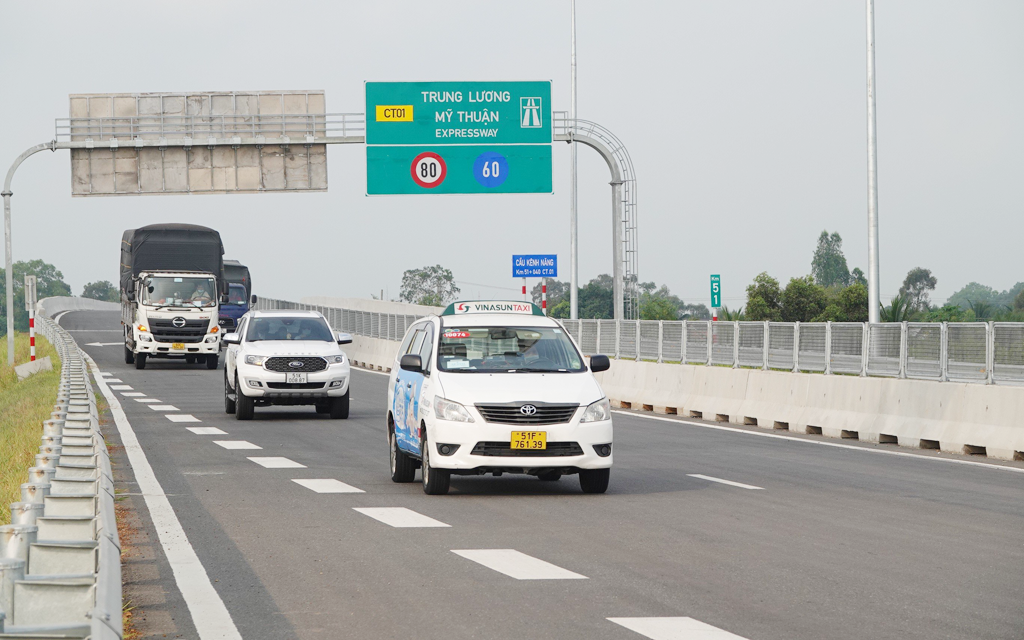
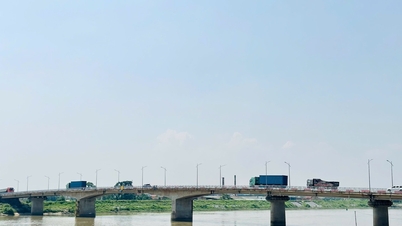
The Trung Luong - My Thuan expressway is overloaded due to a lack of lanes.
Just a few months later, the Ho Chi Minh City Department of Transport also sent an urgent document to the City People's Committee proposing the expansion of the Ho Chi Minh City - Trung Luong expressway. The reason given was that after toll collection stopped at the beginning of 2019, the volume of traffic on the route increased dramatically, peaking at over 51,000 vehicles per day and night, leading to road damage. Phase 1 invested in the main route with 4 lanes for motorized vehicles and 2 emergency stopping lanes, but this has not been able to meet the increase in vehicles and the travel needs of the people. Therefore, it is necessary to expand the Ho Chi Minh City - Trung Luong expressway, the connecting routes between Binh Thuan - Cho Dem and Tan Tao - Cho Dem to 8 lanes, 2 emergency stopping lanes, with a design speed of 120 km/hour.
Previously, the Ho Chi Minh City - Long Thanh - Dau Giay (HLD) expressway was a prime example of how expressways quickly become slow-speed due to their narrow width. This vital artery connecting Ho Chi Minh City with the Southeast and Central Highlands regions only has four lanes. Meanwhile, the Dong Nai Provincial People's Committee assessed that the HLD expressway, a key transportation artery connecting to Long Thanh International Airport, would not meet demand even if built to eight lanes as planned. The Dong Nai Provincial People's Committee has repeatedly proposed to the Prime Minister to consider investing in and expanding the HLD expressway to 10-12 lanes, three times its current size.
In the northern region, Lao Cai province has been "impatient" for the past few years, repeatedly proposing to the Government to allow the expansion of the Noi Bai - Lao Cai expressway section from Yen Bai to Lao Cai (83 km long) from 2 lanes to 4 lanes. The reason is that although it is an expressway, it only has 2 lanes, no median divider, while traffic volume is increasing, posing a potential risk of traffic accidents, even serious accidents when drivers carelessly encroach on other lanes. When it was first put into operation 8 years ago, the Yen Bai - Lao Cai section had a traffic volume of 2,500 vehicles/day and night, but now it has increased to 11,000 vehicles/day and night.
Lack of lanes due to… lack of money?
Speaking to Thanh Nien newspaper, an official from the Ministry of Transport admitted that the reason for the shortage of lanes on expressways is... a lack of funds. In the context of limited economic resources, to ensure the balance of capital and investment efficiency, the National Assembly and the Government have approved the policy of phased investment in the construction of some routes with a 4-lane cross-section and a design speed of 80 km/h. For example, the Trung Luong - My Thuan expressway was built according to the Ministry's design in Decision 5019 dated December 31, 2014, on guiding the design and traffic organization during the phased investment phase of expressway construction. The phased design includes a plan to space out emergency stopping points on both sides in the direction of traffic so that after 6-10 minutes of driving, emergency vehicles still have a place to stop. The reason is that, in the context of limited investment capital, if 17-meter-wide, 4-lane expressways have continuous emergency stopping lanes, the total investment will increase. If the Trung Luong - My Thuan expressway builds continuous emergency stopping lanes along the entire route during the phased construction, the total investment will increase to approximately 17,000 - 18,000 billion VND, an additional 5,000 - 6,000 billion VND compared to the current total investment.
However, transportation experts assess that the option of "cooling down" the cash flow by building small-scale, low-lane roads is unsuitable, as expanding them later would be very difficult due to the enormous land acquisition costs. As a result, projects to expand and complete the expressway network are delayed one after another, while the existing infrastructure rapidly deteriorates, leading to constant traffic congestion and accidents.
Associate Professor Pham Xuan Mai, former Head of the Automotive Engineering Department at Ho Chi Minh City University of Technology, pointed out: The number of lanes on a highway depends on the traffic volume on the route. The current traffic volume on key roads in Vietnam is 25,000-35,000 vehicles per day. Meanwhile, the number of lanes currently being built on highways in Vietnam is only 2 lanes, designed for a traffic volume of 25,000 vehicles. Therefore, during peak hours, holidays, and Tet (Lunar New Year), they are overloaded, causing severe traffic jams. Most recently, the Ho Chi Minh City Ring Road 3, designed for 2030 with a traffic volume of 40,000-50,000 vehicles per day and night, also has 4 lanes, but similar routes in Ho Chi Minh City currently record 25,000-40,000 vehicles per day and night.
"In particular, expressways should only be built in one phase, prioritizing national and regional backbone routes. If we build in two phases, the construction of phase 2 will immediately cause difficulties for traffic flow on the expressway section from phase 1, wasting resources and manpower twice for construction and land clearance… Building for the future means that the number of lanes, speed limits, and emergency stopping lanes must meet international standards, completing each section as it is built," Associate Professor Pham Xuan Mai emphasized.
The number of cars per 1,000 people in Vietnam is currently 50/1,000, which is only 1/5 to 1/6 of Thailand's figure. In the very near future (2025-2030), the number of cars in Vietnam will increase rapidly, at least reaching Thailand's current level. This means that traffic volume on highways will also increase, reaching over 75,000 vehicles per day or higher. Therefore, highways currently being designed and constructed must also take this traffic volume into account, meaning the minimum number of lanes in each direction will be 3.
Associate Professor Pham Xuan Mai
Source link
![[Photo] General Secretary and President To Lam presides over a meeting on assessing national development resources.](https://vphoto.vietnam.vn/thumb/1200x675/vietnam/resource/IMAGE/2026/05/20/1779253785852_a1-bnd-2943-8519-jpg.webp)

![[Photo] National Assembly Chairman Tran Thanh Man working with the Standing Committee of the Economic and Financial Committee](https://vphoto.vietnam.vn/thumb/1200x675/vietnam/resource/IMAGE/2026/05/20/1779249584387_ndo_br_1-jpg.webp)














































































Comment (0)