

The project has just received a significant boost as Climate Investor Three, through its member fund SA-H2 Fund, signed a development financing agreement with the Green eFuels Producers (GeFP) alliance. SA-H2 Fund is managed by Climate Fund Managers in collaboration with Invest International of the Netherlands.
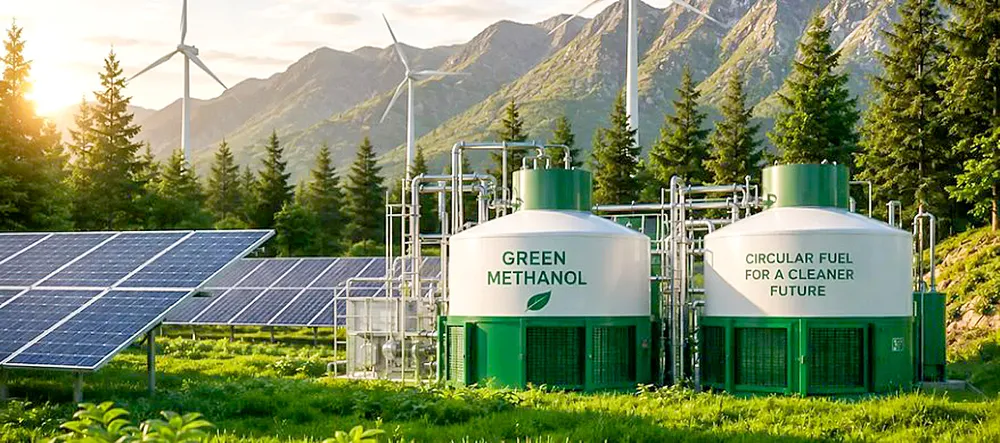
According to the initial commitment, the fund will allocate up to $4 million to support the project's development phase. This money will be used for tasks such as engineering design, environmental and social impact assessment, completion of licensing procedures, and construction of the commercial structure, aiming to bring the project to the financial closing stage. In addition, the agreement also allows the fund to participate in equity investment worth up to $26 million.
The plant is expected to begin commercial operation in 2029 in the Vaal Special Economic Zone, Gauteng Province, South Africa's largest economic hub. It's a closed-loop circular economy model, utilizing organic sludge from domestic wastewater to produce clean fuel. According to the design, the plant will process approximately 90,000 tons of municipal sludge annually from the Sebokeng wastewater treatment plant.
The project will utilize renewable energy, including 50MW of solar power, to operate a 10MW electrolysis system producing green hydrogen, a key raw material in the synthesis of green methanol. When fully operational, the plant is expected to produce approximately 14,300 tons of green methanol per year, helping to reduce CO2 emissions by about 118,950 tons per year.
Methanol is a widely used industrial chemical in the production of plastics, solvents, and many other heavy industries. However, traditional methanol is primarily produced from fossil fuels, resulting in significant emissions. In contrast, green methanol is produced from renewable energy sources combined with sustainable carbon sources such as biowaste and captured CO2. This makes it a promising low-carbon fuel solution for industries struggling to reduce emissions, such as shipping, aviation, and chemicals.
According to Climate Investor Three, the project not only addresses the problem of sludge disposal and local environmental pollution but also lays the foundation for the Green Methanol Corridor – a large-scale clean fuel infrastructure network extending from Gauteng province to the port of Durban in KwaZulu-Natal province, serving future export needs.
Mr. Mphokolo Makara, Managing Director of SA-H2 Fund Managers, stated that transforming sewage sludge into a useful resource helps address waste management challenges, supports local employment, and strengthens South Africa's industrial foundation through a just transition. Meanwhile, Mr. Chris Heinermann, co-founder of Green eFuels Producers, argued that the project will contribute to decarbonization in sectors struggling to reduce emissions, while simultaneously boosting local value chains and creating long-term economic value for the Vaal region.
The project is considered consistent with South Africa's Hydrogen Society Roadmap and climate commitments, aiming for carbon neutrality by 2050. It is also a significant step in the country's ambition to become a hub for the production and export of green electronic fuels to international markets, especially Europe.
Source: https://www.sggp.org.vn/bien-bun-thai-do-thi-thanh-methanol-xanh-post853661.html
![[Photo] General Secretary and President To Lam presides over a working session with the Central Policy and Strategy Committee on the development of the materials industry.](https://vphoto.vietnam.vn/thumb/1200x675/vietnam/resource/IMAGE/2026/05/21/1779359935432_a3-bnd-3129-1412-jpg.webp)

![[Photo] National Assembly Chairman Tran Thanh Man working with the Standing Committee of the Law and Justice Committee](https://vphoto.vietnam.vn/thumb/1200x675/vietnam/resource/IMAGE/2026/05/21/1779378929214_ndo_br_1-4610-jpg.webp)






























































Comment (0)