

In the medium to long term, it is necessary to accelerate the shift from extensive expansion (based on capital and labor accumulation) to intensive expansion (based on productivity and innovation). Simultaneously, Vietnam must implement three strategic pillars: focusing on high-value priority industries, an integrated economic corridor network, and leveraging national breakthroughs in capital, talent, institutions, and infrastructure. This transformation in both the driving forces and the growth model is the solution to achieving the aforementioned "miracle" goal.
This transformation has been and continues to be based on various growth and innovation models at both regional and global levels; considering the overall economy, its strengths, similarities, and, importantly, its high feasibility and sufficient implementation capacity. For example, aiming for advanced manufacturing and smart industries requires ensuring that 25% of GDP shifts from assembly to high-value, technology-intensive production.
Specifically, referencing the Gyeonggi Technology Belt model in South Korea, we are developing specialized industrial corridors with semiconductors, EV components, and precision engineering as the pillars. Or, drawing on the Taiwanese SME support model, we are upgrading the capabilities of domestic suppliers through a structured supplier development program – quality assessment, lean manufacturing, automation, and shared laboratories.
Alternatively, we could apply the German "Industry 4.0 for SMEs" model to accelerate factory digitalization and green transformation (robotics, MES, energy saving). This would be coupled with co-development of technical training programs with businesses and modernization of the national inspection and certification system.
Given that the digital and data-driven economy accounts for 11% of GDP, it's necessary to elevate information technology from outsourcing to innovation. To achieve this, a national data space and highly interactive digital infrastructure (following the EU Data Strategy model) need to be built to unlock data-driven services in healthcare , finance, and logistics. The shift should move from "contract coding" to a product-based platform through R&D tax incentives, scale-up support funds, and prioritized public procurement (following the Israeli and Estonian models). Expanding accessible cloud/AI platforms and supporting SMEs in applying AI (following Singapore's "AI Verify" model) is also crucial.
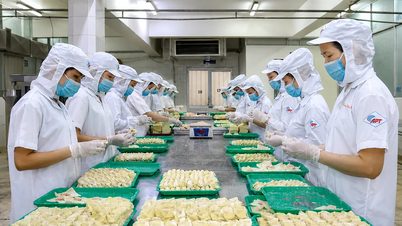
Biotechnology and high-tech agriculture , both accounting for 11% of GDP, require a shift from low-yield farming to high-value, climate-adaptive production. This includes learning from Thailand's model of upgrading fruit and seafood clusters to modernize the value chain through land consolidation, cold chain supply, and traceability.
From the pay-per-use model (India's agritech ecosystem), to experimenting with precision agriculture – drones, sensors, mobile decision-making tools. Or investing in biotechnology and high-value biological products (biofertilizers, improved seeds, functional foods) following the Embrapa PPP model in Brazil. Designing low-carbon standards that meet EU sustainability requirements to unlock green finance.
Nationwide, four key economic corridors are being established – integrating inter-provincial value chains to create three breakthrough levers: expanding capital, strengthening talent, and promoting innovation. Specifically, these are the Red River Delta High-Tech Corridor (Hanoi, Hai Phong, Quang Ninh, Bac Giang); the Southern Financial and Digital Technology Service Center (Ho Chi Minh City and neighboring provinces); the Central Innovation and Tourism Belt (Da Nang, Hue, Quy Nhon, Khanh Hoa, Central Highlands); and the Mekong Delta High-Tech Agricultural Cluster (Can Tho, An Giang, Ca Mau, Ben Tre), shifting from basic commodity farming to high-value agricultural and food production.
Leveraging the emerging International Financial Centers in Ho Chi Minh City and Da Nang to attract global capital flows, as well as diverse and flexible cooperation tools and methods, and new institutions, will create a foundation for long-term productivity growth.
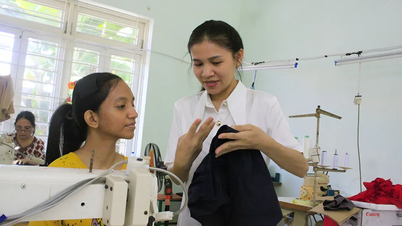
The focus is on expanding STEM education, modernizing vocational and university education systems, and popularizing digital and AI skills throughout the workforce. In particular, it emphasizes promoting technology applications through regulatory sandbox frameworks, reducing regulatory barriers, encouraging private investment, and accelerating commercialization.
Source: https://www.sggp.org.vn/chuyen-doi-mo-hinh-tang-truong-la-menh-lenh-post853832.html


![[Image] Close-up view of the interchange connecting the two expressways and Long Thanh Airport.](https://vphoto.vietnam.vn/thumb/1200x675/vietnam/resource/IMAGE/2026/05/25/1779703378210_ndo_br_z7863716673926-224453a31600126cce10622af6290afd-4549-jpg.webp)


![[Image] Hanoi's urban life under the challenge of a "scorching hot" environment](https://vphoto.vietnam.vn/thumb/1200x675/vietnam/resource/IMAGE/2026/05/25/1779706979265_nang-nong-t5-2026-minh-duy-7-4636-jpg.webp)




























































































Comment (0)